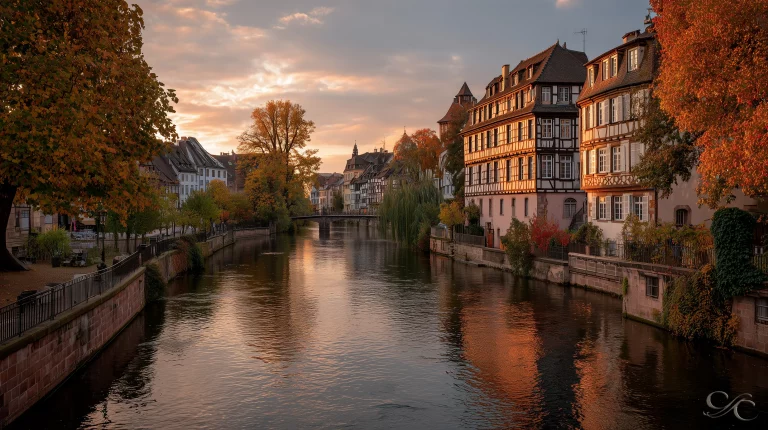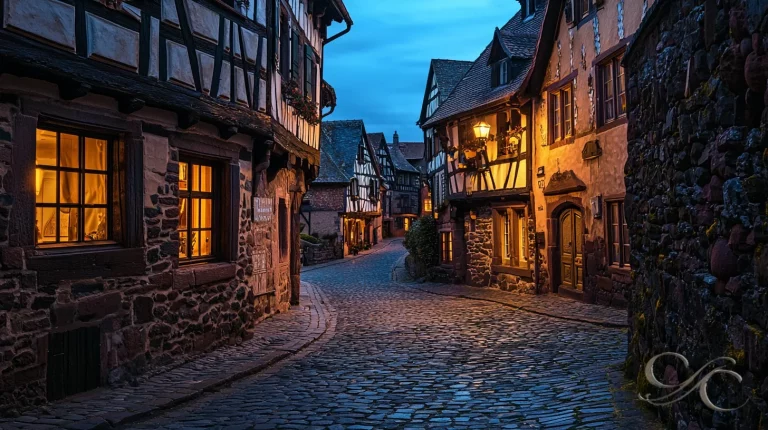
🍂 My journey along the Alsace Wine Route
The Alsace Wine Route runs for more than 170 kilometers along the foothills of the Vosges, linking historic villages, hillside vineyards, and some of France’s most distinctive white wines. For travelers, it offers a rare combination of accessibility and depth: short driving distances, walkable village centers, and a clear sense of place shaped by centuries of winegrowing.
This journey follows a practical stretch of the route, beginning in Obernai and continuing south through Barr, Andlau, and Mittelbergheim—villages known for their wines, historic architecture, and manageable scale. It’s an itinerary designed for slow travel: easy to follow, rich in character, and well suited to a long weekend or the start of a deeper exploration of Alsace.
Along the way, I focus on what matters most for visitors planning their own route—what each village is known for, which wines to taste, how long to stay, and how to move easily from one stop to the next. Whether you’re visiting Alsace for the first time or returning with a deeper interest in its wines, this section of the route offers a clear, rewarding introduction.
Obernai — a historic gateway to the Alsace Wine Route
Obernai has been a wine town since the Middle Ages. First mentioned in the 12th century, it prospered as a Free Imperial City of the Holy Roman Empire, protected by ramparts and enriched by viticulture and trade. Many of the half-timbered houses visible today date from the 15th and 16th centuries, when wine merchants and guilds shaped the town’s layout.
Its position—between the Vosges foothills and the Rhine plain—made Obernai a natural stopping point for travelers and merchants, a role it still plays today. For visitors arriving from Strasbourg, it offers history, wine, and walkability in a compact, approachable setting.

If you’re arriving in Obernai
🚆 From the train station
The station is a 10–12 minute walk to the historic center. Follow signs toward the old town; the route is flat and well marked.
🏨 Where to stay
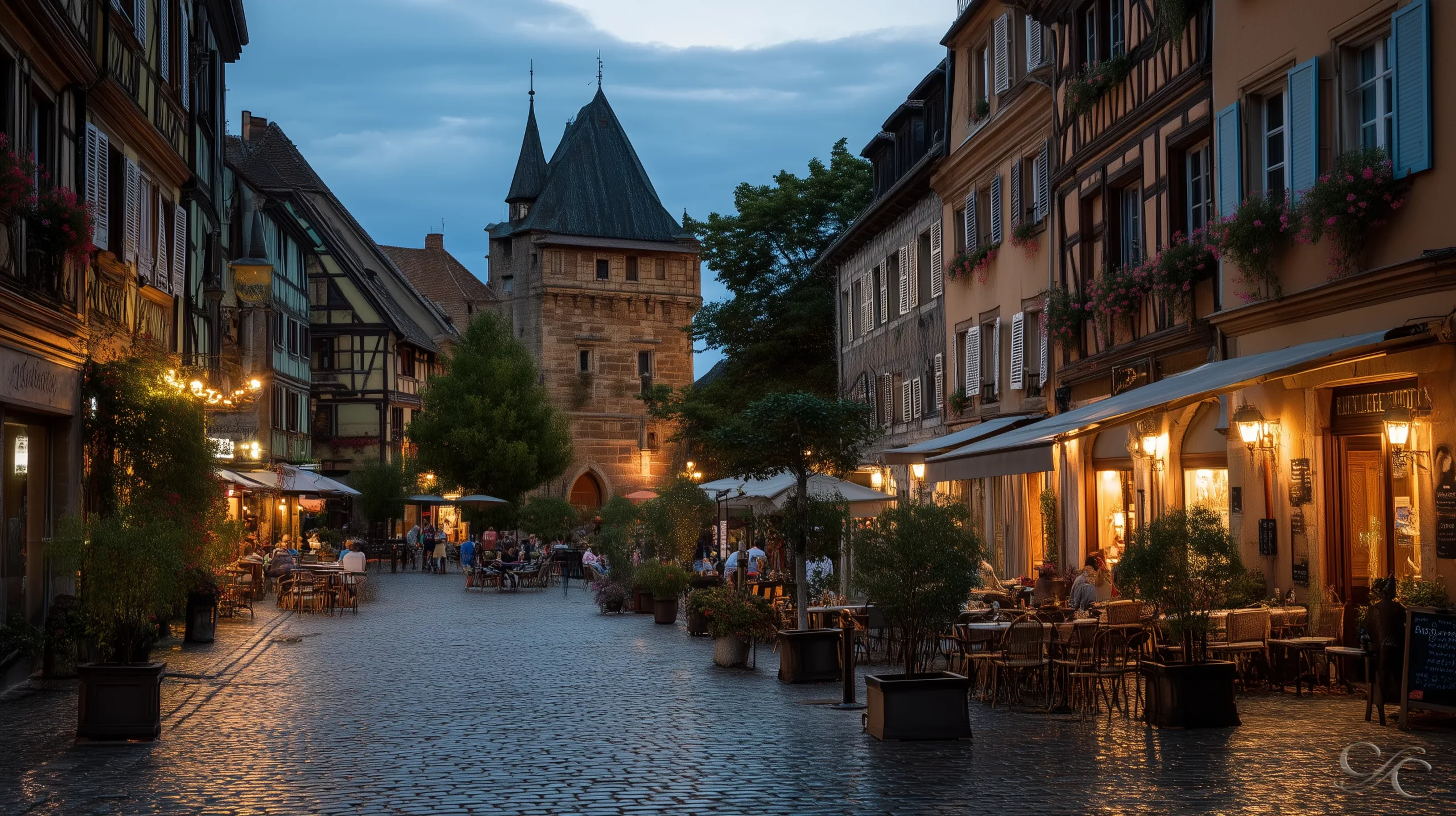
Market Square — flowers, cafés, and the rhythm of Obernai

Obernai’s market square is the heart of the old town and the place most visitors naturally gravitate toward. Framed by half-timbered houses and café terraces, it functions as both a gathering point and a practical reference for navigating the village.
Depending on the day and season, you’ll find flower stalls, local produce, and small specialty vendors set up around the square. Even when the market isn’t in full swing, planters and seasonal arrangements keep the space colorful and active year-round.
This is also where many of Obernai’s cafés and wine bars cluster. It’s an ideal place to pause—whether for a coffee after arriving, a light lunch, or an early glass of wine before continuing along the route.
Use the market square as your reference point:
most streets radiate from here, and nearly everything of interest in the old town is within a short walk.
What you’ll notice in the market square
Alsace wines in Obernai — what to expect in the glass
Obernai’s wines reflect the northern end of the Alsace Wine Route, where vineyard sites favor freshness, precision, and mineral structure over richness. The Vosges foothills provide shelter from heavy rainfall, allowing grapes to ripen slowly while retaining acidity—one of the defining characteristics of Alsace wines.
Unlike many wine regions, Alsace focuses almost entirely on single-varietal wines, clearly labeled by grape. This makes tastings approachable, even for visitors new to the region.

Wines to know in Obernai
Recommended tastings in and around Obernai
Barr — stone wine estates and structured Rieslings

Barr marks a clear shift along the Alsace Wine Route. The architecture becomes more restrained, the streets quieter, and the wine culture more firmly rooted in production rather than presentation. Long known as a center of wine trading, Barr developed around stone-built estates and merchant houses that still define the village today.
Unlike the softer introduction offered by Obernai, Barr feels purposeful. This is a place to walk with intention, to step into cellars, and to taste wines that show more structure and depth—particularly Riesling grown on the slopes just above the village.
Wines to know in Barr
Barr sits below several respected vineyard sites, and its wines tend to reflect greater concentration and definition, especially in dry whites.
- Riesling — typically firmer and more structured here, with pronounced minerality and aging potential
- Pinot Gris — textured and savory rather than sweet, often showing depth without heaviness
- Sylvaner — worth seeking out locally; lean, dry, and expressive in this part of Alsace
Barr is also a good place to taste wines made with longer lees aging, adding texture and complexity.

Recommended tastings in and around Barr
Andlau — hillside vineyards and site-driven Alsace wines

Andlau sits slightly apart from the main road, tucked into the foothills of the Vosges where vineyards rise more steeply and wine identity becomes increasingly tied to specific sites rather than village names. Historically, Andlau was shaped by religious foundations and winegrowing, with monastic influence playing a major role in vineyard cultivation as early as the Middle Ages.
Today, Andlau is best known for its vineyard-focused approach. This is where visitors begin to see how elevation, slope, and soil composition influence style—particularly in Riesling and Pinot Gris.
Wines to know in Andlau
Barr sits below several respected vineyard sites, and its wines tend to reflect greater concentration and definition, especially in dry whites.
- Riesling — typically firmer and more structured here, with pronounced minerality and aging potential
- Pinot Gris — textured and savory rather than sweet, often showing depth without heaviness
- Sylvaner — worth seeking out locally; lean, dry, and expressive in this part of Alsace
Barr is also a good place to taste wines made with longer lees aging, adding texture and complexity.
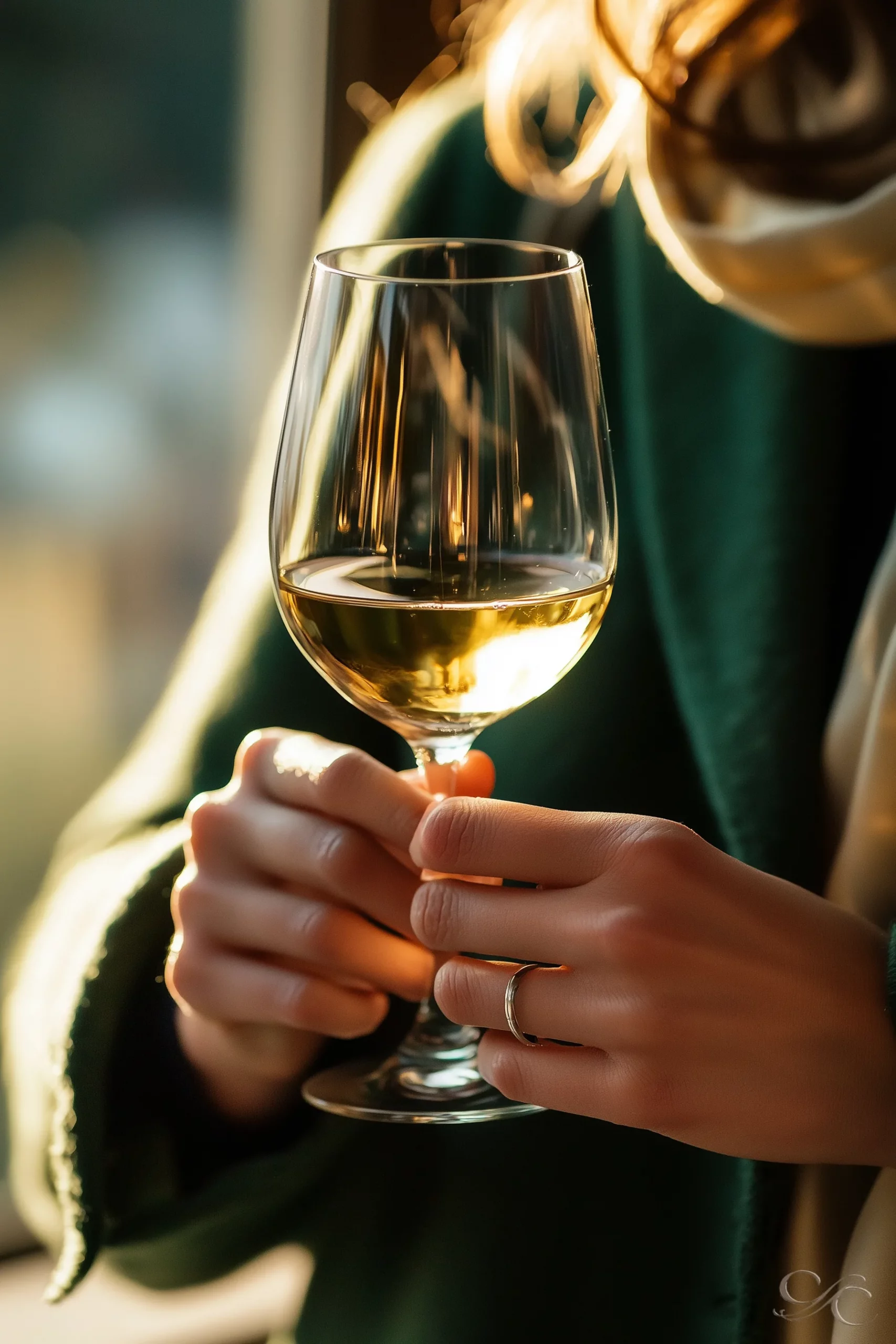
Recommended tastings in and around Andlau
Mittelbergheim — hillside vineyards and a natural stopping point

Mittelbergheim sits slightly above the main road, surrounded by gently rising vineyards and long views across the Alsace plain. Often cited among Les Plus Beaux Villages de France, it’s known not for spectacle but for consistency—both in its architecture and its wines.
The village is compact and quiet, with cobblestone streets, pale stone houses, and a pace that encourages lingering rather than moving on quickly. For travelers following the Alsace Wine Route, Mittelbergheim works especially well as an end-of-day stop: calm, walkable, and closely connected to the surrounding vineyards.
Wines to know in Mittelbergheim
Mittelbergheim’s vineyards are planted primarily on limestone-rich soils, contributing to wines that emphasize balance, clarity, and structure. While the village does not carry the same number of Grand Cru designations as some neighboring areas, its reputation rests on reliably high-quality village wines.
- Riesling — precise, mineral-driven, and well balanced
- Sylvaner — particularly strong here; dry, clean, and expressive
- Pinot Blanc — fresh and approachable, often overlooked but worth tasting

These wines tend to favor restraint over power, making Mittelbergheim a useful reference point for understanding classic Alsace styles.
Recommended tastings in and around Mittelbergheim
Wrapping up Day 2 — where to stay and eat in Mittelbergheim

Mittelbergheim is best experienced at the end of the day, when the village quiets and the vineyards catch the last light. While accommodations are limited, staying nearby allows for an unhurried evening and an easy start the following morning.
Where to stay
- Chambres d’hôtes La Tour des Fées (Mittelbergheim) — A well-regarded guesthouse in the village, ideal if you want to stay within walking distance of vineyards and cellars.
- Small guesthouses in Andlau or Barr — Practical alternatives if Mittelbergheim is fully booked
Where to eat
- La Table de Mittelbergheim — Refined, local cooking suited to a relaxed evening meal.
- Traditional winstubs in nearby villages — Simple, seasonal dishes that pair naturally with local wines.
- Wine bars earlier in the evening — A good option if you prefer something lighter after tastings.
Spending the night nearby keeps the pace calm and avoids backtracking, especially if you plan to continue south the next day.
📘 The Journey Continues
From Mittelbergheim, the route becomes quieter and more rural. Vineyards give way to fortified villages, medieval towers, and narrower roads that wind toward the foothills. The following day shifts in both tone and pace—less focused on structured tastings and more on exploration.
Day 3 continues south through Dambach-la-Ville, Châtenois, and Sélestat, where history takes center stage and distances remain short. It’s a natural progression along the Alsace Wine Route: moving from vineyard-driven villages to places shaped by walls, gates, and long-standing trade routes.
In the next section, I’ll share where to stop, how long to linger, and how to plan this stretch for an easy, walkable day.
👉 Join my mailing list to be the first to receive it — plus my bonus Autumn Capsule Packing List.
💬 Need suggestions sooner?
I’m always happy to help.
💬 Chat with Camille for quick tips on wineries, driving routes, or where to book tastings. I’ll tailor suggestions to your dates, pace, and style.
À bientôt,
Camille 🍇✨