Korčula, a Softer Way into the Dalmation Coast
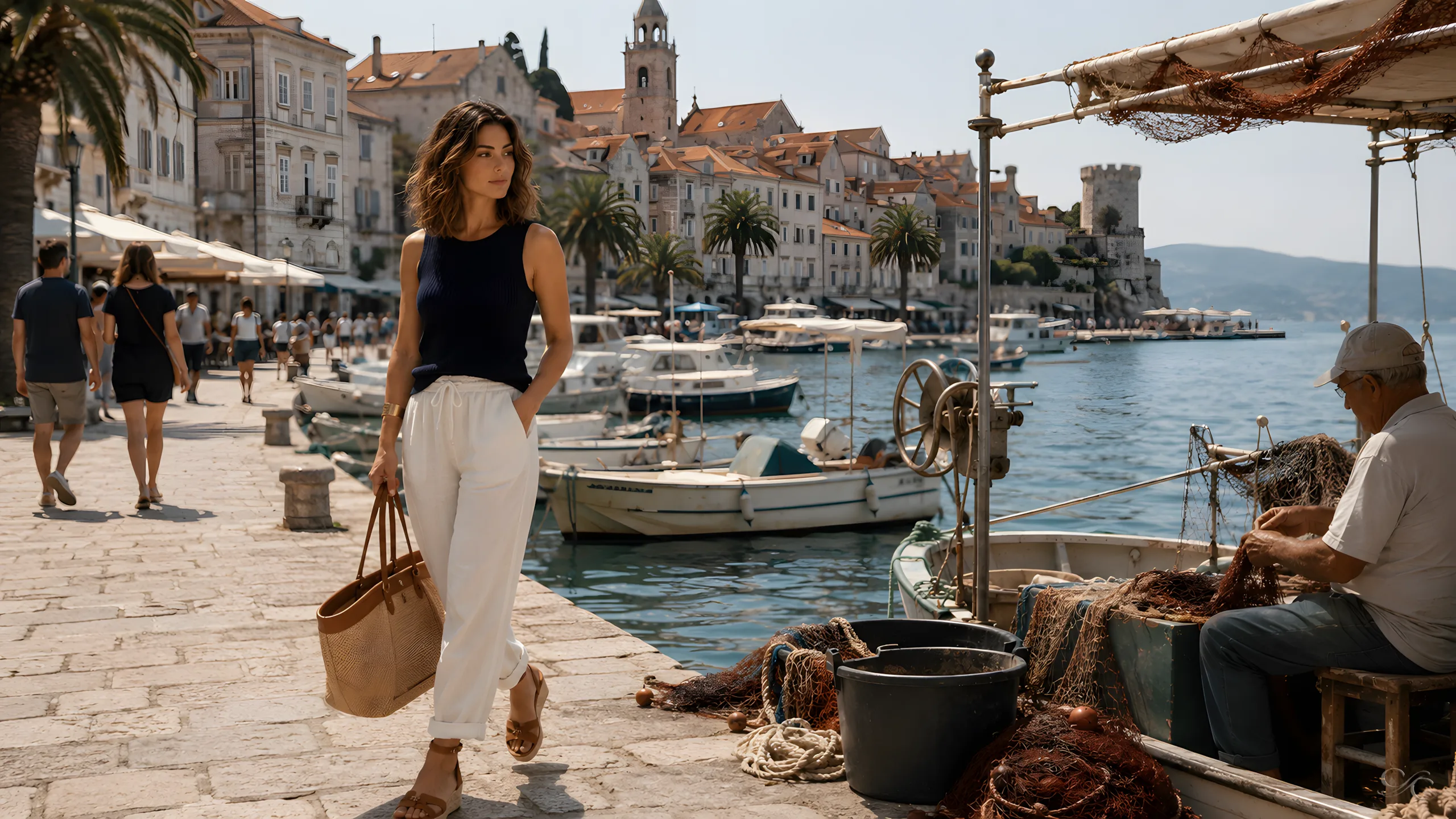
I arrived in Korčula by ferry, which was the right way to meet the island. Provence had been a journey of vineyards, village markets, and long Mediterranean lunches. The Adriatic promised something different: islands connected by ferries, white wines shaped by limestone soils, and towns that still revolved around their harbors. The old town sits on a small peninsula, its limestone lanes packed tightly above the harbor, with medieval streets designed to keep the town cool.
Before checking into anything or pretending to have a plan, I walked the waterfront. Fishermen worked beside their boats, café regulars lingered over coffee, and visitors studied lunch menus a little too early. I was one of them.
Korčula gave the journey a lively beginning: stone lanes, white wine, church towers, and the steady movement of boats. Mljet, which came next, was greener and more spacious, with saltwater lakes, pine paths, and fewer voices. I liked that this part of the Dalmatian coast introduced itself in stages.
→ Ask Camille for what to wear, where to stay, or how to shape your days 🤍
Korčula, afternoon arrival and exploration
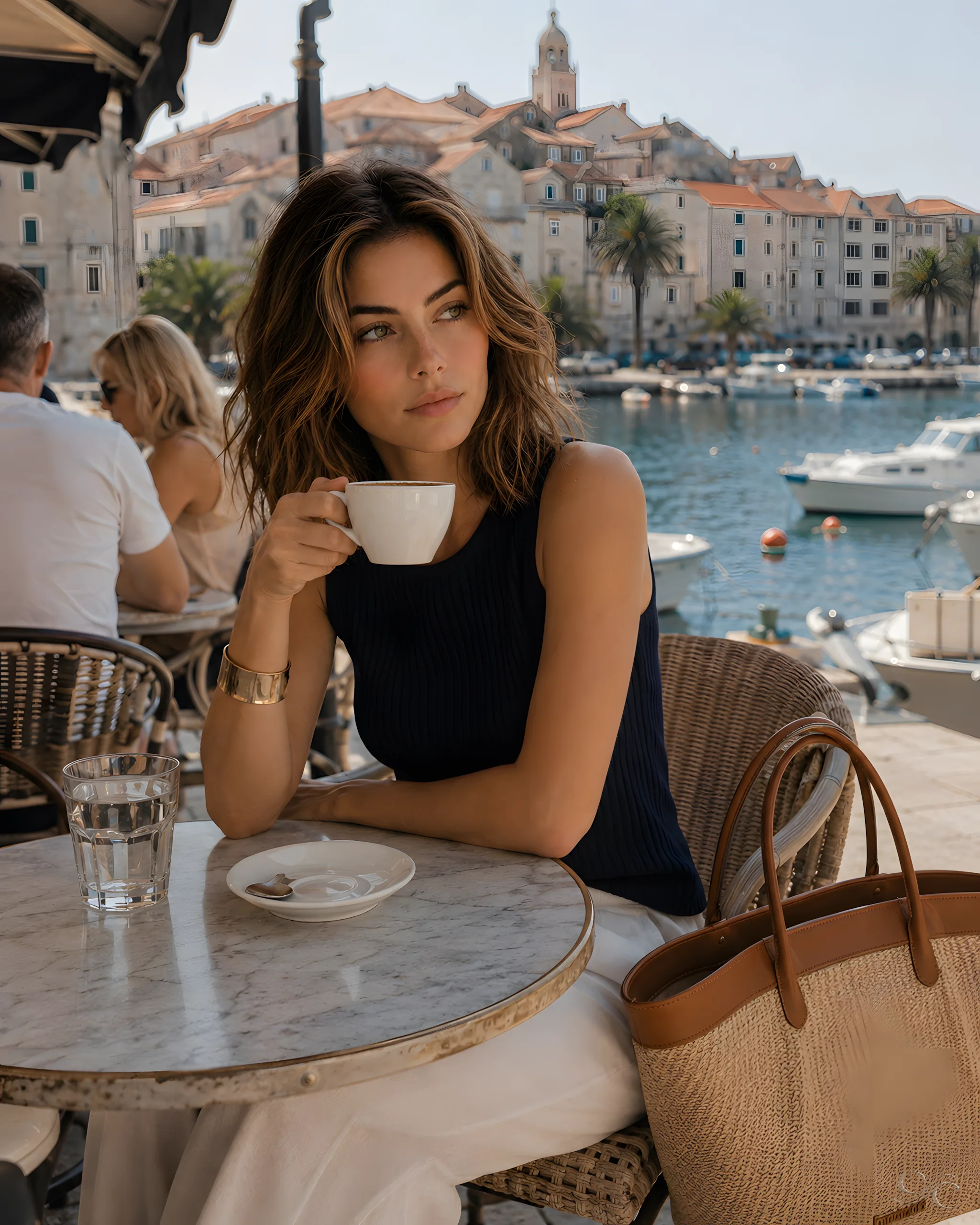

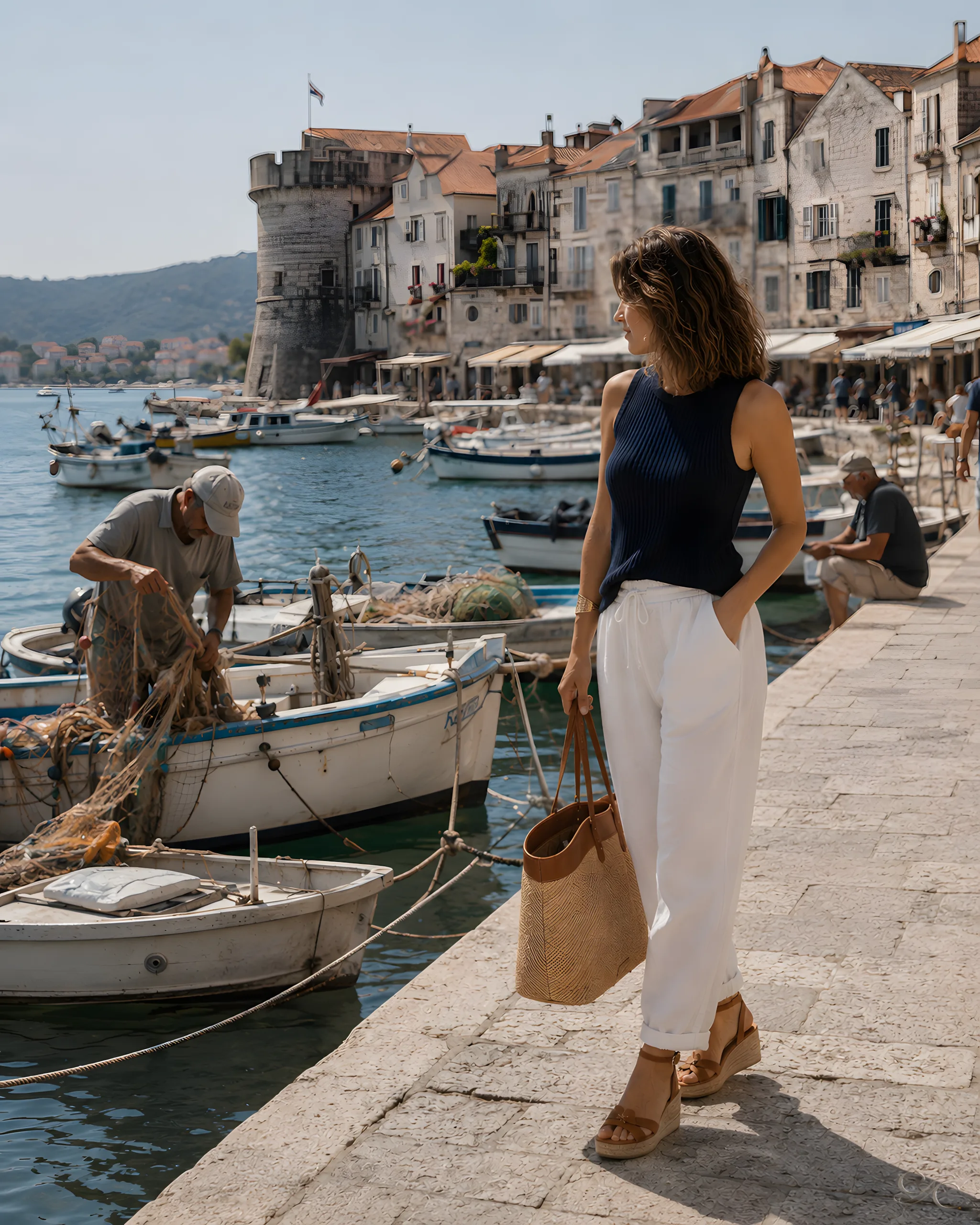
By the time I sat down at a harbor café, I had already made the classic arrival mistake: walked too far with too much enthusiasm and not enough water. A waiter brought coffee and sparkling mineral water, and I watched the quay settle into the afternoon. Ferry passengers disappeared into guesthouses, fishermen checked lines, and a group of local men debated something that sounded important and probably was not.
From the water, Korčula’s shape is easy to read: fortified walls, tiled roofs, a compact old town facing the harbor. Inside the walls, the lanes narrowed and cooled. There are Venetian traces everywhere, but the town does not feel like a museum. Laundry hung above the stones. Kitchen doors opened for dinner prep. Bright flowers filled a window box with total confidence.
I kept stopping for small things: a carved balcony, a doorway worn smooth, the smell of grilled fish drifting from somewhere nearby. It was a good first hour on the island: coffee, salt air, old stone, and the realization that I did not need to rush toward the next place.
Lumbarda, A day at the vineyard
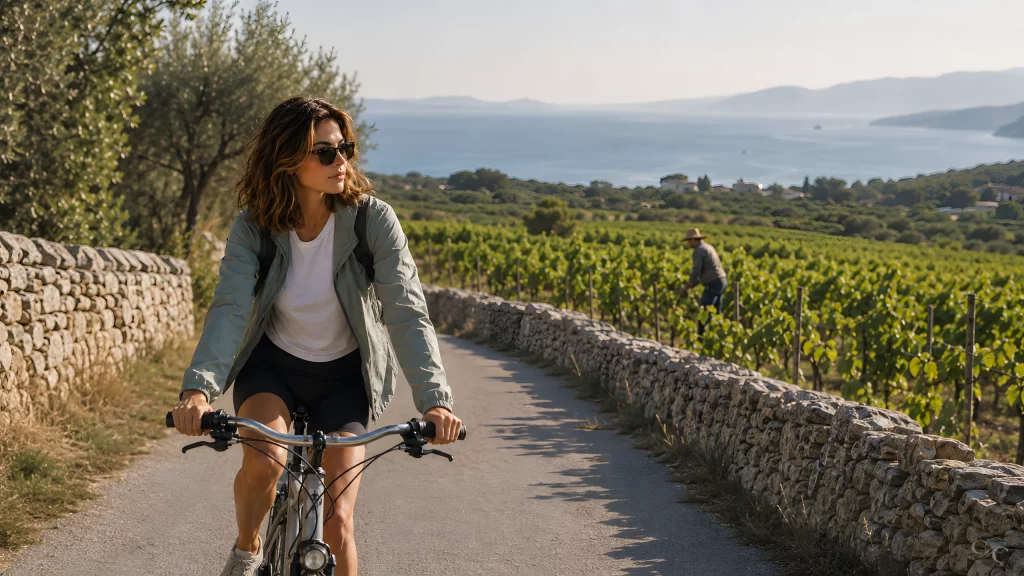
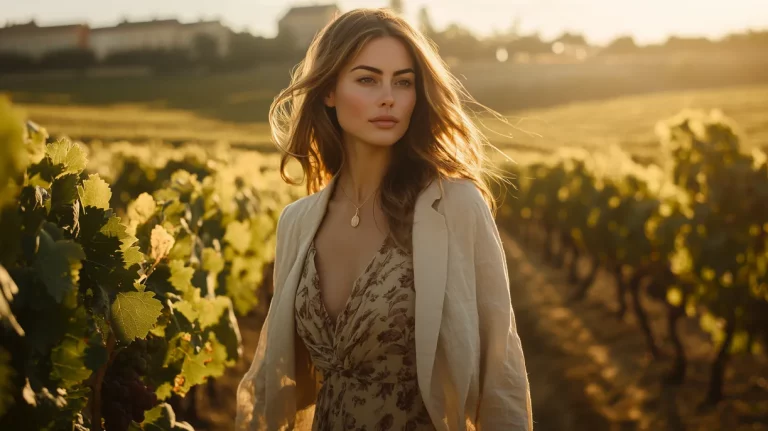
I left Korčula town early and cycled east toward Lumbarda before the lanes filled with scooters and beach bags. My only plan was to stay ahead of the heat. The road soon narrowed into vineyard country: low limestone walls, olive trees, vegetable plots, and rows of vines stretching across sandy soil toward flashes of sea.
This part of Korčula is known for Grk, a white grape grown mainly around Lumbarda and difficult to find elsewhere. The landscape did not feel staged or decorative. A man in a faded cap lifted one hand from the vines to say good morning; another was loading crates near a stone shed. The walls, vines, and sea explained more than any tasting note could. Wine here belongs to the working landscape, not just the lunch table.
I kept riding, happily unhurried, with Claire waiting somewhere later in the morning.
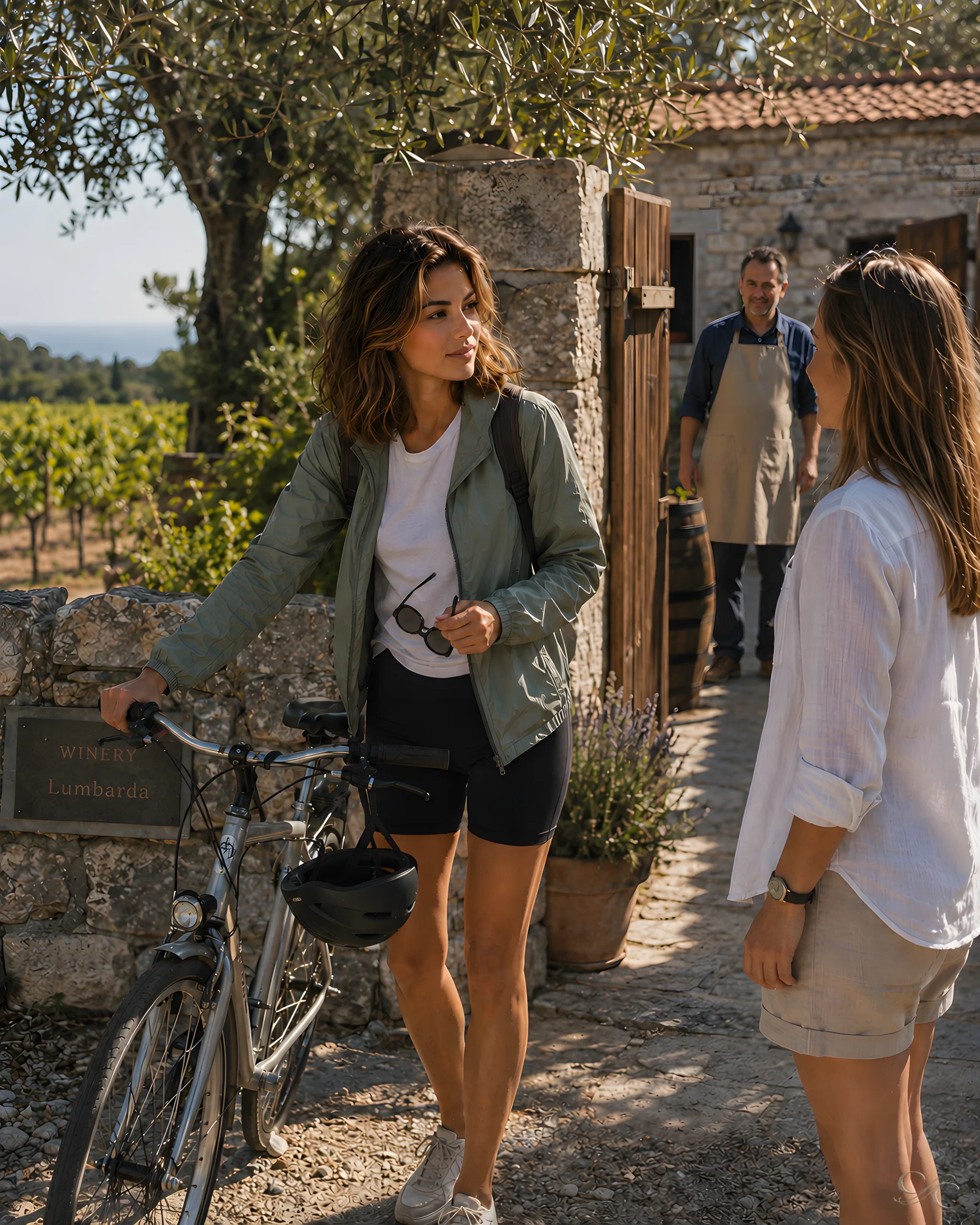

I reached the winery by bicycle, feeling less elegant than I had imagined when I rented the bike. Claire was already waiting in the shade of an olive tree, looking far more composed than I felt after treating a small hill as a personal trial.
We left the bikes by the entrance and followed the winemaker into a courtyard that was clearly a place of work: crates near a doorway, barrels against a wall, herbs in pots, dust on the stones. Inside the cellar, the temperature dropped at once. He poured from the barrel and spoke about Grk, pale and mineral, tied closely to Lumbarda’s sandy soils.
He also explained one of my favorite details: Grk has female flowers and needs help with pollination, so other vines, often Plavac Mali, are planted nearby. Wine, like people, is rarely as independent as it claims.
We tasted Pošip too, another Korčula grape, more associated with Čara and Smokvica inland. Tasting them together made the island feel less like one postcard coastline and more like a small map of soils, winds, families, and habits.
Want help refining this for your trip? Ask Camille 🤍
Vineyard then lunch
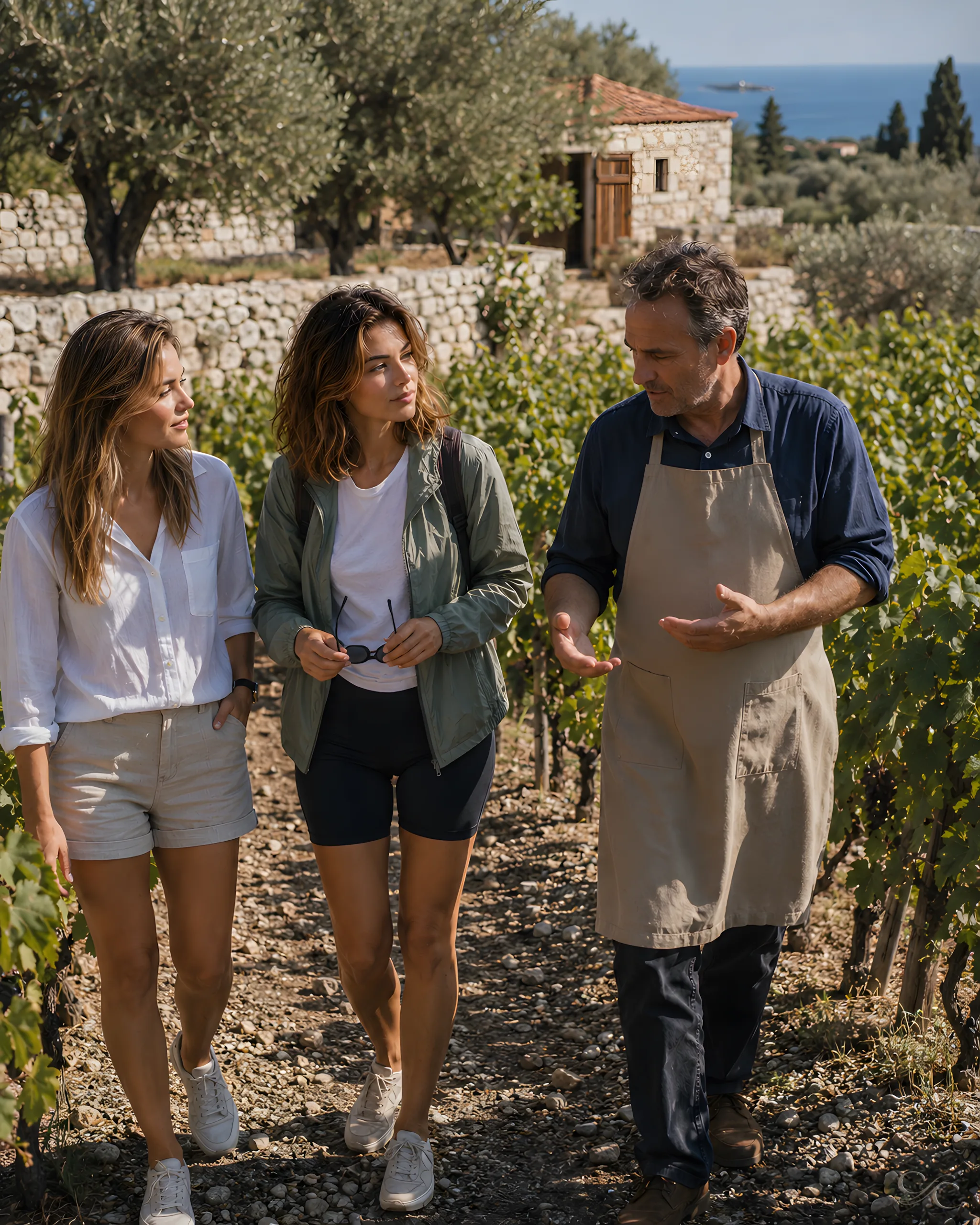
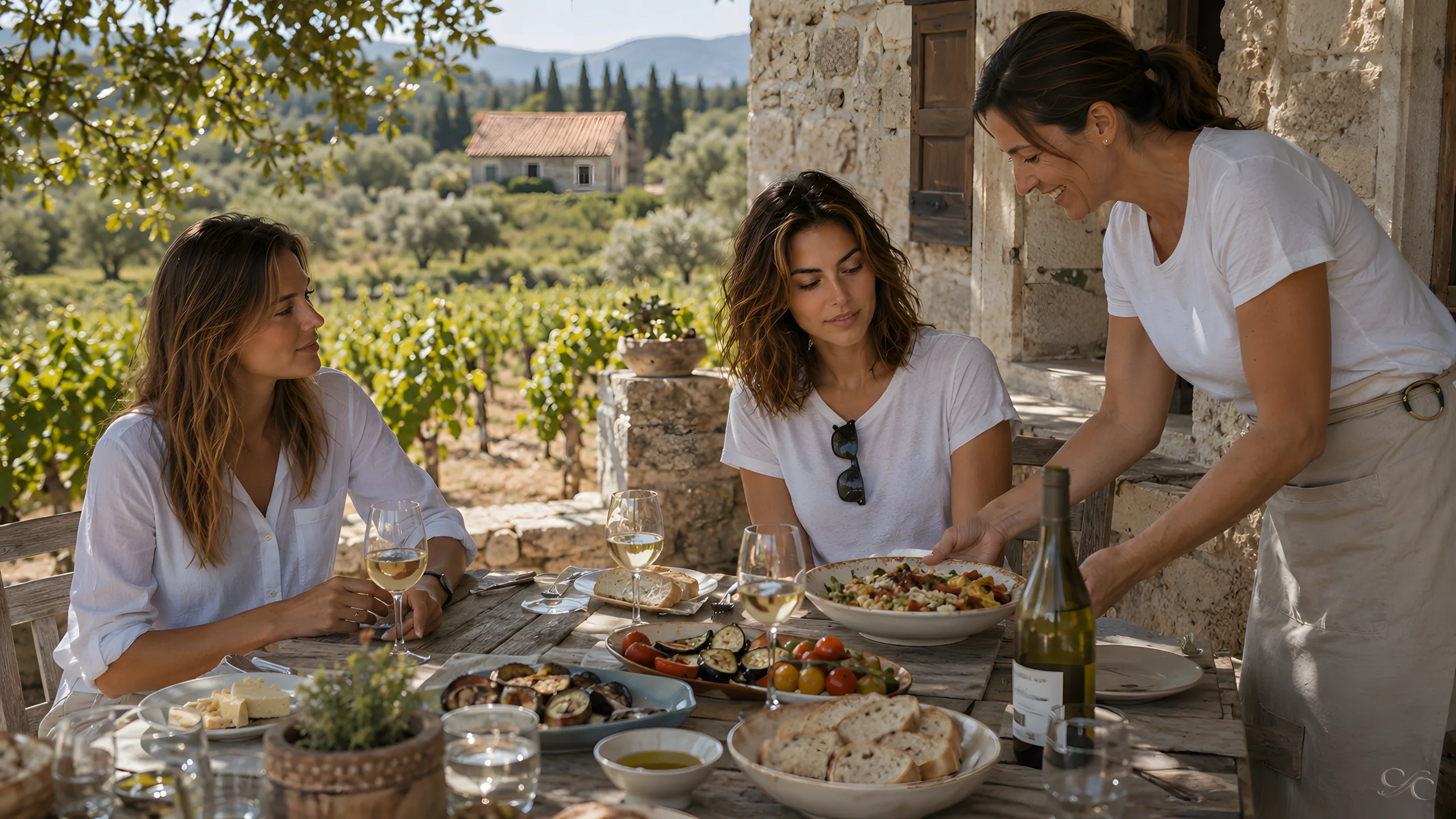
Our host did not send us back to the road with a bottle and a wave. He picked up his hat, called to someone inside, and led Claire and me into the vineyard behind the family winery.
Among the vines, Grk became easier to understand. In the glass it was crisp and slightly salty; in the vineyard it was rare, stubborn, and very local. Our host pointed out older vines, the exposure to sea wind, and the small size of family plots. Island agriculture is not romantic in the abstract. Water, labor, transport, weather, and the cost of getting bottles off the island all matter.
Lunch appeared on the shaded patio as if this had been the plan all along: bread, olive oil, cheese, tomatoes, grilled vegetables, and another chilled glass of Grk. No performance, no grand speech. Just a family winery doing what island families often do well: feeding you until your original schedule becomes embarrassing.
We stayed longer than intended, defeated by the wine, the shade, and the calm competence of Lumbarda.
🍷 Wines to Try on the Dalmation Coast
Wine on Korčula is part of the island’s geography. Vines grow in sandy pockets near Lumbarda, on stonier inland slopes, and across the channel on Pelješac, where the reds get more sun and muscle. Dalmatian wine is best with food in front of you: grilled fish, octopus salad, sheep cheese, and bread still warm enough to forgive bad decisions.
Mljet State Park
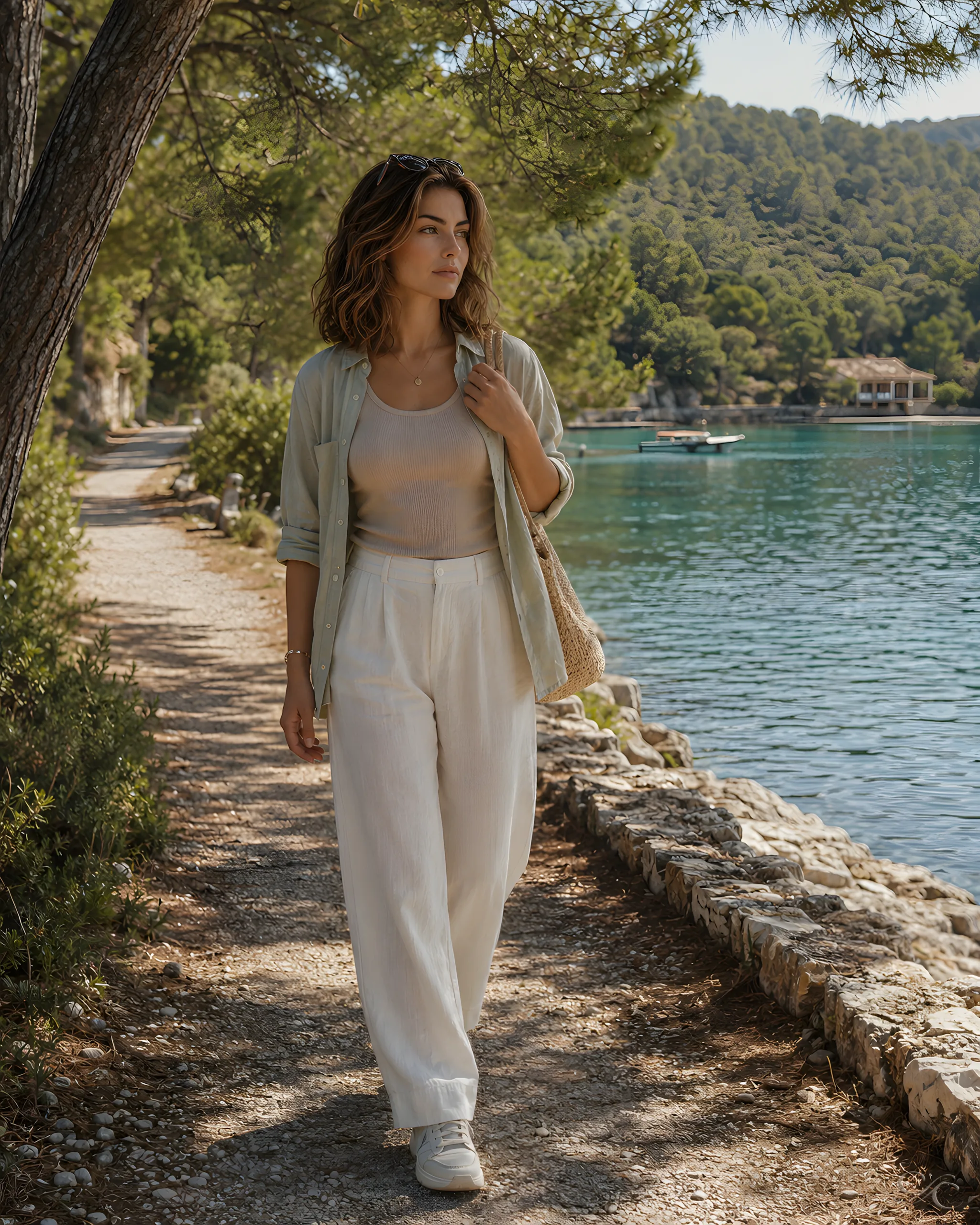
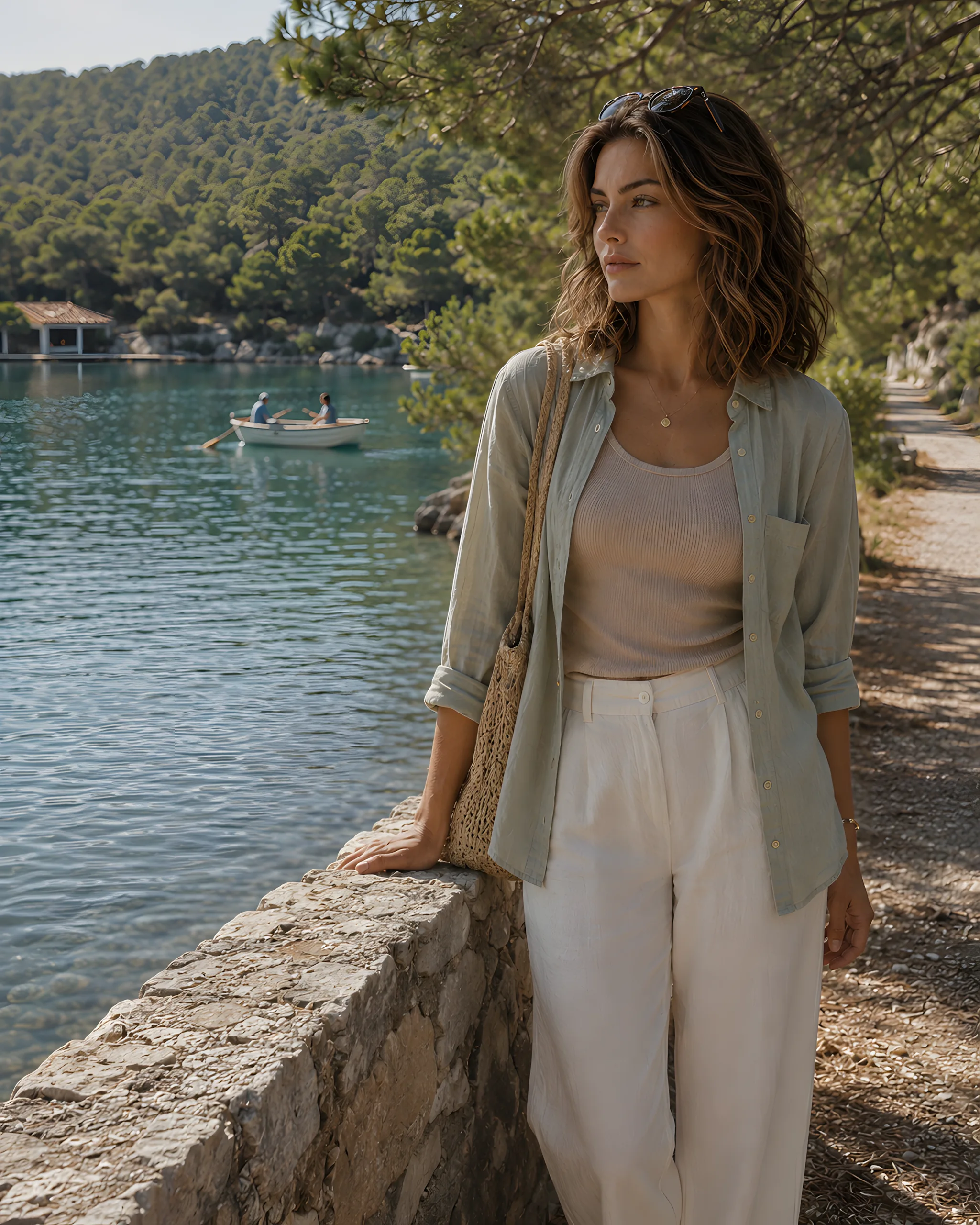
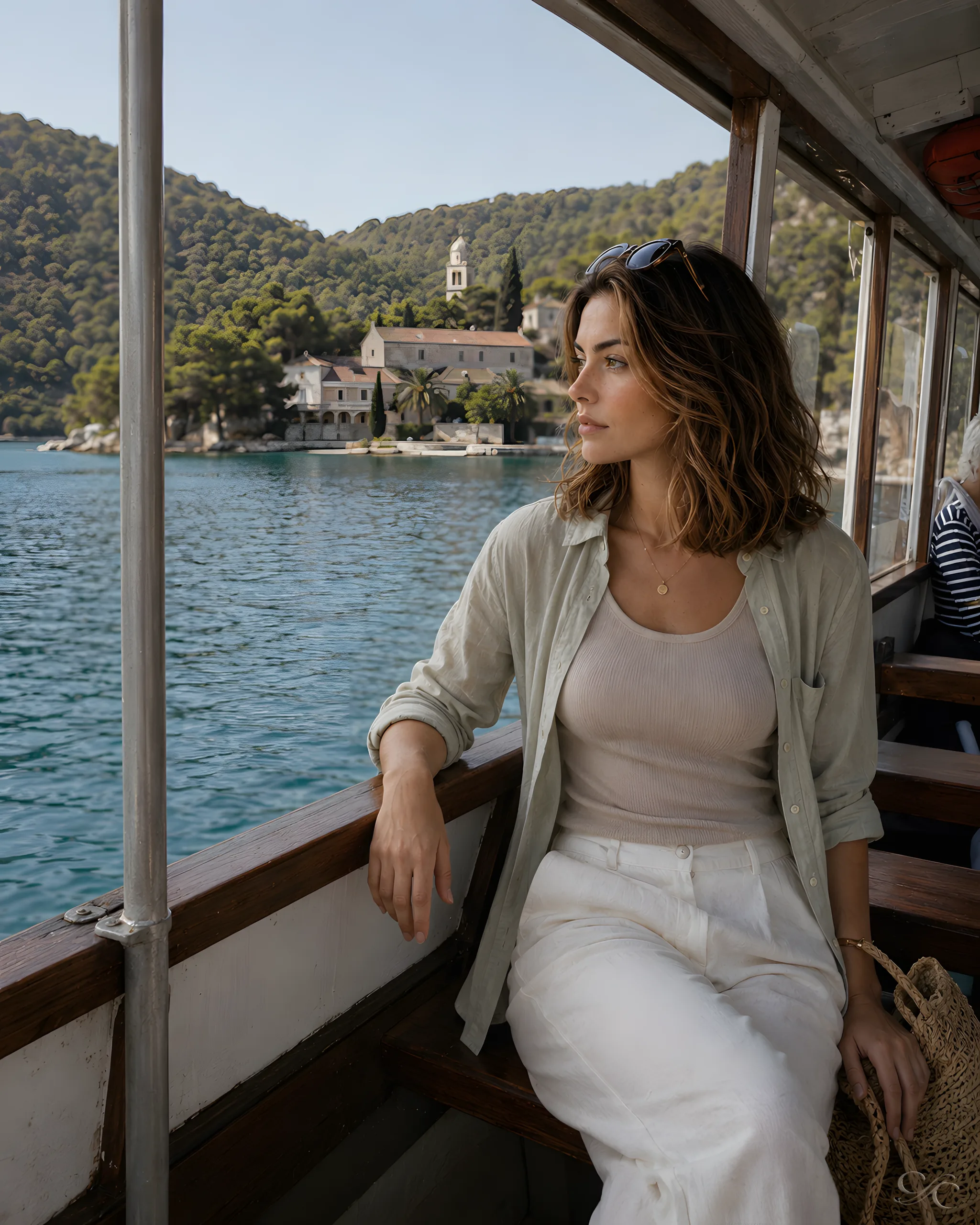
Leaving Korčula’s harbor cafés and Lumbarda’s vineyards, Mljet felt like someone had lowered the volume. The boat crossing was short, but the change was immediate: more pine resin, fewer voices, bicycles leaning against low stone walls, and clear green water in every direction.
Much of western Mljet is protected as a national park, and the path beside the saltwater lakes was a good introduction. They look enclosed and still, but narrow channels connect them to the sea, which explains the faint marine smell under the trees.
I walked with no ambitious plan, passing a couple studying a map very seriously and a boatman calling out departure times with the authority of a man who knows everyone will ask twice. Later I crossed to St. Mary’s Islet, where the old Benedictine monastery sits among the pines. The trip takes only a few minutes, but it shifts the day completely. Korčula had been stone, wine, and conversation. Mljet asked for shade, water, and better shoes.
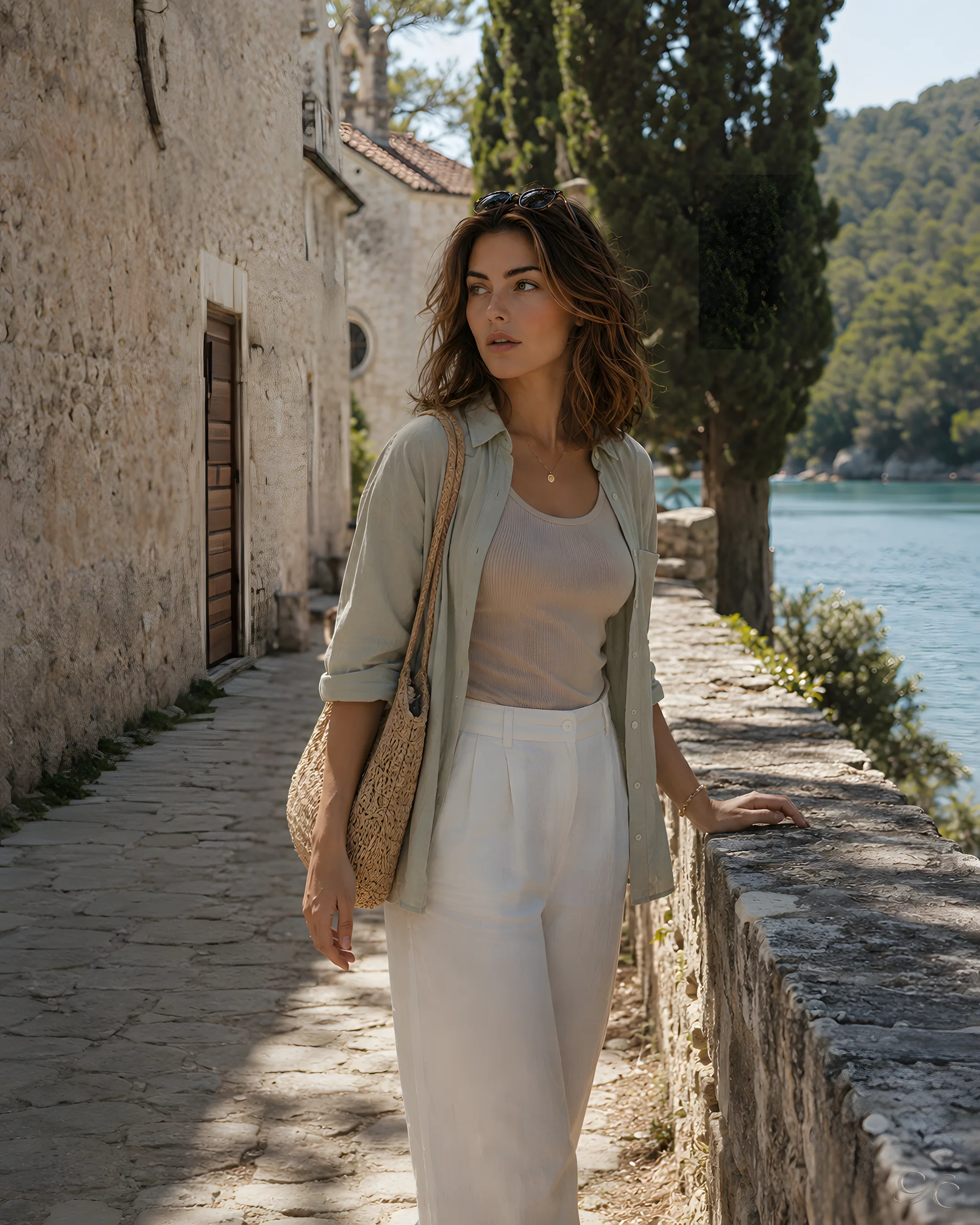
On St. Mary’s Islet, I followed the monastery path, partly because the stones were uneven and partly because Mljet discourages rushing. The Benedictines built here in the 12th century, on an islet inside Veliko Jezero, one of the island’s two saltwater lakes. Cypress shade, limestone walls, sandals on stone: for a while, that was enough.
Then a cheerful group arrived behind me, loud enough to wake any monk still spiritually on duty, and I slipped toward the outer path by the water.
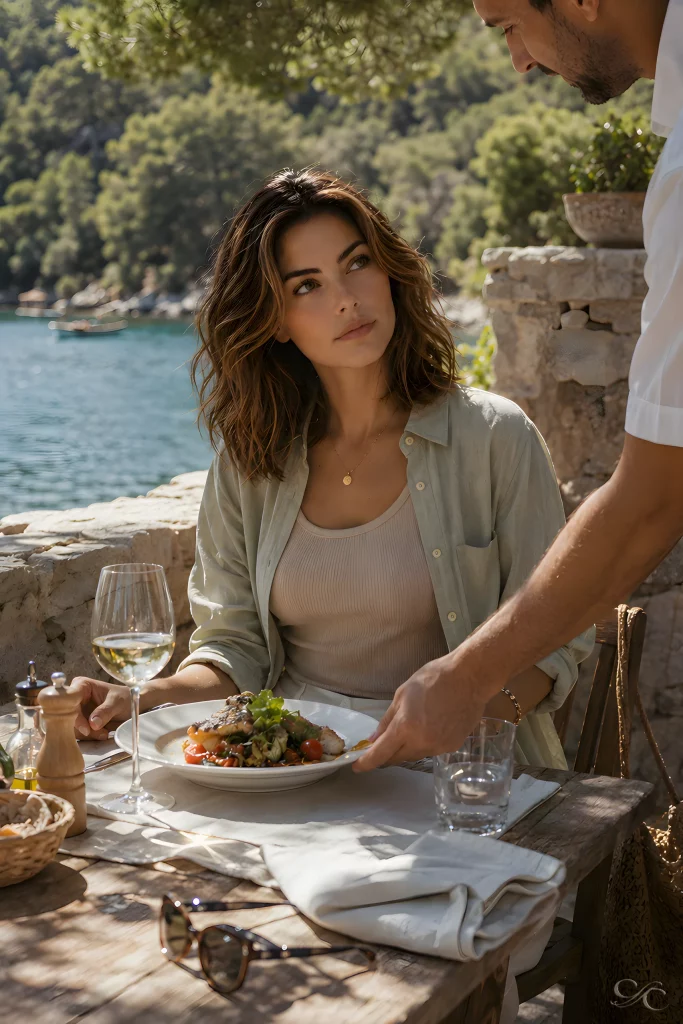
Lunch was simple and exactly right for the place. I sat at a terrace near the lake with white wine, bread, and fish cooked without fuss. The server moved between tables as if everyone had agreed to be patient. Around us, people came in from swims, ordered coffee, asked about the next boat, and settled into the useful laziness of an island afternoon.
I checked the return time, then pretended not to check it again.
Korčula, Day of Departure
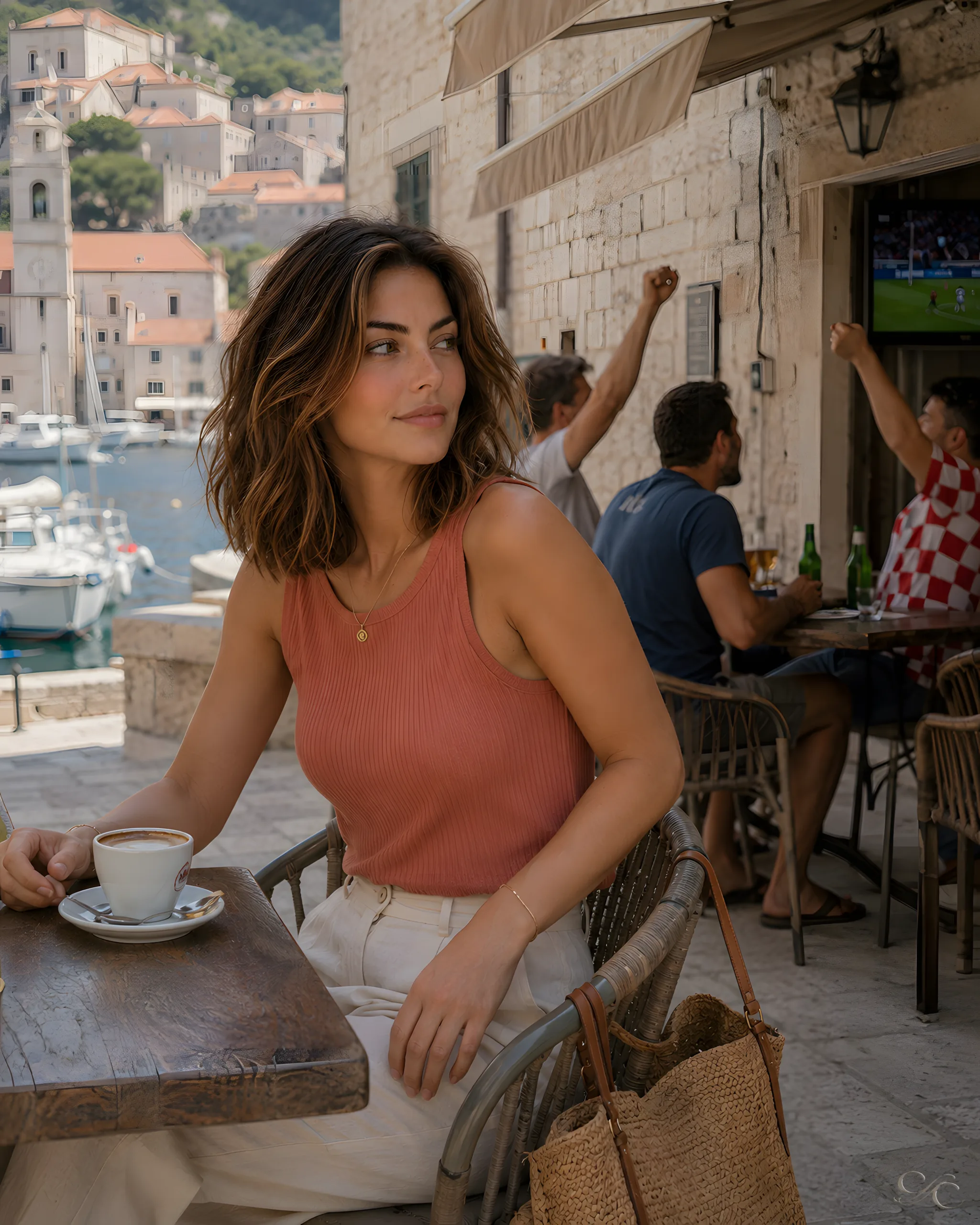
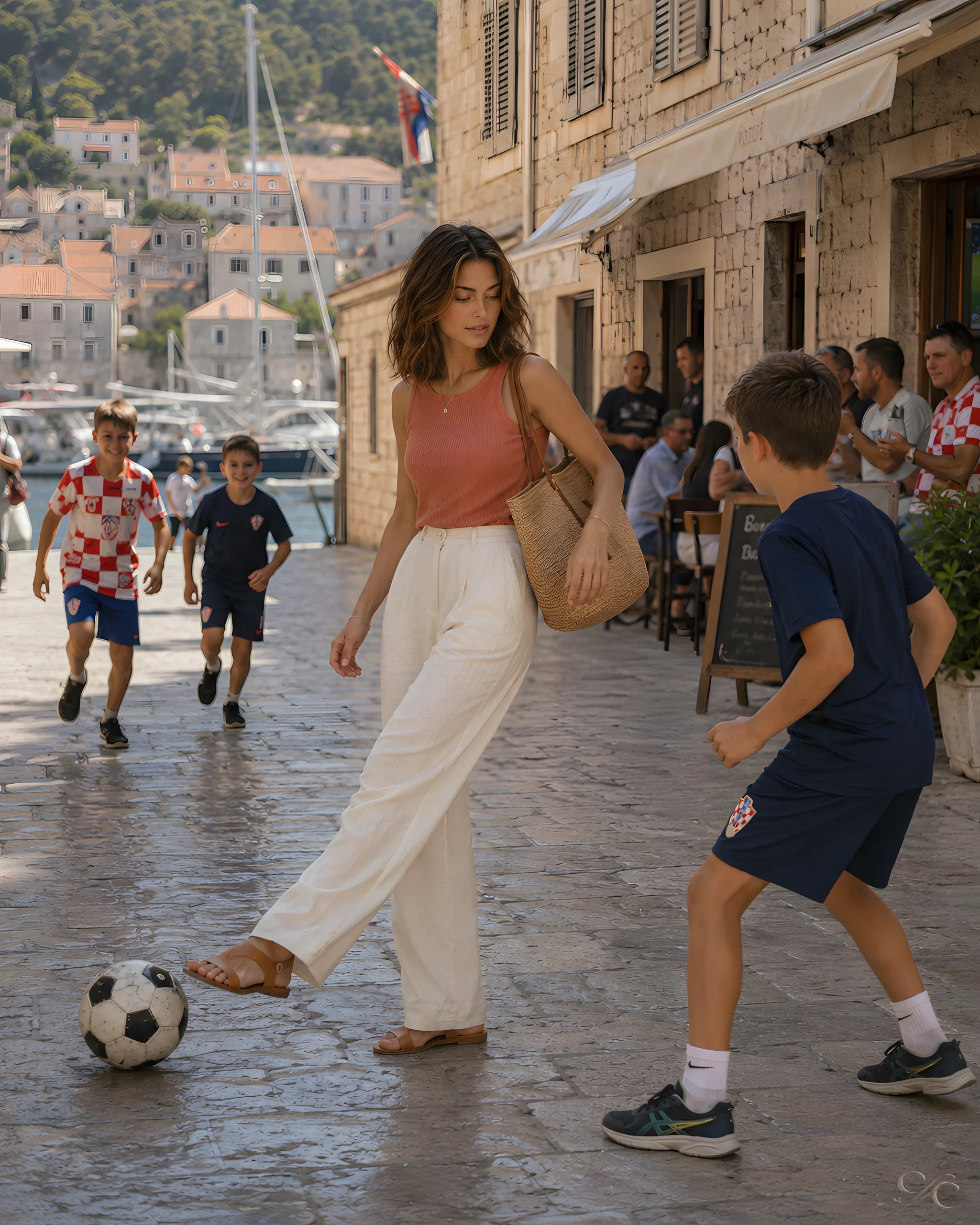
On my last morning in Korčula, I took one more loop through the old town before stopping for espresso near the harbor. The cafés here are not just scenery for visitors. Men read the news in the shade, servers carried trays across the stone, boat crews came and went, and everyone seemed to know who had already had a coffee and who was still waiting.
Korčula is often described through its medieval walls and its possible connection to Marco Polo. The old town is beautiful, yes, but it also holds errands, deliveries, footballs, wet swimsuits, and dinner decisions.
Near the waterfront, a group of boys were playing football in the lane while adults lingered outside a café, still discussing Croatia’s match. The ball rolled toward me, one boy looked up, and for a second I was recruited. I passed it back with more enthusiasm than skill, which seemed acceptable.
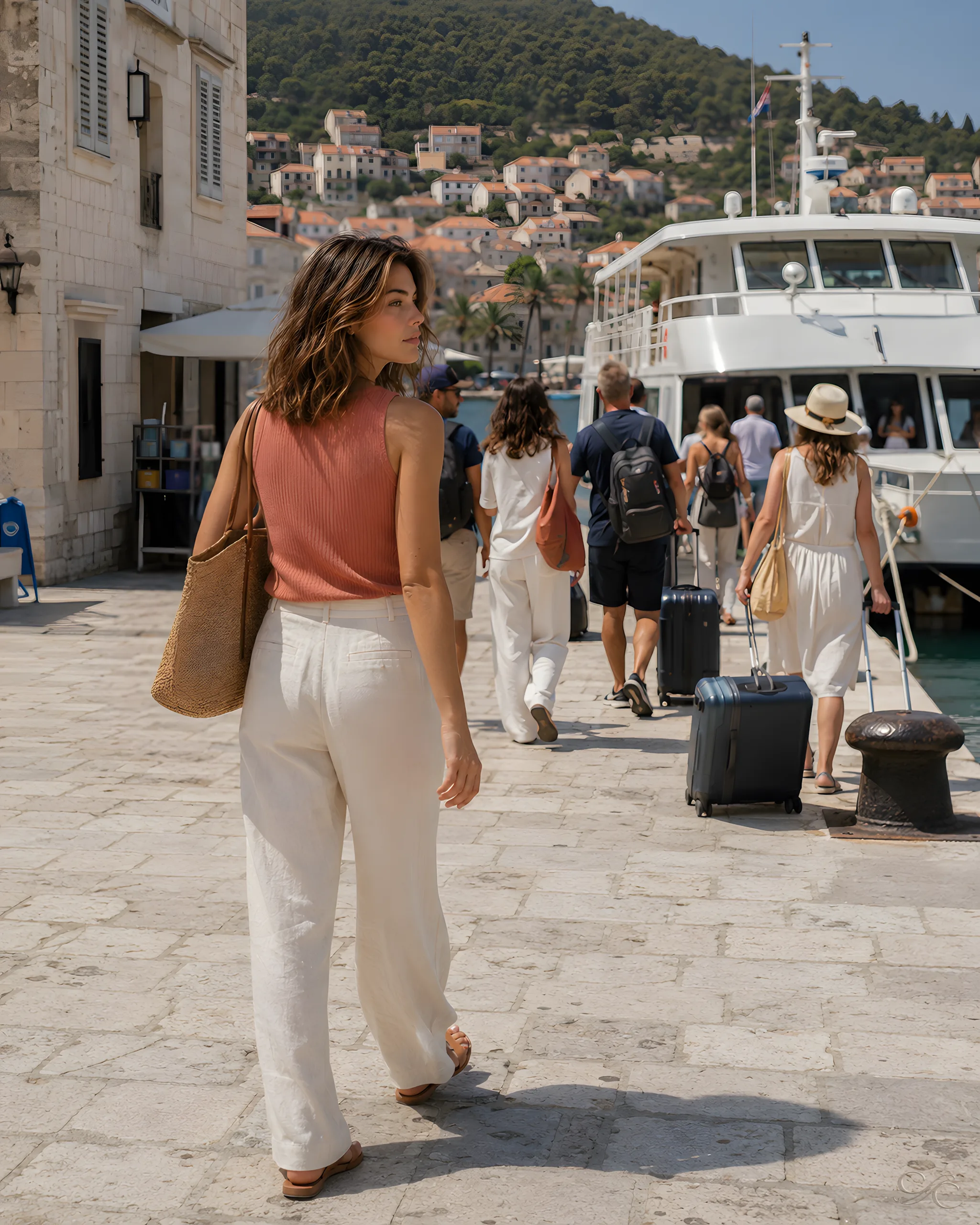
At the quay, luggage had started gathering for the ferry. Korčula did not feel finished, but the timetable was not interested in my feelings.
My Notes
📘 The Journey Continues
🧭 Every coastline has its own way of introducing itself.
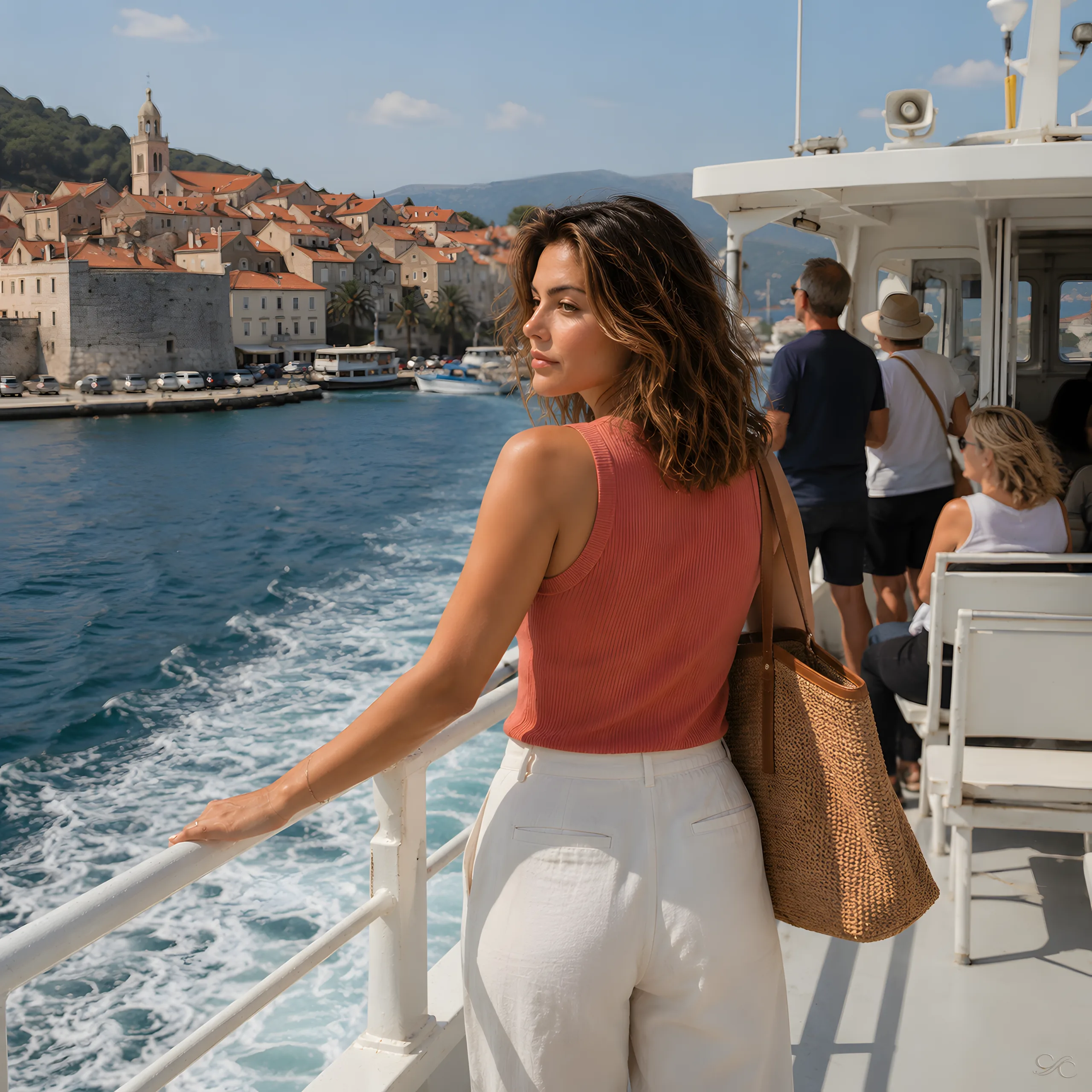
Some are best understood from the road. Others reveal themselves by train. Along Croatia’s Dalmatian Coast, the ferry became part of the journey rather than simply a way to reach the next destination.
Korčula welcomed me with lively harbors, medieval stone streets, local wines, and long evenings that seemed to stretch naturally toward dinner. Mljet answered with pine forests, saltwater lakes, quiet monastery paths, and the gentle reminder that not every beautiful place asks you to keep moving.
Those contrasts stayed with me more than any single viewpoint.
If you’re planning your own journey through the Dalmatian islands, leave room for the unexpected conversation, the extra swim, the winery that turns into lunch, or the ferry that encourages you to slow down instead of hurry.
The Adriatic rewards curiosity far more than tight itineraries. Next is change of pace as we are heading inland to Slovenia. We will be in Goriška Brda in the next couple of weeks. Stay tuned.
If you’re planning a trip to Croatia, Slovenia, or Italy’s northeastern wine regions, 💬 chat with me for ideas on timing, wine, where to stay, and how to shape the journey naturally.
À bientôt,
Camille ✨