🍂 Autumn Moments in Avignon — sunlight, stone, and softly tailored days
Medieval grandeur, Provençal light, and easy autumn style in one of France’s most storied cities
After a gentle route through Aix-les-Bains and Chambéry, I continued south into Provence, arriving in Avignon—a city where medieval history and warm southern light blend in a way that feels instantly cinematic.
Avignon has an energy all its own. For nearly 70 years in the 14th century, it was the seat of the papacy, and the legacy is everywhere: the Palais des Papes, the fortified ramparts, and the grand squares that still carry echoes of that golden age. But beyond the history, Avignon is surprisingly soft—quiet side streets, sunlit stone, and cafés where time seems to slow down in the most French way possible.
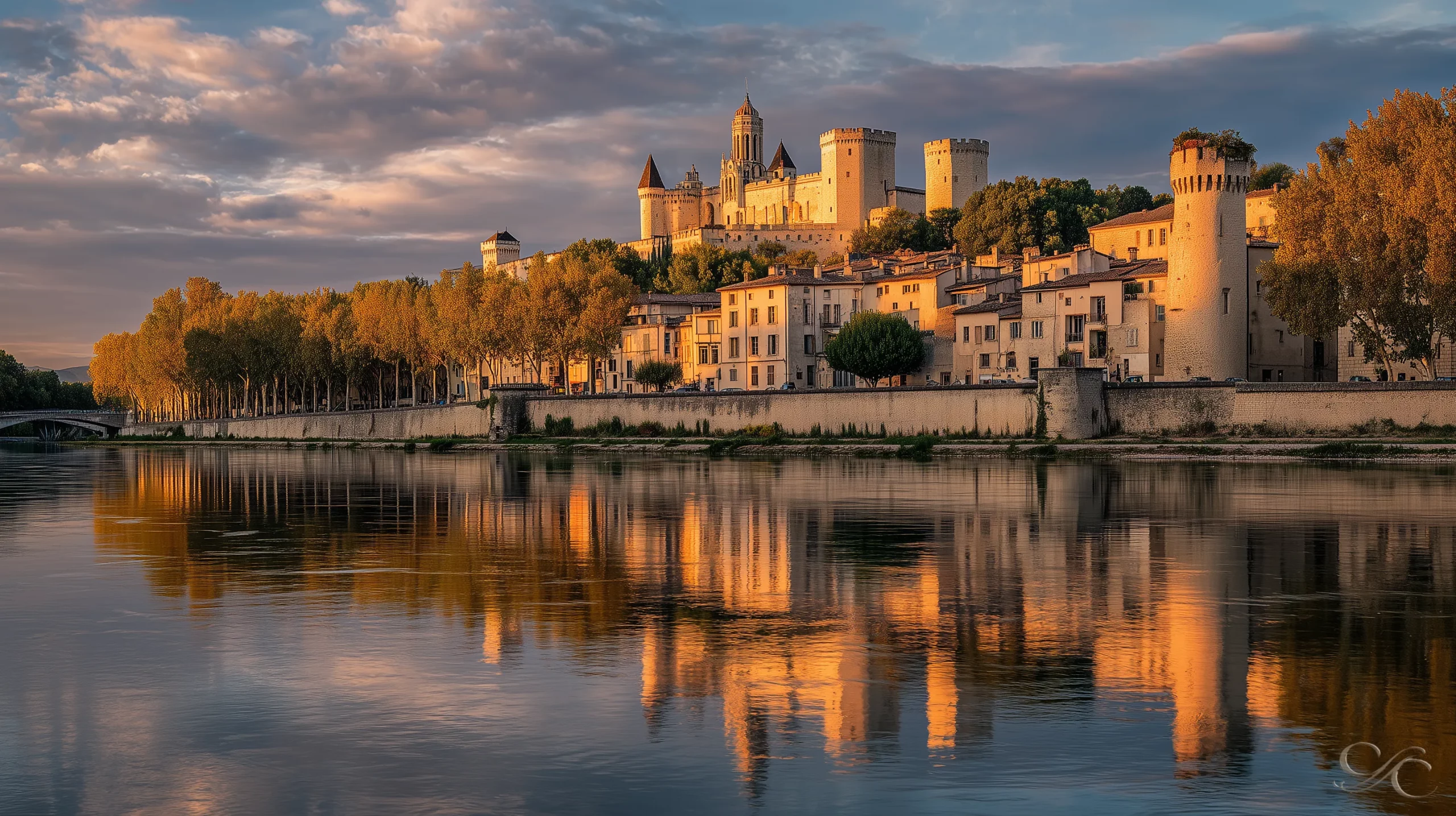
Autumn suits the city beautifully. The Rhône glows at sunset, the vineyards just outside town turn gold, and the cooler evenings bring out coats, scarves, and warm layers that make each stroll feel both effortless and elegant.
It’s a place where style blends naturally with setting—nothing forced, everything infused with light, texture, and a little Provençal calm.
Arrival in Avignon — warm stone and Provençal light
The train rolled into Gare d’Avignon Centre just as the last hour of sun was brushing the platforms with that soft southern glow Provence is known for. Stepping off the train, I could immediately feel the shift in climate—warmer, drier air, and an ochre palette that replaces the Alpine greens of Savoie.
Avignon wears its history openly. Just beyond the station, the 14th-century ramparts circle the city like a protective ribbon, still largely intact after seven centuries. Passing through the gates feels like stepping into another era, where wide boulevards meet narrow medieval lanes lined with limestone cafés and bookshops.
My outfit mirrored the transition: layered neutrals for travel, but lighter fabrics ready for the milder Provençal evening.

If you’re visiting:
Over the Rhône — bridges, wind, and the city’s medieval skyline

The next morning, I crossed the Pont Édouard-Daladier, one of the modern bridges spanning the Rhône. From the midway point, Avignon unfolds in a perfect tableau: pale stone facades, the cathedral, and the imposing silhouette of the Palais des Papes rising above the trees.
Historically, the Rhône shaped everything here. For centuries, it was both a trade route and a natural boundary, which is why Avignon became a fortified papal stronghold in the 1300s. Even today, you can feel how the river frames the city’s rhythm—calm in the morning, golden in the evening.
With the breeze picking up, I walked along the riverside path, letting the wind catch my scarf and the soft autumn light reflect across the water.
What to look for:
Café at Place de l’Horloge — terraces, theater, and morning rituals
Avignon’s café culture feels especially vibrant in autumn, when the mornings are warm and the terraces fill with locals having their first espresso. I stopped at a café on Place de l’Horloge, the city’s central square framed by plane trees, Belle Époque architecture, and the historic Opéra Grand Avignon.
The square has been the city’s social heart since medieval times—first as a marketplace, later as a gathering spot for festivals and street performers. Today, it’s perfect for a slow start: croissants, sunlight, and the hum of the city waking up.

If you’re visiting:
Stone Arcades — medieval passages and the rhythm of old streets

Just a few minutes from the square, the streets narrow into a network of stone archways and passageways, many dating back to the 14th and 15th centuries. These were once the walkways of merchants, guilds, and pilgrims arriving in the city during Avignon’s papal era.
Walking through them today feels intimate and cinematic: filtered light, worn steps, and a sense of quiet that’s rare in most historic centers. I filmed a few moments here between stone columns and arches, letting the soft textures of old limestone set the tone.
Don’t miss:
Along the Rhône — the Pont Saint-Bénézet
No visit to Avignon is complete without walking near the legendary Pont Saint-Bénézet, the famous bridge that famously stops halfway across the Rhône. Built in the 12th century, collapsed several times, and never fully repaired, it has become one of France’s most iconic silhouettes.
Standing along the riverbank, the sun turning the stone warm gold, the view blends history and landscape in a way few cities manage. The partial bridge feels symbolic—beautiful, weathered, and perfectly imperfect.

If you’re visiting:
Wine in the Old Town — cellars, courtyards, and Provençal evenings

As the evening set in, I found a small wine bar tucked behind Rue de la Peyrolerie, not far from the palace. Avignon isn’t a vineyard city like Beaujolais, but it sits at the gateway to the southern Rhône—home to Châteauneuf-du-Pape, Gigondas, Tavel, and more.
Many cellars in the old town offer tastings of these regional wines. Inside, the mood shifts: warm stone walls, candlelight, and deep red cuvées that taste of herbs, sun, and the Provençal earth.
Where to go:
Strolling through the Old Town — cobblestones, layers, and golden evenings
By twilight, Avignon’s streets take on a warm, amber glow. Lanterns reflect off cobblestones, the palace towers rise dramatically above the rooftops, and the narrow lanes feel like a natural runway for autumn layers—coats, scarves, soft knits, and tailored trousers.
Each corner reveals texture: carved doorways, aged stone, shuttered windows, and hidden squares that open unexpectedly. It’s a city made for walking slowly.

Fashion notes:
Last Night in Avignon — wrap-up with the crew

For the final evening, I met my small crew near the palace walls. The lights had just come on, giving the old stone a luminous softness that only appears at night. We shared a glass of wine and talked through the next leg of the journey—Avignon to Arles and beyond.
Travel always feels different in cities like this: layered with history, shaped by light, and made for lingering.
Train Journey from Avignon to Strasbourg — crossing France from south to north
Traveling from Avignon to Strasbourg is one of the most scenic long-distance routes in France, stretching roughly 680 km (423 miles) and taking 4h55 to 6h45 on a direct TGV.
The trip cuts diagonally across the country—from the warm, sunlit landscapes of Provence to the timbered villages and vineyard slopes of Alsace—revealing a surprising variety of scenery in just a few hours.
As the train accelerates north, the views transition quickly: olive trees give way to lavender fields, then to the rolling hills of Burgundy, and finally to the forested plains and fairytale villages near the German border.
Below is a curated list of notable regions and landmarks you’ll pass along the way, perfect for adding context to your narrative.
Where the Alps Fade and Provence Begins
📘 The Journey Continues
If you’re enjoying following along from Beaujolais to the Alpine towns, my Autumn Travel & Style Guide arrives this spring. It’s a curated companion of fashion notes, scenic spots, café recommendations, and effortless outfits crafted from these journeys.
Inside you’ll find:
- Simple, chic outfit formulas for autumn trips
- Small, scenic walks in Aix-les-Bains & Chambéry
- Café & terrace picks with the best morning light
- 2-day and 3-day style-forward itineraries
👉 Join my mailing list to be the first to receive it — plus my bonus Autumn Capsule Packing List.
💬 Need suggestions sooner?
I’m always happy to help.
💬 Chat with Camille for quick tips on wineries, driving routes, or where to book tastings. I’ll tailor suggestions to your dates, pace, and style.
À bientôt,
Camille 🍇✨