
🥂 Heading south along the Alsace Wine Route
The Alsace Wine Route isn’t only about postcard villages—it’s a chain of small, distinct places shaped by centuries of viticulture, trade, and the shifting borders of the Rhine plain. On this part of the wine route, as I continue south from Mittelbergheim, the character changes: the vineyards feel closer, the villages tighten around their historic cores, and the practical geography matters even more—because each stop on the wine route rewards a different pace.
This stretch of the wine route moves through Dambach-la-Ville, Châtenois, and Sélestat—three towns within easy driving distance of each other, yet telling very different stories. Together they form a satisfying next chapter: one foot in vineyard culture, one in medieval Alsace, and a final step into a larger town where history is preserved not only in stone, but in manuscripts and memory.
Dambach-la-Ville — a vineyard town with deep Alsatian roots
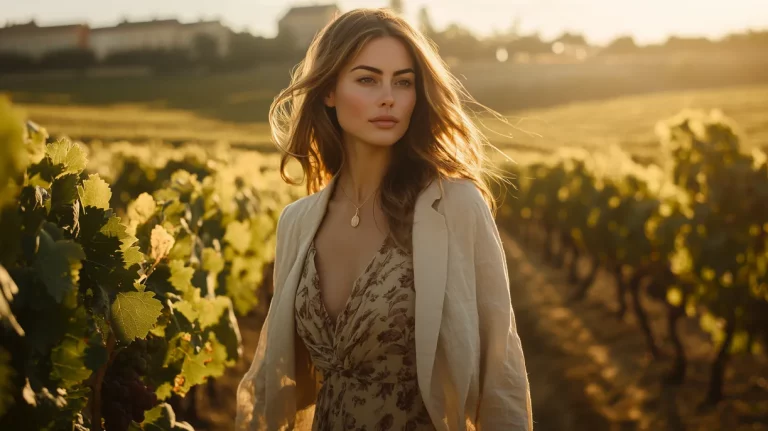
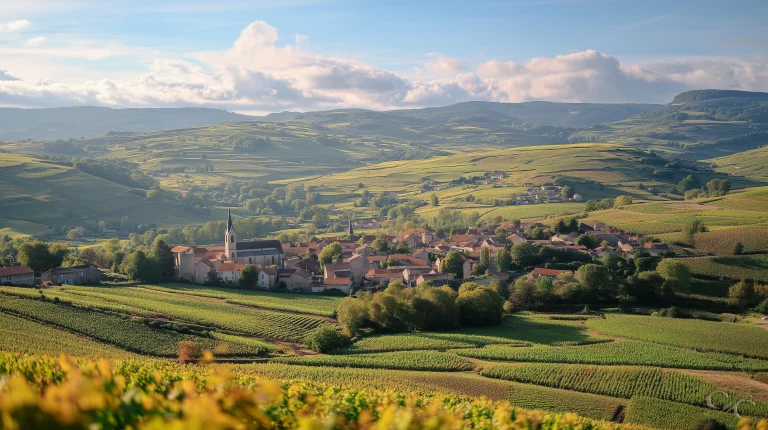
It’s a classic stop on the wine route when you want vineyards, cellars, and a town that still feels working and real. Dambach-la-Ville is the kind of wine town that feels quietly confident—less decorative than the most famous villages, but deeply grounded in the practical reasons the Wine Route exists in the first place: vineyards, cellars, and a long local tradition of making white wine for nearby markets. Its historic center still carries the look of fortified Alsace, and the surrounding slopes remind you that this is agricultural land first and foremost.
Historically, Dambach-la-Ville sits in a landscape that prospered from winegrowing and trade—a pattern repeated across Alsace, where towns rose with the value of the vine and the need to protect it. Even without making a long detour,

you can feel how the route was designed: compact distances, easy village access, and the sense that you could stop for a tasting almost anywhere.
Dambach-la-Ville is a great place to lean into Riesling and Pinot Gris—structured whites that work beautifully with Alsatian cuisine—then add a lighter glass of Pinot Blanc if you’re aiming for something simple and refreshing.
A short visit works well—enough time for a stroll through the old town and one tasting. If you have time to slow down, it’s also an easy place to build a late-morning pause before continuing south.
Wines to know in Dambach-la-Ville
Dambach-la-Ville’s vineyards sit slightly higher and cooler, giving its wines a clear, linear profile with excellent balance.
This is a good stop if you enjoy clarity over power and wines that feel rooted in everyday Alsatian drinking rather than special occasions.
Recommended tastings in and around Dambach-la-Ville
To start the day or midday for later arrivals
Châtenois — a quiet stop on the wine route
Châtenois, which feels more intimate—less about “wine route bustle” and more about the quiet shape of a historic village. Its appeal is the simplicity: a walkable center, older stone details, and the sensation of being close to the vines without being in a tourist funnel. This is where the Wine Route becomes less performative and more lived-in.
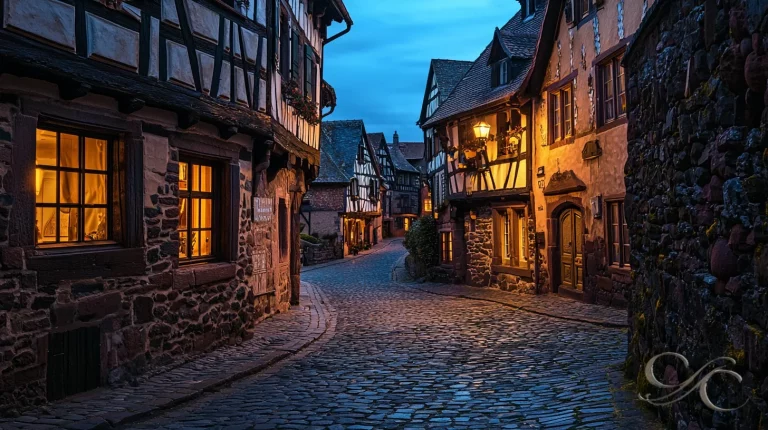
Like many Alsatian villages, Châtenois has a medieval footprint and the kind of architecture that formed around local protection, local trade, and the steady reliability of agriculture. It’s not a place that needs a checklist; it’s a place where the texture—stone walls, narrow lanes, small distances—creates the mood.

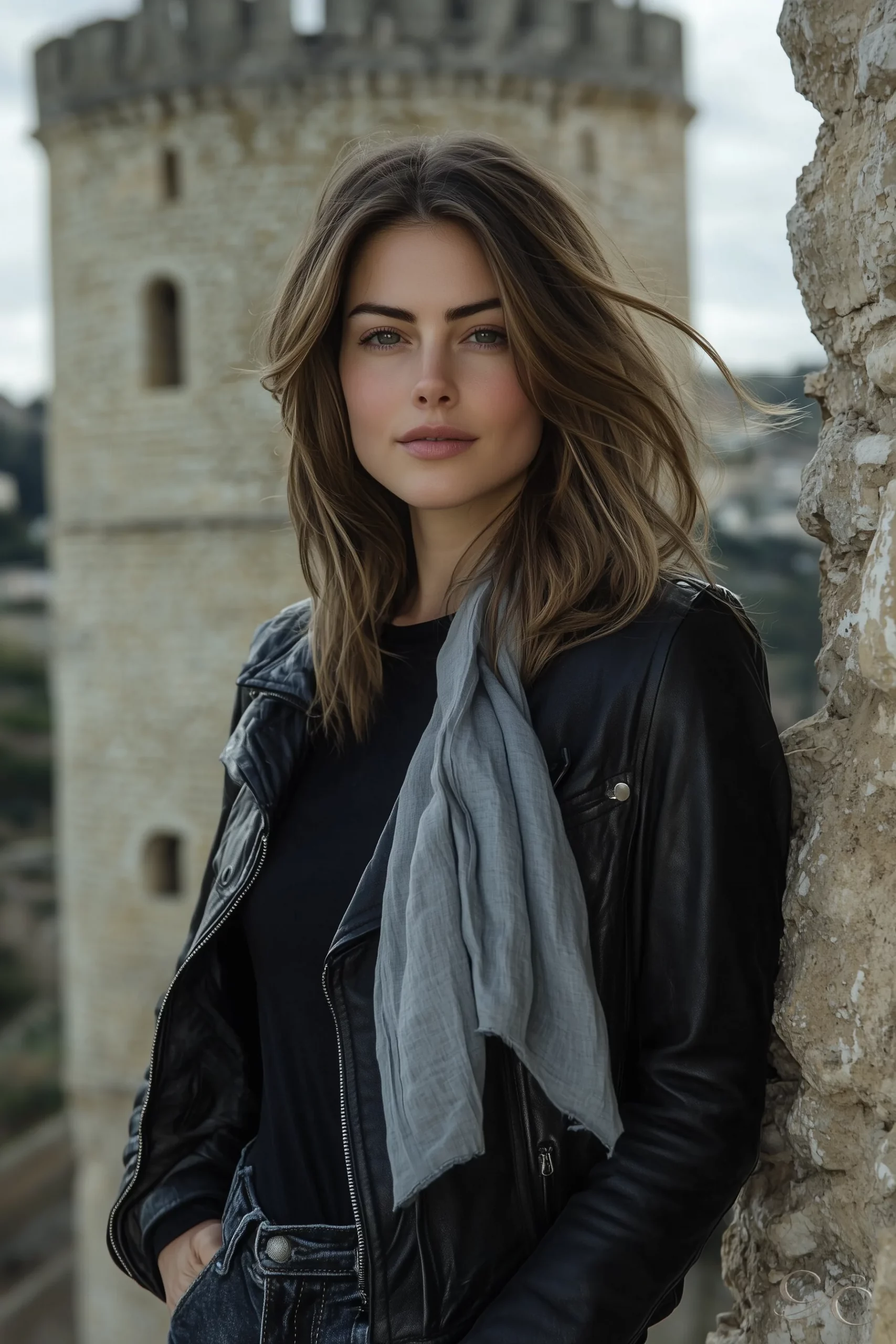
This is a good town to keep your tasting “Alsace-classic” but slightly softer: Pinot Blanc, Muscat, or a gentle Gewürztraminer if you want aromatics and warmth. (Gewürz can be bold—wonderful with spice, cheeses, and richer dishes.)
Historically, Châtenois sat along one of Alsace’s early trade corridors, linking villages between the Rhine plain and the Vosges foothills. Its remaining walls and gates reflect a period when protection mattered more than display. Governed for centuries under the Bishopric of Strasbourg, the village developed steadily but quietly—focused on agriculture rather than expansion. That restraint still defines its scale and atmosphere today.
Wines to know in Châtenois
Châtenois sits quietly between larger wine centers, producing wines that feel softly expressive rather than dramatic.
This is a place to slow down rather than “collect labels.”
Recommended tastings nearby
For something to eat
Sélestat — a larger town where Alsace’s history feels tangible
Sélestat changes the rhythm. It’s larger than the village stops, and with that comes a different kind of richness—more civic history, more layers, and a sense of Alsace as a region that has always been shaped by culture as much as agriculture.
Sélestat is known for its preserved old town and, importantly, for the way it holds onto its intellectual past—part of why it’s often linked with Alsace’s humanist tradition. In a route defined by vineyards and village lanes, Sélestat is a reminder that wine towns were also places of learning, printing, and trade.


It’s the perfect place to let the day turn inward: warm light, window reflections, and that late-afternoon feeling when you stop moving and start noticing.
Today, Andlau is best known for its vineyard-focused approach. This is where visitors begin to see how elevation, slope, and soil composition influence style—particularly in Riesling and Pinot Gris.
In towns like Sélestat, I like to return to a crisp Alsace white—Riesling if you want clarity and structure, Pinot Gris if you want something rounder. If you’re ending the day somewhere cozy, a richer glass makes sense.
Sélestat has long occupied a different role on the Alsace Wine Route—not as a vineyard village, but as a regional center of learning and culture. In the late Middle Ages and Renaissance, it was known for its Latin school and early humanist scholarship, producing thinkers and educators whose influence extended well beyond Alsace. This intellectual tradition is still present in the town’s preserved libraries, churches, and civic buildings.
Wines to know around Sélestat
Sélestat marks a transition point on the wine route. The wines nearby often show more breadth and structure, reflecting varied soils and elevations.
Recommended tastings near Sélestat
For the late afternoon or evening
Sélestat is an ideal place to end the day: more dining options, evening light, and a natural slowing of pace.
For the night, Hôtel Le Colombier is a natural choice—quiet, central, and set within a historic building that mirrors Sélestat’s thoughtful, unhurried pace.
📘 The Journey Continues
This is what I love about the Alsace Wine Route: the driving is effortless, but the character shifts subtly from one village to the next. Dambach-la-Ville brings you back to the agricultural heart of the region—vineyards first, villages second. Châtenois slows everything down, narrowing the focus to stone walls, quiet lanes, and the rhythm of daily life. And Sélestat widens the lens again, grounding the journey in history, learning, and a sense of place that feels distinctly Alsatian.
It’s an easy stretch of road, but it never feels repetitive. Each stop changes how you experience the region—what you notice, what you taste, how long you want to linger.
Tomorrow, the route continues south. The villages become smaller, the scenery more storybook, and the wines begin to reflect subtle changes in slope, soil, and elevation. It’s where Alsace starts to feel more intimate again—less about movement, more about staying a little longer.
This coming spring, we’ll be releasing a wine and travel guide—starting with Alsace Wine Route, ready for you to use next fall. It’s designed to be practical, beautiful, and easy to follow on the road.
Inside you’ll find:
- Simple, chic outfit formulas for autumn trips
- Small, scenic walks in the regions
- Wine discoveries for the regions visited
- Café & terrace picks with the best morning light
- 2-day and 3-day style-forward itineraries
👉 Join my mailing list to be the first to receive it — plus my bonus Autumn Capsule Packing List.
💬 Need suggestions sooner?
I’m always happy to help.
💬 Chat with Camille for quick tips on wineries, driving routes, or where to book tastings. I’ll tailor suggestions to your dates, pace, and style.
À bientôt,
Camille 🍇✨