Vienna in Five Days: Palaces, Cafés, Klimt and Wine
I arrived in Vienna with five days ahead and a handful of names beginning to fix themselves on the map: Stephansplatz, the Hofburg, Belvedere, Schönbrunn, Wieden, the Donaukanal. The journey stayed mostly within and around the old center, but the scale kept changing from cathedral stone and palace courtyards to market counters, café tables, garden paths, residential side streets, and the water’s edge.
Vienna is organized into 23 districts. The Innere Stadt is the 1st, encircled in large part by the Ringstrasse, the boulevard built after the city walls were dismantled in the 1850s. That layout made the first days easy to plot on foot, with the U-Bahn and trams filling in the longer reaches.
Arriving at Wien Hauptbahnhof

I arrived at Wien (Vienna) Hauptbahnhof with the city still ahead of me, moving from the train platforms into a concourse of glass, signs, shops, and steady commuter traffic. The station was not old Vienna; it opened in its current form in 2015 after a ceremonial opening in 2014, built for through trains rather than terminal stops. U-Bahn and local rail connections were clearly marked, making the shift from luggage and timetables to the city itself simple.
St. Stephen’s Cathedral and a Würstelstand
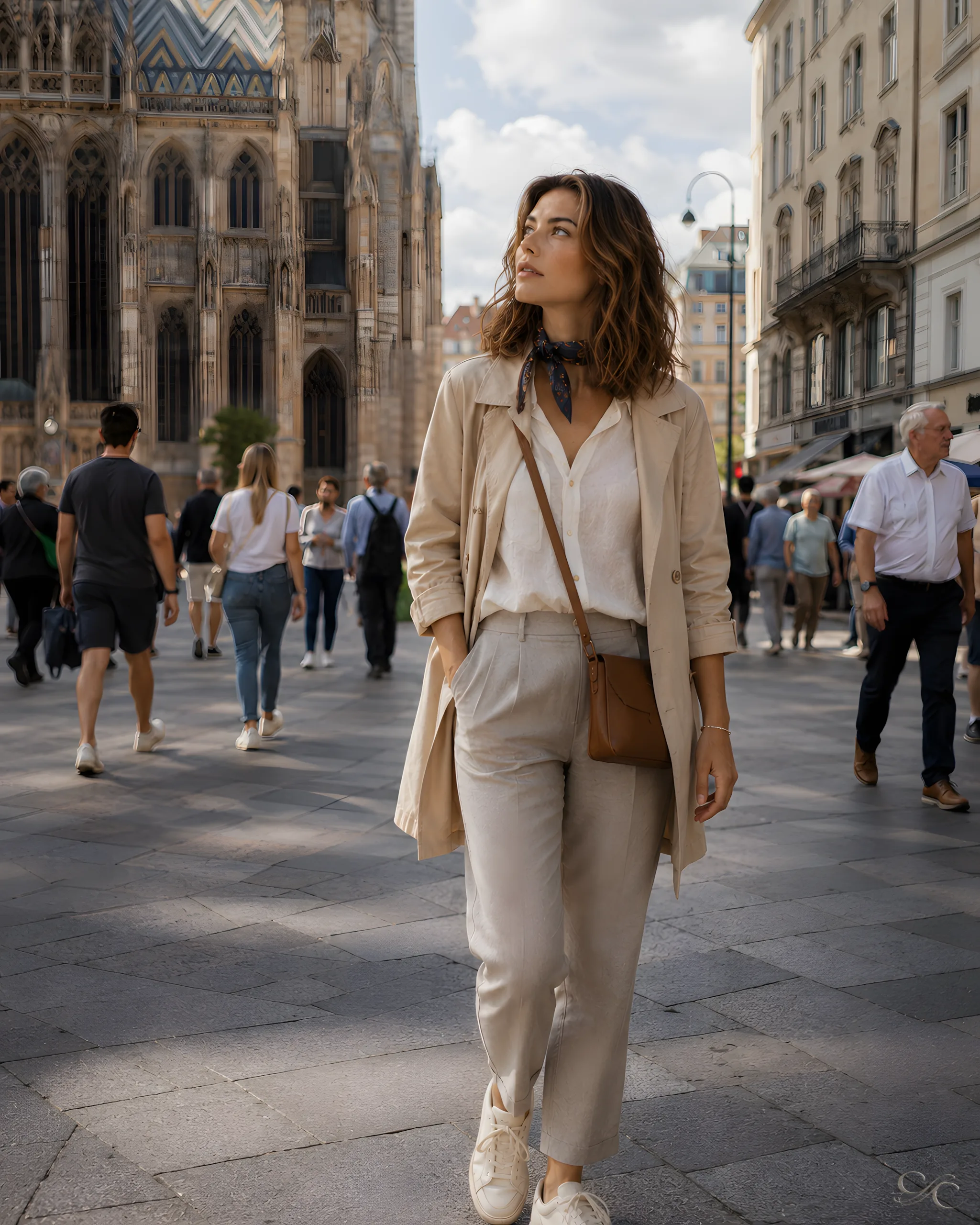
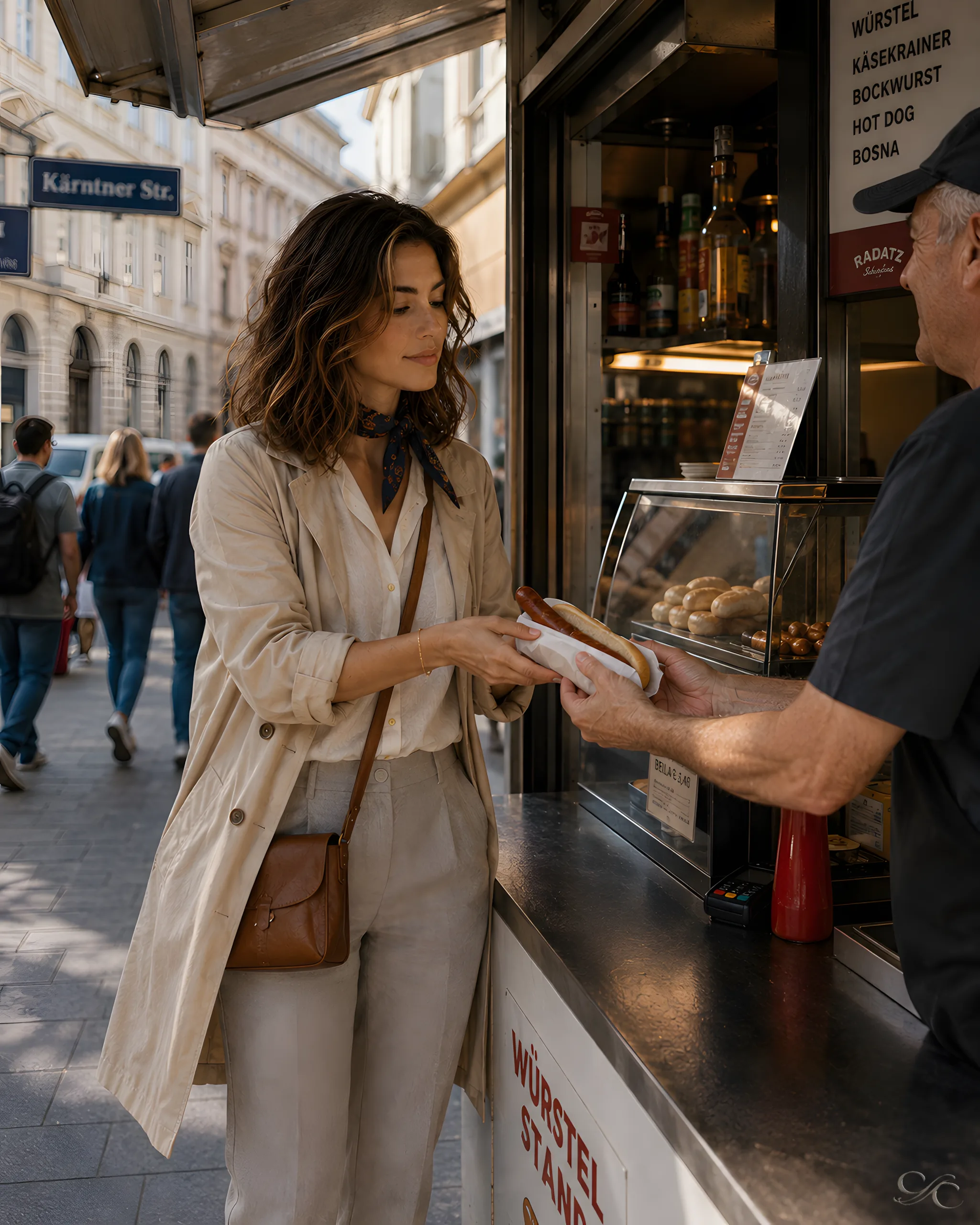
Stephansplatz gave me St. Stephen’s Cathedral almost at once: dark stone, a steep patterned roof, and the south tower pulling the square upward. The tower rises about 136 meters, high enough that it served for centuries as a fire lookout over Vienna. A few streets later, the scene narrowed to a Würstelstand. This Viennese sausage-stand culture has roots in mobile vendors dating back to the 18th and 19th centuries, while permanent fixed-location stands became established in the 1960s.
Walking the Graben to the Hofburg Gardens
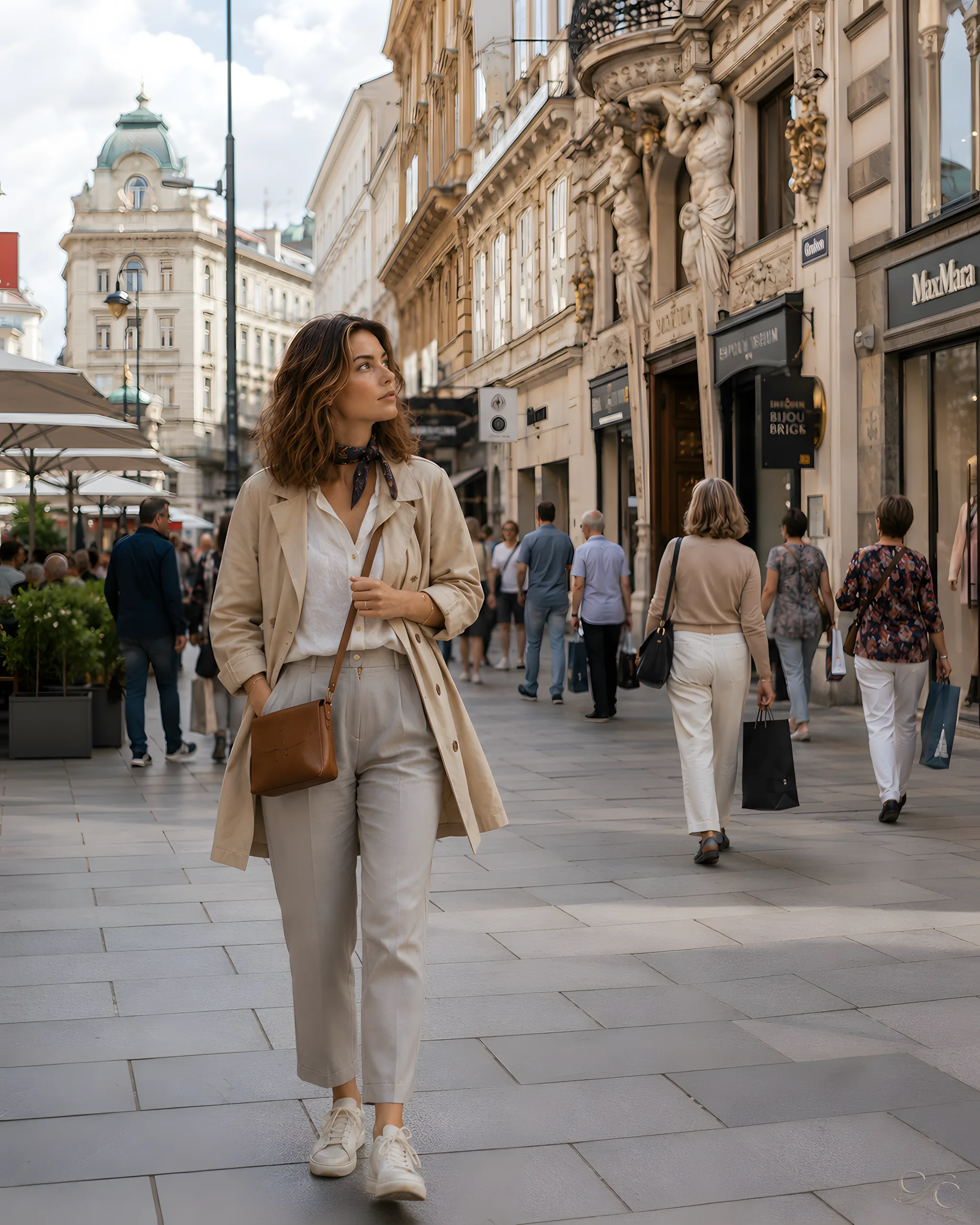
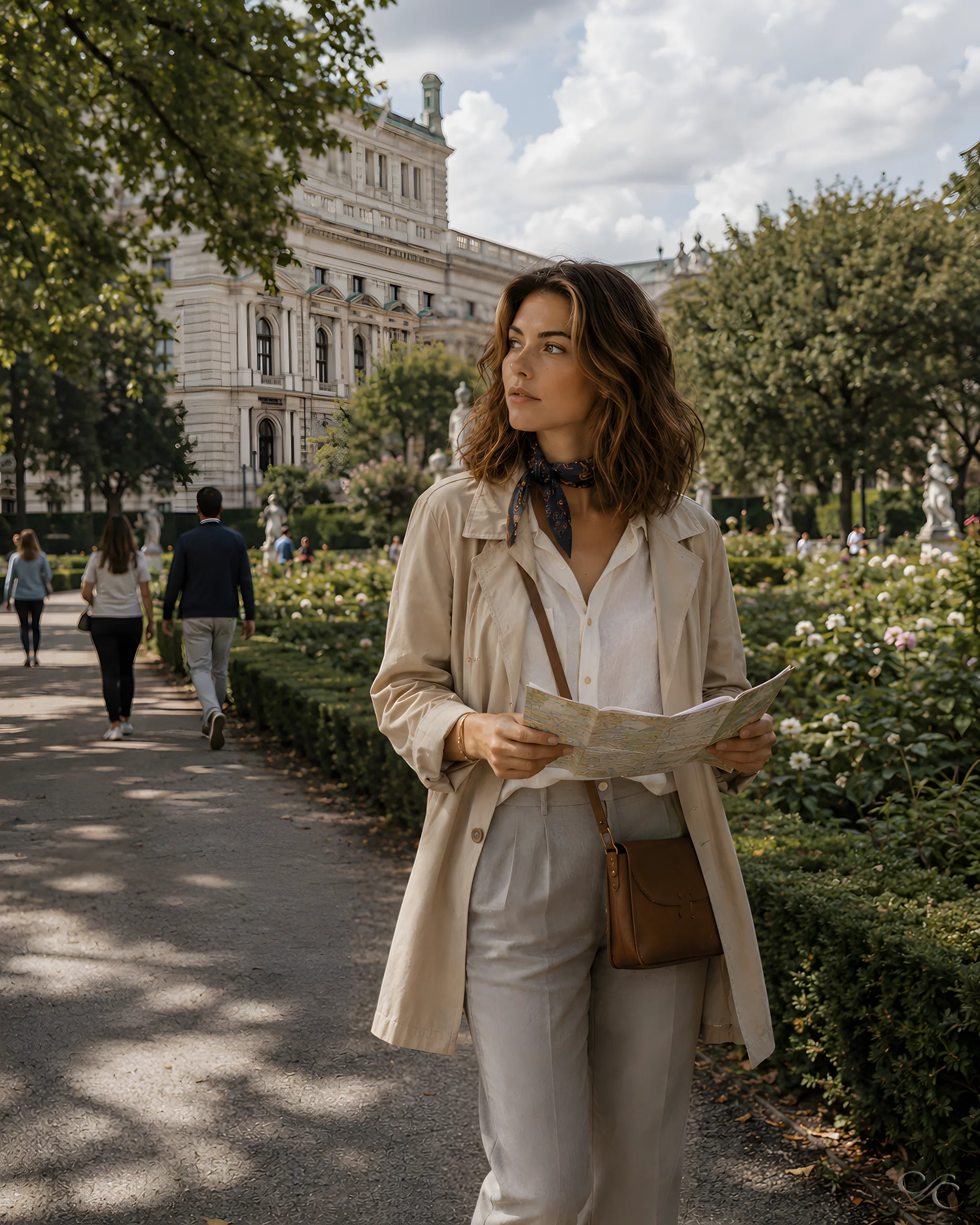
From Stephansplatz, I followed the Graben past shop windows, café tables, carved façades, and the pale swirl of the Plague Column rising from the middle of the street. The name still points to an older layer; the Graben began as a defensive ditch outside the Roman camp, later filled in and turned into a market street. Near the Hofburg, the gardens softened the scale, with paths and clipped planting replacing the busy display.
Melange and People-Watching
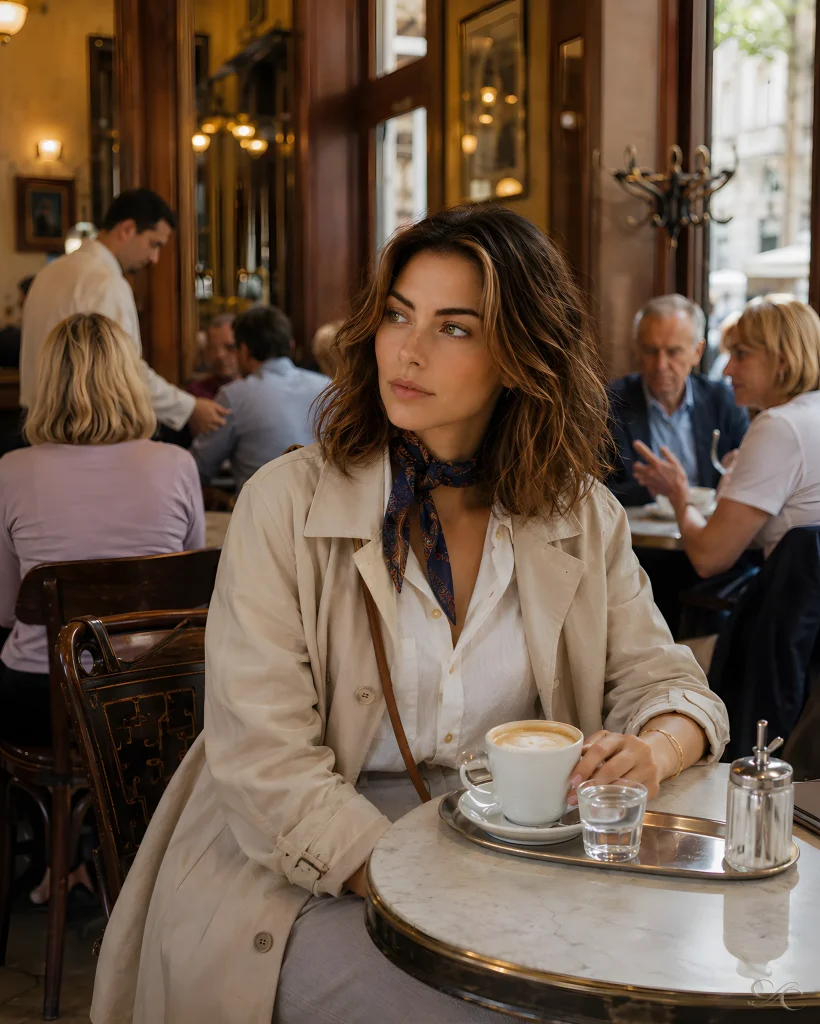
I ended the day with a melange in a café room where tables turned slowly. Around me, people read, talked, paused between errands, and let cups sit. That habit has deep roots in Vienna. Coffeehouses became places where newspapers, conversation, chess, and writing could fill an afternoon; the price of a drink also bought time. I watched the room work in that older arrangement, one small table at a time.
Crossing Into the Hofburg
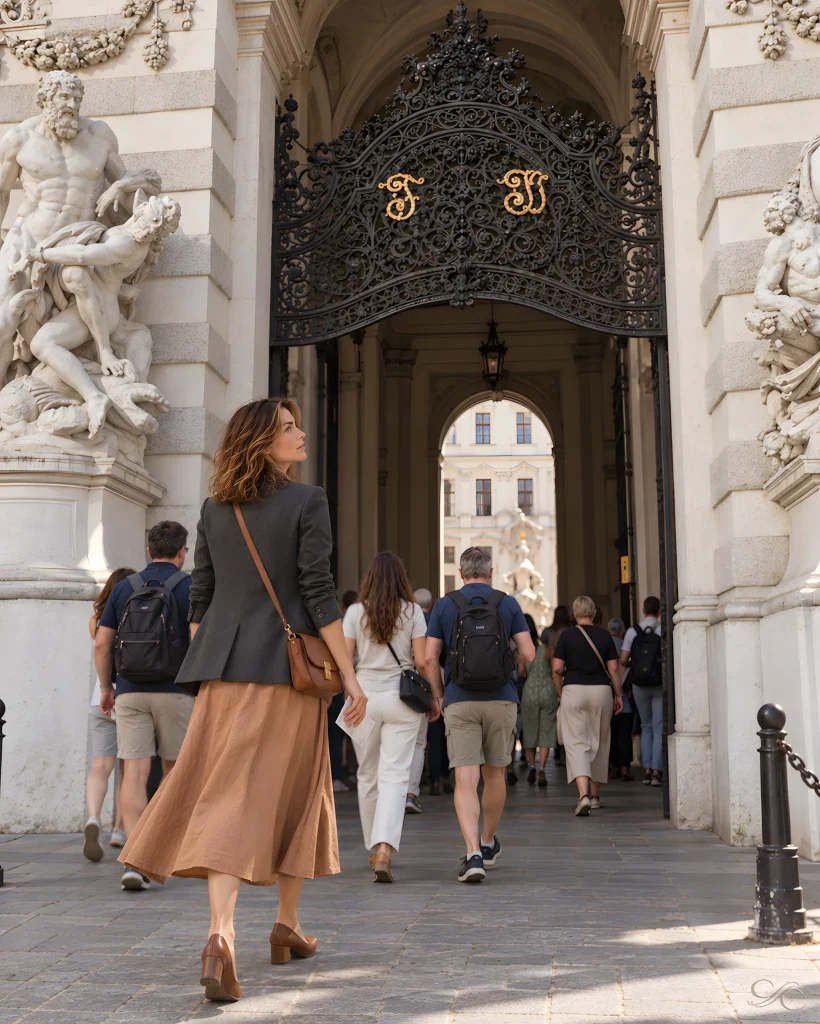
The next morning, I entered the Hofburg through the Michaelertrakt, beneath the curved late-19th-century wing facing Michaelerplatz. The passage immediately made the scale harder to read as a single palace. The Hofburg began as a medieval fortress in the 13th century, then kept expanding as Habsburg power grew, with new wings, courtyards, and ceremonial spaces added over centuries. By the time I crossed that threshold, it felt less like arriving at one building than stepping into an imperial district.
Sisi Apartments, Kunsthistorisches Museum and Imperial Treasury
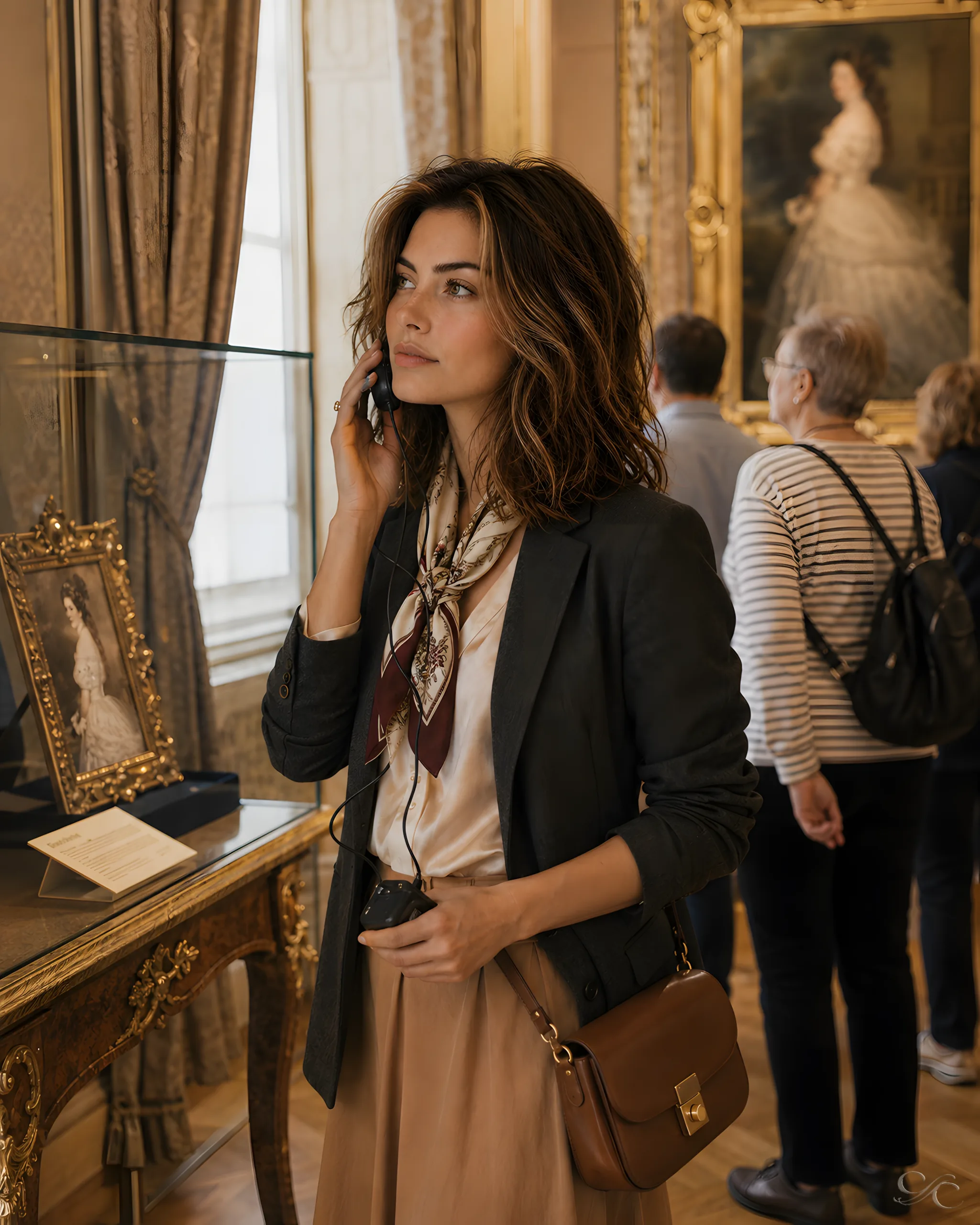
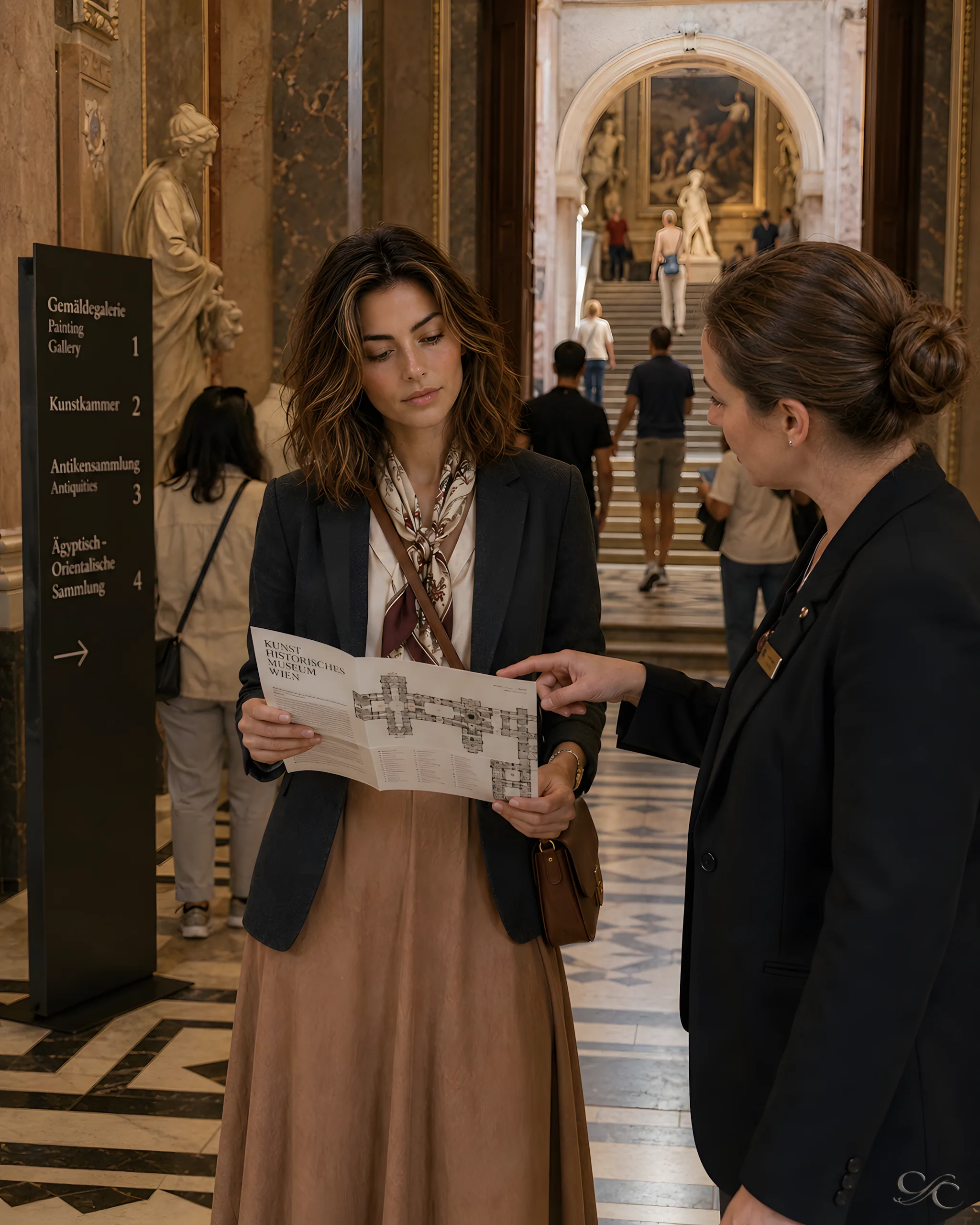
Inside the Sisi Apartments, the Hofburg narrowed from empire to habit: rooms arranged around Empress Elisabeth’s private life, with the story of a woman often reduced to portraits and legend. The audio made her routines feel more precise than romantic, especially against the formality of the palace around her.
At the Kunsthistorisches Museum, the scale changed. The Habsburgs collected across centuries, and the building itself, opened in 1891 under Emperor Franz Joseph, was made to house that inherited abundance.
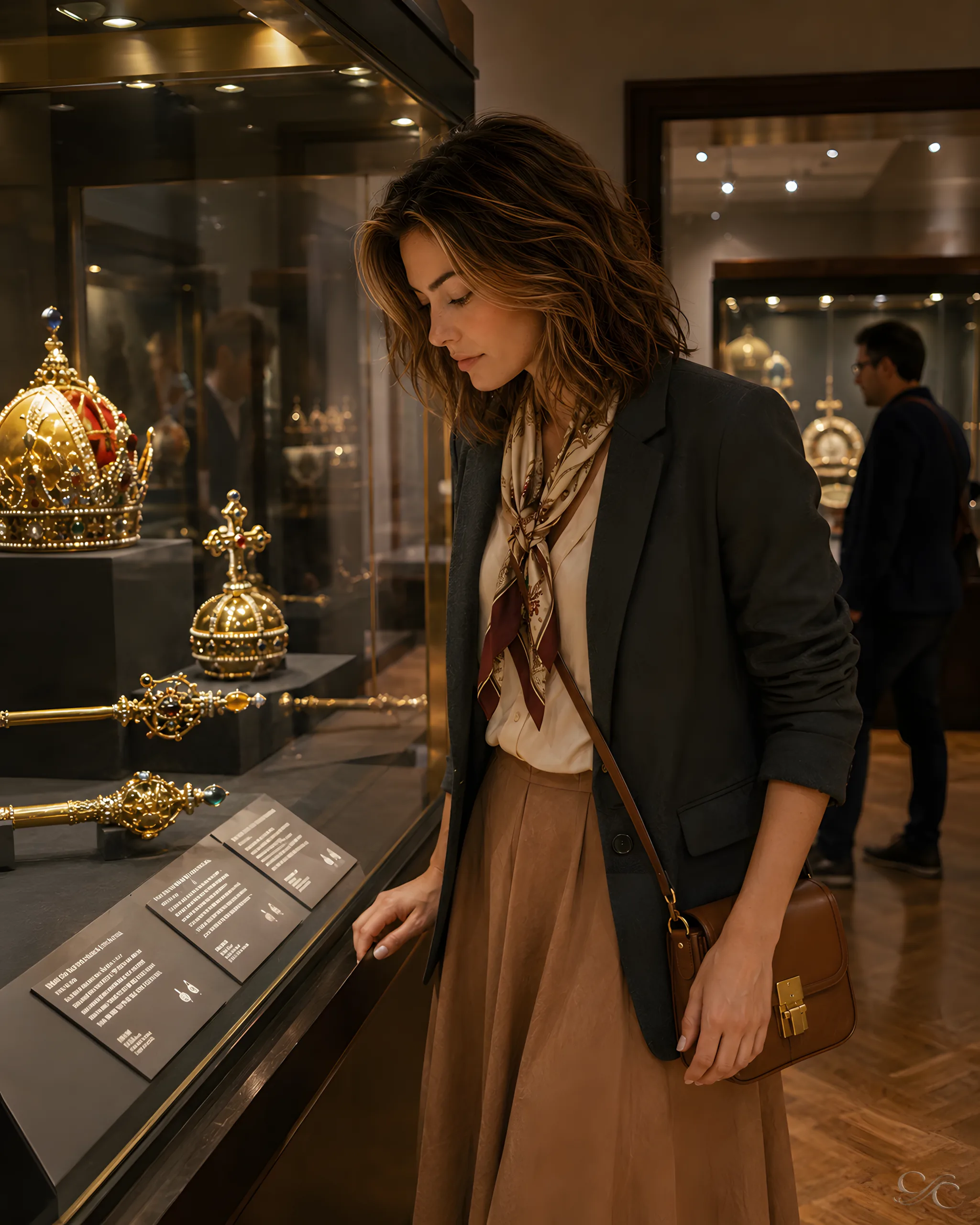
The Imperial Treasury brought the focus back to authority: crowns, robes, and ceremonial objects designed to make power visible. The rooms were quiet, but nothing there was modest.
Vienna Rooftop Views at Dusk
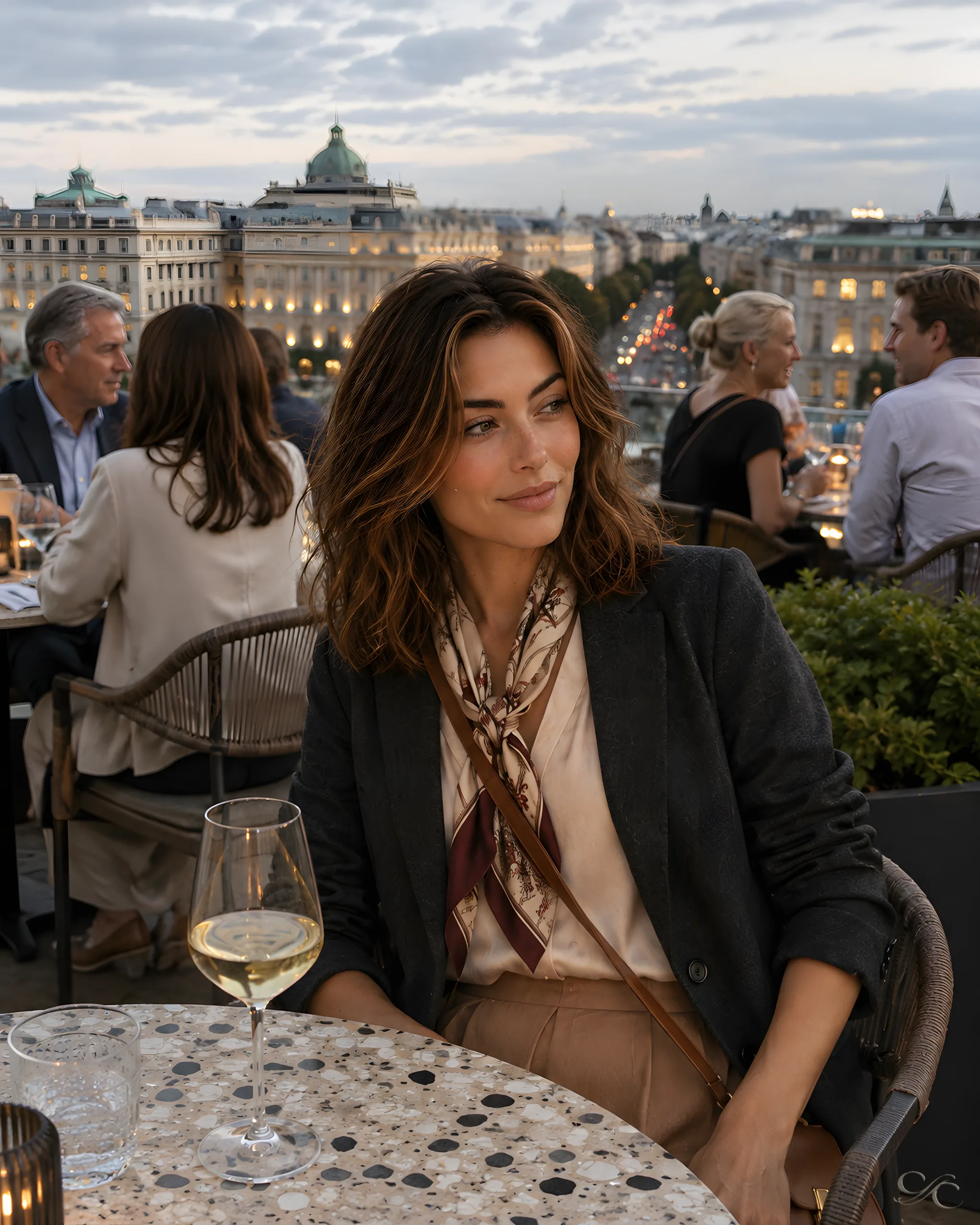
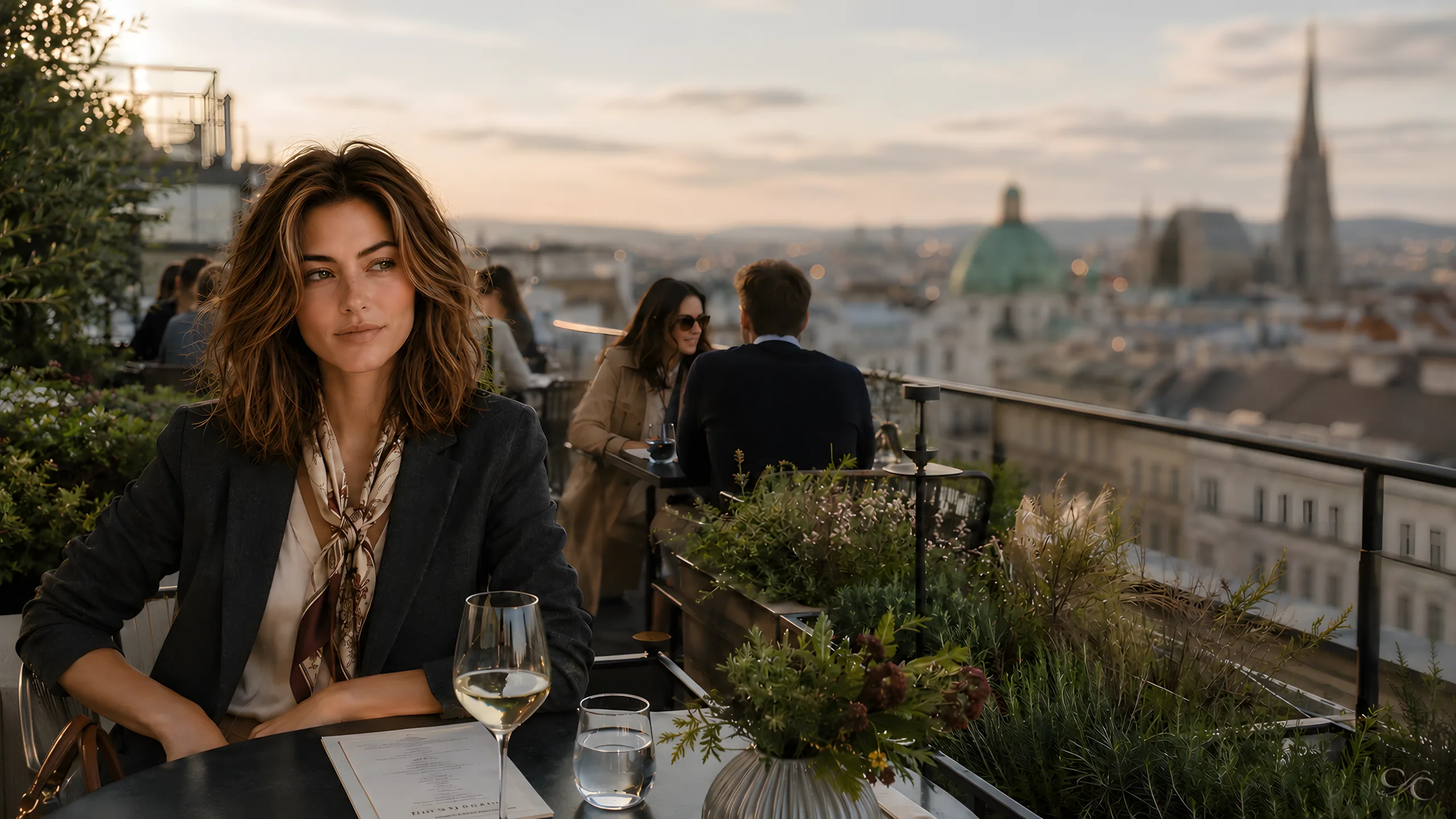
From the rooftop overlooking Vienna, the day loosened into rooftops, domes, and lit streets. I could pick out the center I had been crossing on foot: Stephansdom, the Hofburg area, the museum buildings beyond it. The Ringstrasse made more sense from above, its loop gathering imperial, civic, and cultural buildings around the inner city.
Belvedere Gardens and Klimt in the Gallery
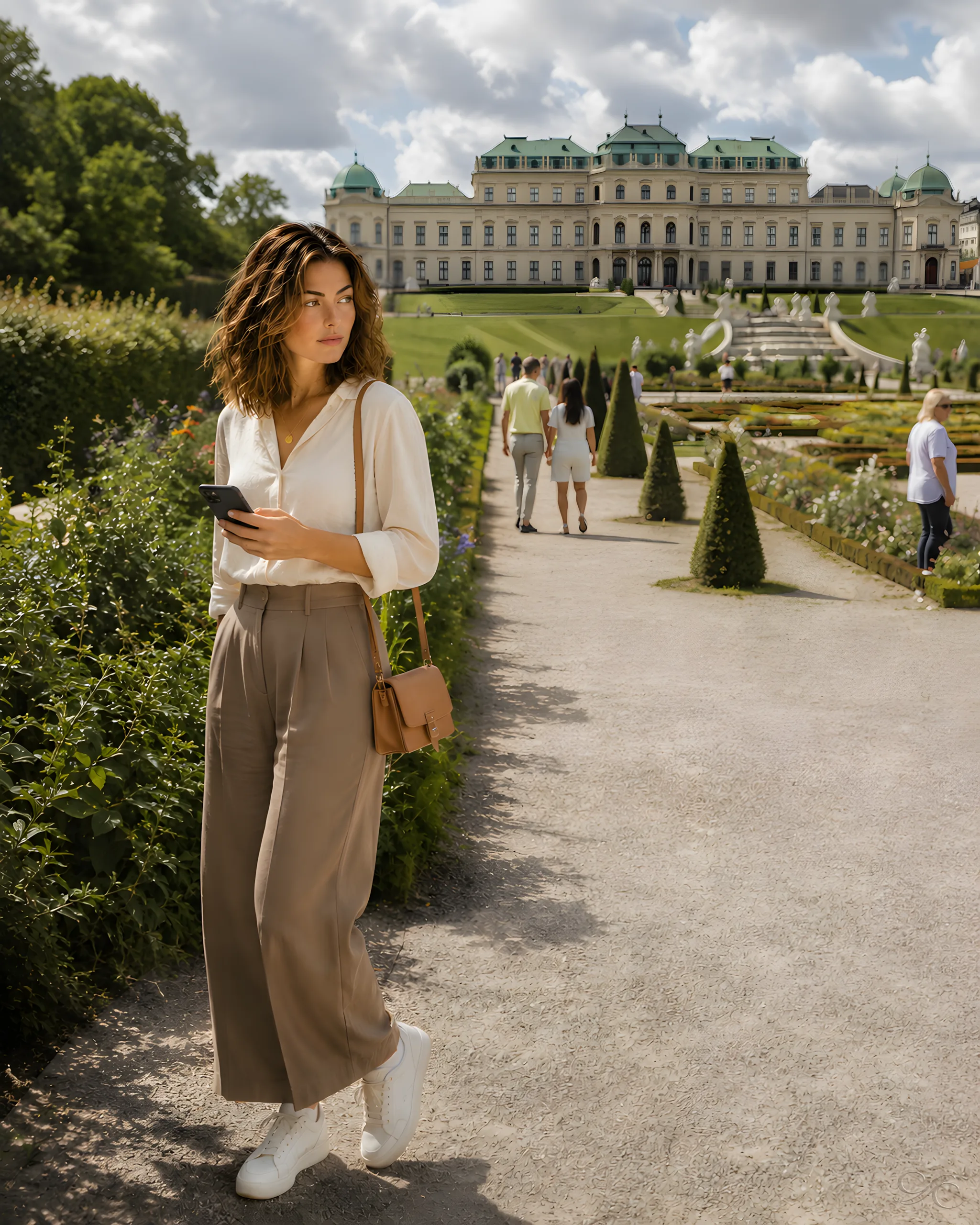
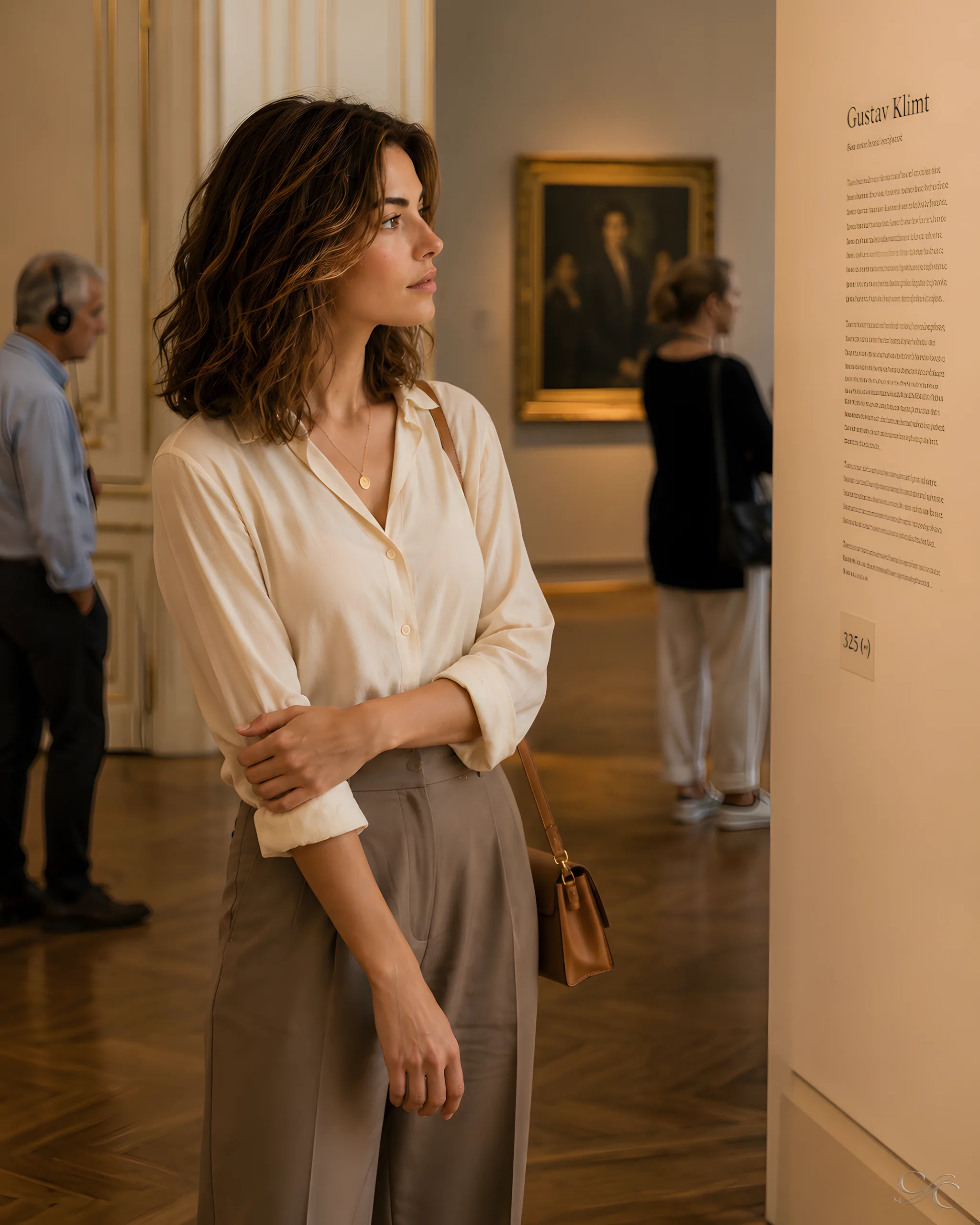
The morning began along the Belvedere’s formal garden axis, where clipped hedges, fountains, and terraces organized the approach before the palace filled the view. The Upper and Lower Belvedere were built in the early 18th century as the summer residence of Prince Eugene of Savoy, their scale expressing his political and military power.
Inside, the galleries pulled attention from symmetry and façades to brushwork, faces, and surfaces. Klimt’s rooms drew the closest looking, especially where gold leaf turned paint into something almost architectural. Vienna’s courtly past and its later artistic experiments sat close together here.
A Market Bite at Naschmarkt
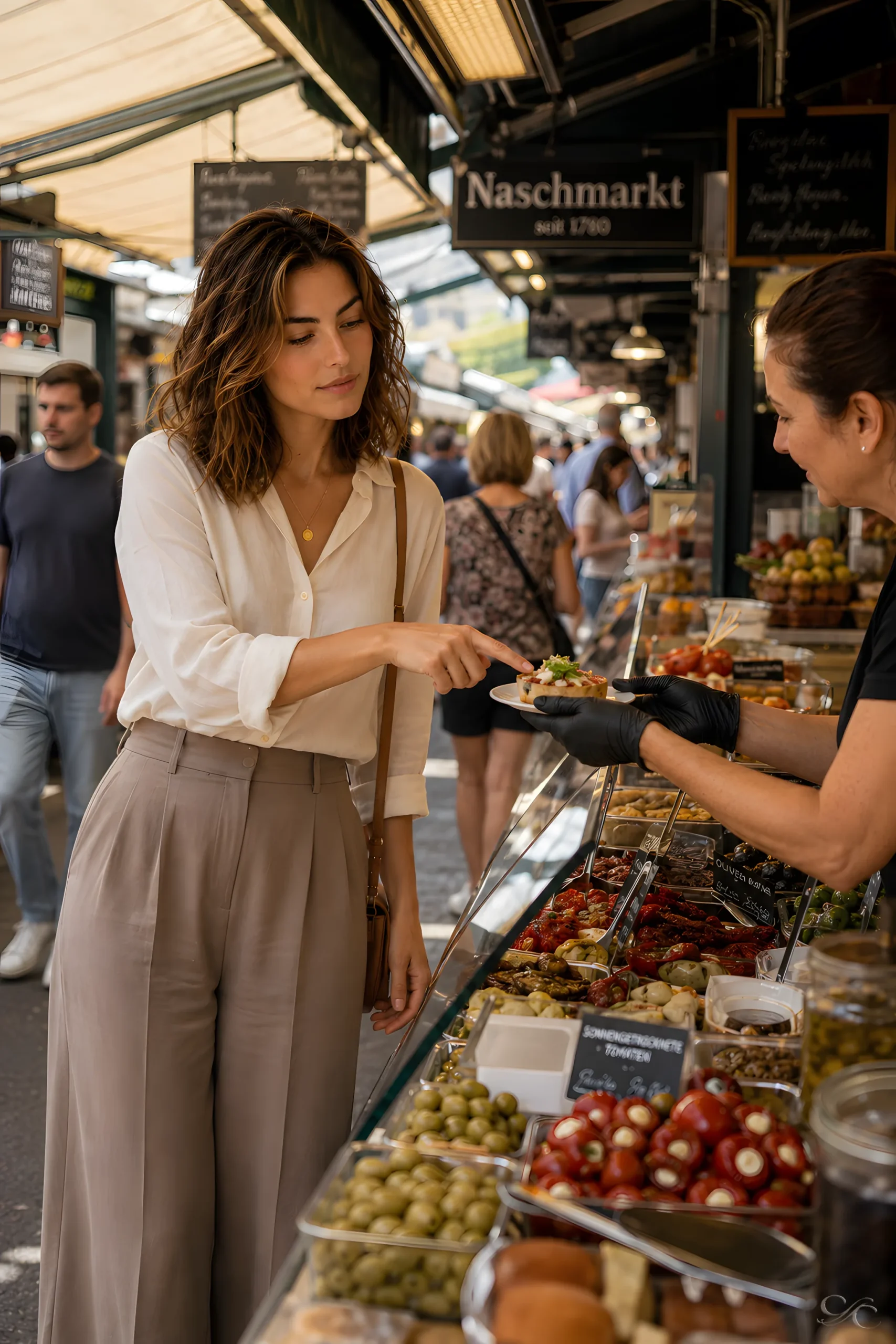
After the museum, the Naschmarkt displayed counters instead of canvases: olives, cheeses, spices, bread, grilled vegetables, and prepared bites ready to carry away. I lingered near stalls where Austrian pumpkinseed oil sat not far from vine leaves and Turkish sweets. The market developed alongside the regulated Wien River around the turn of the 20th century, becoming Vienna’s best-known produce market, shaped by trade and immigrant kitchens as much as local appetite.
Making and Tasting Sacher-Torte
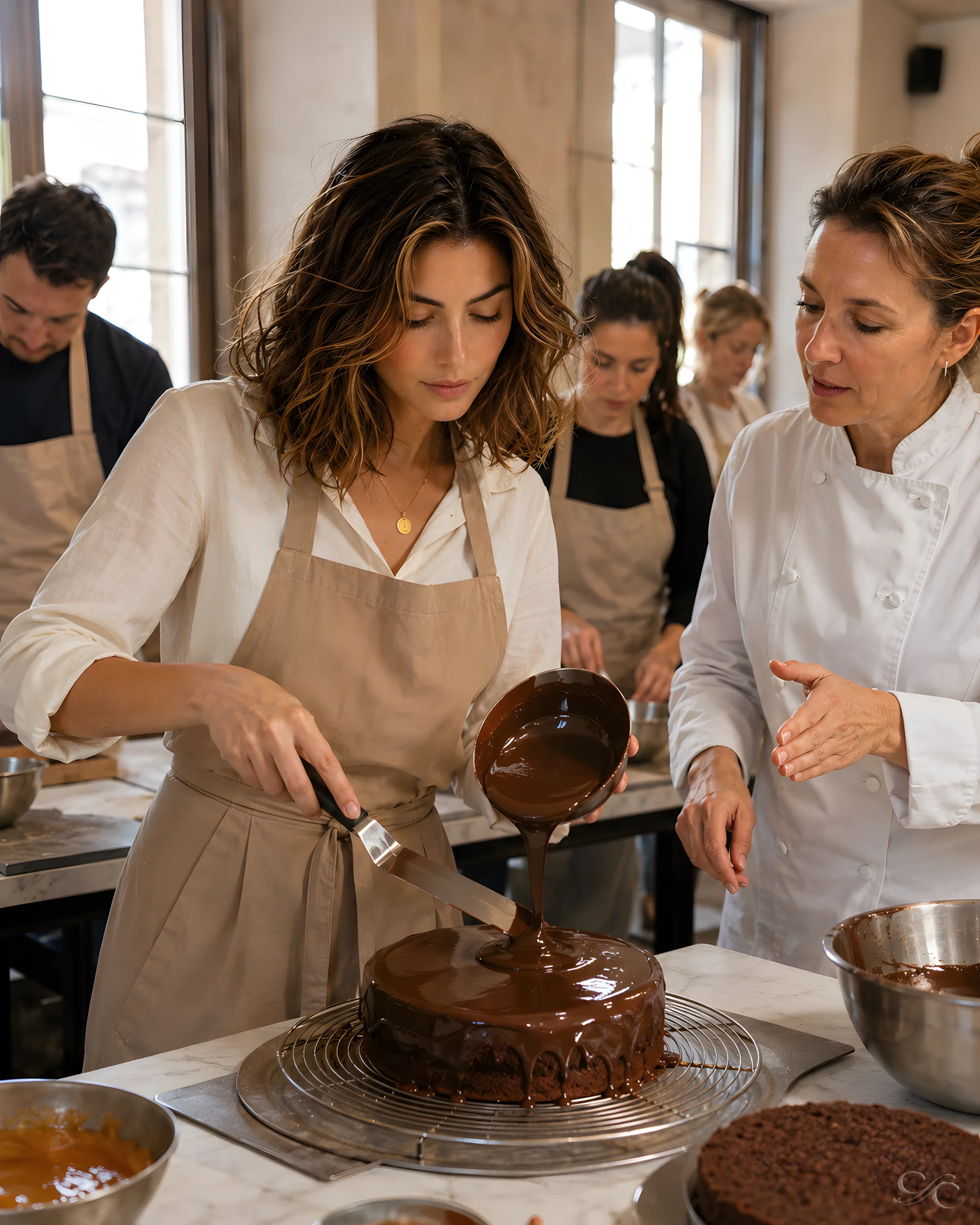
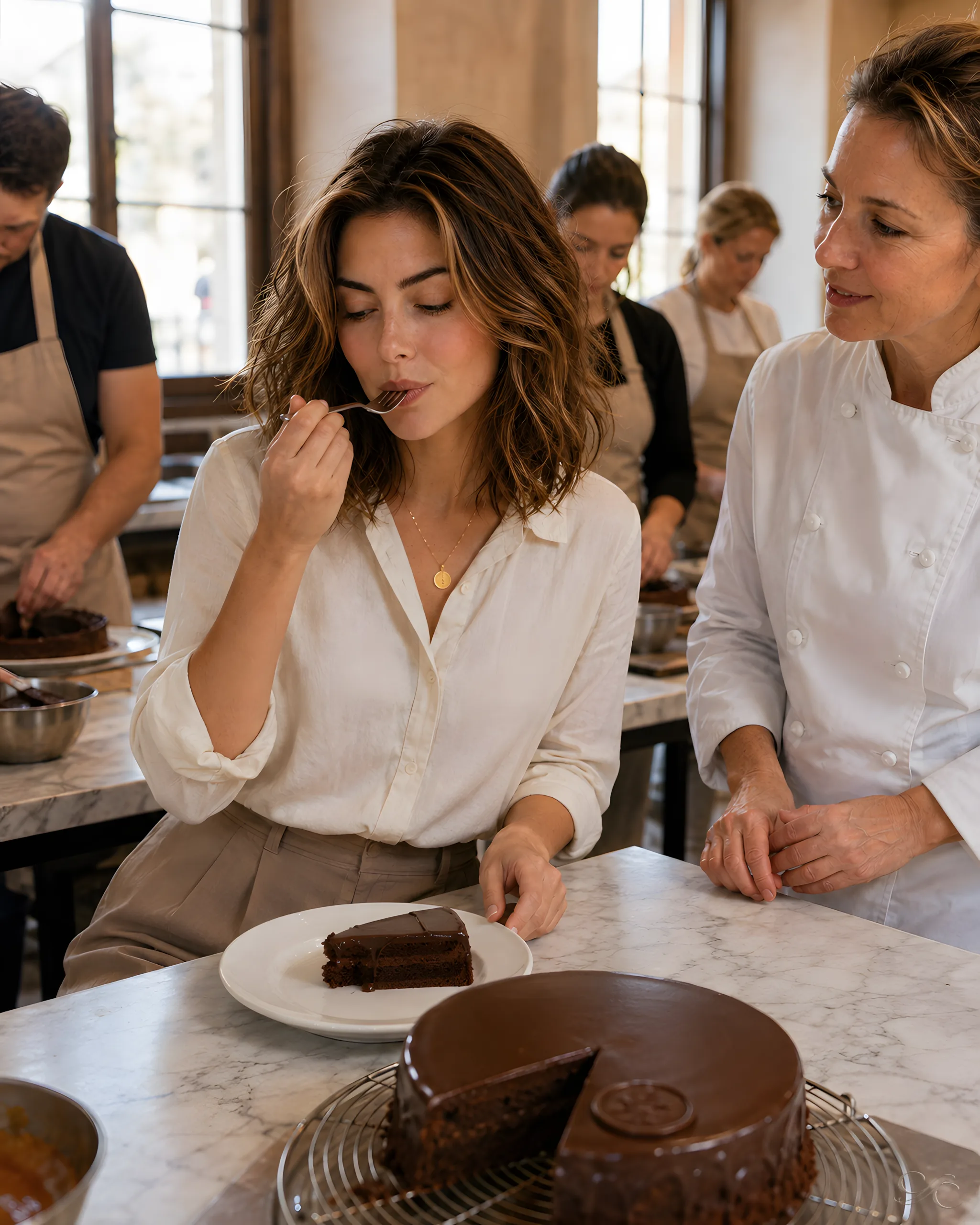
The Sacher-Torte made more sense once I had a hand in the glazing. It was not just a chocolate cake with a famous name, but a precise arrangement: dense chocolate sponge, a layer of apricot jam, and a smooth chocolate glaze that sealed the surface.
The usual story dates it to 1832, when the young Franz Sacher created a chocolate cake for Prince Metternich’s household. Vienna has argued over versions since then, but the apricot and glaze remain part of what makes it specific.
When I tasted the finished slice, the cake was firm and dark, with the apricot cutting through the chocolate rather than disappearing behind it.
Turning into Freihausviertel
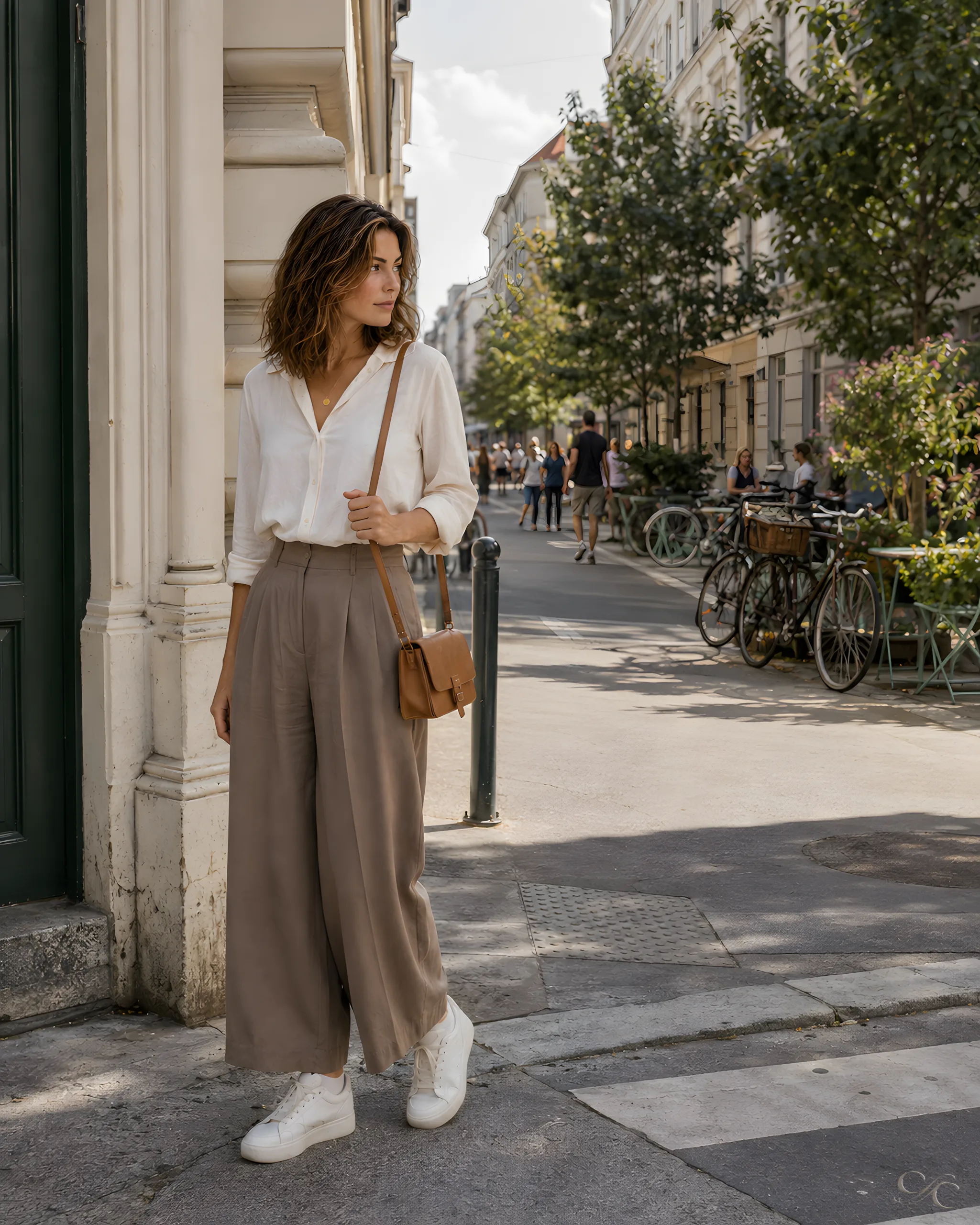
After the Naschmarkt, I turned into the Freihausviertel, part of Wieden, Vienna’s fourth district, just south of the inner city. The streets narrowed into apartment blocks with bicycles chained near doorways, small cafés, design shops, and independent businesses at ground level. Delivery vans paused beside residents carrying groceries. The neighborhood takes its name from the old Freihaus auf der Wieden, once a large mixed-use complex nearby, and the area still kept that practical mix of living, working, and stopping for coffee.
A Toast at the Heuriger Table
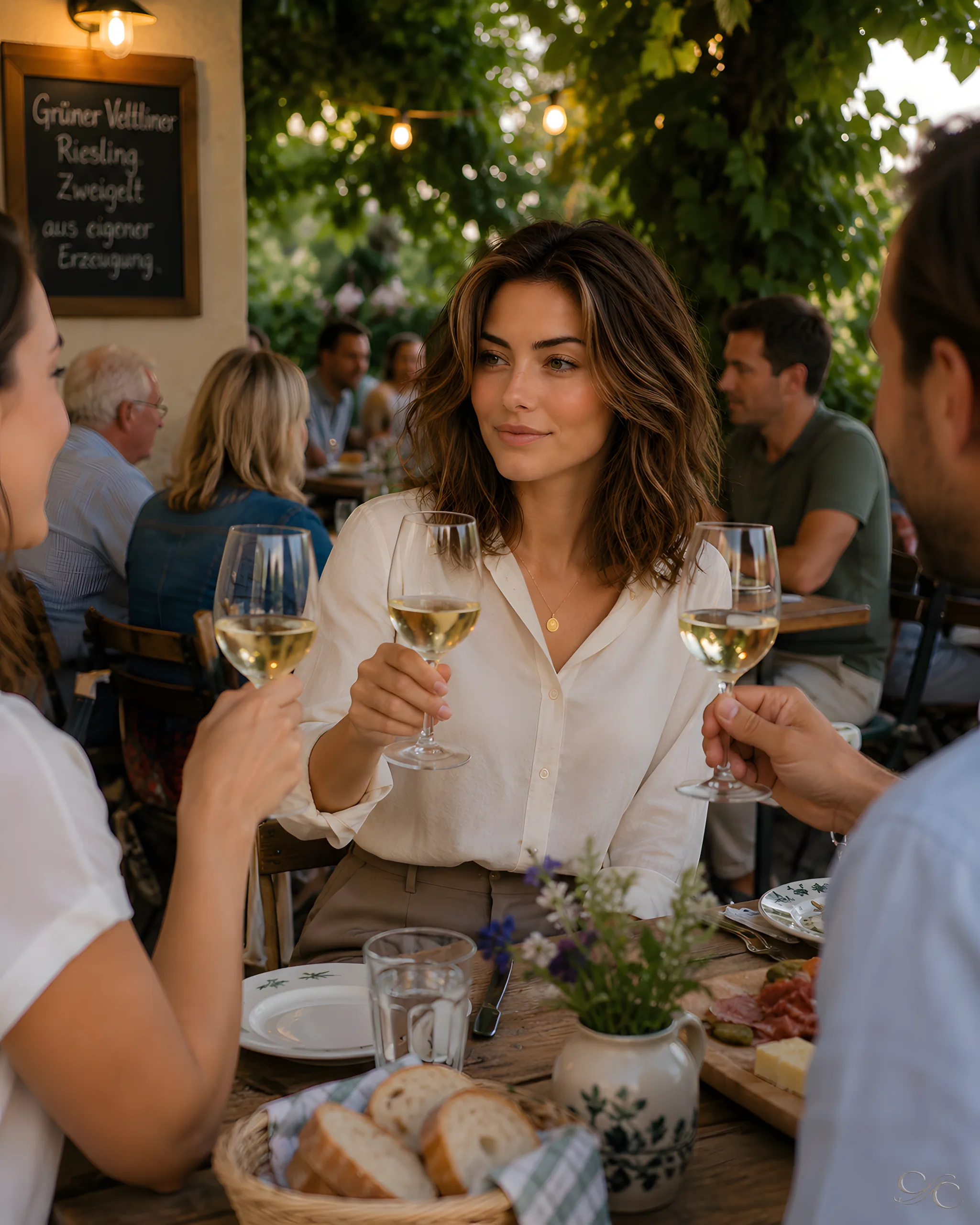
With my Grüner Veltliner already in the glass, the Heuriger became more than a place to drink wine. A Heuriger is a wine tavern where growers serve their own young wine, traditionally from the most recent harvest. Vienna is unusual in keeping vineyards within the city limits, especially on the hills toward places like Grinzing and Nussdorf, so the wine did not feel imported into the evening.
One custom was worth remembering: when a Heuriger is open, a bundle of pine branches outside traditionally signals that the vintner’s wine tavern is open and serving its own wine.
Schönbrunn Gardens and the Gloriette
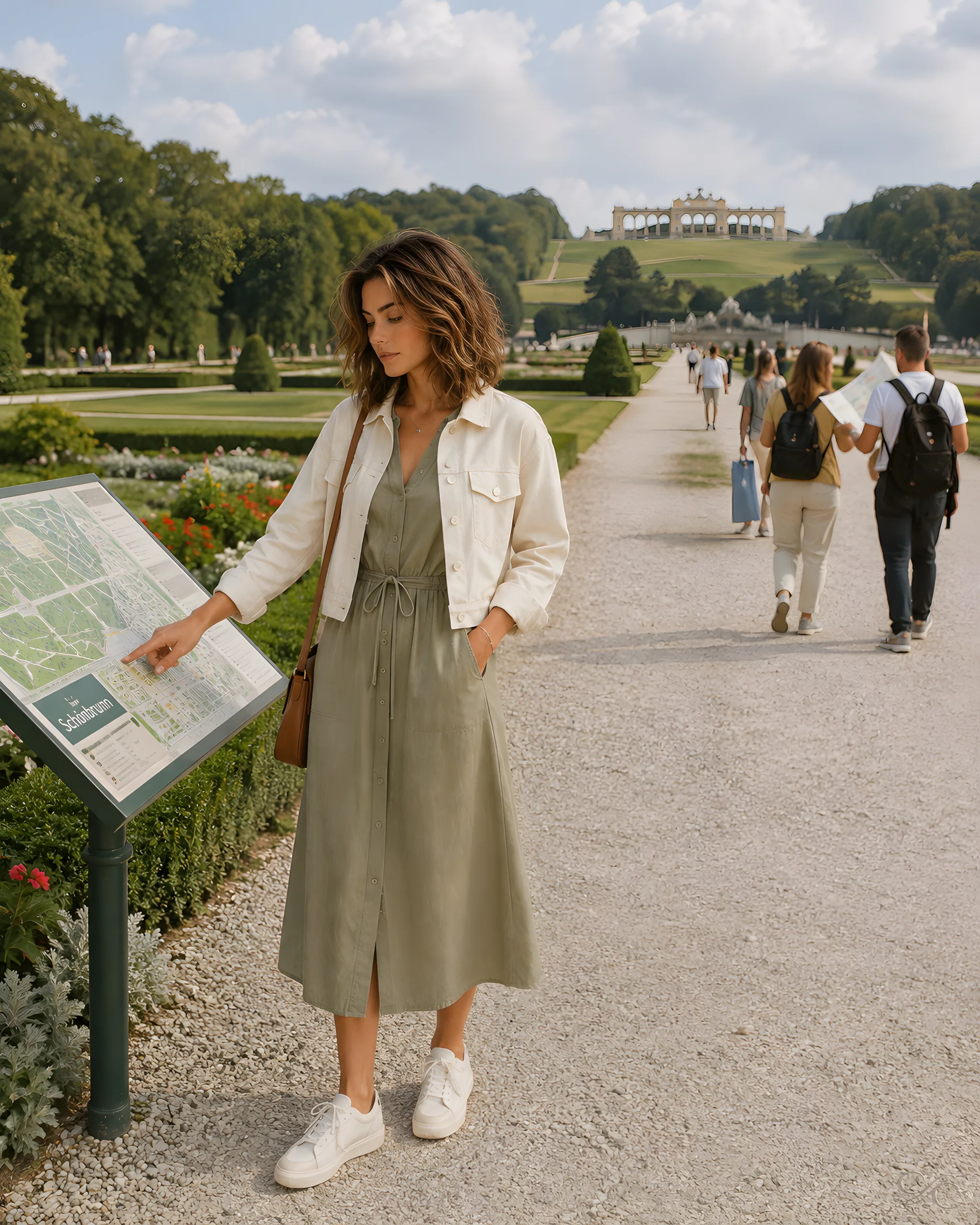
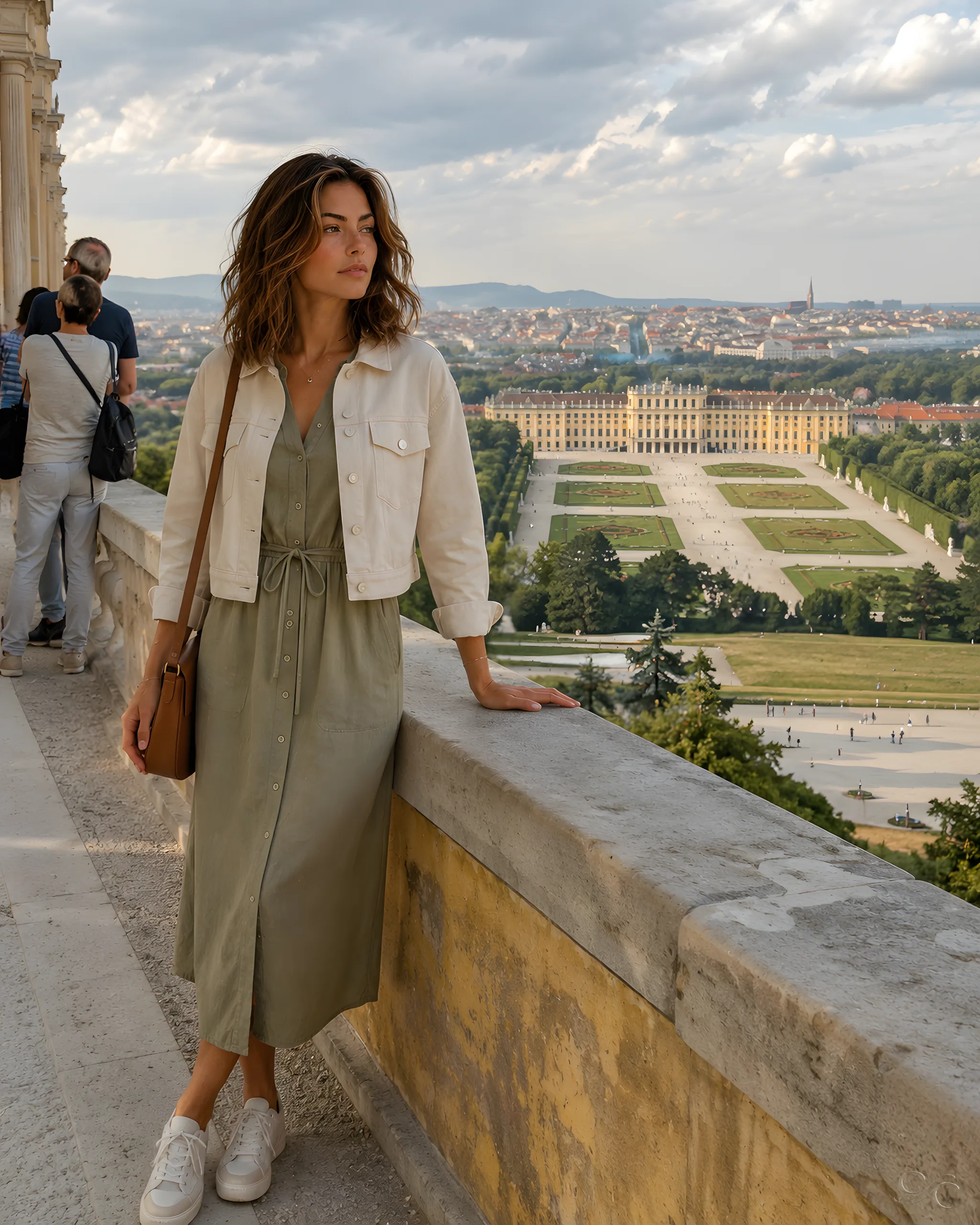
The next morning began from the palace gardens. The Gloriette sat high enough above Schönbrunn to make the distance part of the design. I followed the long central axis uphill, with the palace gradually dropping behind me and the formal beds stretching out in measured lines.
Schönbrunn’s gardens were not added as scenery after the palace; they were planned as part of the imperial composition. The Gloriette, completed in 1775 under Maria Theresa, served as a monumental endpoint on the ridge, closing the view from below and opening it from above. By the time I reached it, the palace, gardens, and Vienna beyond lined up in one panorama.
Coffee in Schönbrunn Gardens
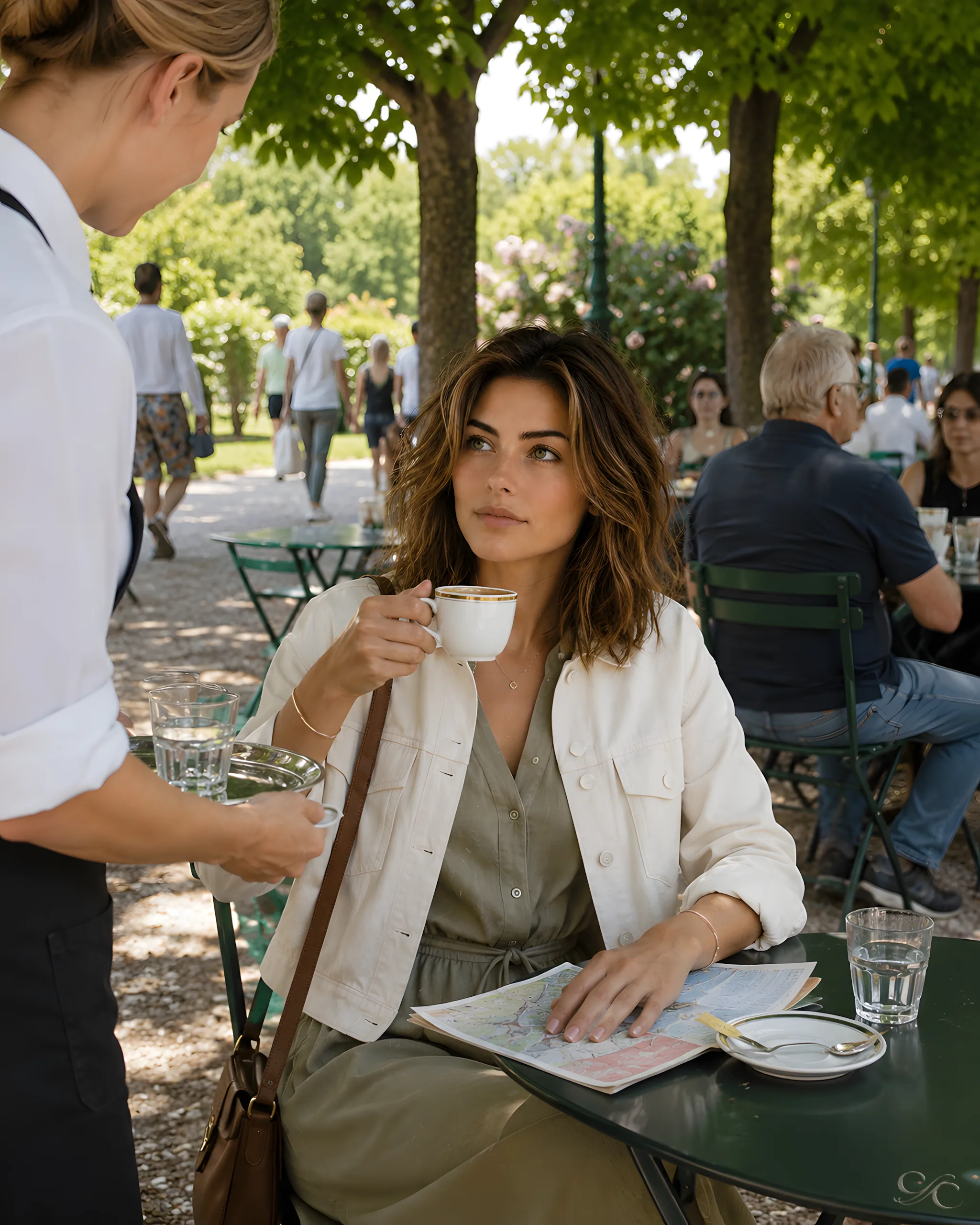
After the climb to the Gloriette and the walk back through the gardens, I stopped for coffee in the shade of the lime trees. The palace was no longer the main event for a moment. Schönbrunn’s park has been open to the public since 1778, initially only on Sundays, and that access mattered here: gravel paths, clipped avenues, and benches made room for an ordinary pause inside imperial grounds before leaving.
Street Art and People-Watching Along the Donaukanal
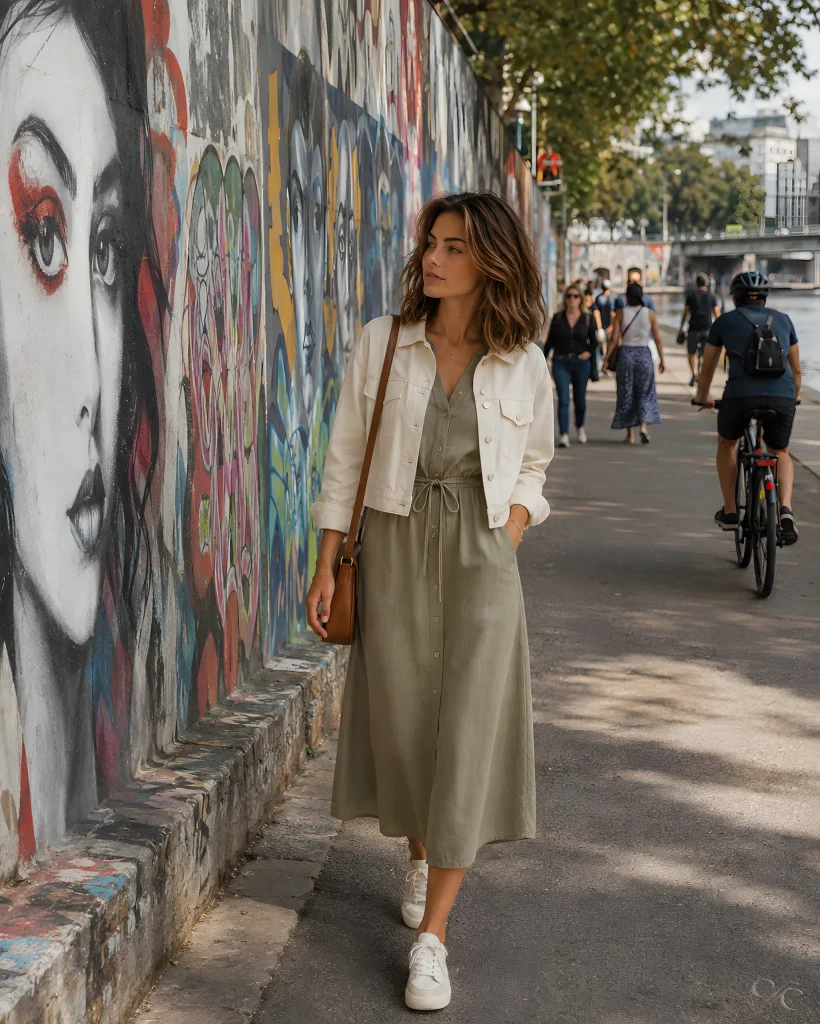
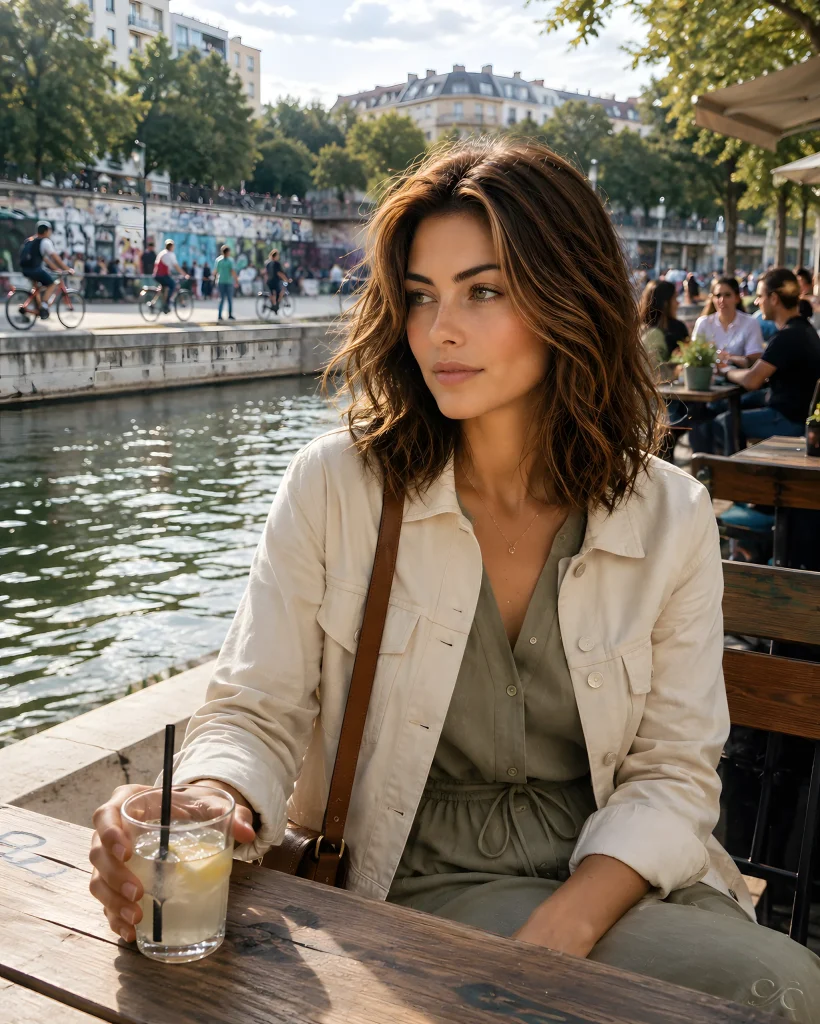
After Schönbrunn’s clipped gardens and long imperial axis, the Donaukanal made a sharp change in scale. This was not the main Danube, but a regulated side channel running close to the inner city. Along its concrete banks, graffiti covered long walls, cyclists passed on the riverside paths, and bar terraces filled the edges of the water. I watched the afternoon traffic of people rather than carriages or court views: bikes, drinks, painted walls, and ordinary public space.
A Viennese Salon Concert
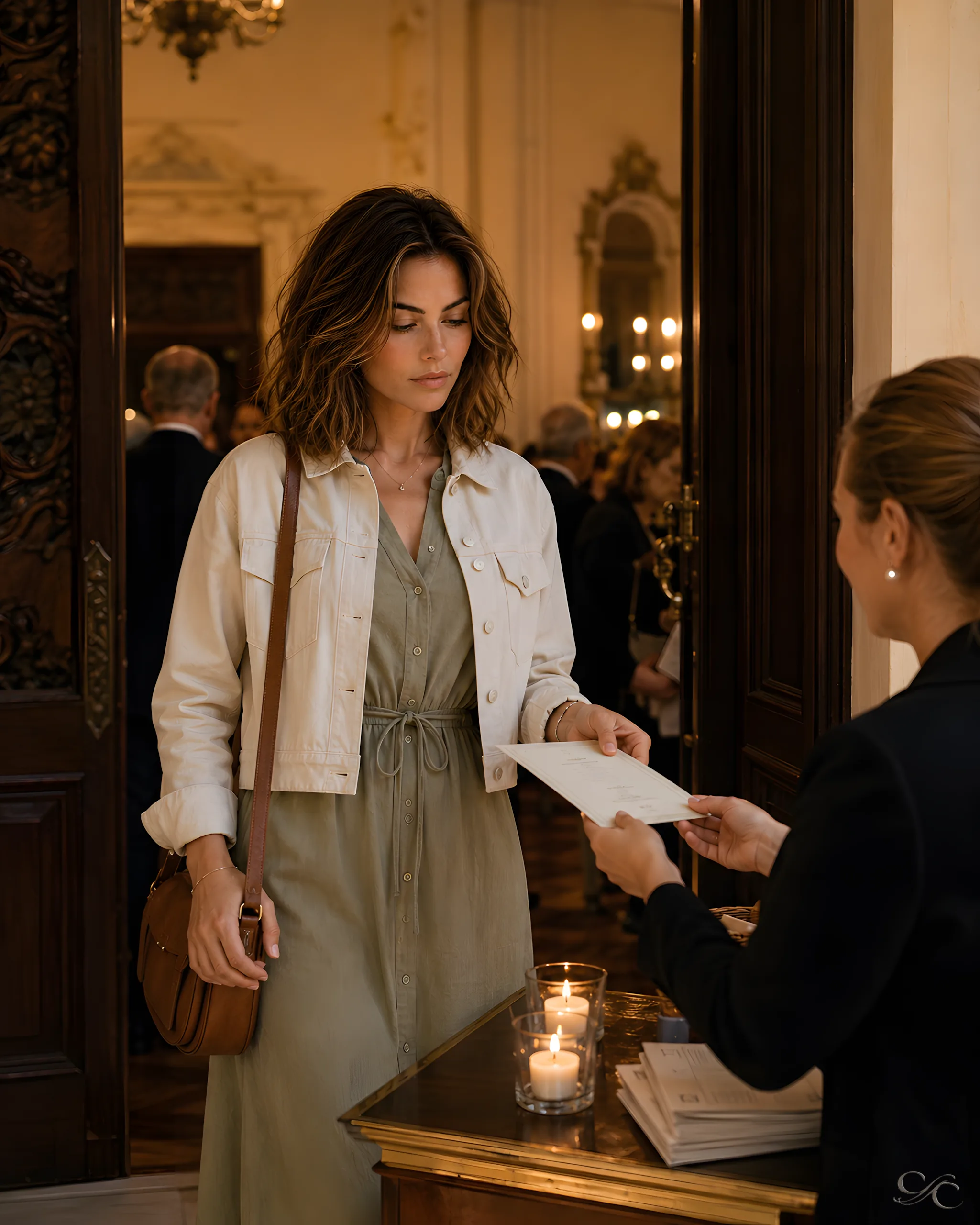

I received the salon program at the evening concert, a small printed guide for a room rather than a grand hall. That scale suited the music. In 18th- and early 19th-century Vienna, much chamber music was written for private houses, aristocratic salons, and close circles of listeners.
By the final piece, the applause stayed contained but immediate. The closeness made the tradition easier to hear: not as monument, but as conversation.
A Final Viennese Breakfast
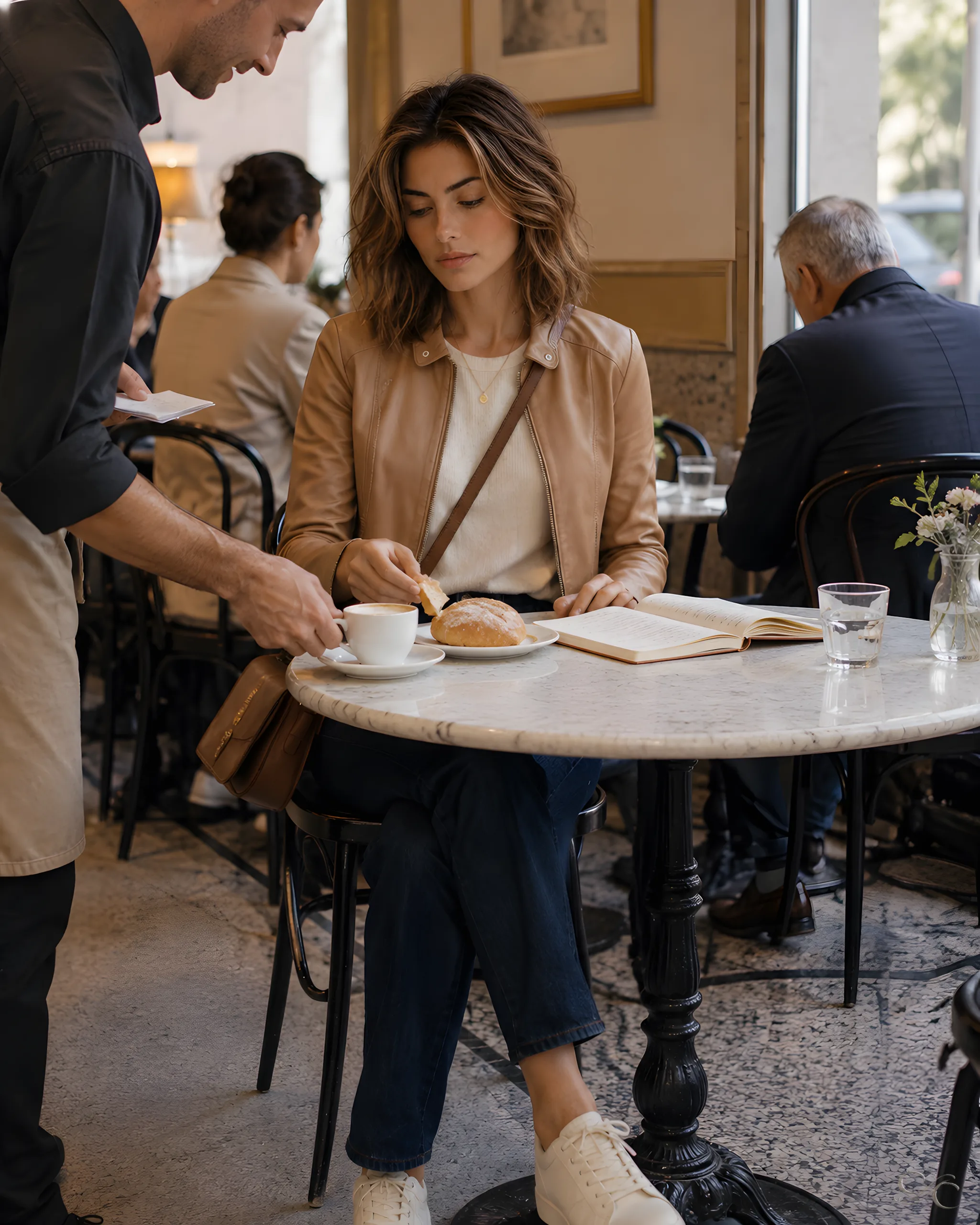
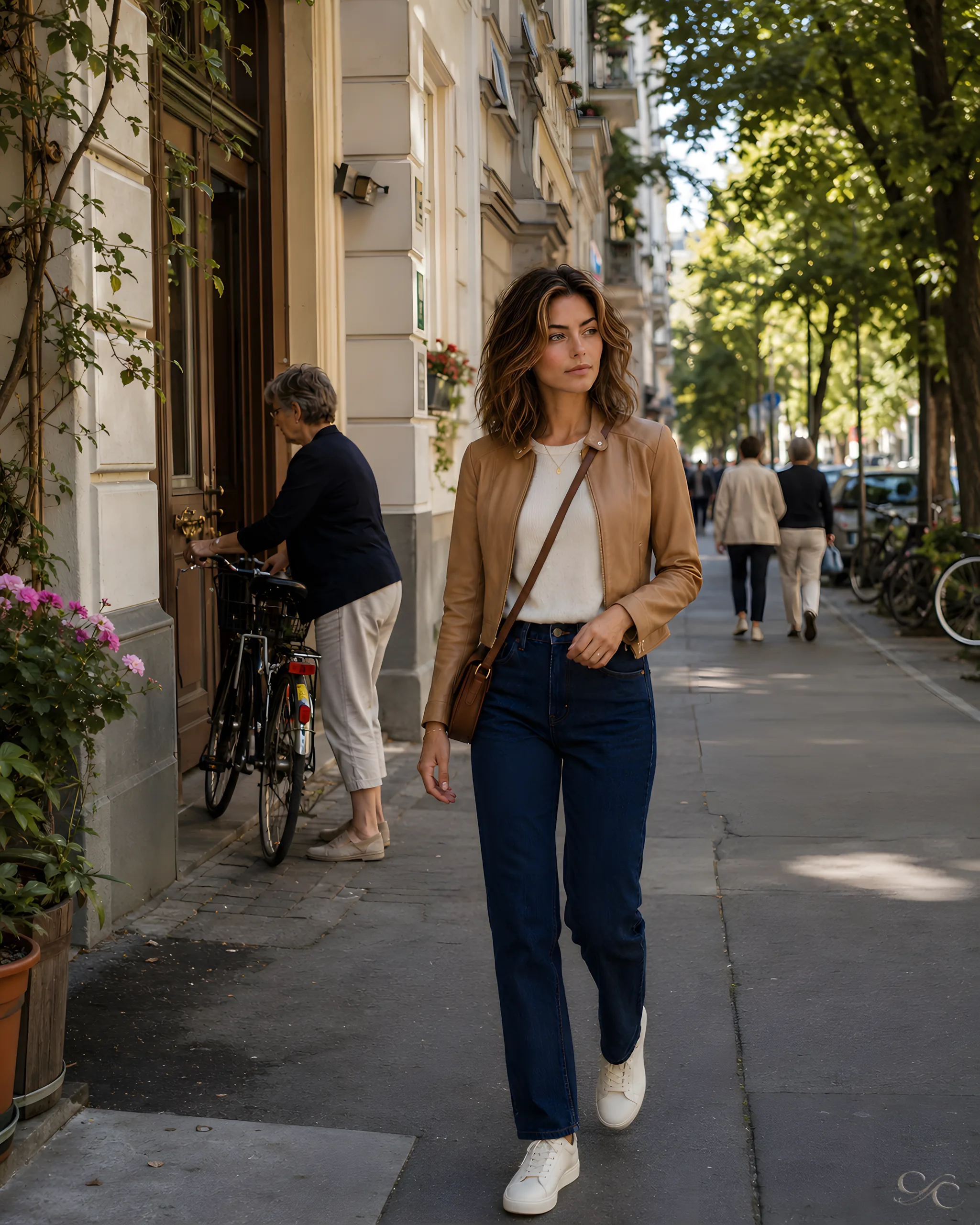
I kept the final morning small: breakfast at a neighborhood café, then a turn into a quieter lane near the Ring. A Viennese breakfast often stays plain Semmel rolls, butter, jam, sometimes a soft-boiled egg, with coffee and a glass of water beside it. Away from the larger streets, apartment doors, bicycles, and shuttered windows held my attention before departure plans took over.
Returning to Wien Hauptbahnhof
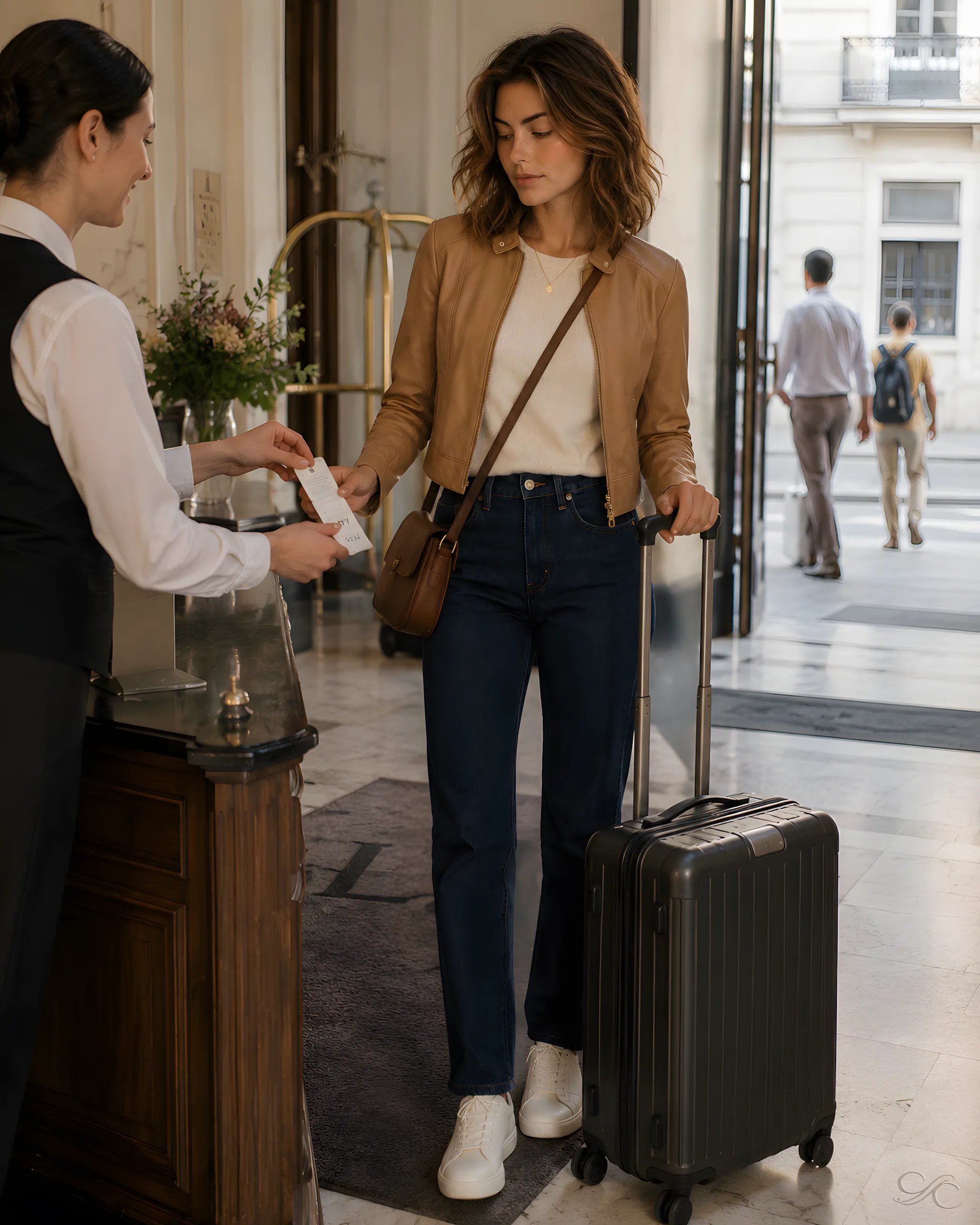
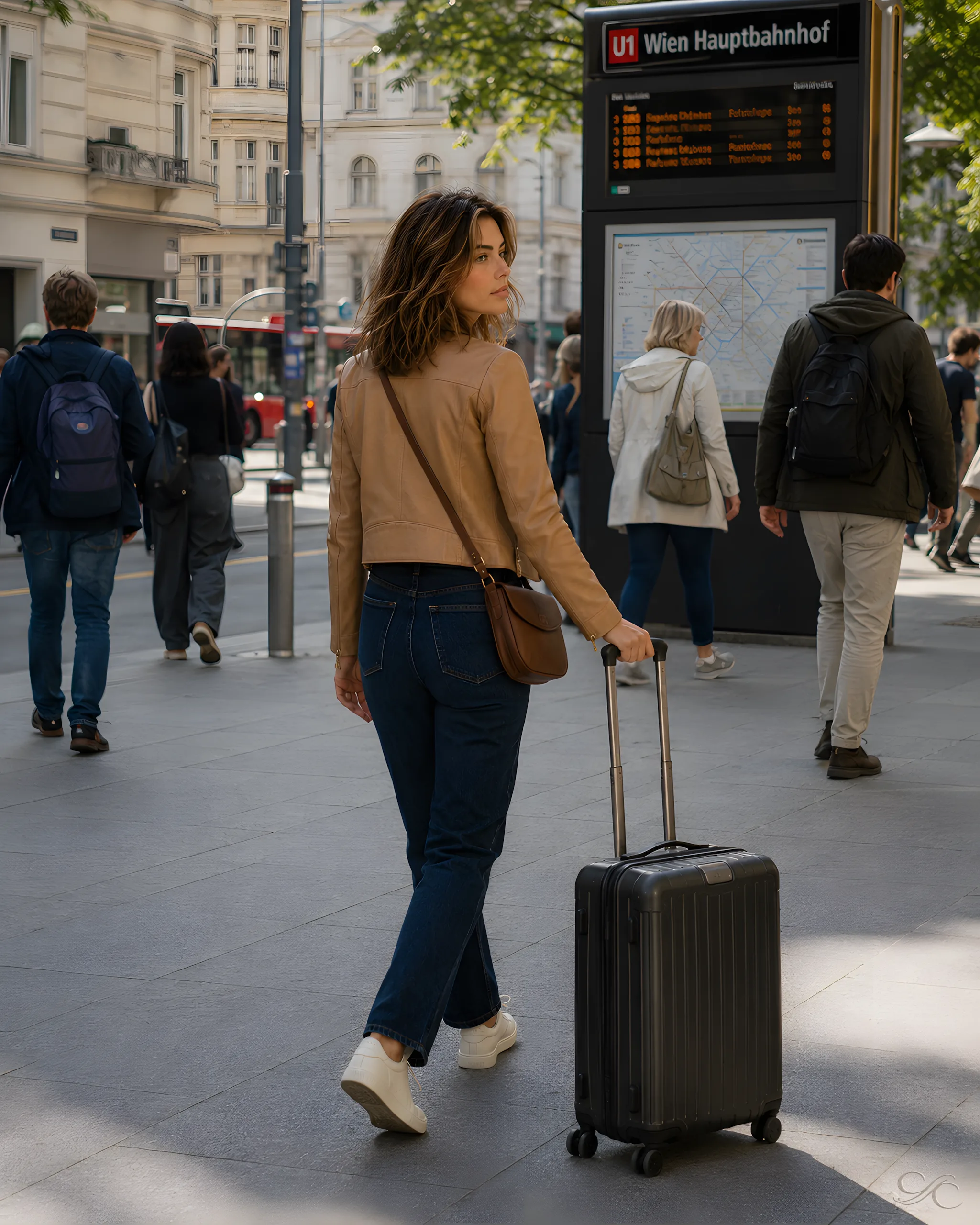
After checkout, I collected my suitcase and moved from the quiet streets into Vienna’s transport system. Wien Hauptbahnhof sits just south of the center; from central stops, the U1 reaches Südtiroler Platz-Hauptbahnhof in a few minutes, with signed passages toward the main station. Departure did not require surrendering the whole morning.
Boarding the Train at Wien Hauptbahnhof
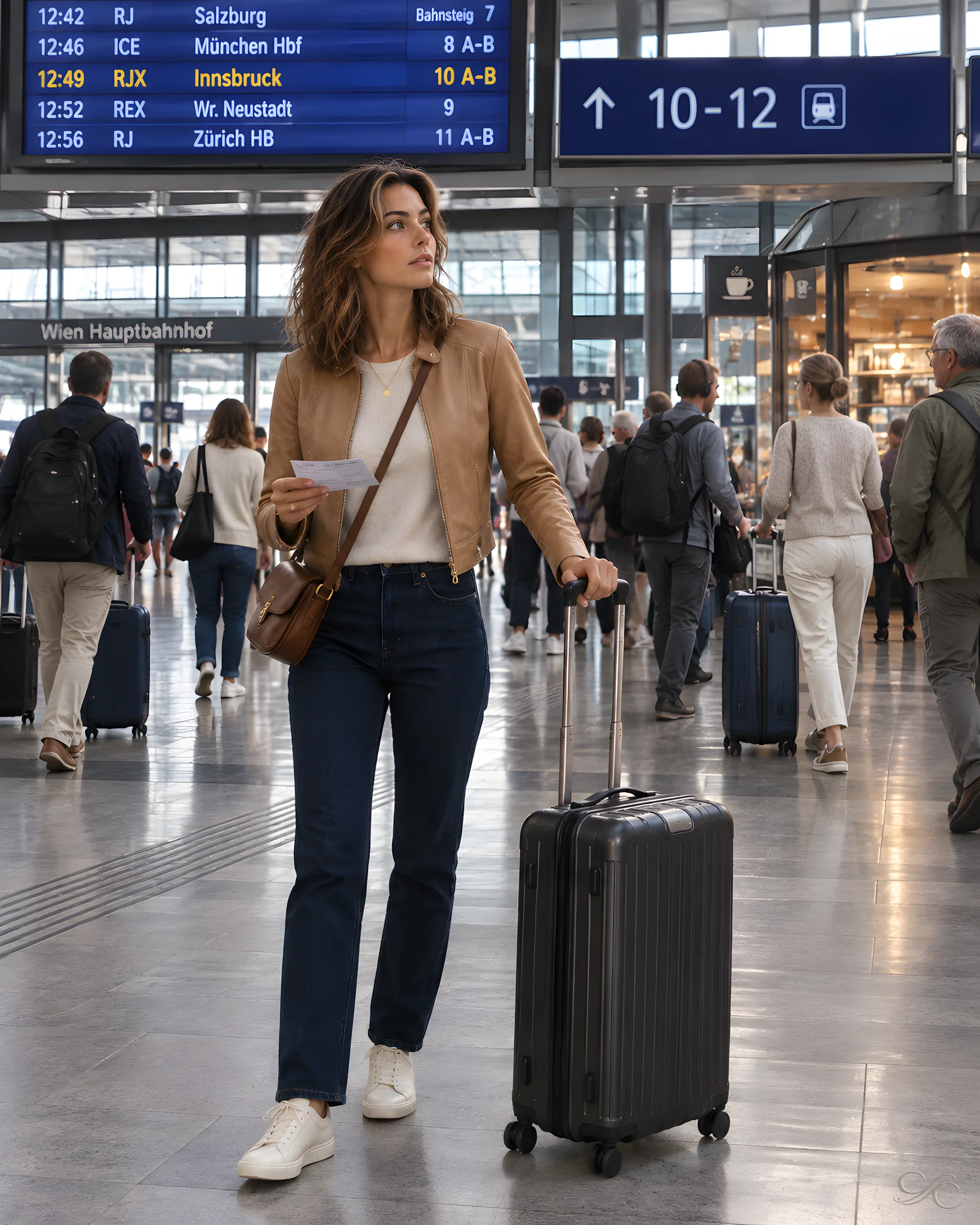
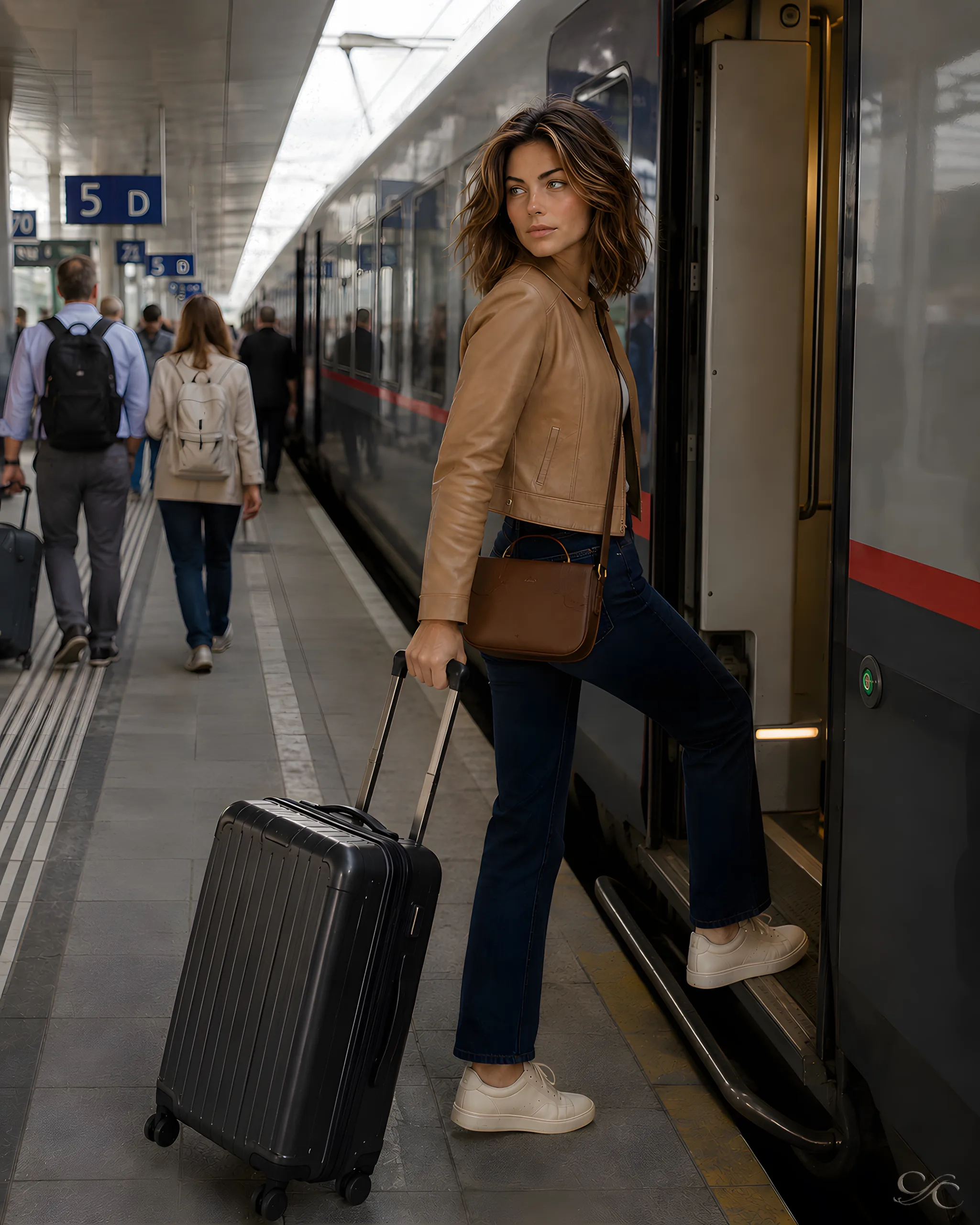
I reached Wien Hauptbahnhof before 13:00 and checked the departure board for the platform. The useful details were compact: train number, time, platform, and carriage position. Austrian stations often mark platforms by sectors, so the letter on the display mattered too. With the suitcase beside me, I found the train and crossed into the next leg.
Wines to Try in Vienna
At the Heuriger table, Grüner Veltliner was the obvious place to start, but Vienna sits close to several Austrian wine regions. A short list was enough.
- Grüner Veltliner – Austria’s signature white: dry, crisp, often with citrus, green apple, and a peppery edge. Good with sausages, salads, and market bites.
- Wiener Gemischter Satz – Vienna’s traditional field blend, made from different grape varieties grown together in the same vineyard.
- Riesling – Look for examples from Wachau, Kamptal, or Kremstal is often dry, refreshing, and marked by lively acidity and mineral character.
- Zweigelt – an easygoing Austrian red, often cherry-led and light enough for casual meals.
- Blaufränkisch – darker and more structured, worth trying with richer dishes.
My Notes
Vienna was easiest when I treated the center as walkable, then used public transport for the longer jumps to Schönbrunn, Belvedere, the Donaukanal, and Hauptbahnhof.
- The U-Bahn, trams, and buses worked as one network, so I did not need separate plans for each transfer. Hauptbahnhof was especially straightforward on the U1.
- In the old center, short distances held a lot: Stephansplatz, the Graben, the Hofburg, and the Ring were close enough to connect on foot.
- Café time was not rushed. A coffee usually came with water, and lingering over one cup felt normal rather than indulgent.
- Naschmarkt was better for browsing than for deciding quickly. Prepared counters made it easy to build a small meal without committing to a restaurant.
- Freihausviertel, just beyond the market, was useful for seeing ordinary Vienna: small shops, cafés, bicycles, apartments, and errands.
- At Schönbrunn, the garden mattered as much as the palace. The climb to the Gloriette took time, but the view explained the layout.
- At a Heuriger, I would look for the pine branch outside. That sign traditionally meant the winemaker was open.
The Journey Continues
Vienna closed at Wien Hauptbahnhof, with the suitcase already inside the carriage and the departure board behind me. The next stretch led into Austrian wine country before the route turned west to Salzburg and Innsbruck. Lower Austria is Austria’s largest quality-wine-growing region, with regions such as Wachau, Kamptal, and Kremstal known for Grüner Veltliner and Riesling.
If you’re planning a trip to Vienna, Prague, Slovenia, or other European destinations, 💬 chat with me for ideas on timing, wine, where to stay, and how to shape the journey naturally.
À bientôt,
Camille ✨