Chania — Arrival & First Impressions
The rhythm shifts again. After the open coastline and long Atlantic light of the Algarve, Crete feels more layered—less expansive, perhaps, but deeper in its sense of time and place.
Chania sits along the northwestern edge of Crete, where layers of history stretch back more than three thousand years. Ancient Kydonia once stood here, a Minoan settlement long before the harbor took its present shape.
What you see today is a quieter composition—Venetian lines, Ottoman details, and modern Greek life woven together along the water’s edge.
Most arrivals begin just outside the city, at a small airport framed by low hills and sea air. Within minutes, the landscape shifts—roads narrow, buildings soften, and the harbor begins to appear in fragments of light and color.
I arrived in the morning, just as the city was beginning to wake.
There’s something immediate about Chania. Not dramatic, not overwhelming—just a quiet sense that everything is exactly where it should be.
Planning something similar in Chania?
→ Ask Camille for what to wear, where to stay, or how to shape your days 🤍
Harbor Morning — The Shape of the City
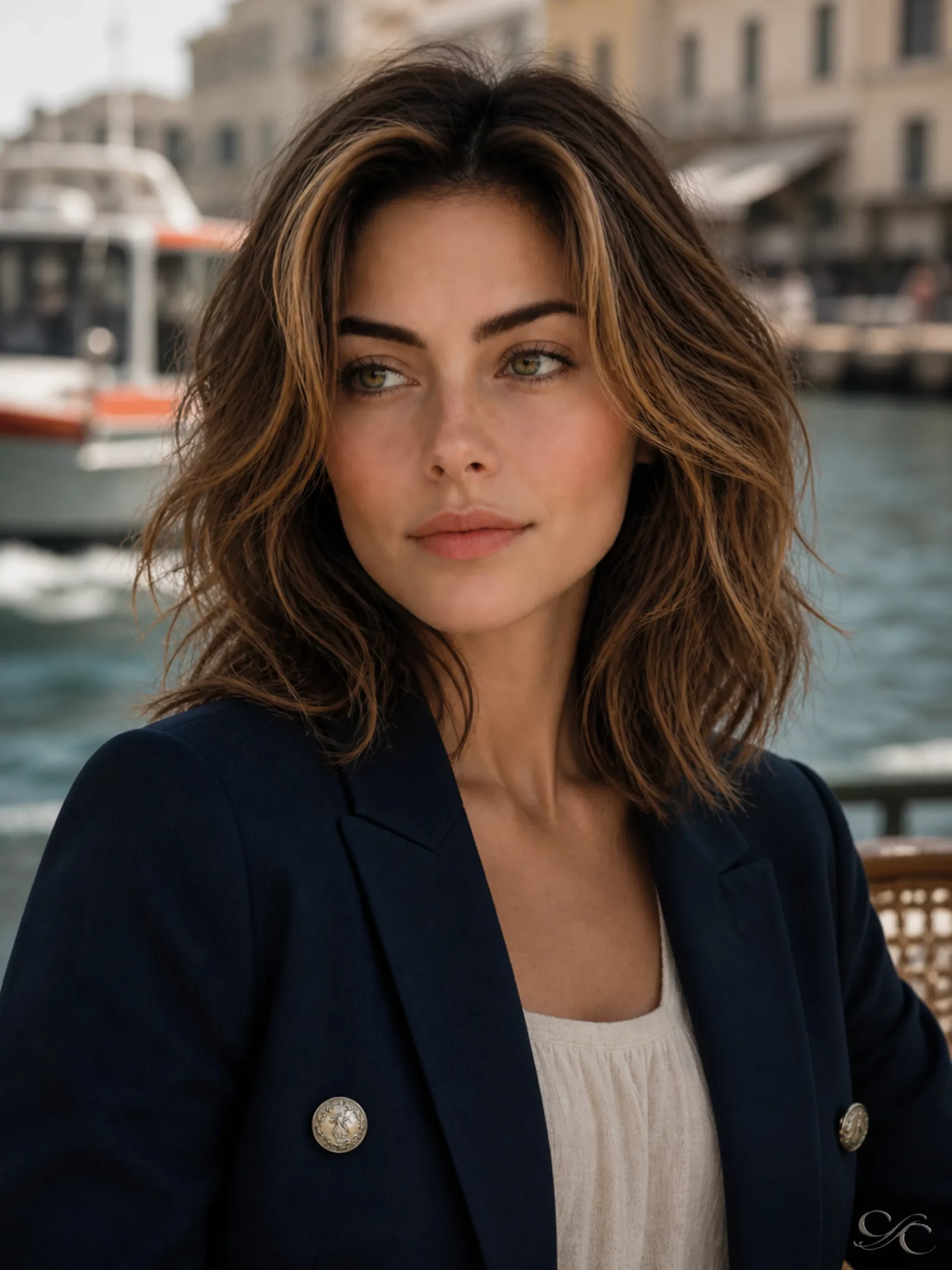
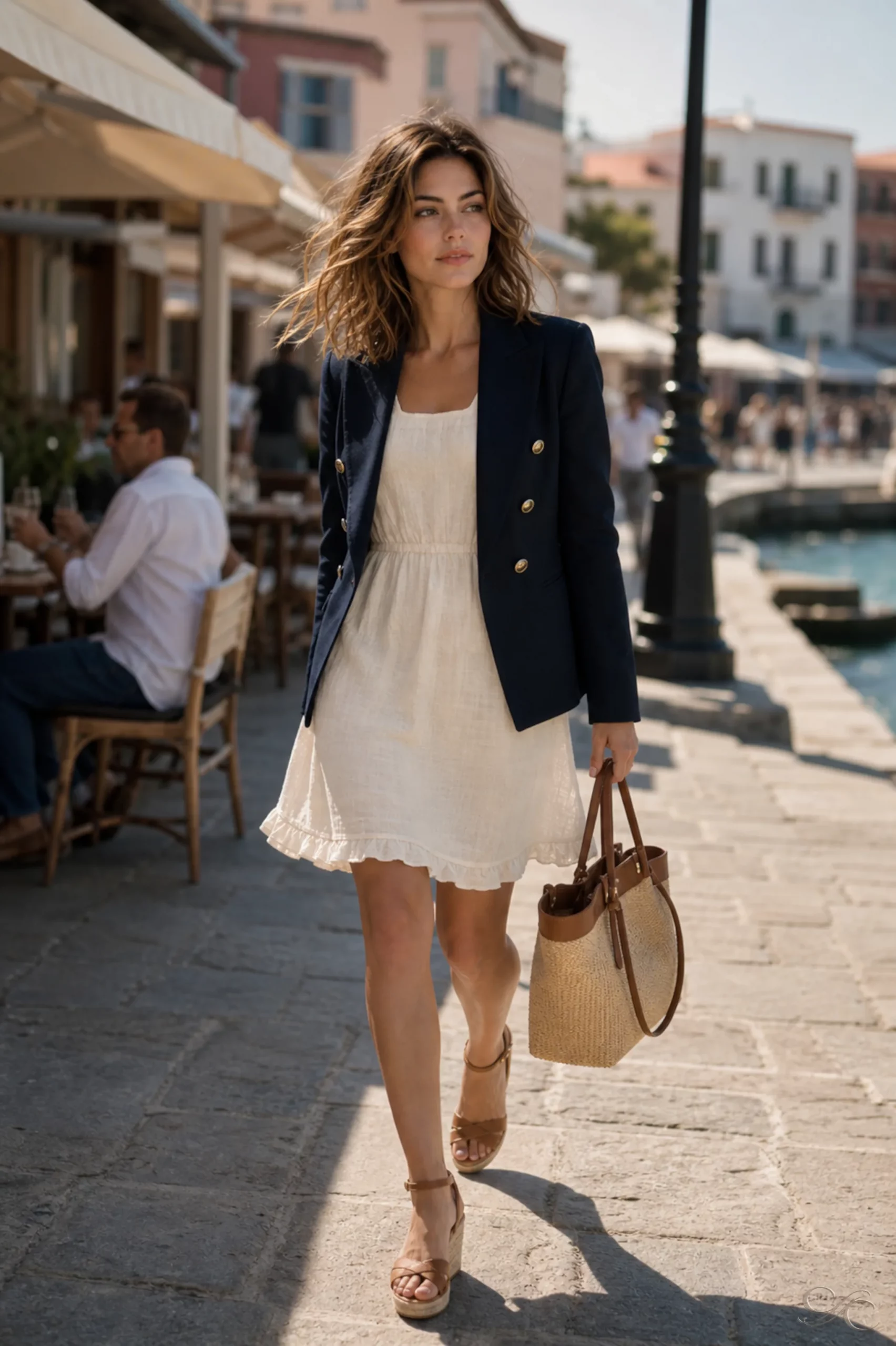
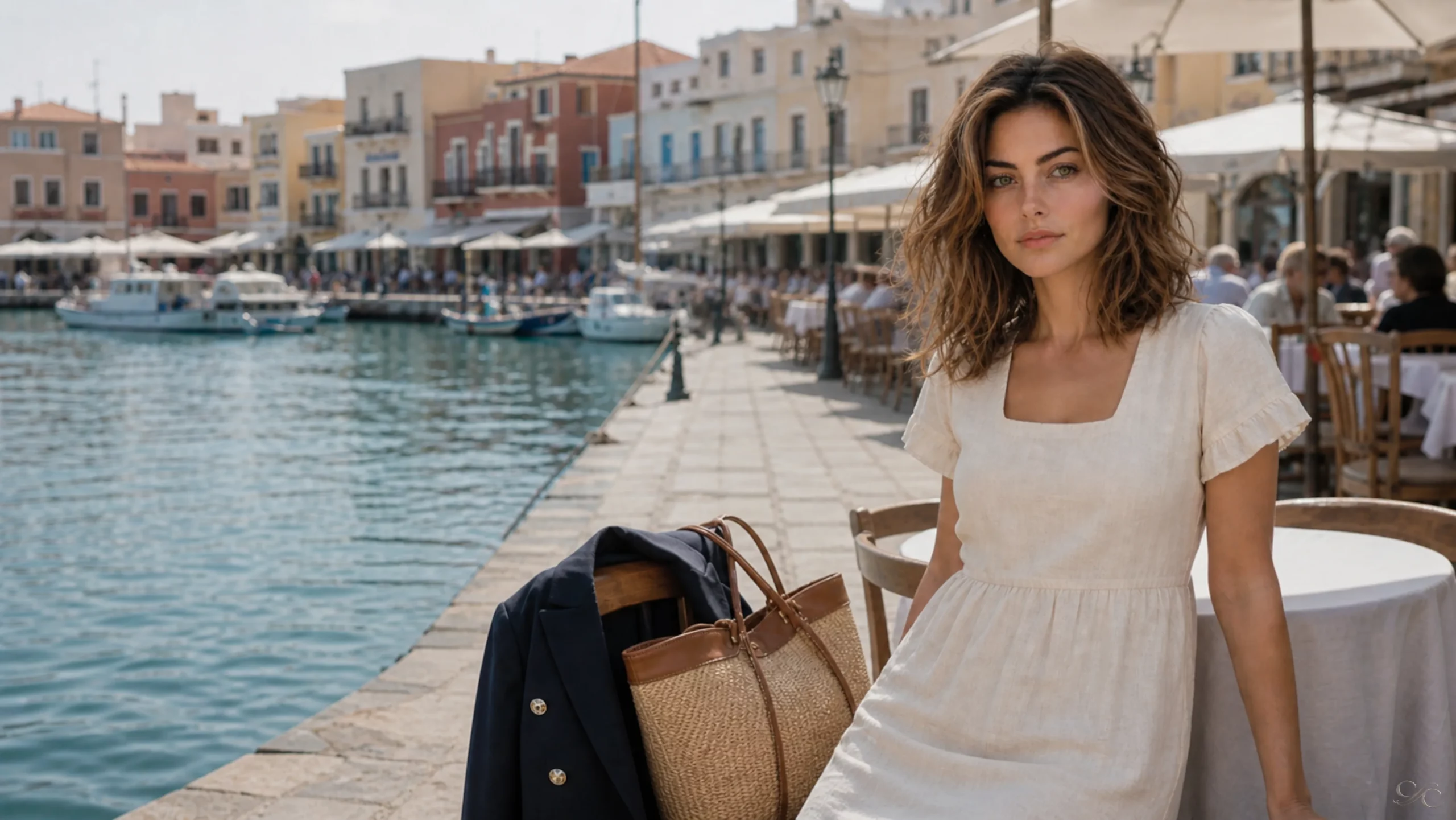
The harbor still carries its Venetian bones—the long curve of the port, the 16th-century arsenals once used to build and repair ships, and the lighthouse at the entrance, later reshaped under Egyptian administration in the 19th century.
You don’t notice it all at once.
It reveals itself slowly, as you walk.
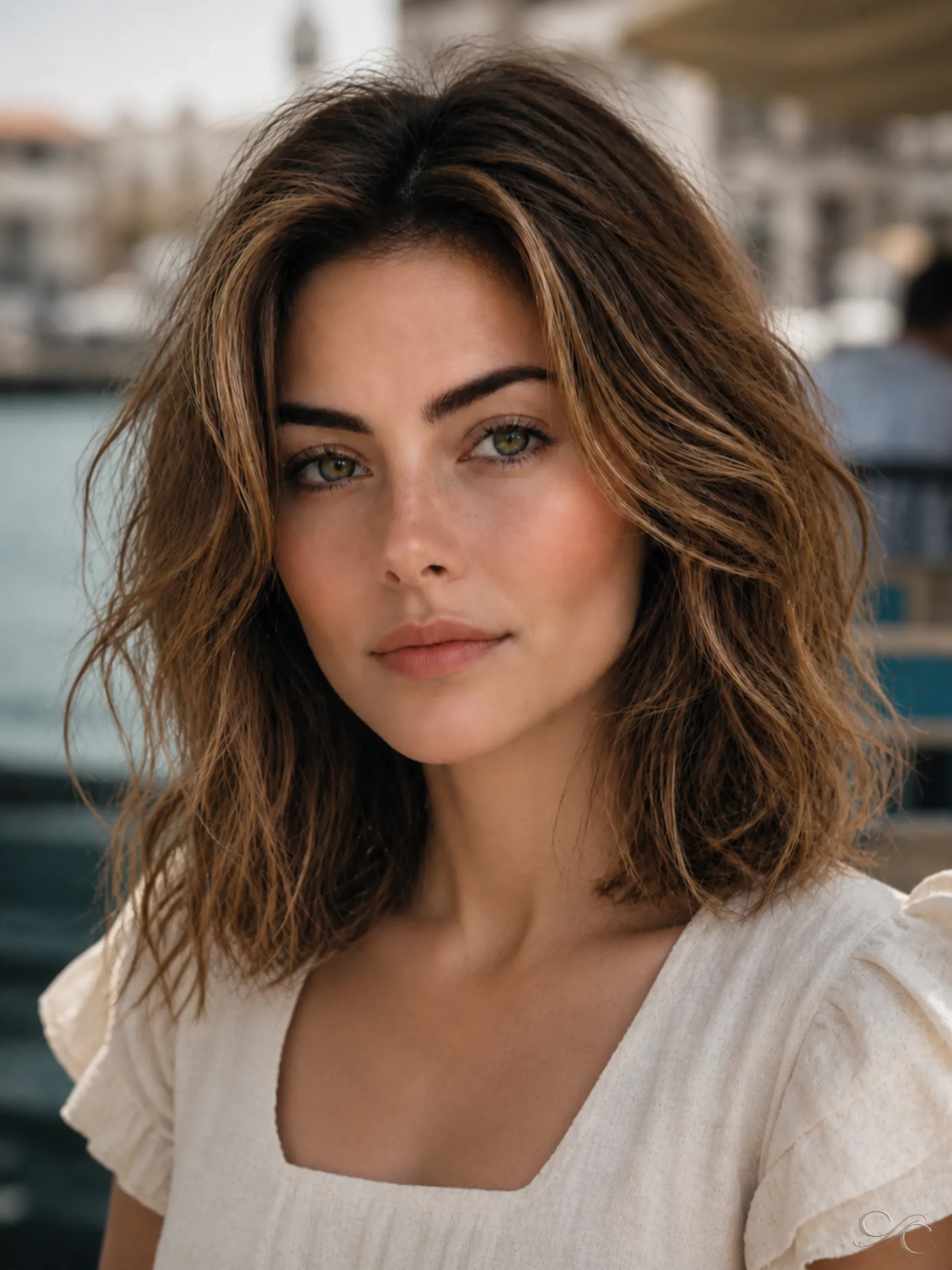
A linen dress, a light blazer, the sound of footsteps against stone. Boats shifting gently in place. The kind of morning where nothing feels rushed, and there’s no reason to change that.
A Table by the Water
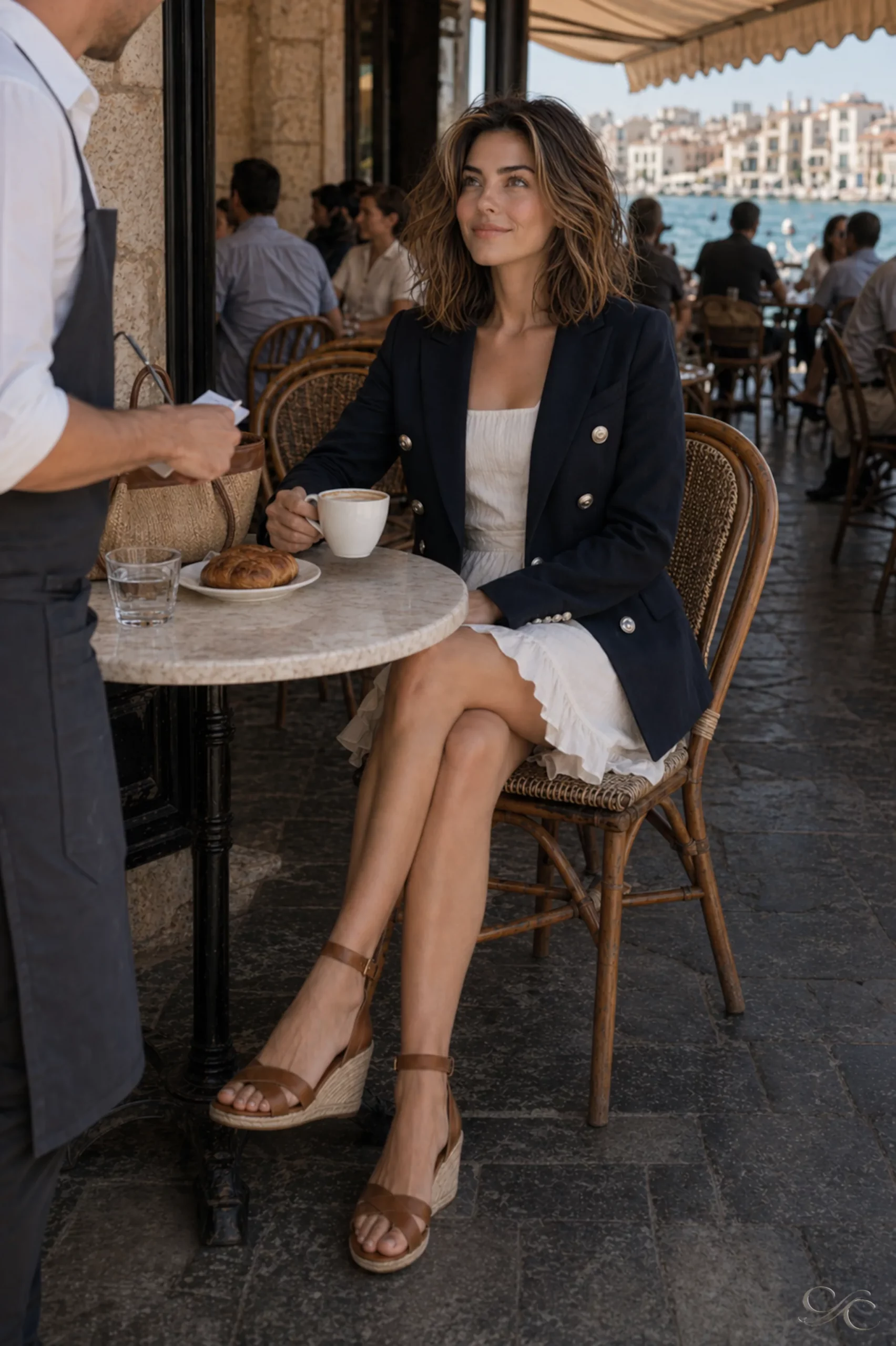
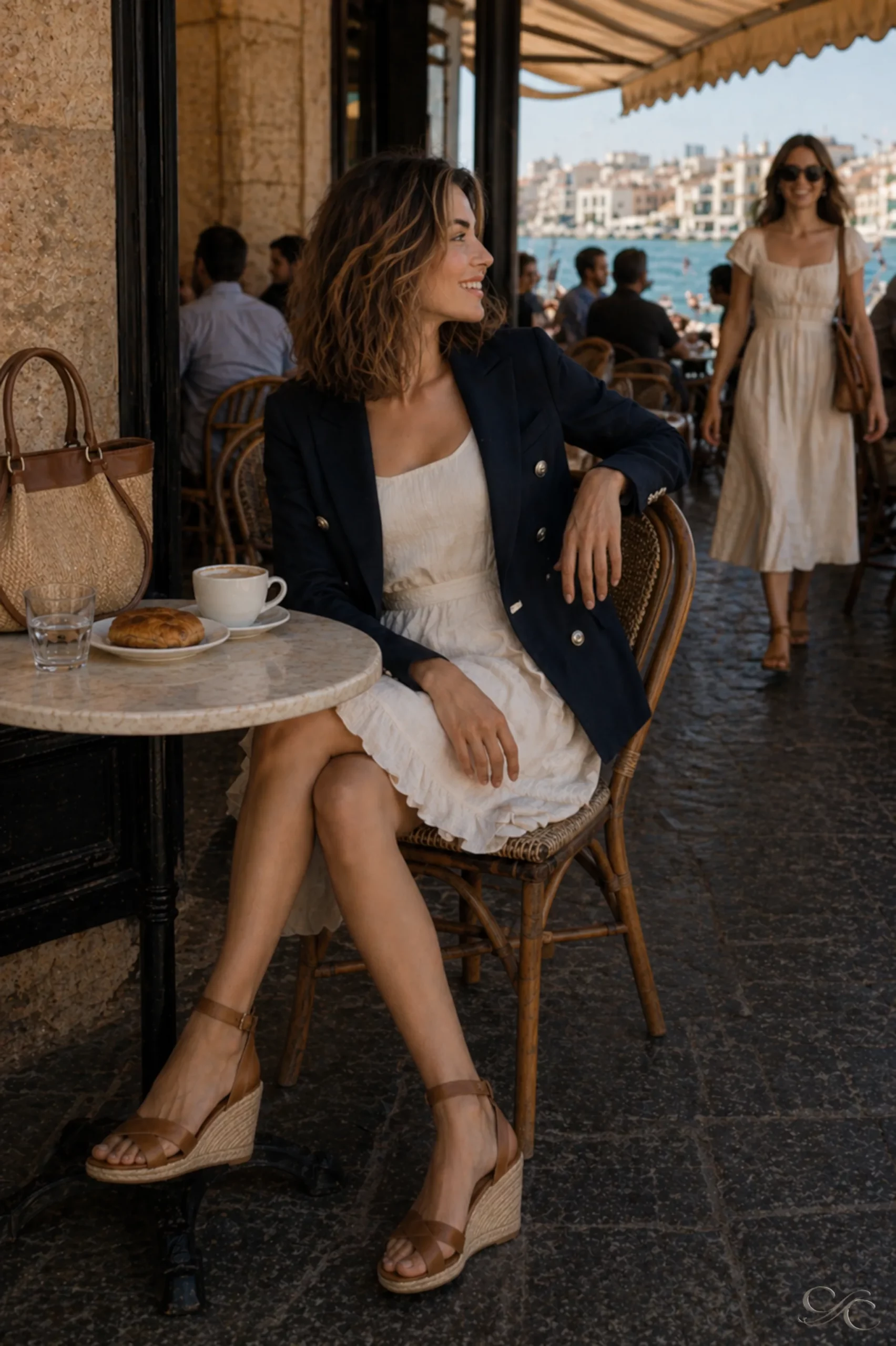
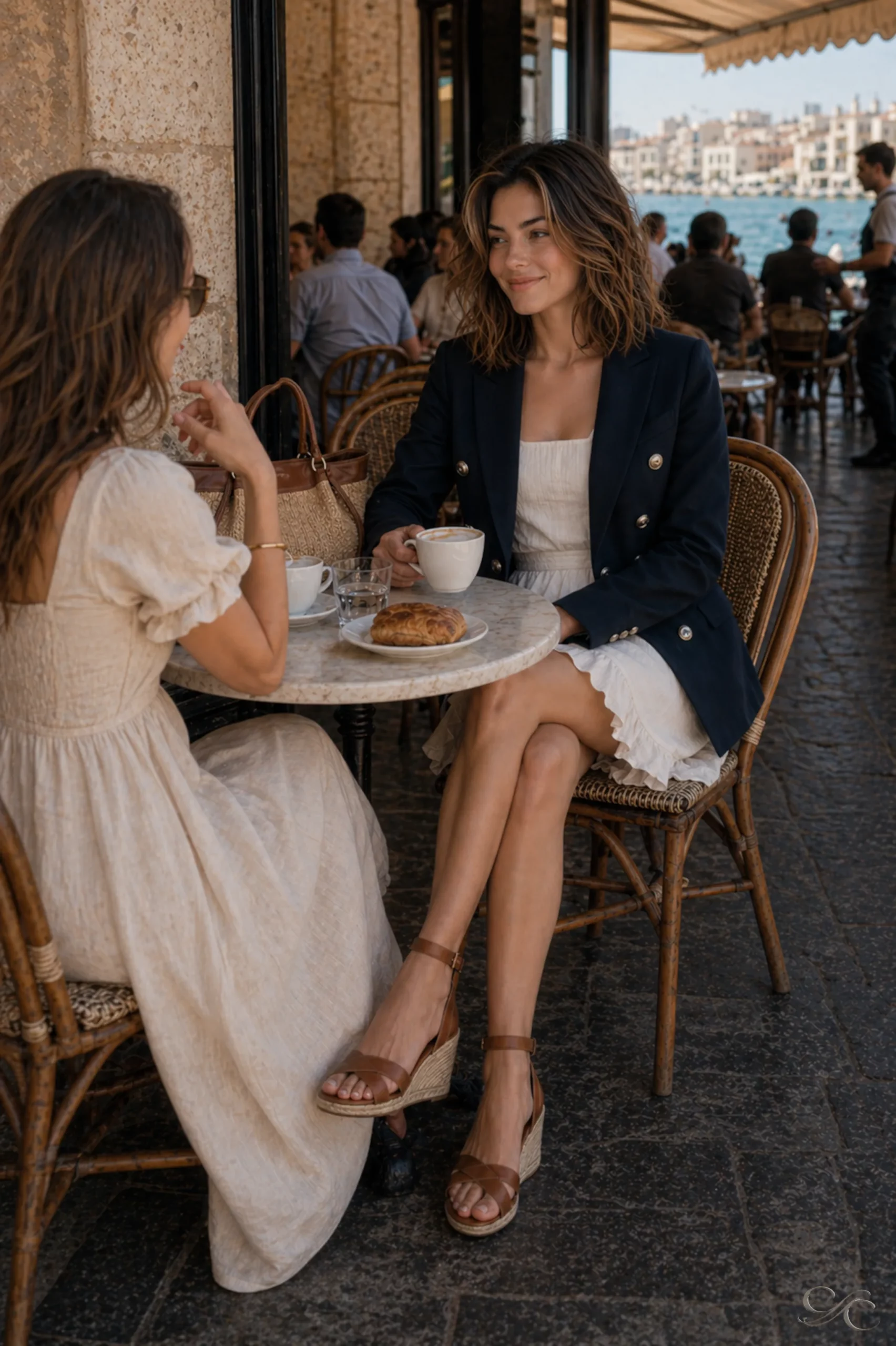
Tables fill gradually. Conversations stretch. Coffee arrives without urgency.
I found a small table just along the edge—close enough to the water to hear it, far enough to stay in the shade. These are the moments that define a place more than any landmark.
A second coffee felt inevitable.
There’s something about Chania that invites you to stay longer than planned. Not bec ause there’s more to do—but because there’s no need to move on.
Camille’s Look
Effortless pieces for a day along the harbor—light, structured, and easy to move between café, coast, and evening.
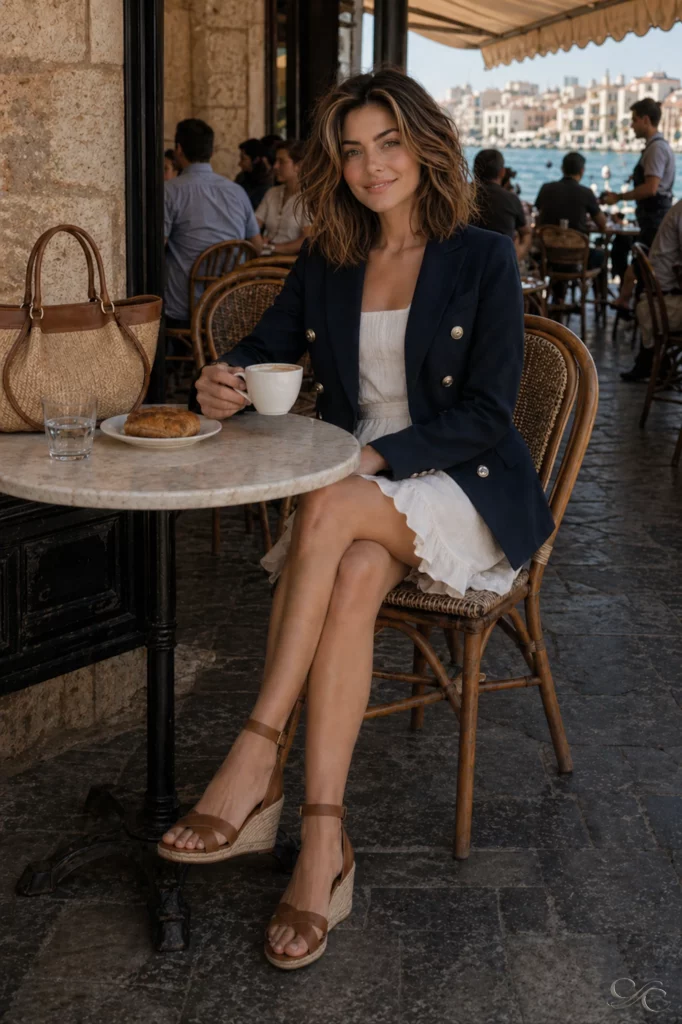
- Linen dress
- Tailored double-breasted blazer
- Wedge espadrille
- Woven bag
What to Wear in Chania
Light fabrics, soft layers, and pieces that move easily between harbor cafés and coastal paths. A simple dress, a linen blouse with denim, or a lightweight blazer all work beautifully here.
Want help refining this for your trip? Ask Camille 🤍
Beyond the Harbor — Following the Coast
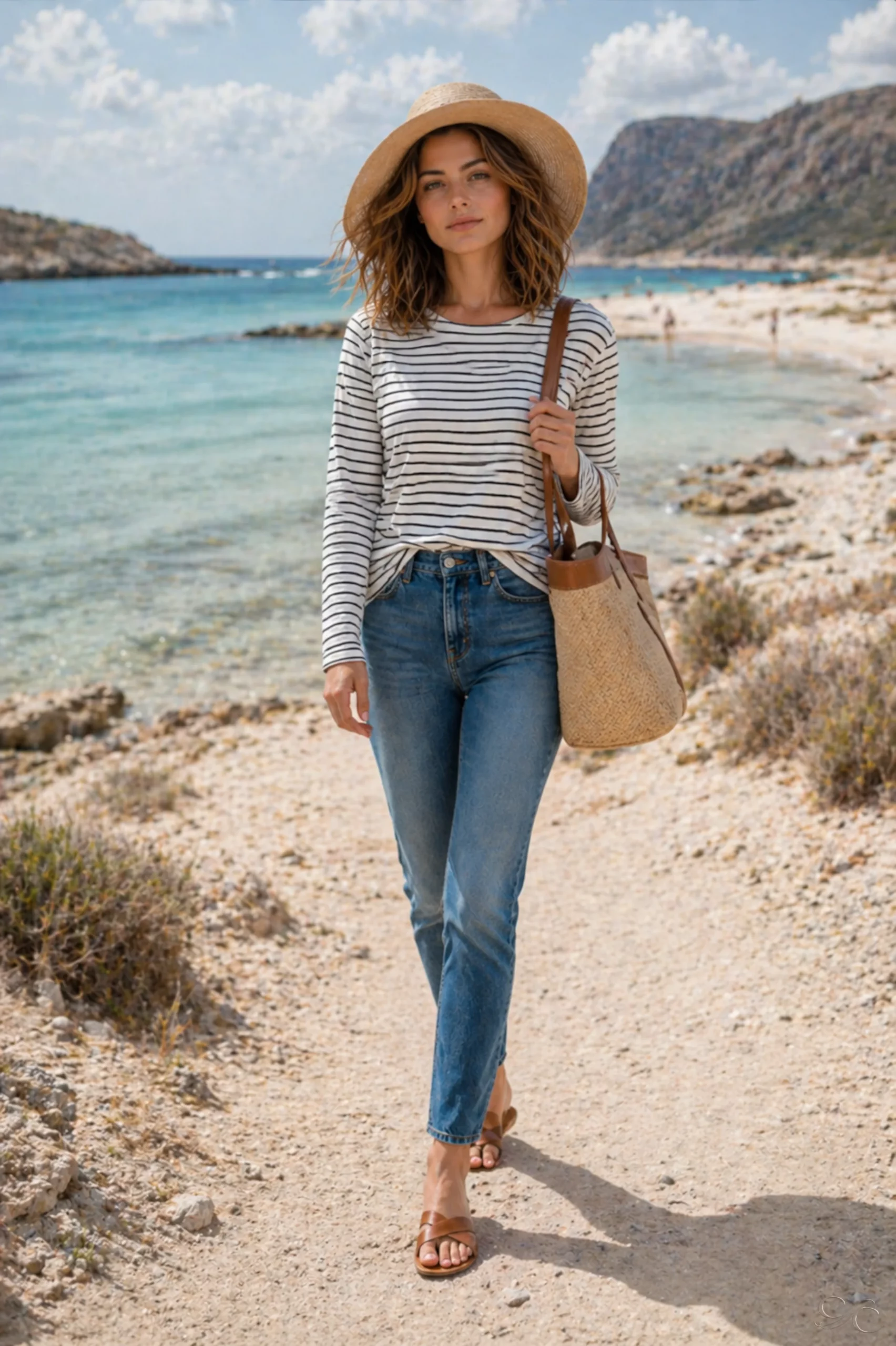
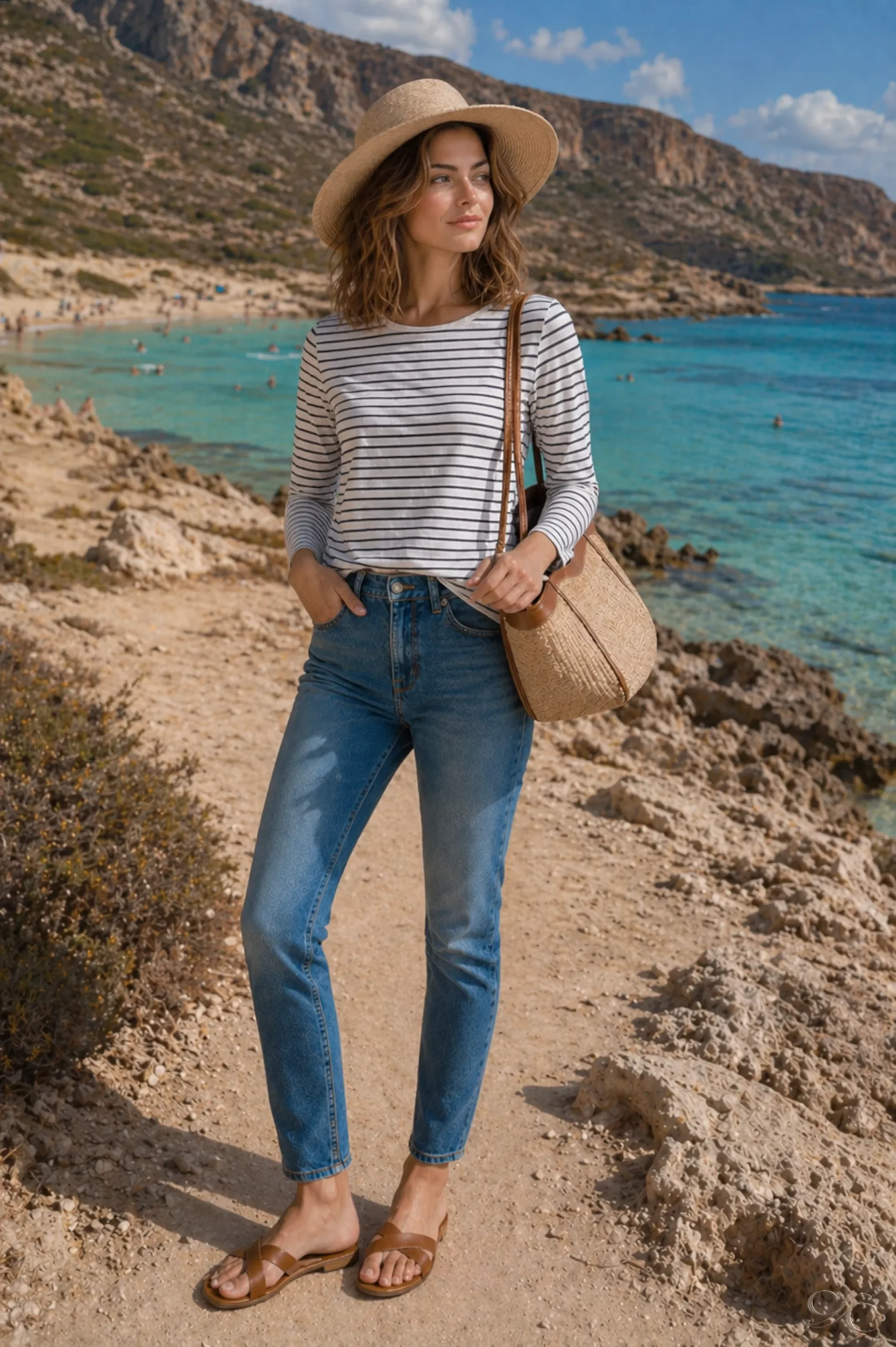
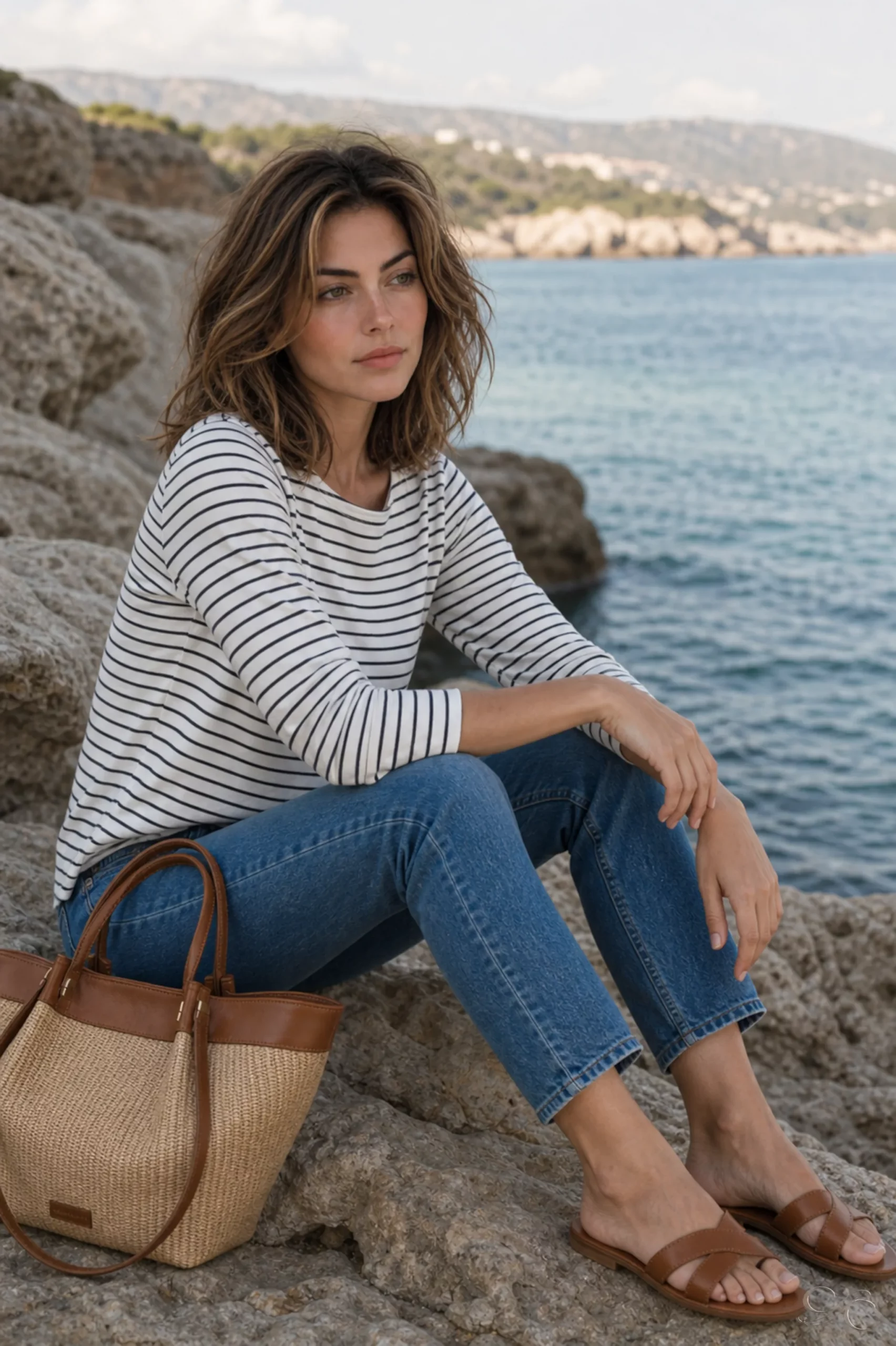
By early afternoon, I left the harbor behind and followed the coastline west.
Here, the city gives way to something more open—long stretches of water, pale sand, and paths that feel only loosely defined. The sea shifts in color throughout the day, from soft turquoise to deeper blue, depending on the light.
Further along, places like Balos and Falassarna feel almost untouched—wide, quiet, and shaped more by wind and water than by time.
I walked without direction.
Further along the coast, places like Elafonissi are known for their pale pink sand—created over time from crushed shells that tint the shoreline in soft rose tones.
Not sure what works best for a seaside morning like this?
Camille can refine this look for your style and timing 🤍
Inland — Where the Light Softens
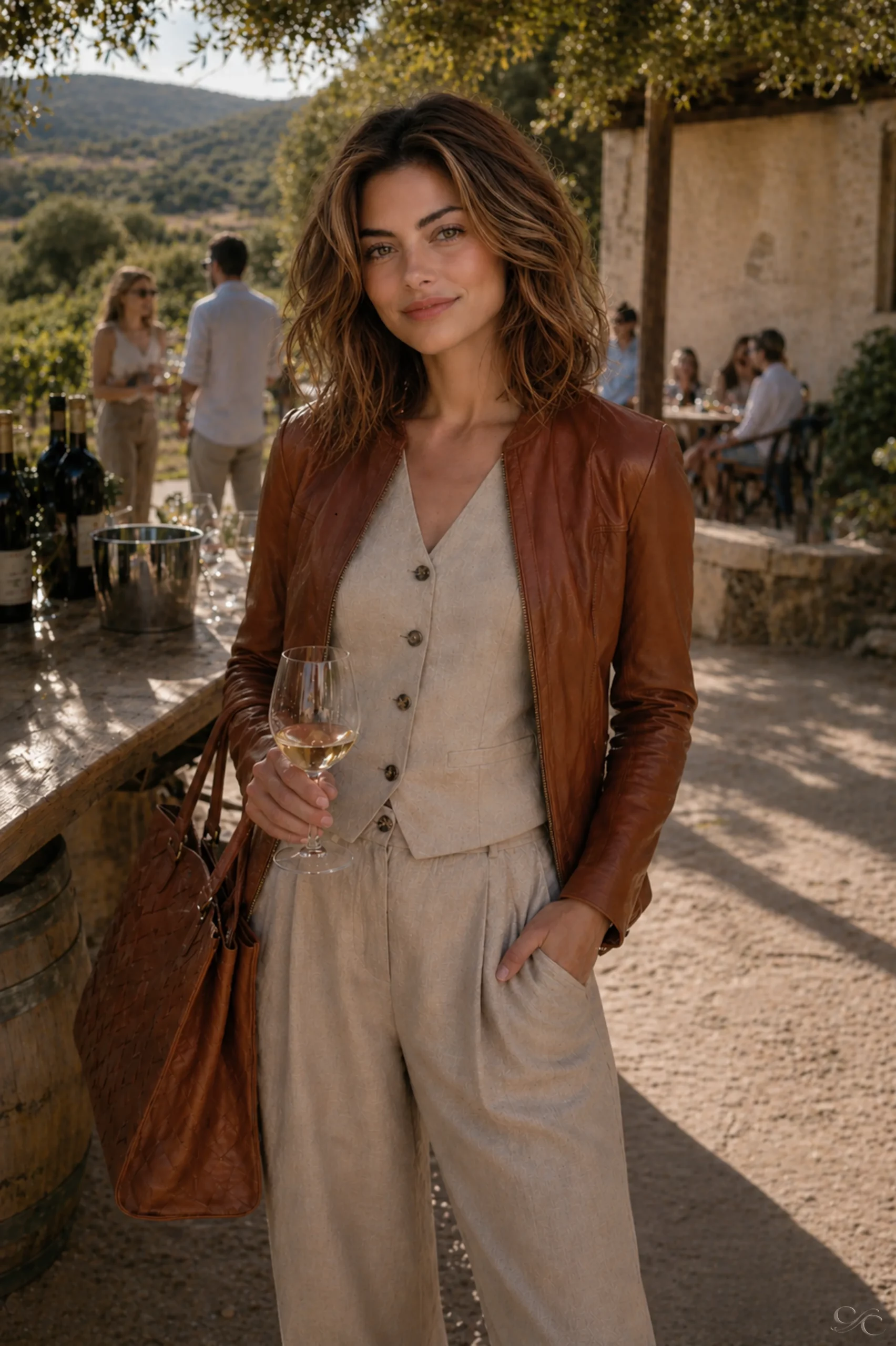
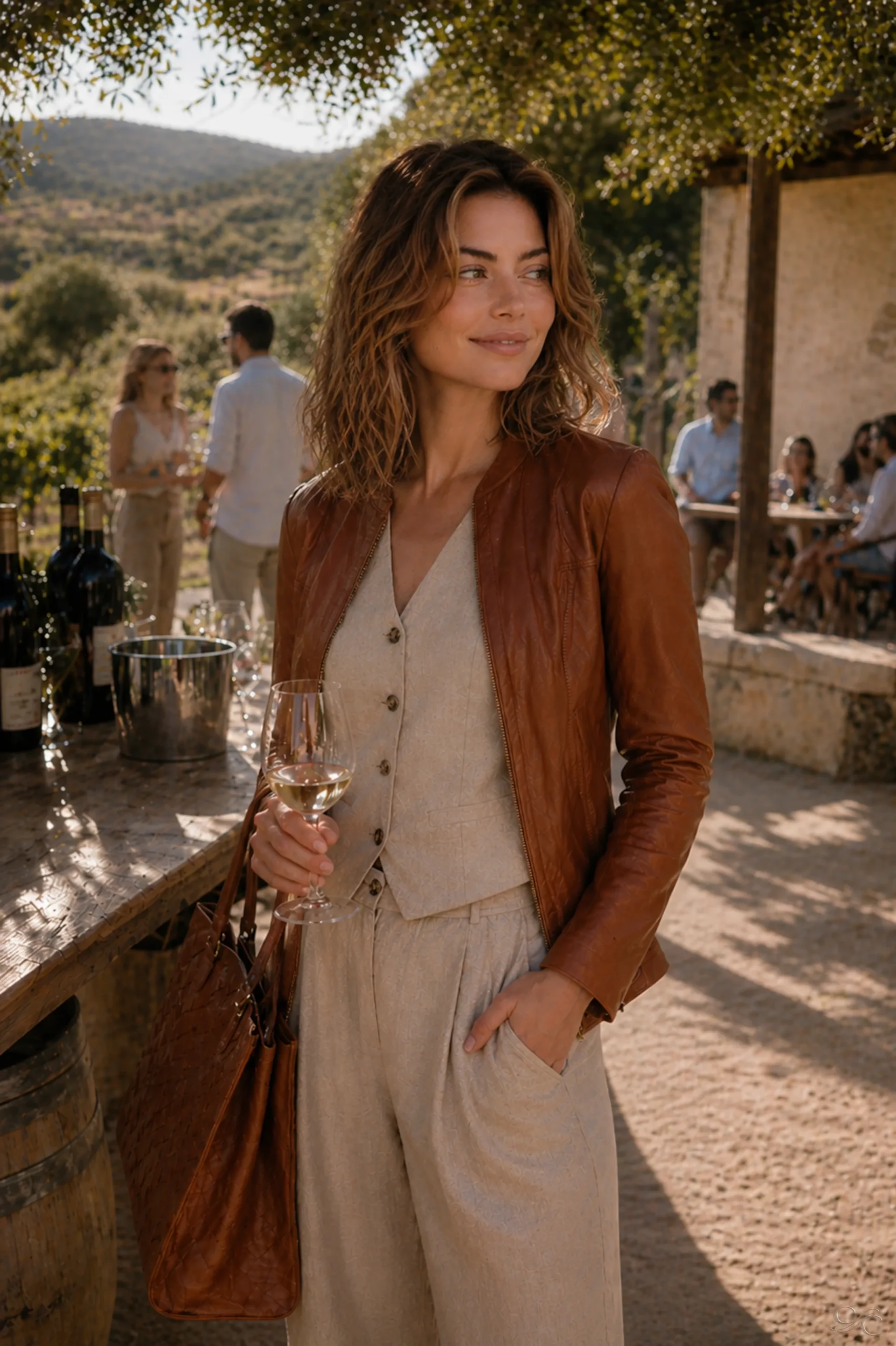
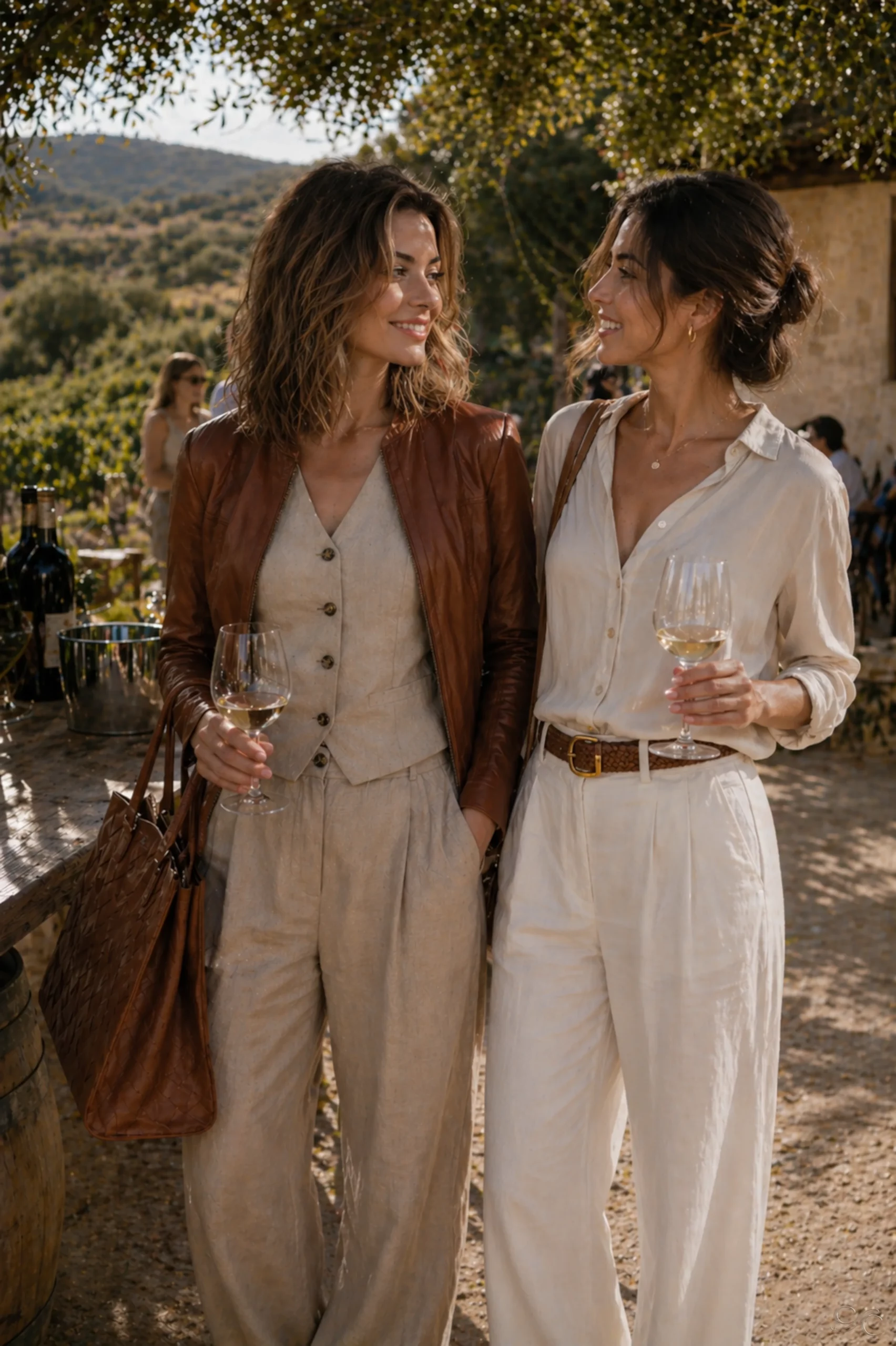
Inland, the landscape softens into olive groves and vineyards, where smaller producers continue traditions shaped over generations.
At Dourakis Winery, just outside Vamos, the experience feels personal—stone terraces, shaded tables, and a slower rhythm that mirrors the land itself.
Try a glass of Vidiano, a native Cretan white known for its soft citrus and mineral notes, or a deeper Kotsifali red—earthy, structured, and unmistakably local.
Alongside the wine, you’ll often find small tastings of local olive oil—peppery, golden, and just as expressive of the region as anything in the glass.
🍷 Wines to Try in Crete
Crete has one of the oldest winemaking traditions in Europe, dating back to the Minoan period. Today, the island’s wines feel both rooted and quietly evolving—built around native grape varieties and shaped by sun, altitude, and sea air.
Whites tend to stand out, especially in warmer months—fresh, mineral, and often lifted by natural acidity.
For something a bit more expressive:
Reds are often softer and more rustic in character, shaped by the climate and traditional styles:
And for something simple and local:
A chilled house white or rosé, served alongside small plates and local olive oil, is often the most effortless way to experience Crete—uncomplicated, expressive, and perfectly suited to long afternoons.
Evening in the Old Town
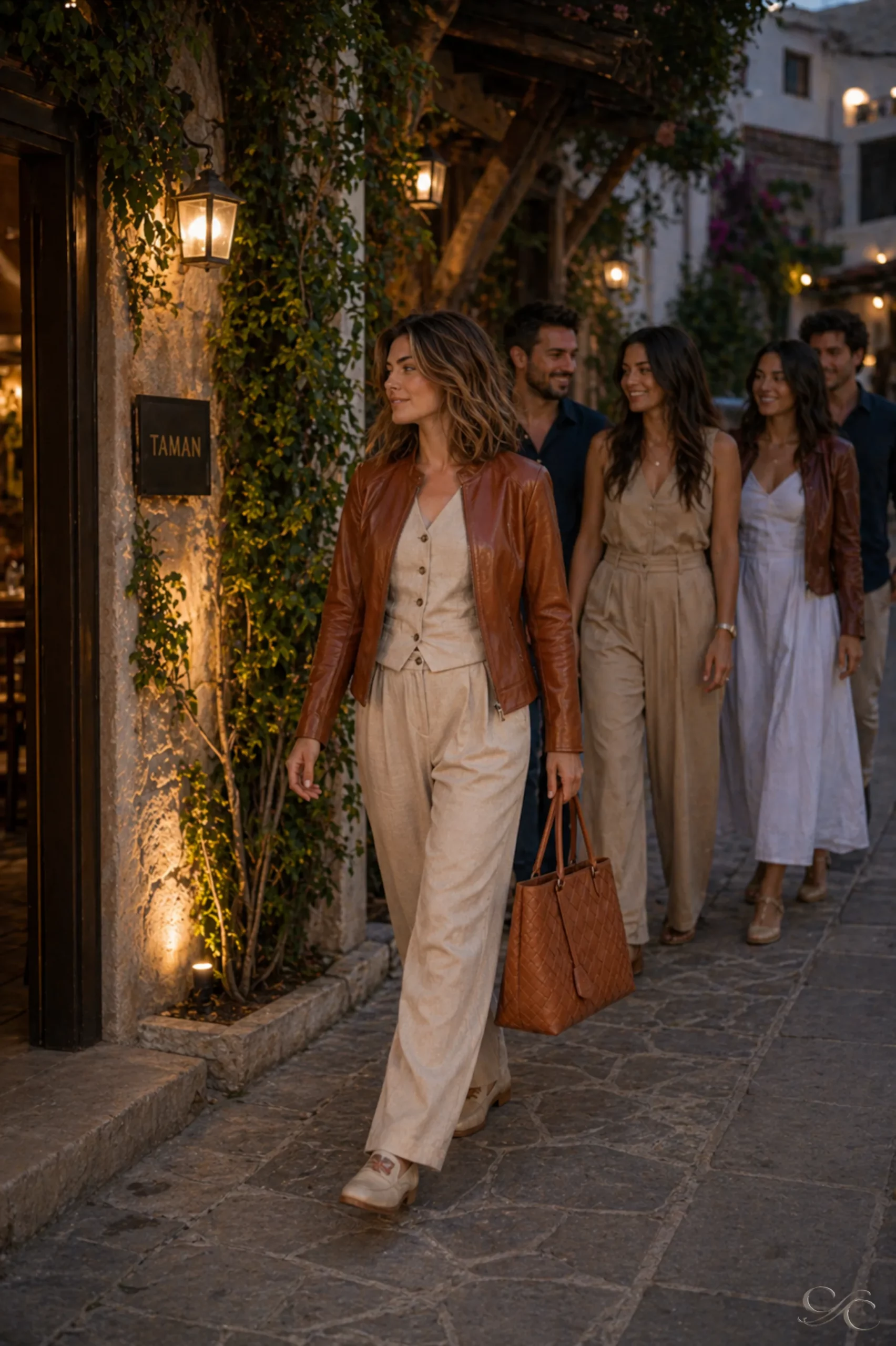
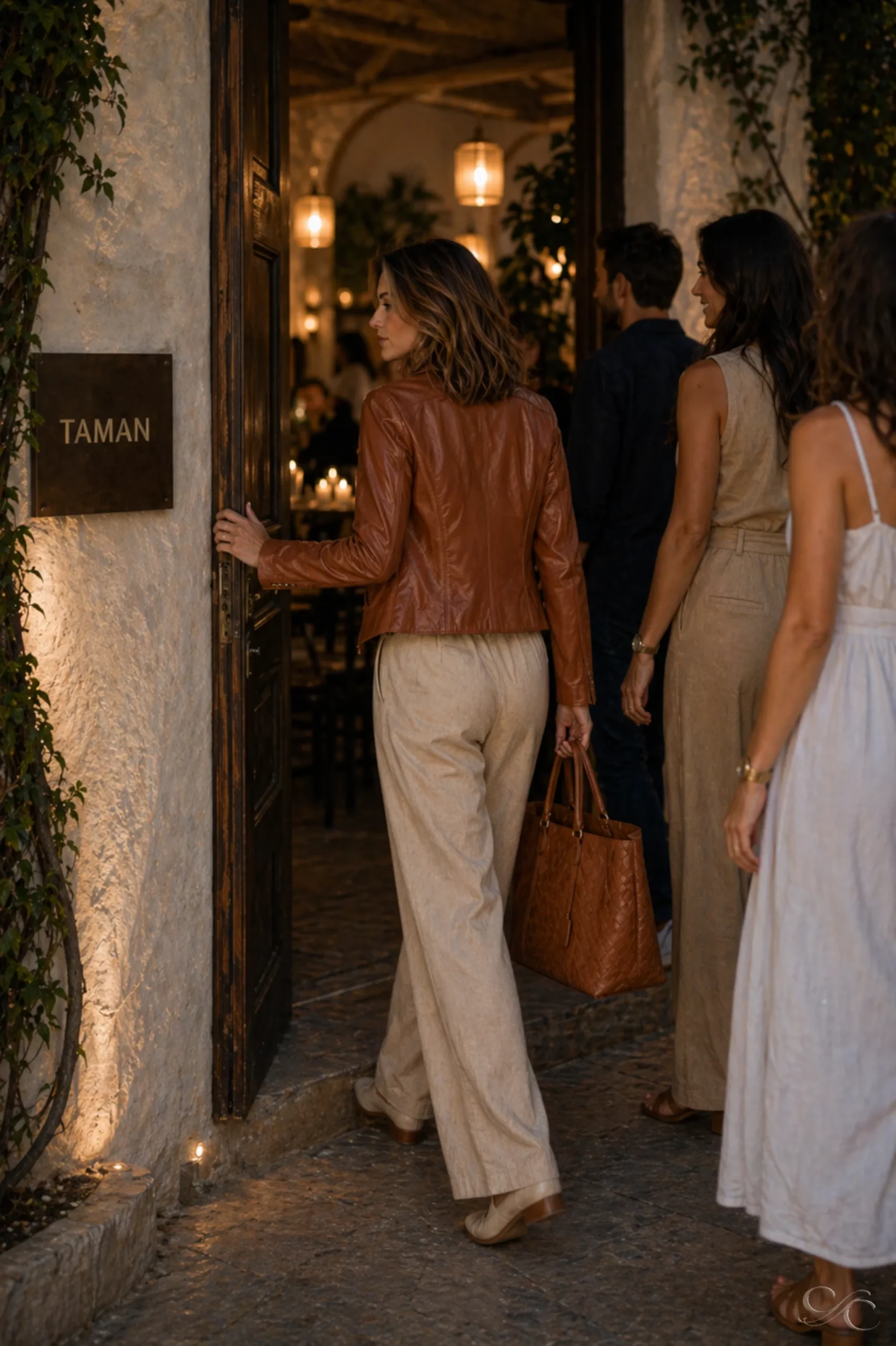
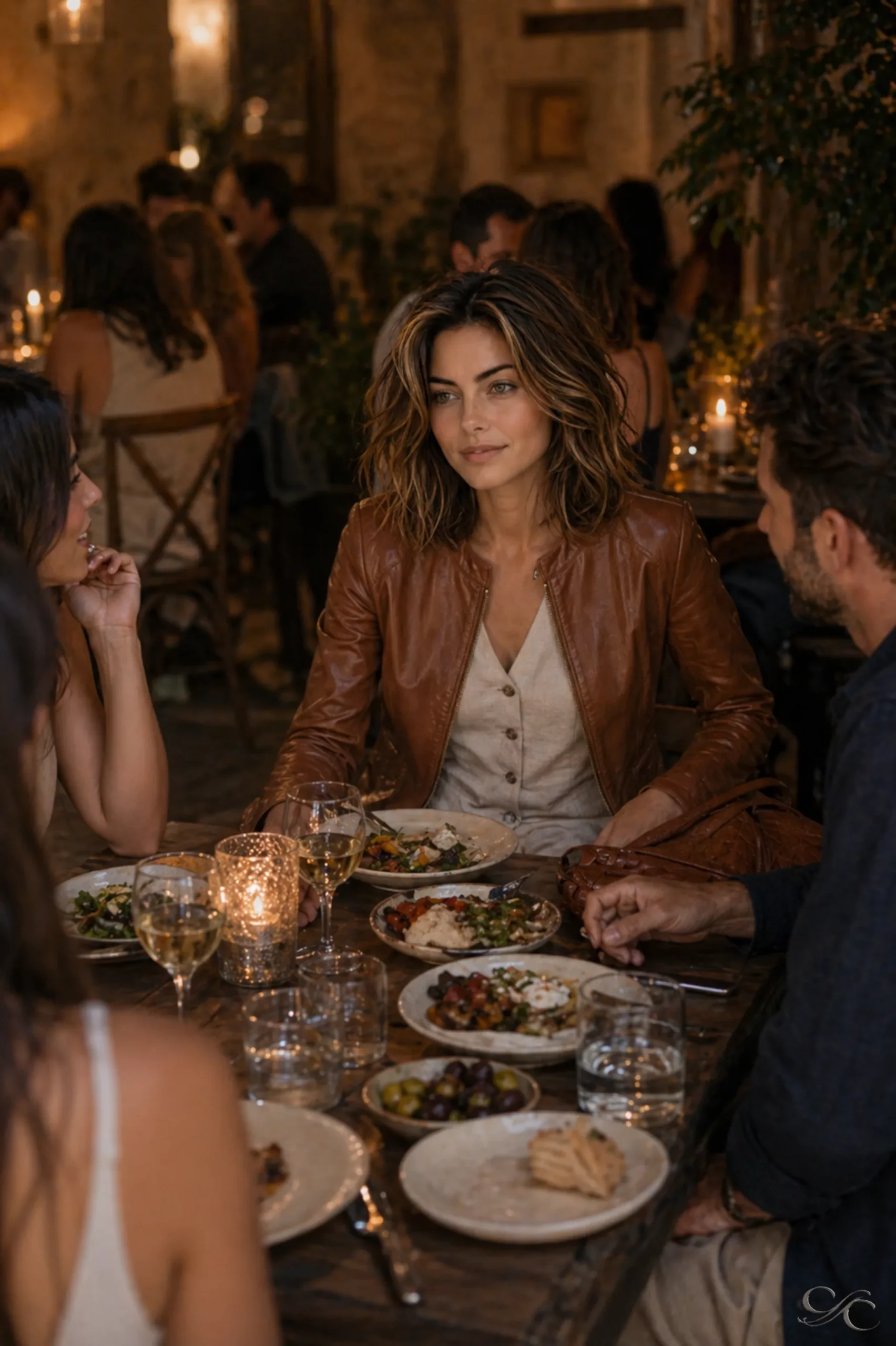
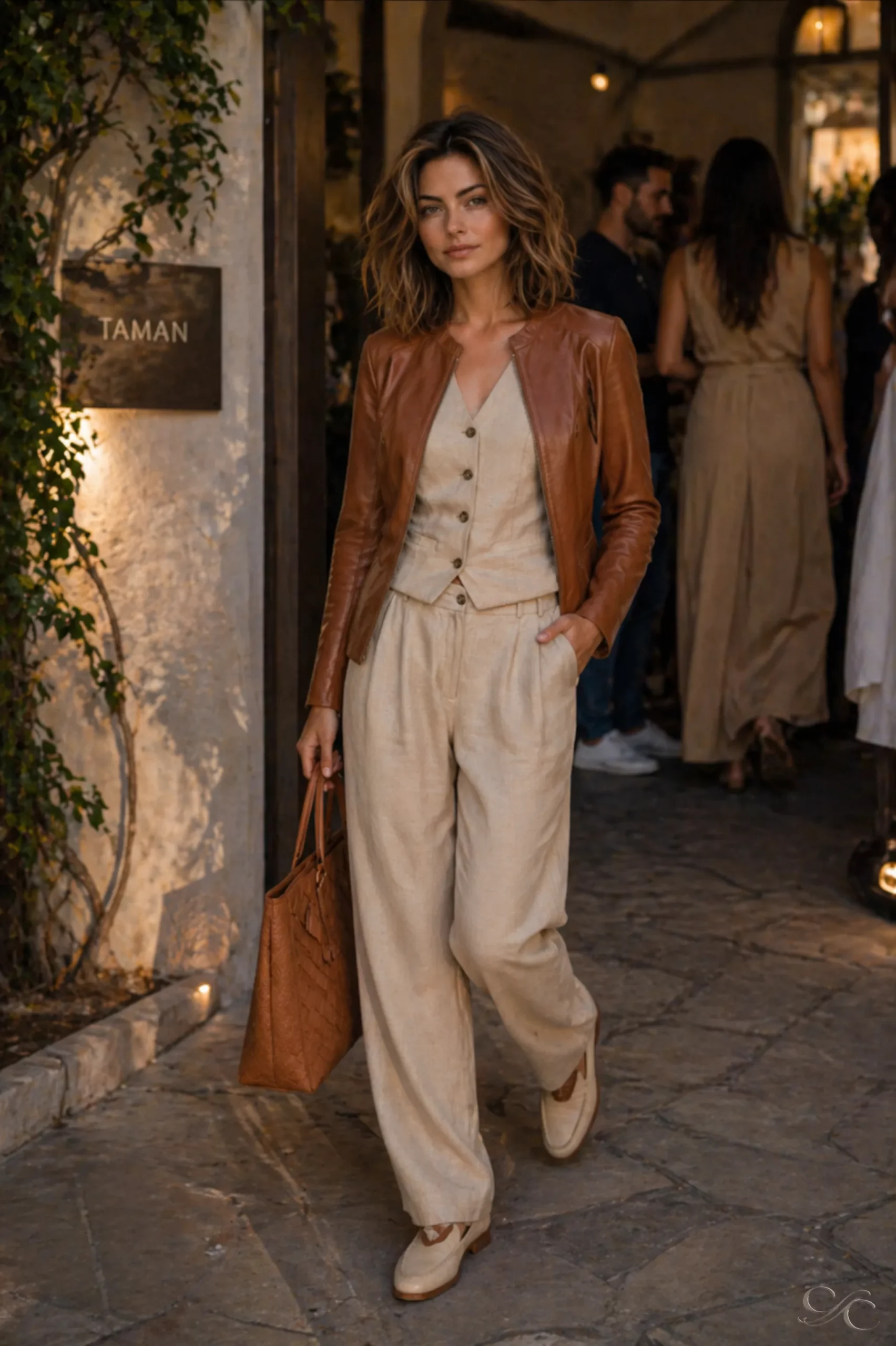
By night, Chania becomes something else entirely.
The narrow streets of the old town—once shaped by Venetian design and later Ottoman influence—glow under warm light. Stone walls, wooden balconies, small doorways opening into restaurants filled with quiet conversation.
The day lingers here, just beneath the surface.
Dinner stretches late. Glasses refill. The energy shifts from movement to presence.
I changed just enough for the evening—soft neutrals, something relaxed but intentional—and stepped back into the rhythm of the town.
There’s no need to rush.
Not here.
My Notes
📘 The Journey Continues
From Chania, the rhythm shifts again—away from the layered harbor and into something more elemental. The journey continues east, where the landscapes simplify, and the light begins to feel sharper, more defined.
Now, the journey moves further east—toward the Cyclades, where the landscape becomes more elemental. In Santorini, white stone meets volcanic cliffs, and the light feels sharper, more defined, almost sculpted by the sea itself.
Afternoons stretch along the caldera. Evenings arrive slowly, with that familiar pause just before sunset when everything softens, then deepens.
It’s a different kind of beauty—more dramatic, more exposed—and one that invites you to slow down in a new way.
Inspired to go yourself? You can 💬 Chat with Camille for travel and style ideas—where to stay, what to wear, and how to shape the journey as it unfolds.
If you’re thinking about Crete—when to go, where to stay, or how to shape the route—I’m always here to help you plan it in your own way.
À bientôt,
Camille 🍇✨