From Franconia to the Rhine
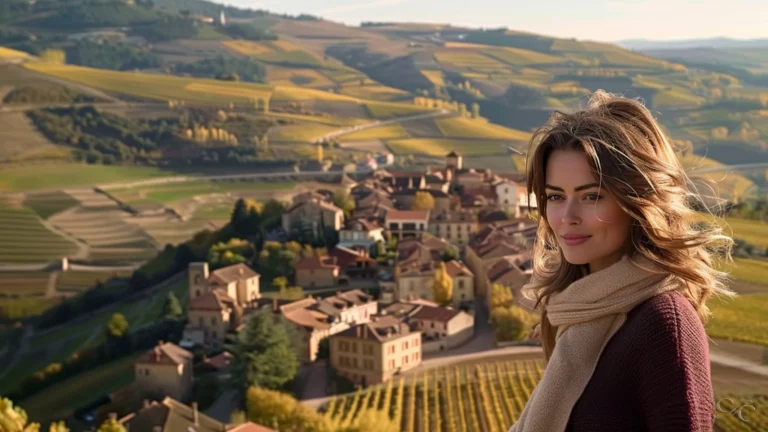
Rain glazed the platform when I arrived in Würzburg to begin five days between two rivers. From Franconia, I followed the Main west through Miltenberg, where vineyard slopes gave way to wooded uplands and half-timbered streets, before reaching the Rhine.
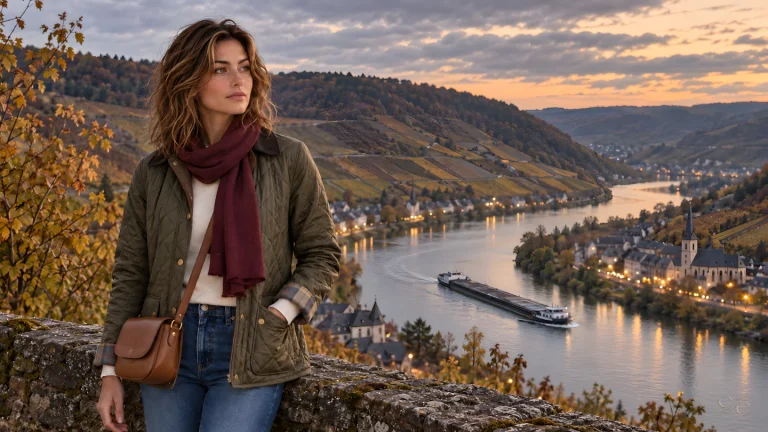
The wines changed with the landscape. Around Würzburg, Silvaner appeared in the flattened Bocksbeutel associated with Franconia. Farther west, the Rheingau’s broader vineyard slopes were planted chiefly with Riesling. Beyond Rüdesheim and Bingen, the Rhine narrowed between steep terraces, medieval towns and castles on the way to Bacharach, Oberwesel and St. Goar.
Market sellers, cellar guides, winegrowers, restaurant neighbours and fellow travellers supplied advice that maps could not: how to eat a dumpling, read a vineyard or reconsider one more uphill walk.
Arrival on a Rainy Platform
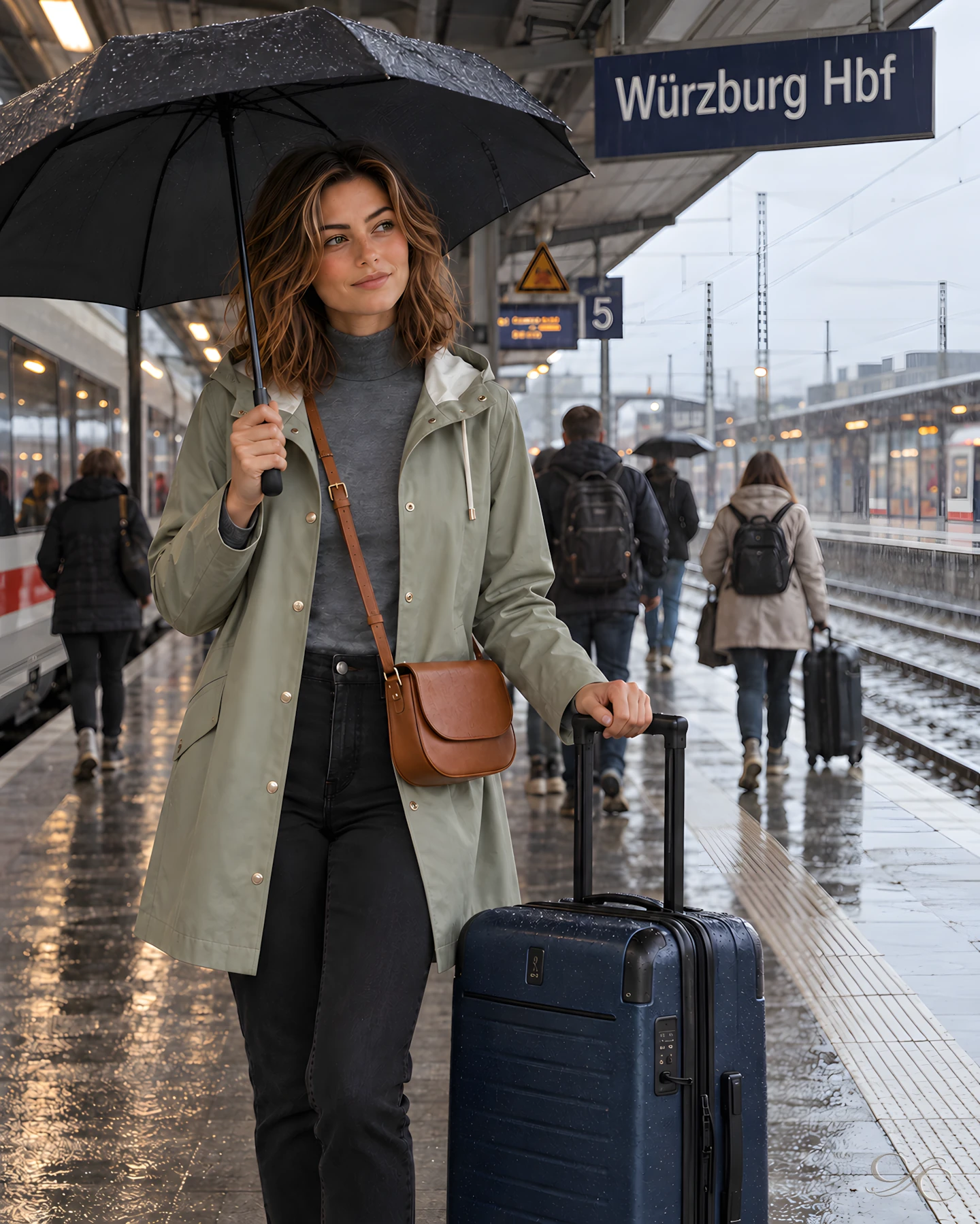
I reached Würzburg Hauptbahnhof around midday, with steady autumn rain falling beyond the platform canopy. Water glazed the paving and tracks as passengers moved towards the exit, umbrellas folded or already open. On German station signs, “Hbf” is short for Hauptbahnhof. I paused beside my blue suitcase, glanced from the sign to the downpour and smiled at the sight.
A Market-Square Exchange
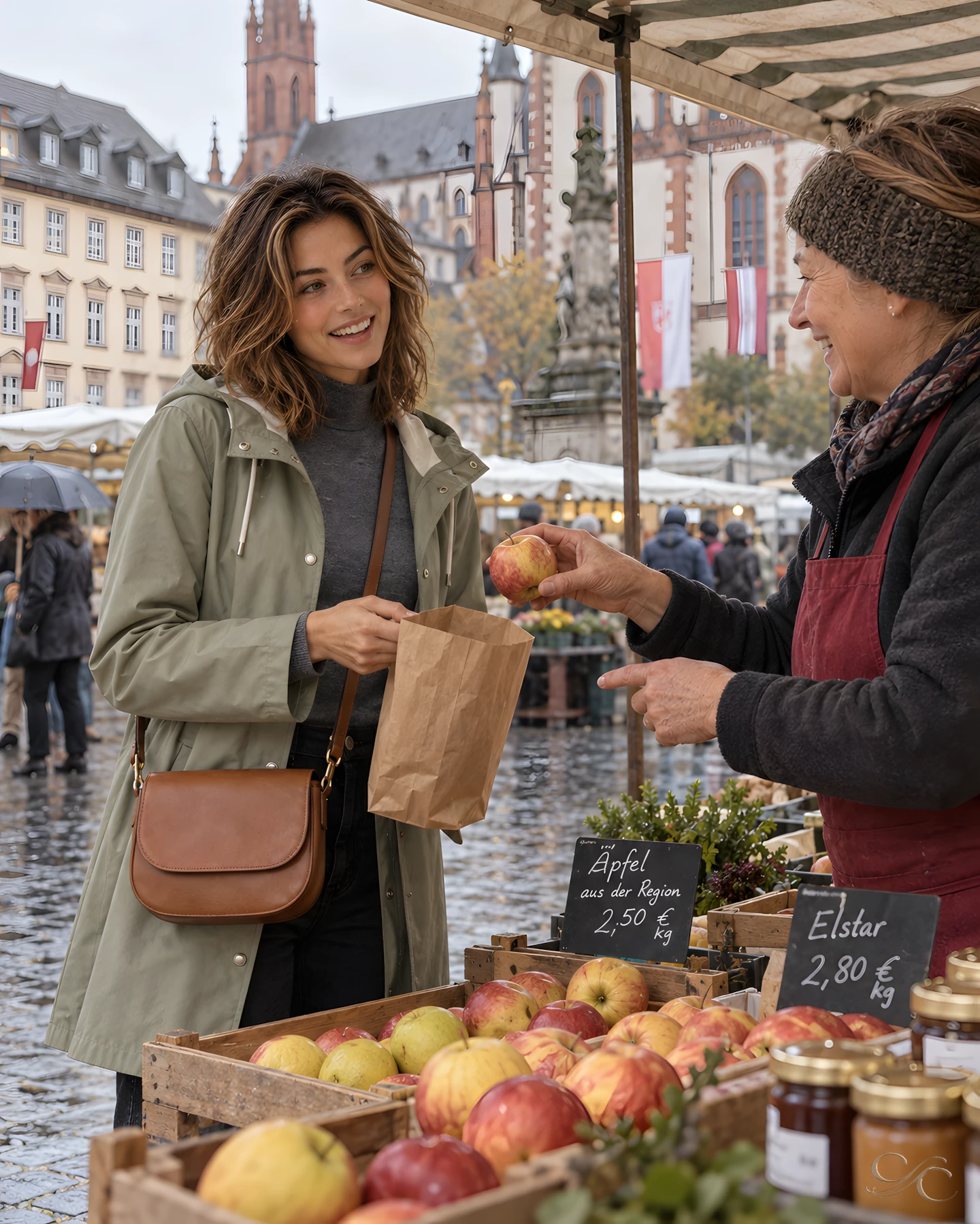
Saturday’s rain had not emptied Würzburg’s Marktplatz. Shoppers moved among covered stalls while umbrellas crossed the paving. At an apple stand, I held open a small paper bag for my selection. The stallholder added one more than I had chosen, then pointed to it with a smile: a gift. Surprised, I looked up and answered with a grin.
First Taste of Silvaner
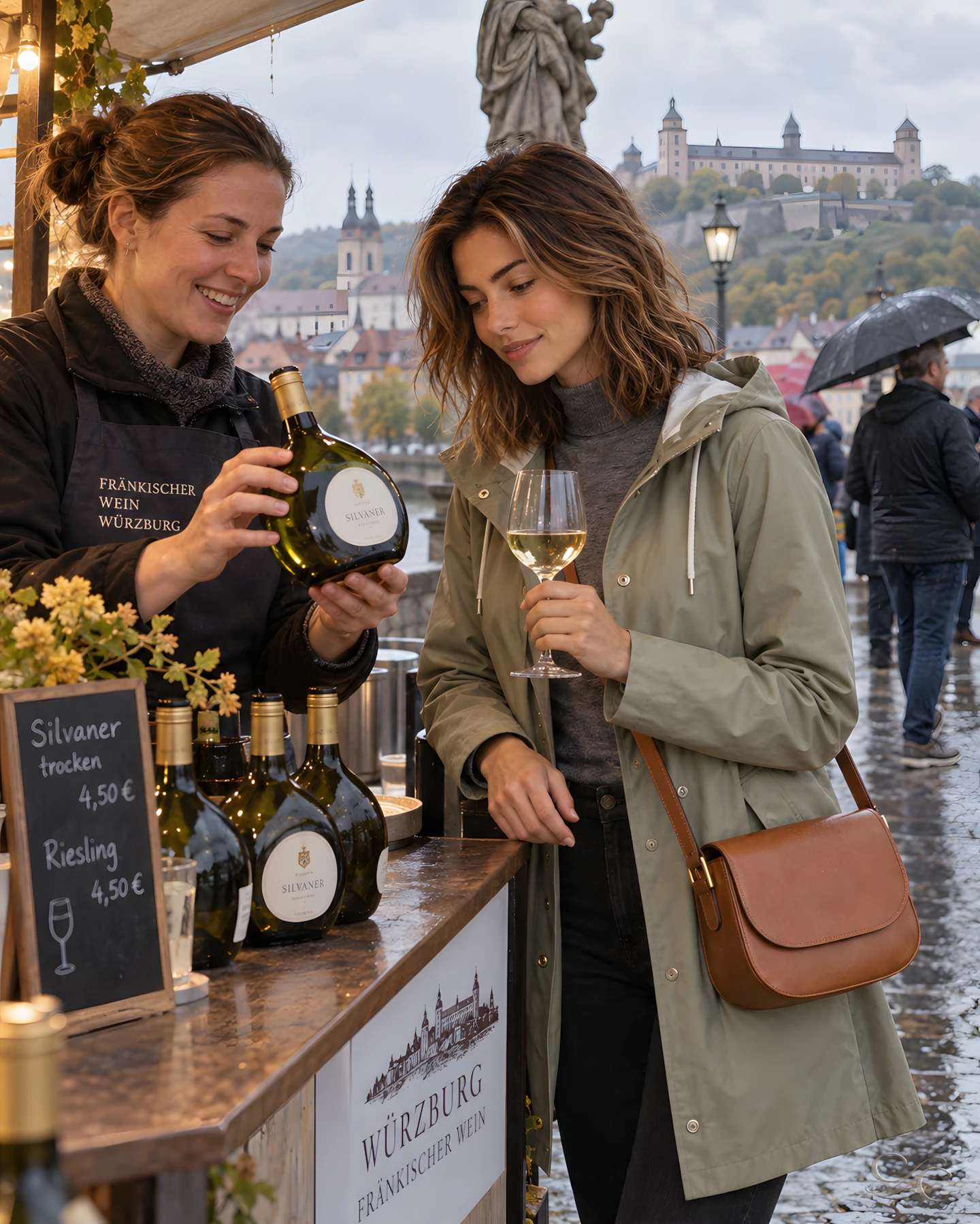
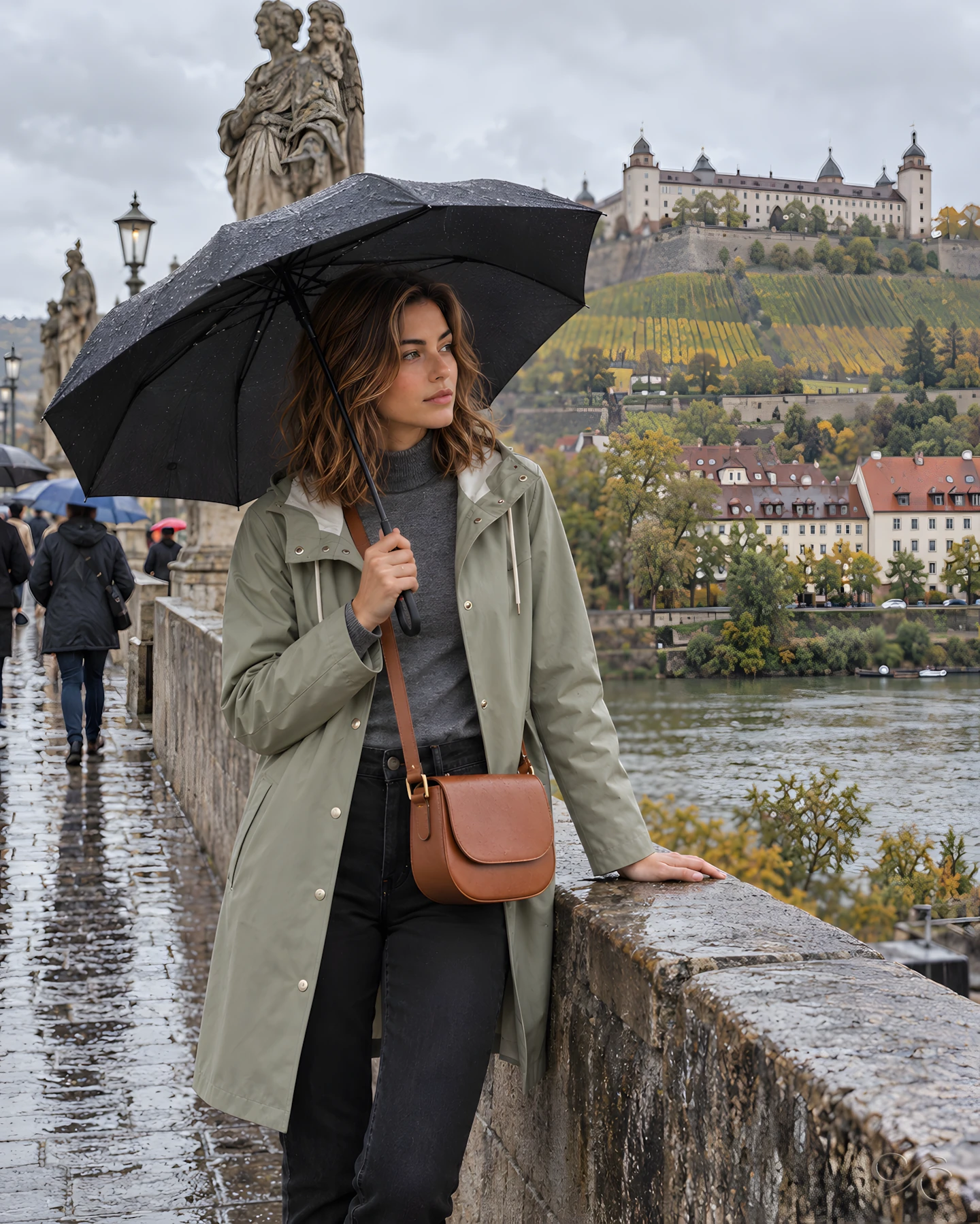
At a sheltered counter on the Alte Mainbrücke, I tasted my first Silvaner while the seller turned a Bocksbeutel sideways to show its flattened profile. The Franconian bottle was almost as distinctive as the bridge’s Brückenschoppen custom: buying a local wine and drinking it informally above the Main. Beyond the wet parapet, the river passed below vineyard rows climbing towards Marienberg Fortress.
Franconian Dinner Advice
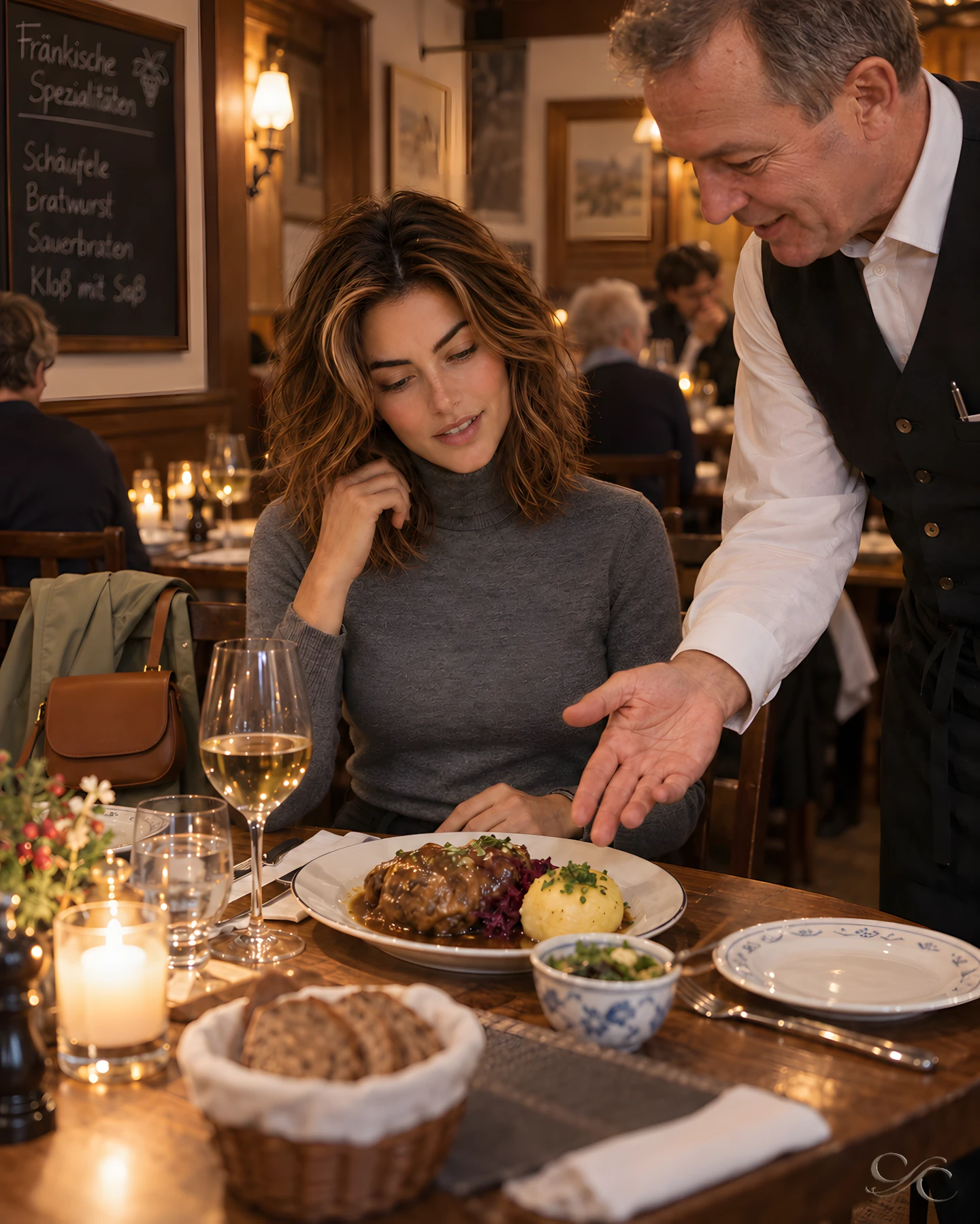
By evening, the dry, candlelit dining room was a welcome change from Würzburg’s wet streets. My plate held meat in dark gravy, red cabbage and a round potato dumpling. The server suggested breaking the dumpling apart with a fork rather than cutting it with a knife, allowing the soft interior to absorb the gravy. He demonstrated the technique with a small gesture. I followed his advice, discovering that the dumpling was particularly good at collecting the sauce.
Mapping the Day Over Breakfast
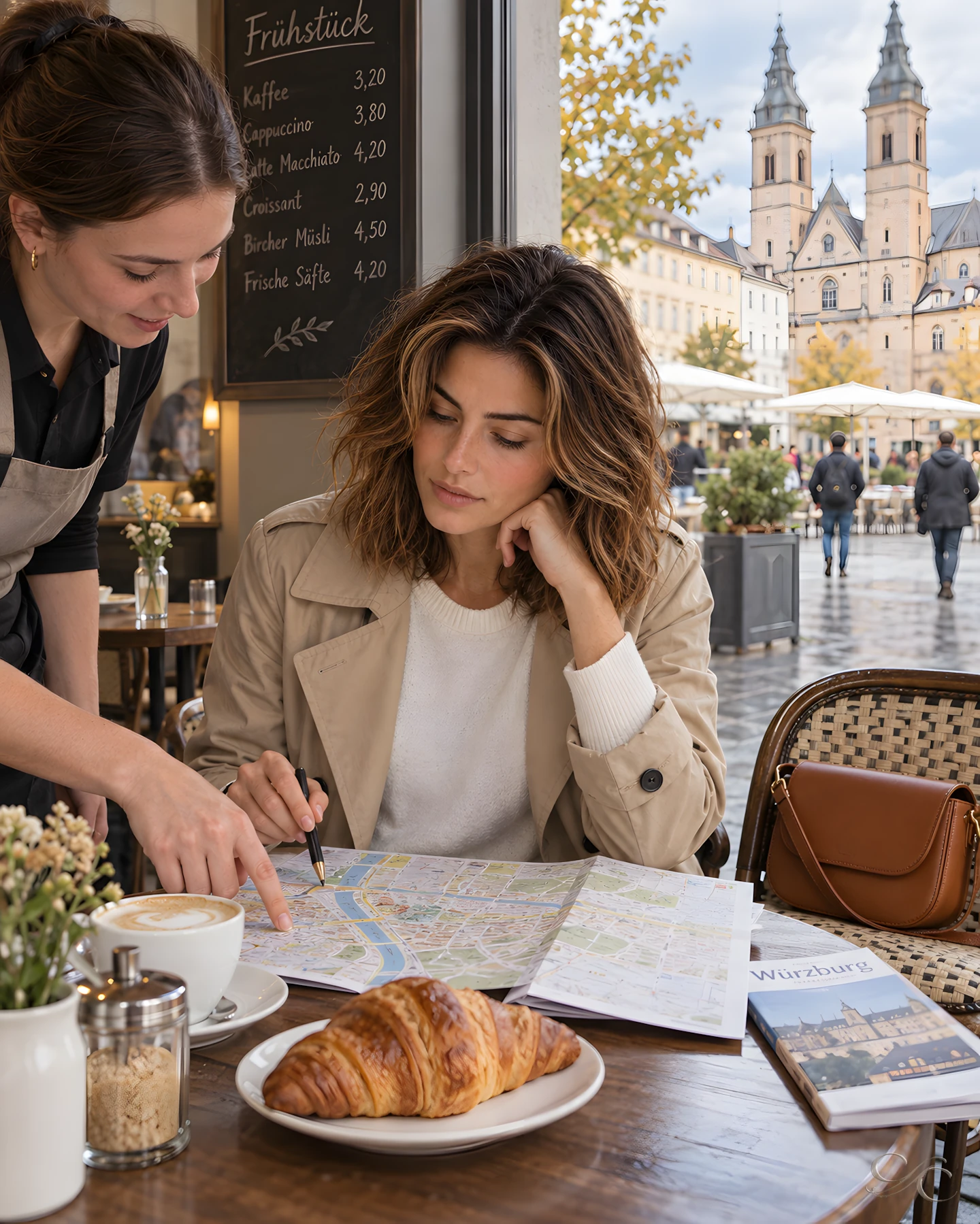
At a central café, I unfolded the city map beside my coffee and croissant. I marked the Residenz, Juliusspital and the vineyard slopes, then asked a server about the order. She traced a practical route between the city-centre stops, beginning with the Residenz on the eastern edge of the old town. I folded the map and set out for the palace.
Finding the Continents in Tiepolo’s Fresco
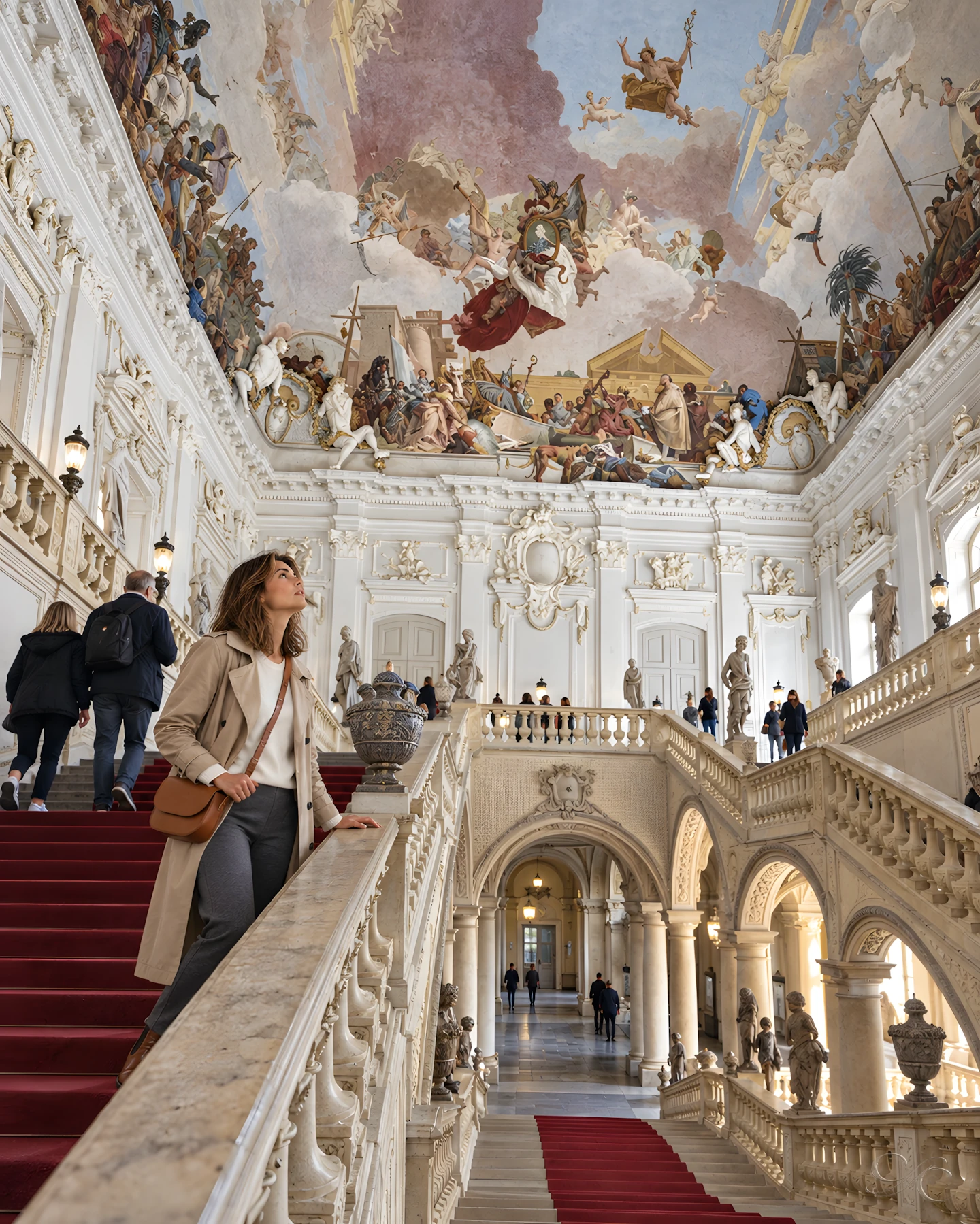
Ascending the Grand Staircase, I paused beneath Giovanni Battista Tiepolo’s ceiling fresco, painted in 1752–53. Its roughly 677 square metres depict allegories of Europe, Asia, Africa and America around a celestial centre. Figures and animals crowded the painted ledges, some appearing to cross into the real stucco below. The staircase brought each illusion into view among the pale stone, statues and ornate balustrades.
Reading the Marks on the Old Barrels
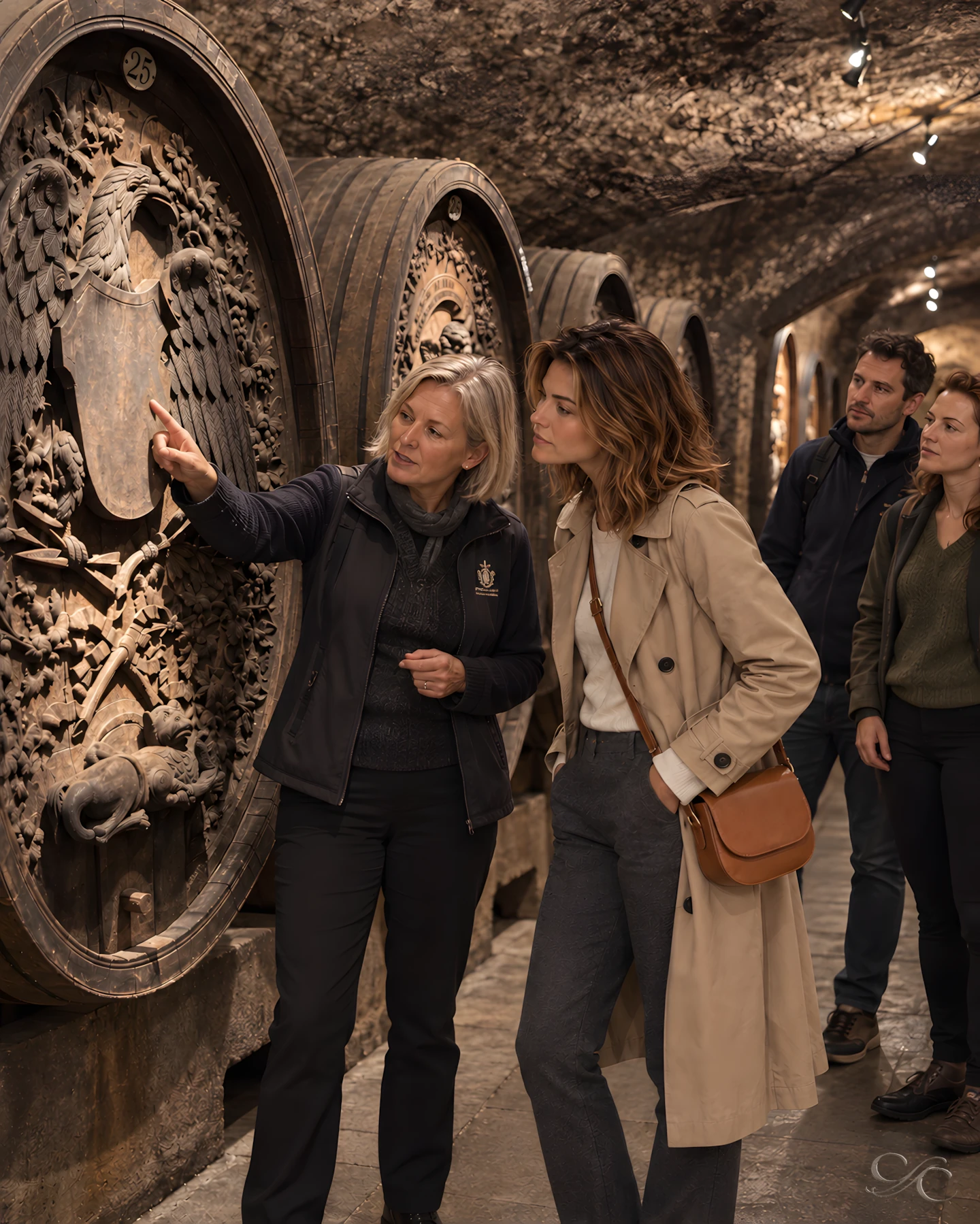
Beneath Juliusspital’s vaulted cellar ceiling, the guide traced a carved date and cooper’s mark on one of the enormous wooden barrels. The marks identified the barrel maker and recorded part of the vessel’s working history.
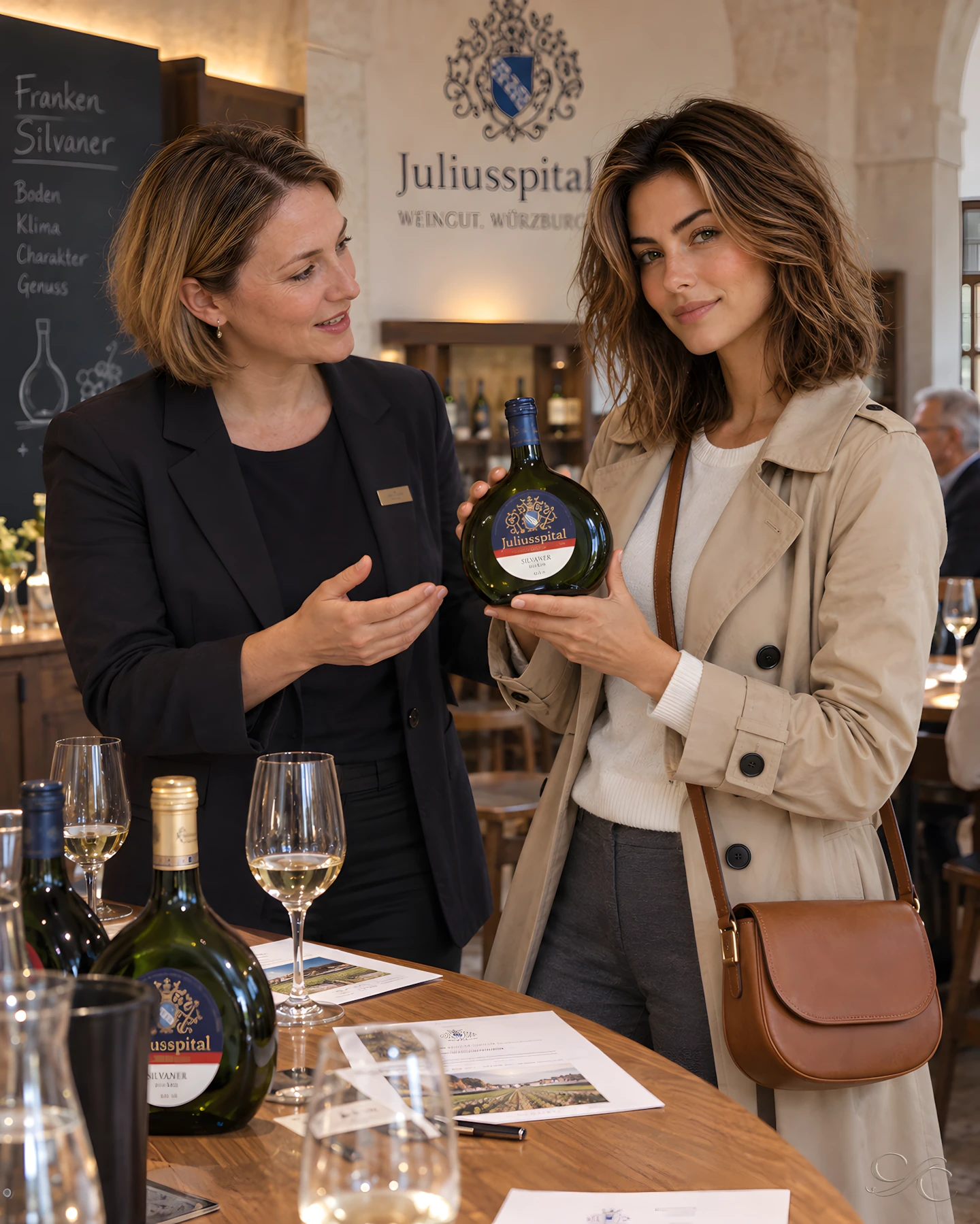
The visit ended with Silvaner served from a Bocksbeutel. Use of the traditional bottle form is legally restricted to certain wine regions, including Franconia. I turned it sideways, recognising the profile from the bridge.
A Piece of the Vineyard Underfoot
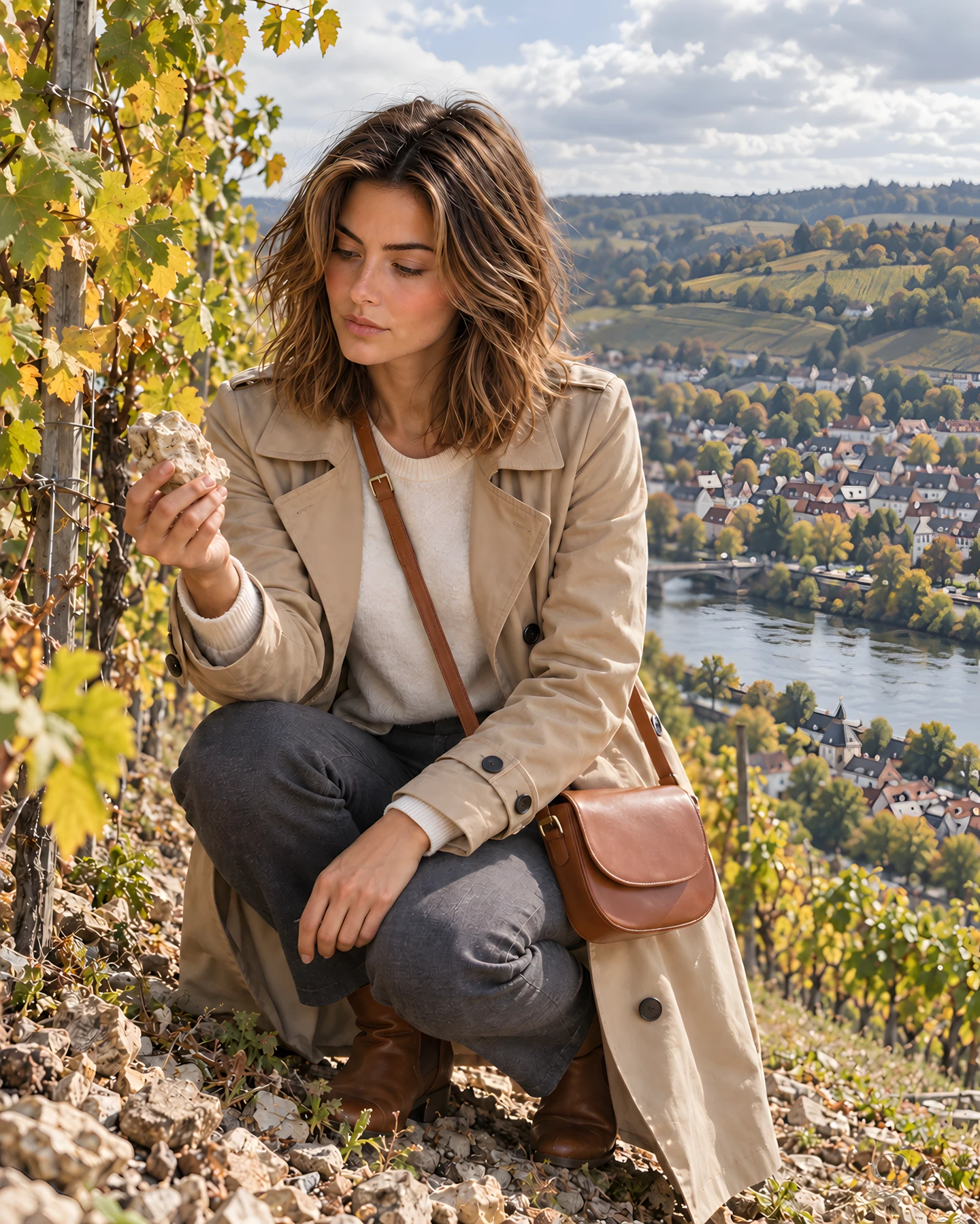
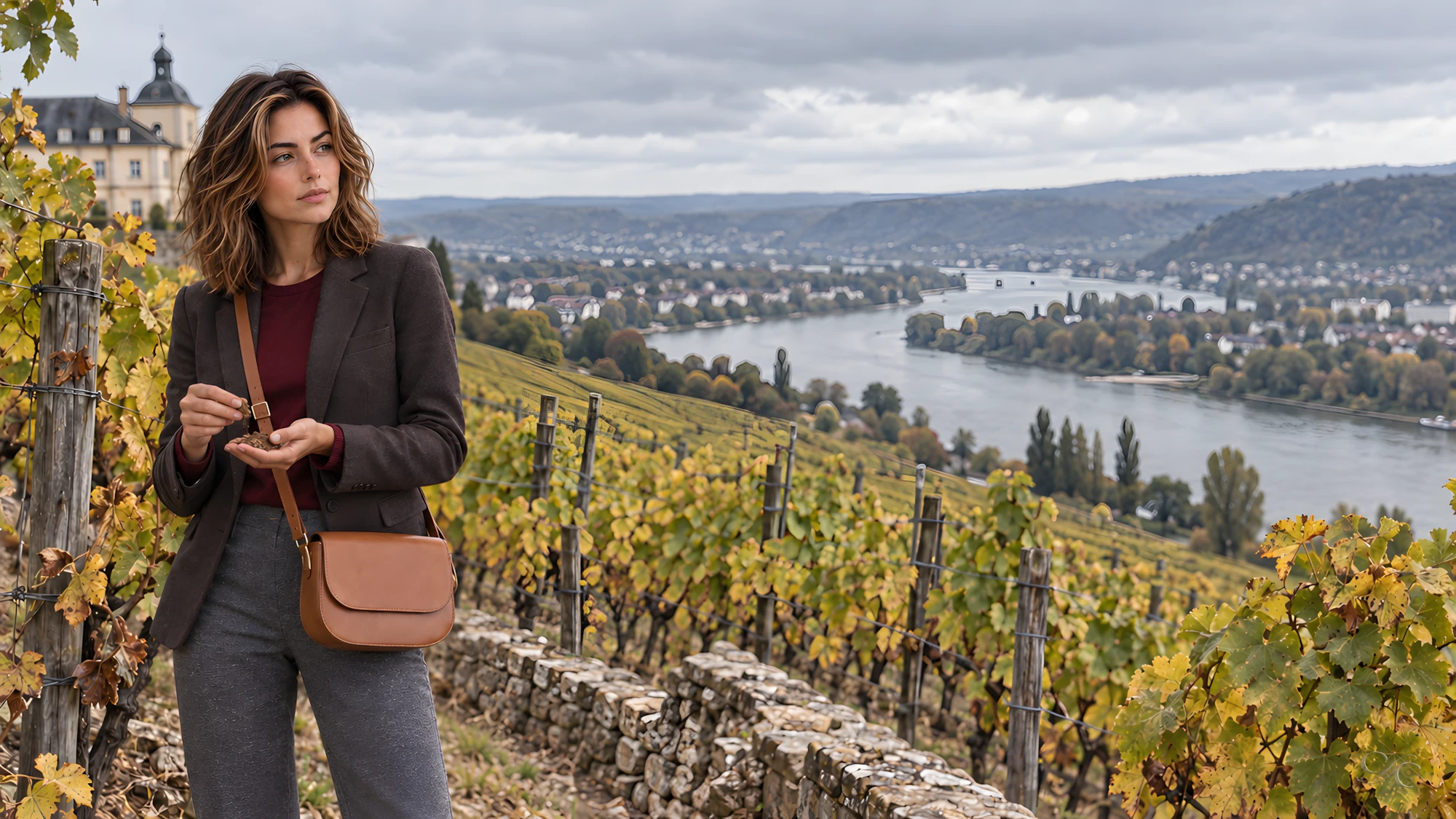
Late in the afternoon, I picked up a pale fragment from the path beside a vine. The Würzburger Stein lies on weathered Muschelkalk—shell limestone formed in a shallow sea during the Triassic, more than 200 million years ago. Broken pieces covered the slope beneath rows of green and muted-yellow leaves. Farther uphill, the Main curved below, with Würzburg’s towers across the water and Marienberg Fortress on the opposite hillside.
The Great Silvaner Debate
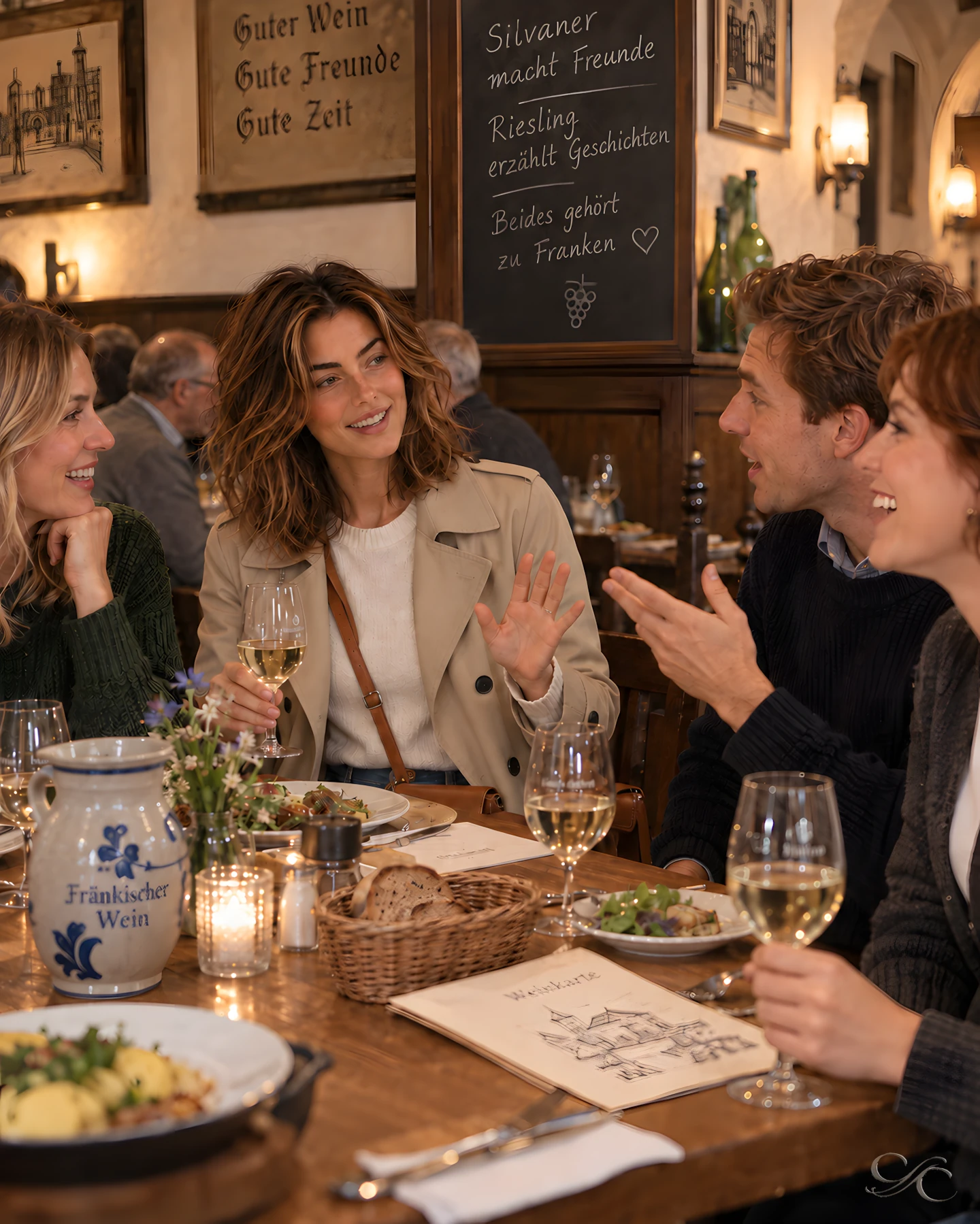
At dinner, my tasting notes lay beside the wine list in a busy Würzburg Weinstube. A local across the table argued enthusiastically for Riesling; I raised a hand in playful objection and defended Silvaner, checking the notes beside my glass. Riesling was Germany’s better-known grape, but Silvaner had a strong Franconian identity and often showed more texture than aroma. The chalkboard behind us offered a compromise: both belonged to Franconia.
The Valley Changes
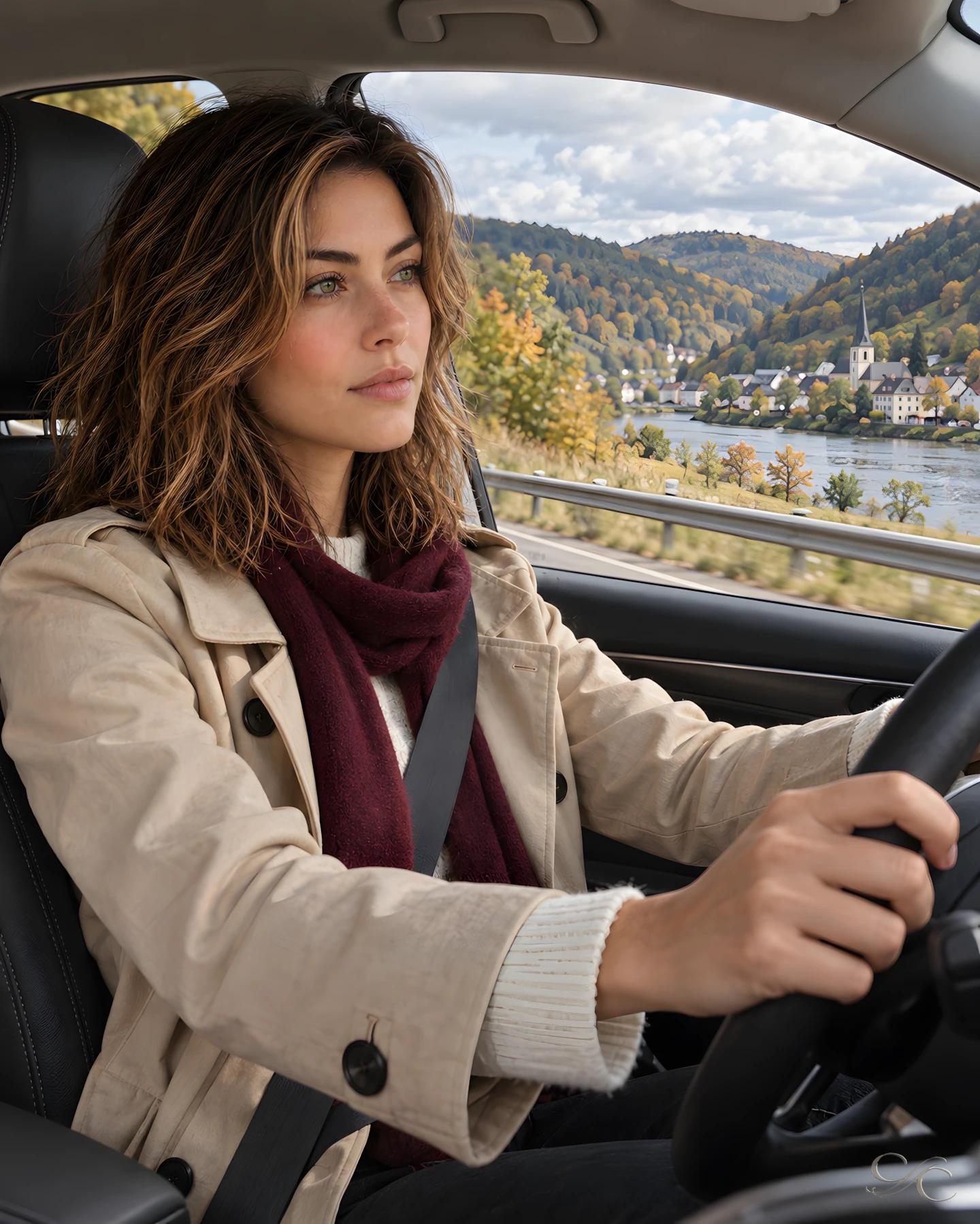
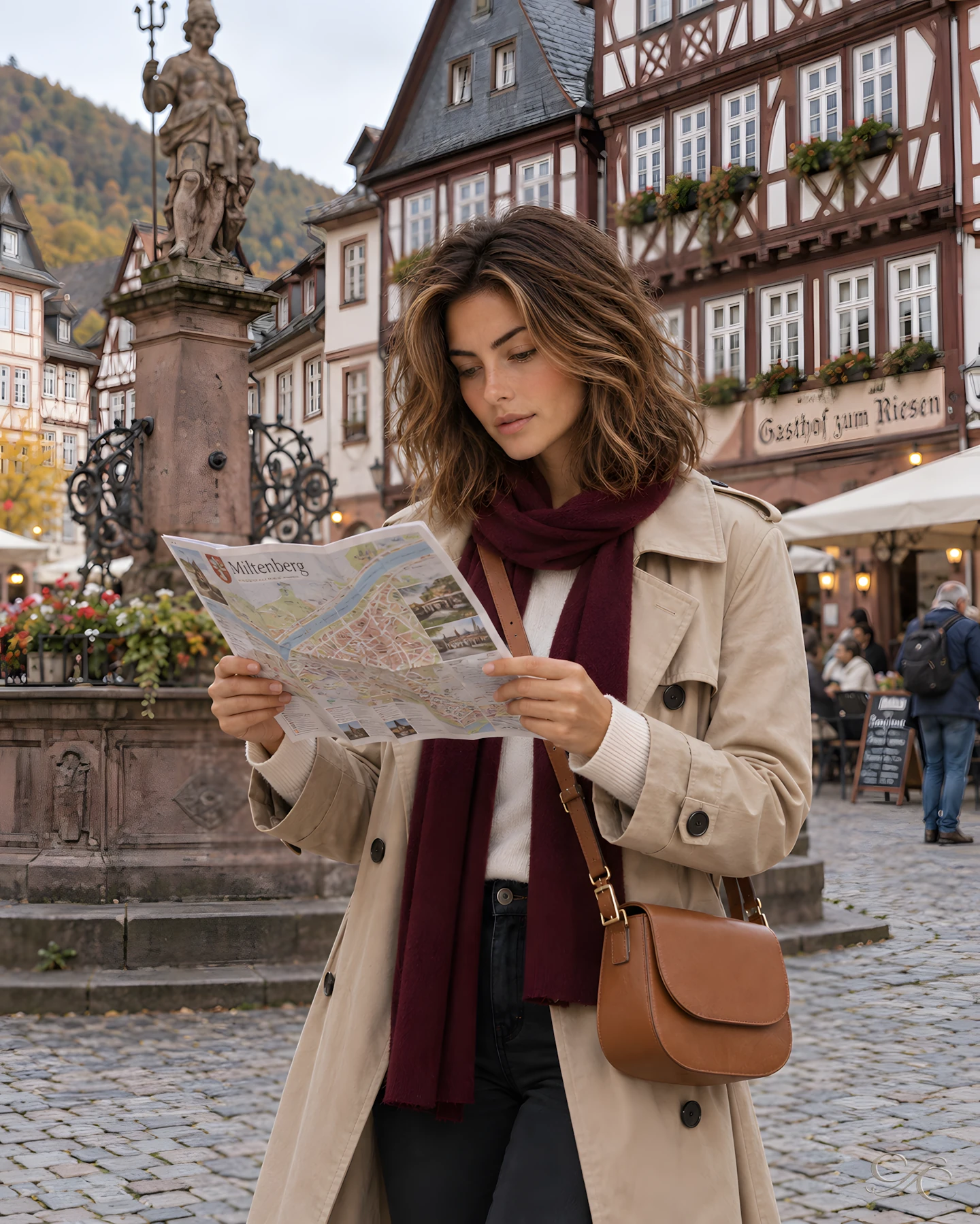
West of Würzburg, the vineyard slopes gradually thinned. Muted fields, autumn woodland and small riverside communities took their place as I followed the Main towards Miltenberg. The town sits where the river curves between the wooded Odenwald and Spessart uplands. In the old centre, cobblestones and close-set half-timbered façades replaced the open river landscape. Beside the fountain at Schnatterloch, I rotated my map until its branching lanes matched the streets around me.
The Bocksbeutel Reappears
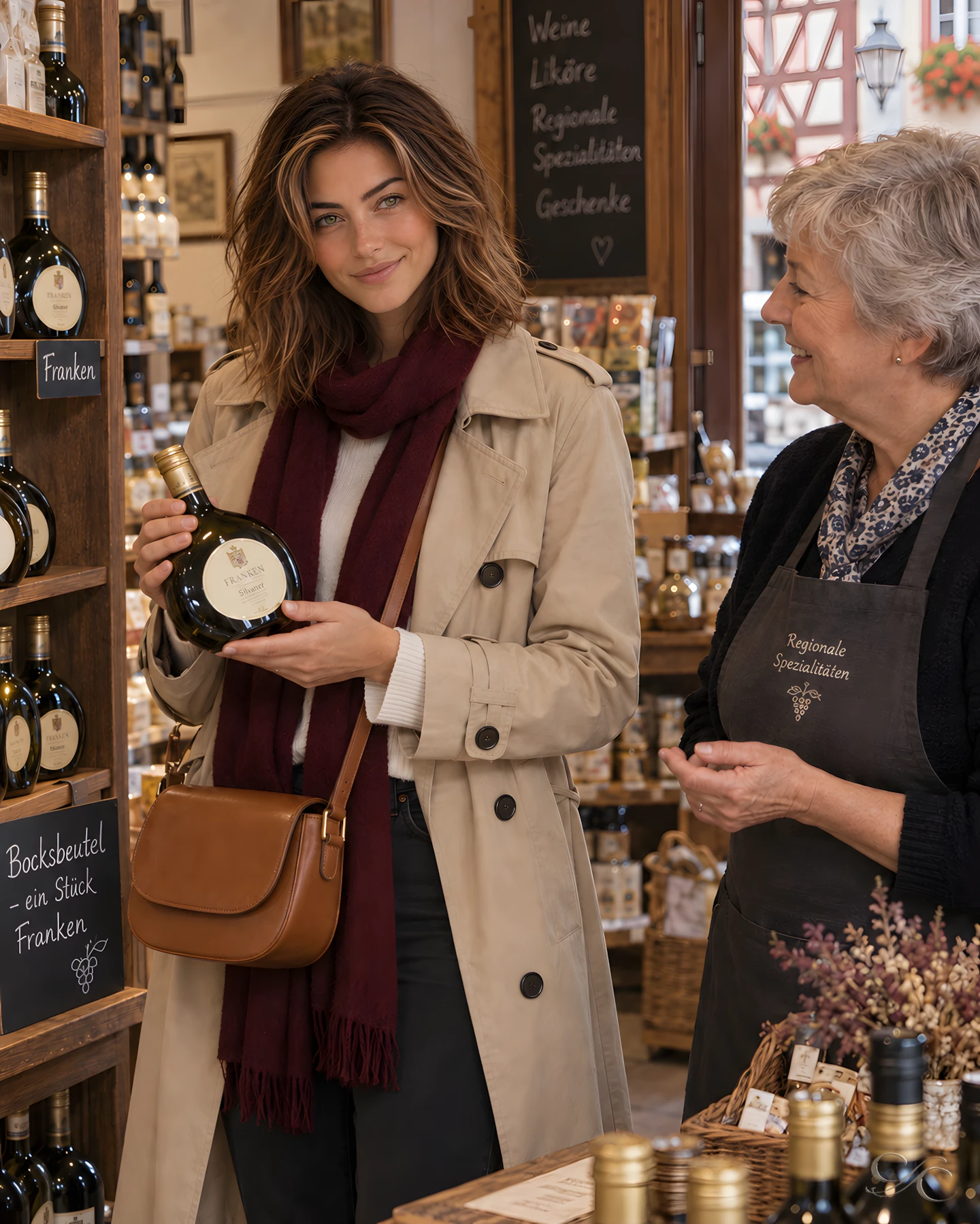
Among the regional wines in a small Miltenberg shop, the flattened bottle was immediately familiar. I lifted the Bocksbeutel and exchanged an amused glance with my cameraman. By then, the shape had become a shared joke. The silver-haired shopkeeper gestured towards the display, while the chalkboard beside the shelf called the bottle “a piece of Franconia”.
Franconian Lunch Explained
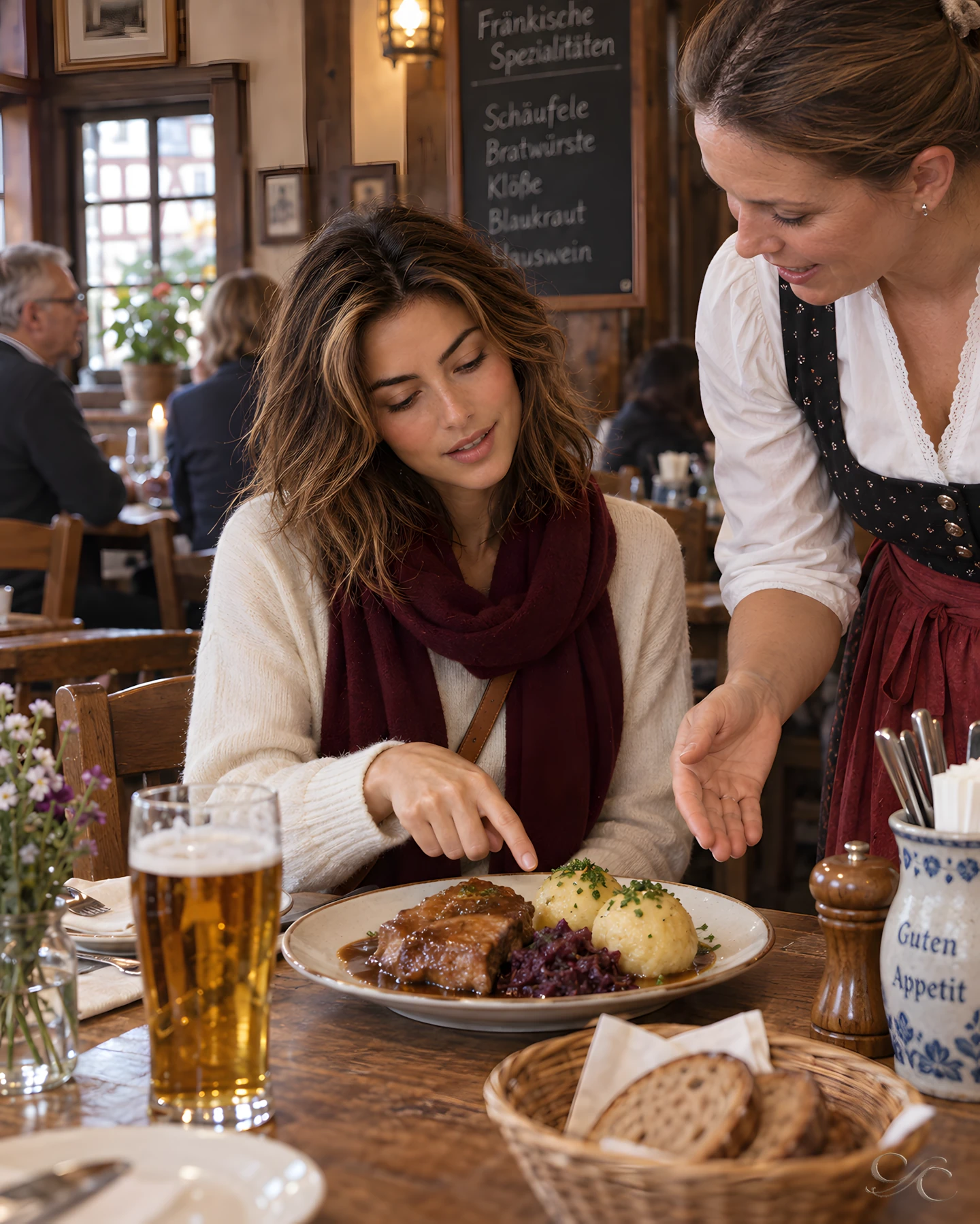
At a wooden table in a busy Miltenberg inn, the server set down meat in dark sauce with dumplings and red cabbage, naming each part. I pointed to the cabbage, and she called it Blaukraut, the southern German name for the sweet-sour accompaniment often served with roasts and dumplings. With a beer beside my plate, I ate among local diners in the wood-panelled room before continuing west.
A New River on the Map
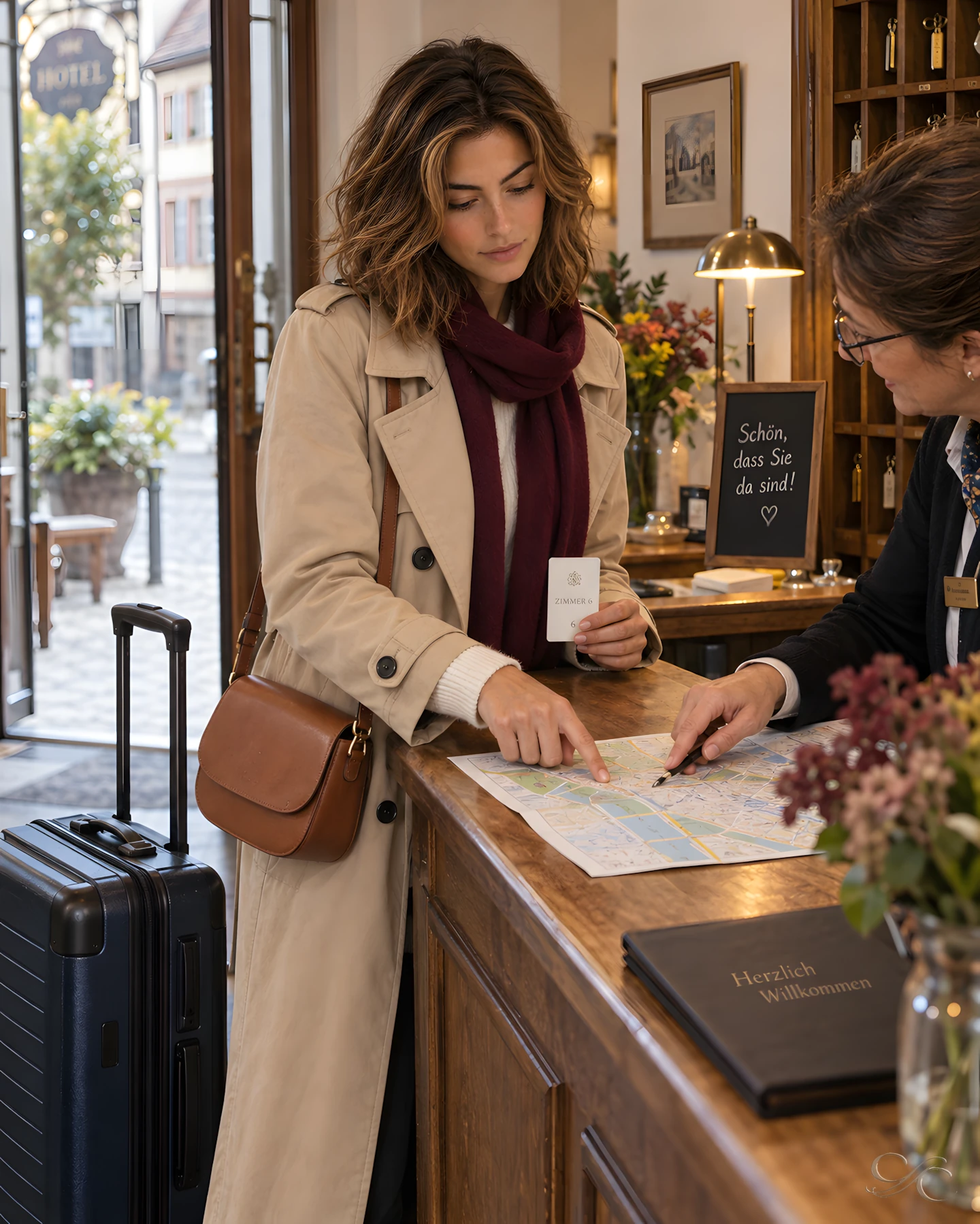
By late afternoon, I was at the hotel reception in Rüdesheim, room key in one hand and a local map beneath the other. The host marked the hotel, riverfront and town centre, then outlined a short route between them. Rüdesheim lies near the western end of the Rheingau’s main east–west stretch, where the Rhine turns north toward the Middle Rhine valley. I traced the directions before setting out.
Silvaner Gives Way to Riesling
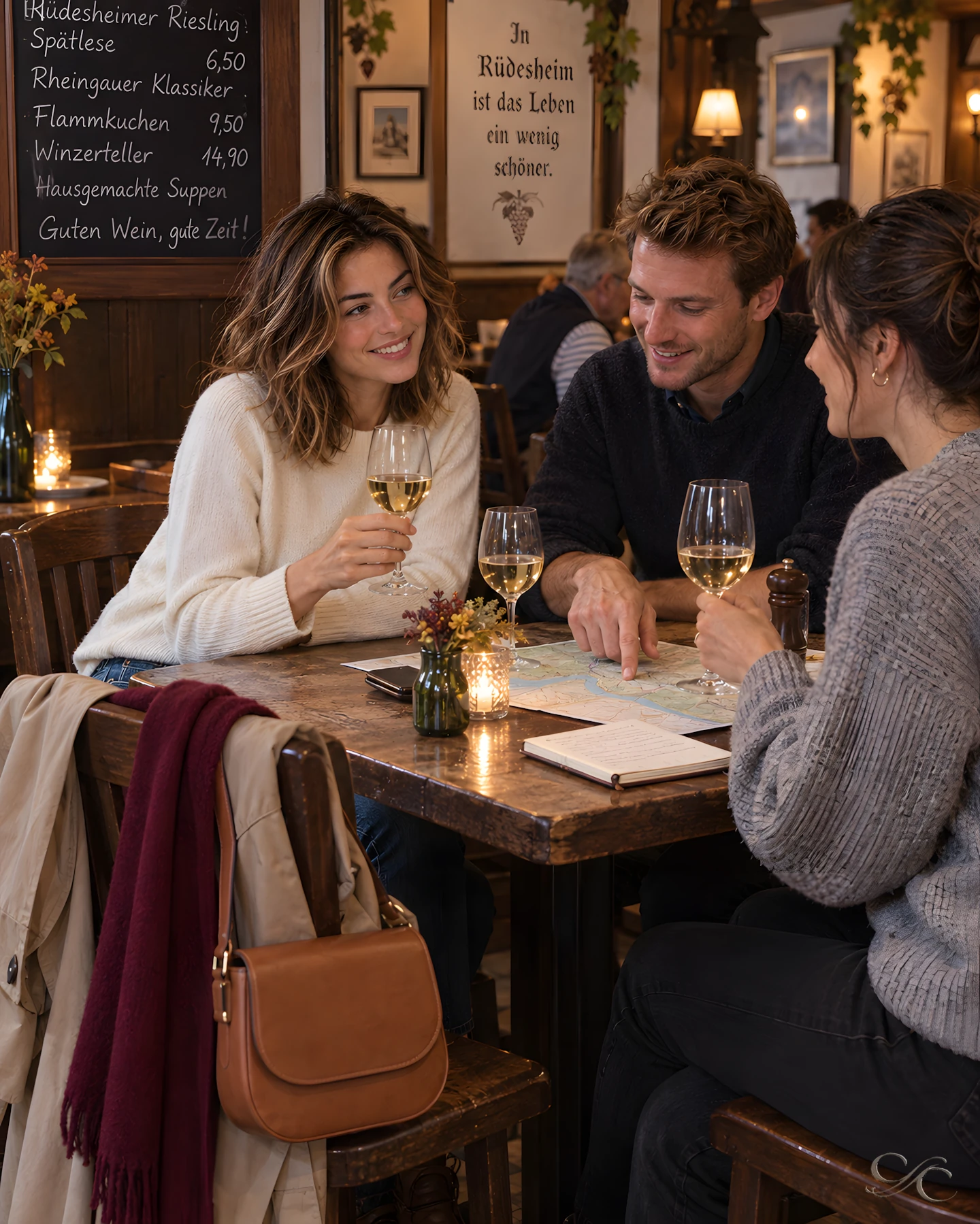
After two days of Franconian Silvaner and a day on the road, my first Rheingau Riesling marked the change of region. At a wooden tavern table, the three of us discussed the next day while one companion traced our route across the map. Schloss Johannisberg, associated with the development of late-harvest Spätlese in the eighteenth century, came first, followed by Eltville and time among the vineyards. We amended the plan several times, with some gentle teasing.
Mapping the Rheingau Over Breakfast
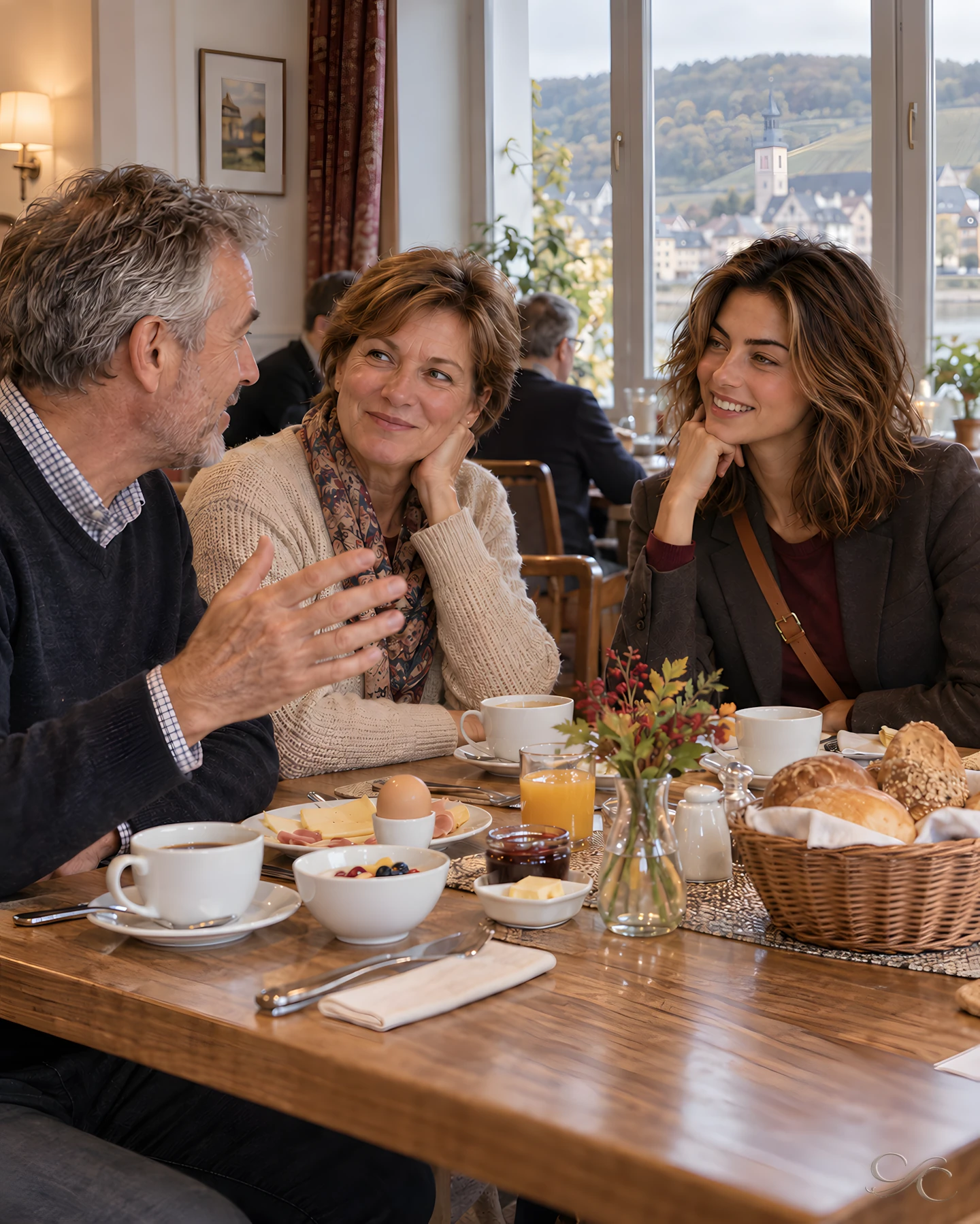
At breakfast in Rüdesheim, a German couple turned my plans into a running debate. The husband made an emphatic case for his favourite local Riesling producer; his wife, wearing the amused expression of someone who had heard this before, offered her own preference. I listened over coffee as the recommendations accumulated. By the time the bread basket was empty, both choices had found a place in my day.
Making Room for Vineyard Work
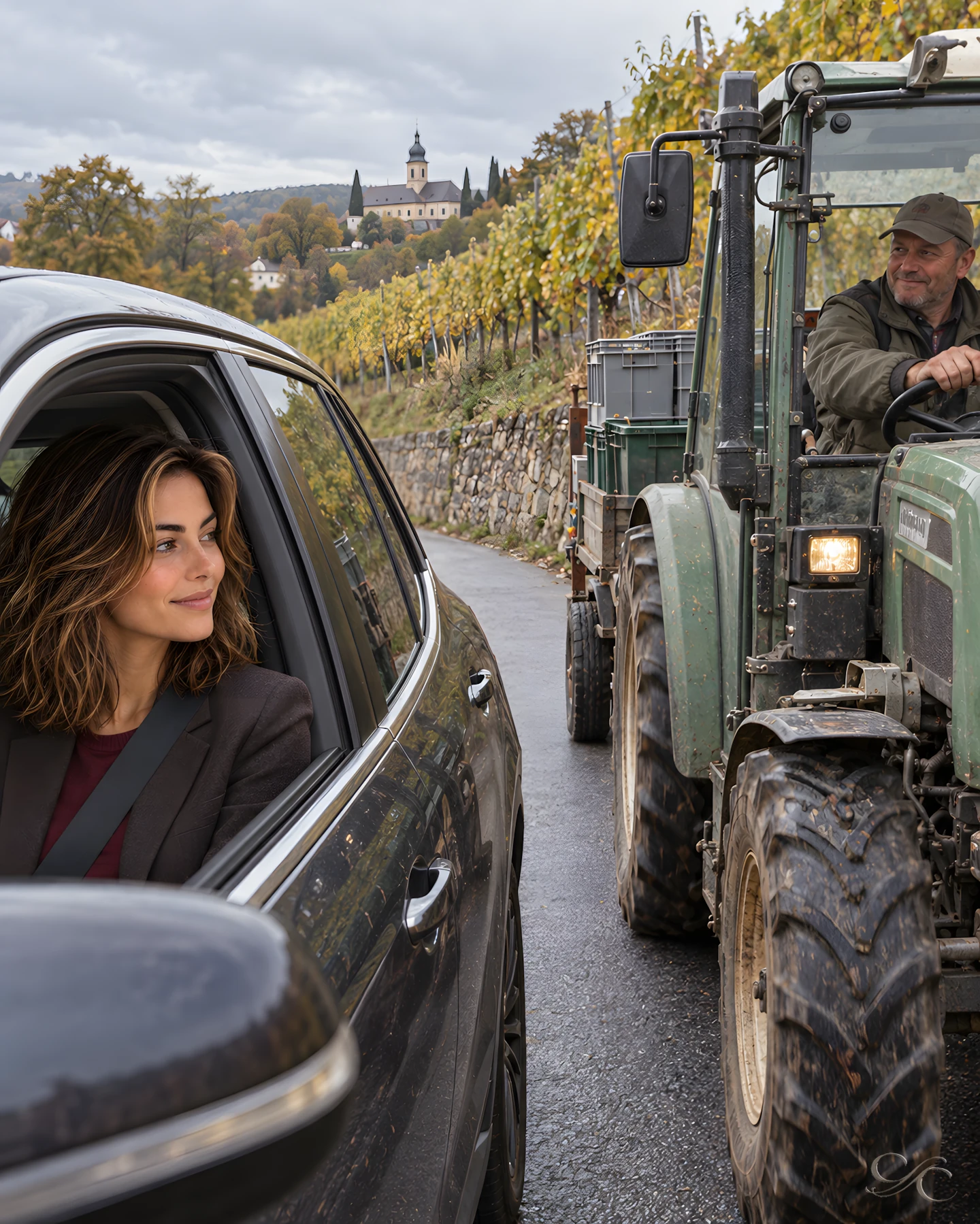
Near Johannisberg, my companion pulled into a slight widening as a weathered tractor carrying crates approached between low stone walls and autumn vines. Its driver eased past with little clearance and gave us a quick nod; I smiled back through the open window. The narrow roads also served as vineyard access routes for machinery and harvest crews.
Reading Riesling Through a Vineyard Map
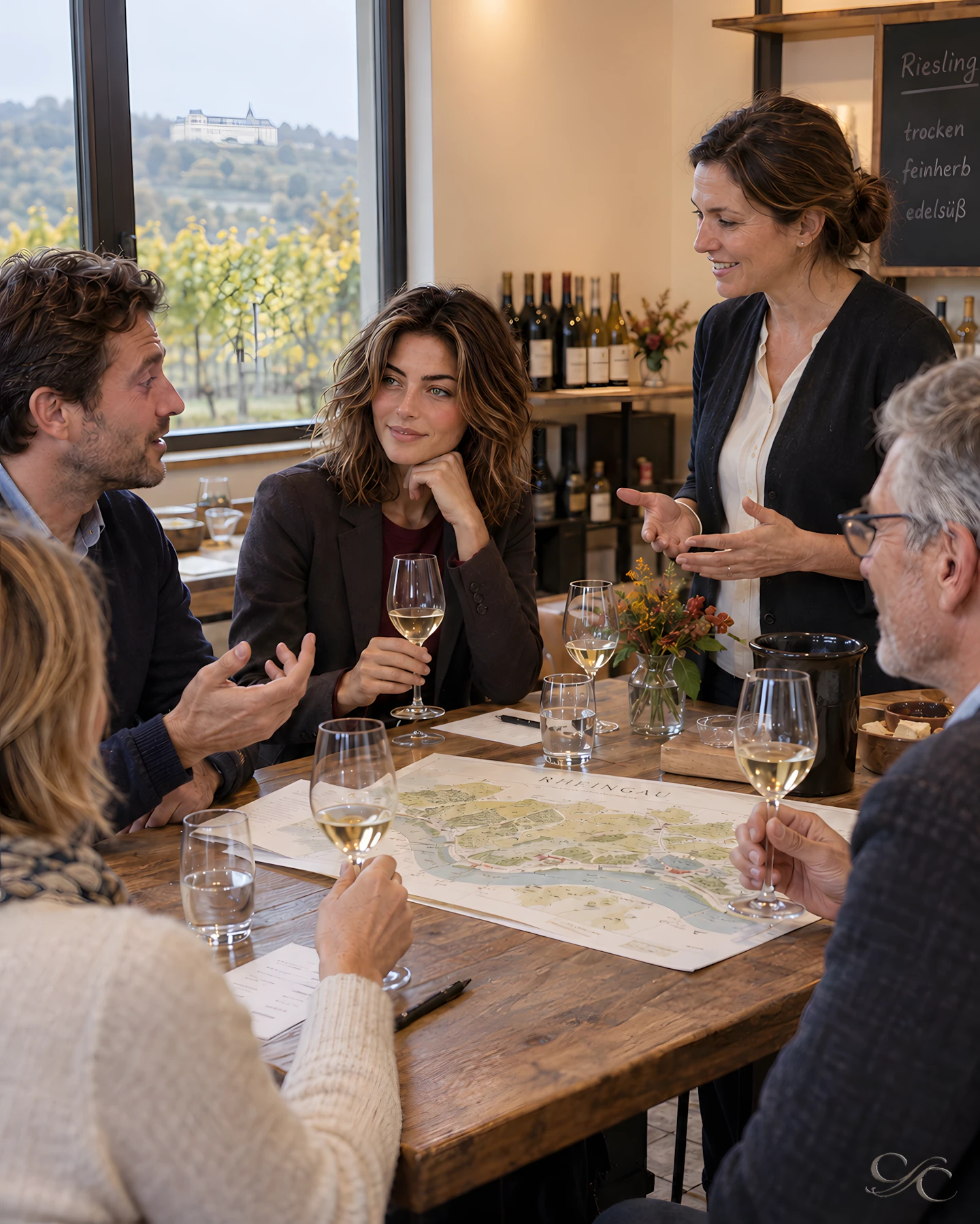
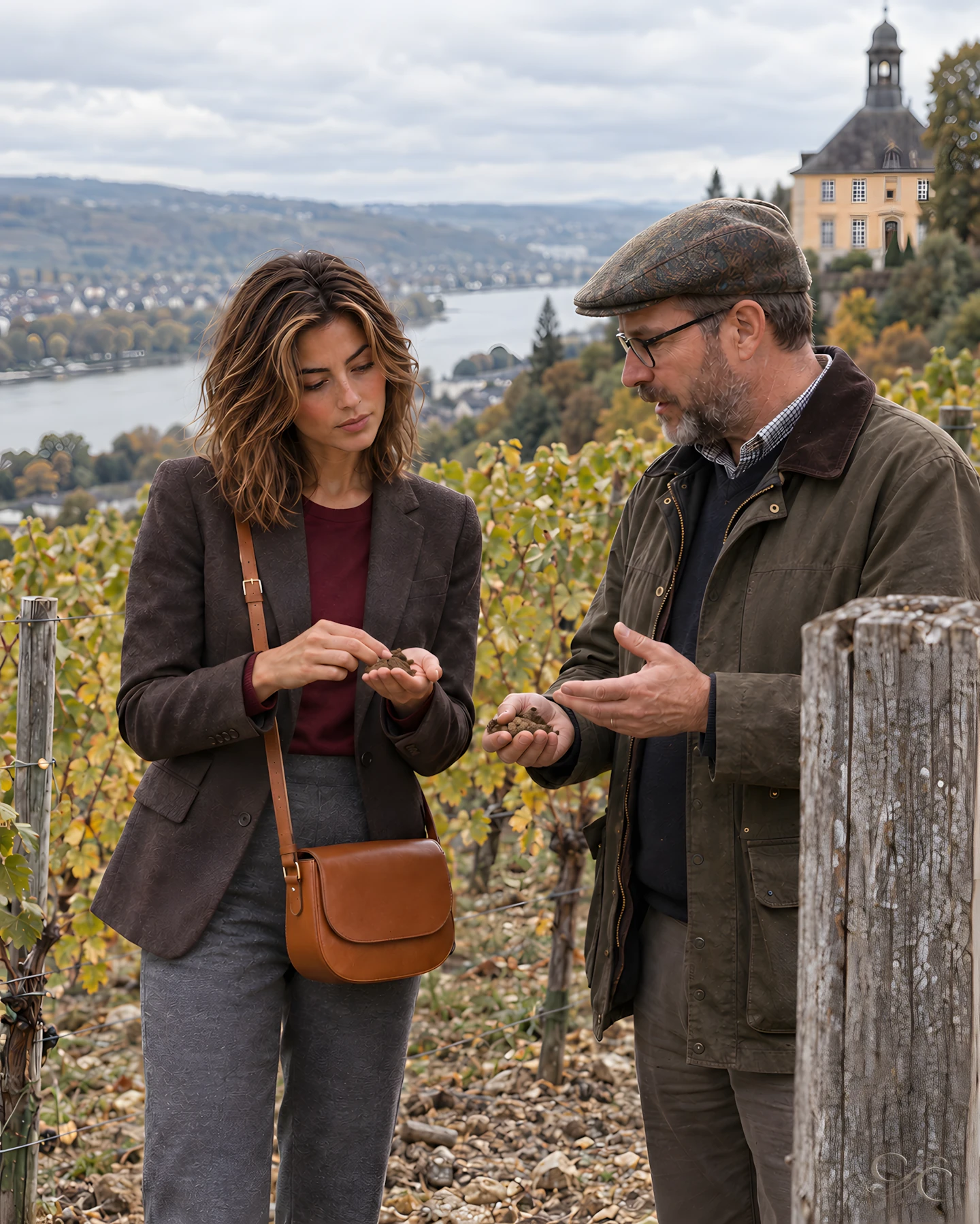
At Schloss Johannisberg, the vineyard map linked each glass to the ground outside. I rubbed a soil sample between my fingers while the guide explained how slope, exposure, drainage and soil influenced grape ripening and acidity.
We compared a trocken Riesling with a feinherb, a flexible term commonly used for off-dry wine. Residual sugar remained after fermentation, but Riesling’s acidity could make the sweetness less obvious. One visitor’s confident verdict on which tasted sweeter drew amused disagreement. The educator smiled: our wines matched, but our palates did not.
A Seat at the Table
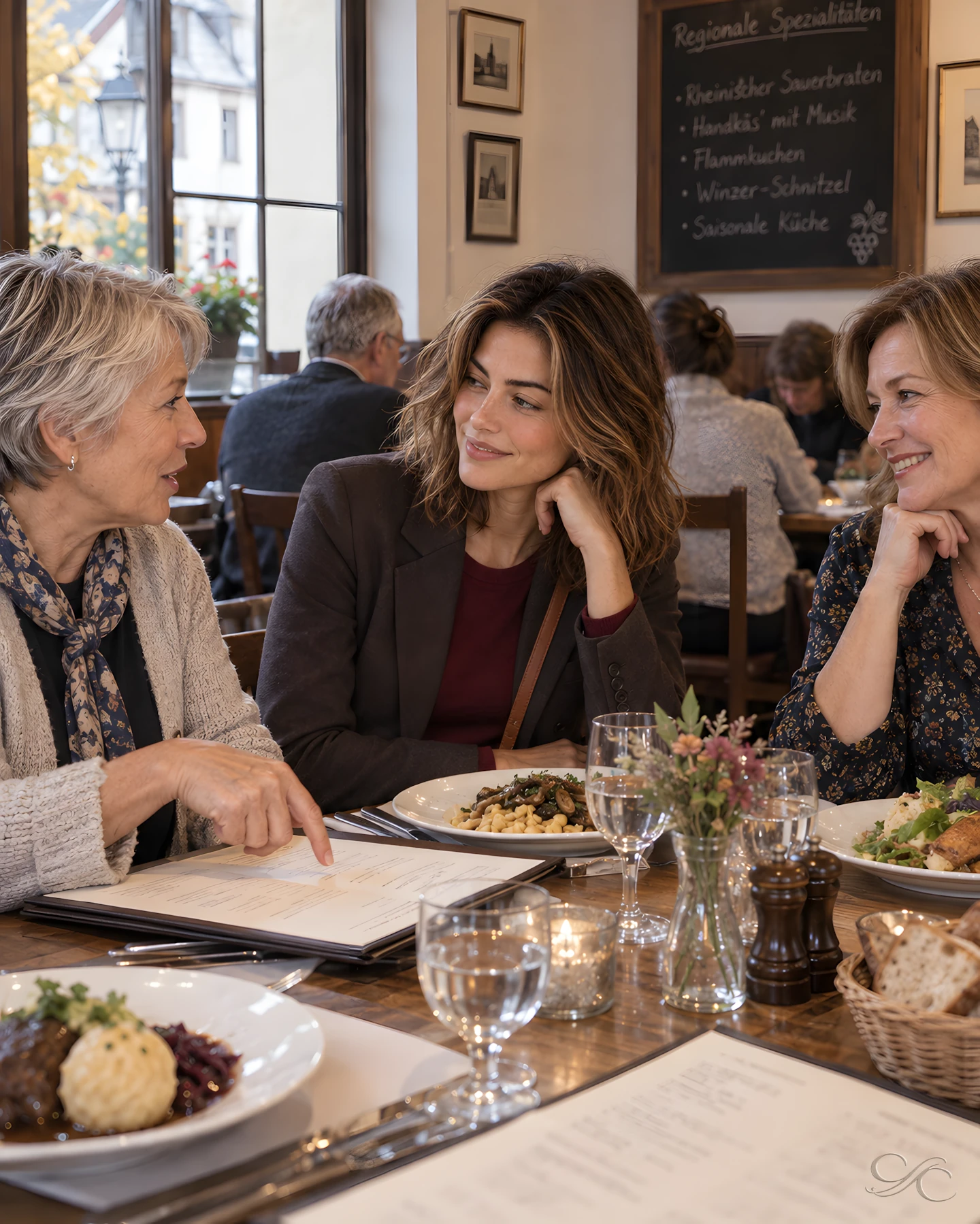
At a busy restaurant in Eltville’s historic centre, I asked two local women whether I might take the empty place at their table. The silver-haired woman welcomed me, then promptly turned to my lunch decision, pointing to the menu and confidently recommending a regional dish. Her companion watched with an affectionate smile. Lunch widened into conversation about regional dishes, ordinary life in Eltville and the surrounding Rheingau.
Crossing from Rüdesheim to Bingen
Once I had secured the rental car in its deck lane, I moved to the passenger rail. Rüdesheim’s autumn vineyard slopes receded across the broad river as vessels passed between the banks. Breaks in the cloud briefly lit the hillside before shadow returned as Bingen drew closer. Before returning to the car, I confirmed the correct exit lane with a crew member directing traffic.

A Conversation in Bacharach’s Old Town
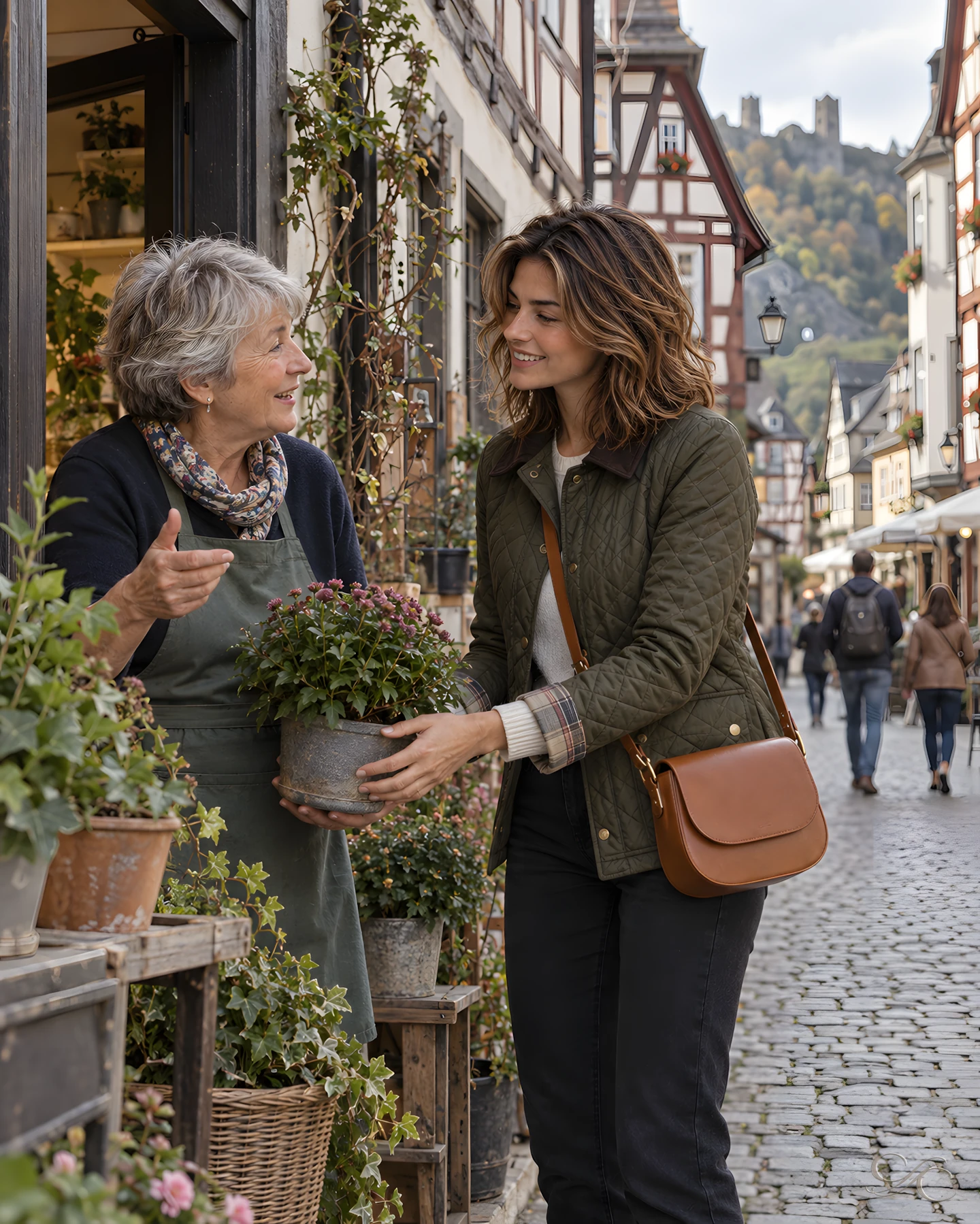
Outside a small shop, I helped the silver-haired owner move a flowering pot beside the doorway. She gestured along the timber-framed façades as she talked, folding humour into her observations about the old town.
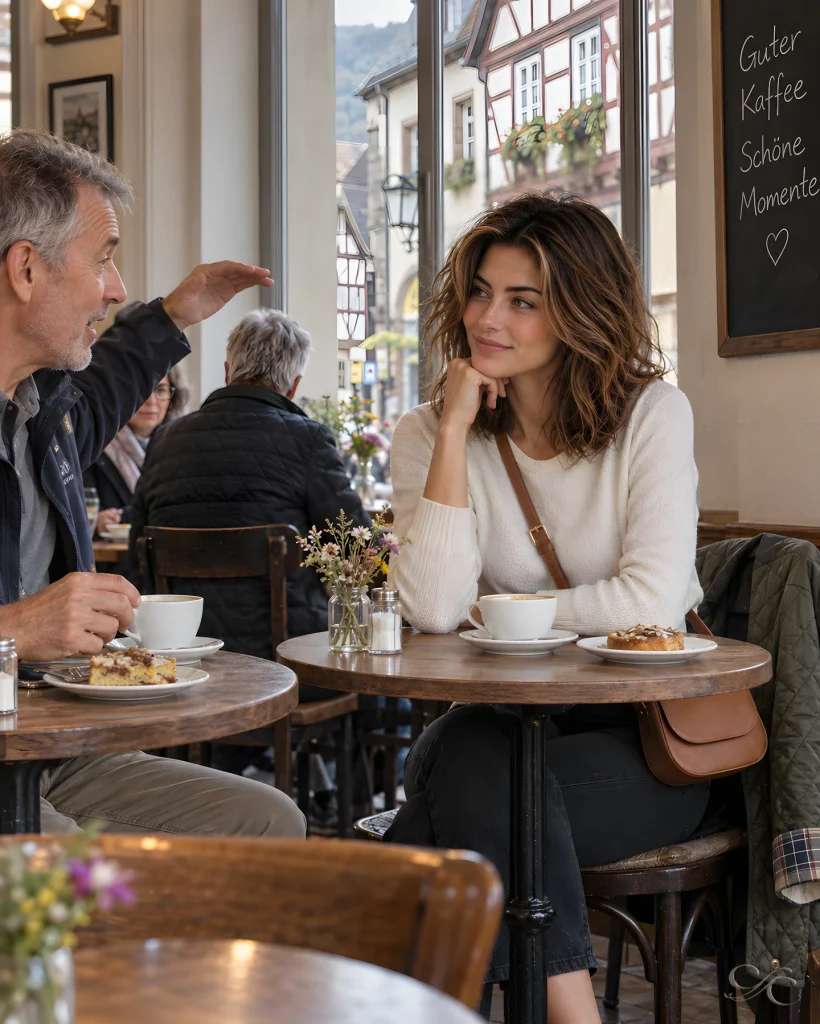
Later, a traveller at the next café table described his walk towards Burg Stahleck. He raised one hand to trace the slope and looked pleasantly tired after the climb. Through the windows, the half-timbered streets seemed almost level by comparison. I reconsidered whether I needed another uphill walk that day.
Lunch Beside the Working Rhine
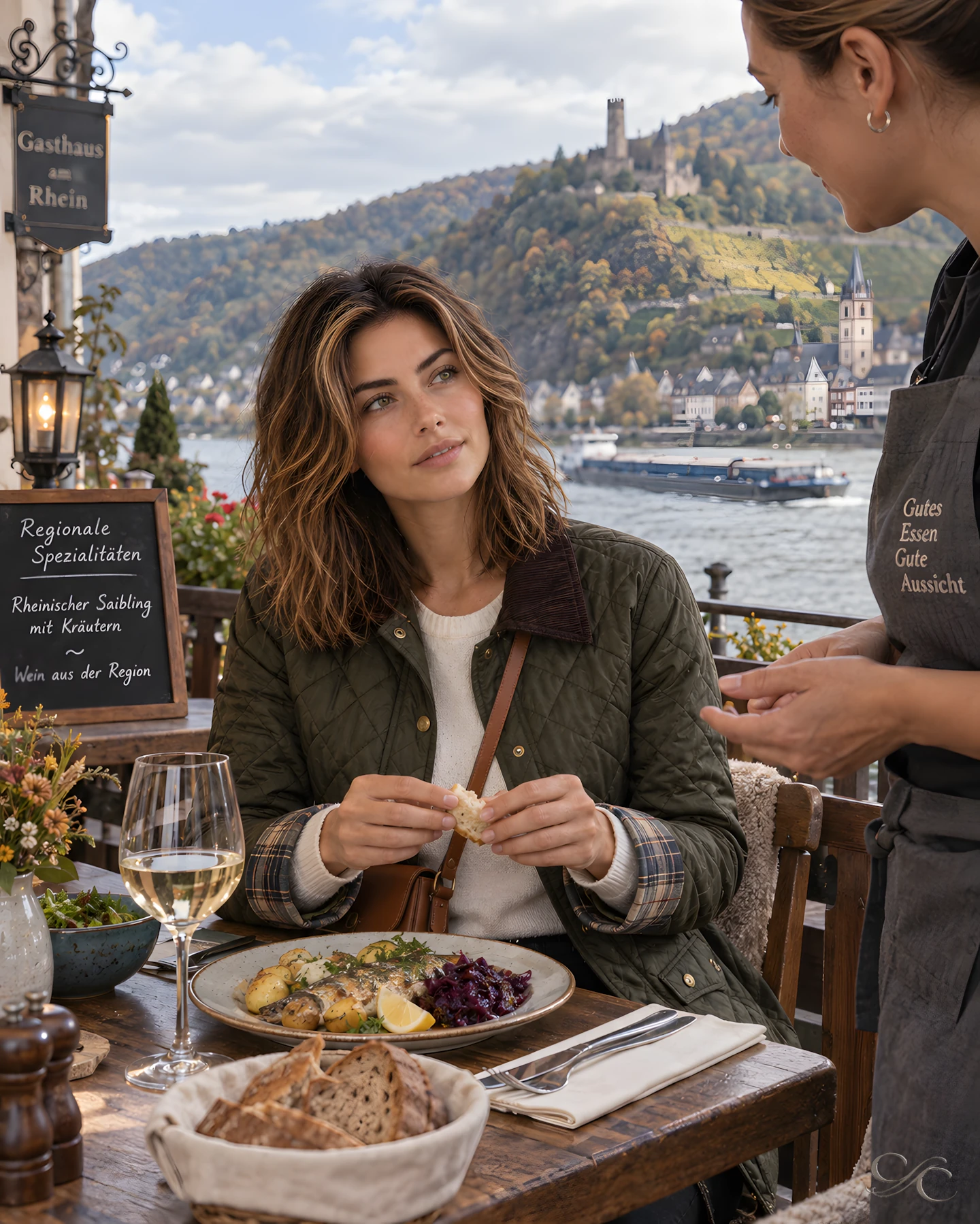
Near Bacharach, I took my time over Saibling—char—with herbs, potatoes, red cabbage and greens. The server explained which accompaniments were local. The fish and herbs contrasted with the meat, dark gravy and dumplings I had eaten in Franconia, though red cabbage linked the meals. Beyond the inn, a cargo vessel passed below the vineyards, and trains followed the bank. In this narrow section of the Middle Rhine, river, road and railway shared the corridor.
Learning the Cost of Steep Slopes
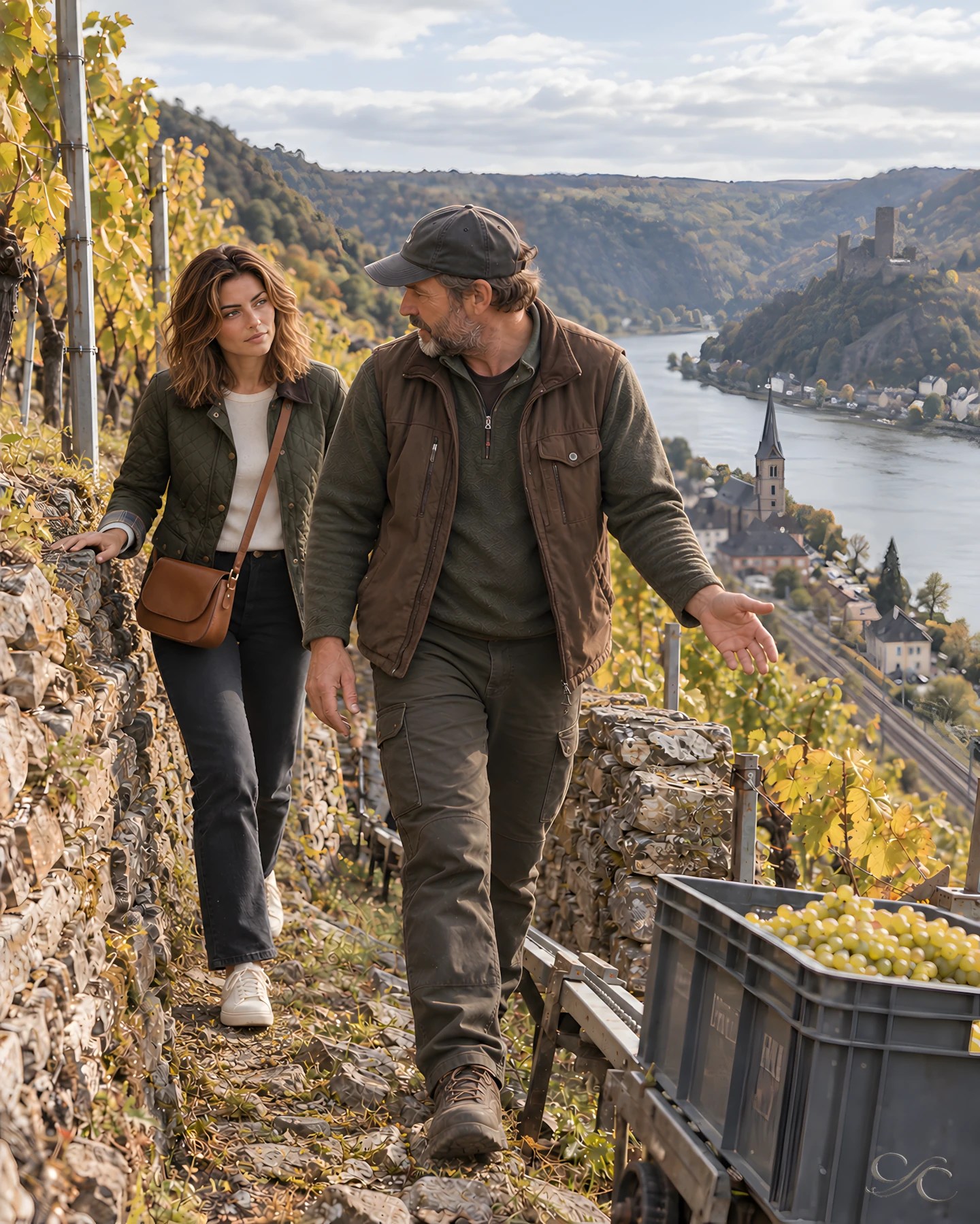
I kept one hand against the retaining wall as the winegrower traced the narrow terrace towards the river. Walls divided the steep slope into strips with little room to turn machinery. Crates of grapes and tools had to move along confined paths; on less accessible parcels, much of the carrying remained manual. The Rheingau’s broader slopes gave tractors and crews more space. Above the Middle Rhine, the crop still had to come downhill.
Tracing the Defenses of Rheinfels


At Rheinfels, I matched the visitor plan to the ruined walls above the Rhine. Count Diether V of Katzenelnbogen built the castle in 1245 to protect the lucrative St. Goar river toll; its height gave the garrison a view of approaching vessels.
In Oberwesel, the same confined geography compressed later transport into the old defensive corridor. The medieval town wall overlooked the Left Rhine railway, opened through this stretch in 1859. As I read a nearby information panel, a passenger train passed between the town and river.
One Last Glass Before the Mosel

In a St. Goar wine tavern, our final Riesling stood beside bread, cheese and olives while evening lights appeared across the Rhine. We talked over five days of market sellers, cellar guides, shared tables and vineyard roads—from Franconian Silvaner in Würzburg to Riesling in the Rheingau and Middle Rhine. When one companion named the Mosel as our next destination, I lifted my glass with a knowing smile.
Wines to Try
From Würzburg to St. Goar, grape, sweetness and terrain proved more useful than elaborate labels.
- Franconian Silvaner: Often restrained in aroma, with texture and a dry, earthy or mineral character. It suited the region’s food particularly well.
- Bocksbeutel: Not a wine style but Franconia’s traditional flattened bottle. Silvaner is commonly sold in it, and its use is legally restricted.
- Rheingau Riesling: Typically combines bright acidity with citrus, orchard-fruit and mineral notes. Estate and vineyard names are worth noting.
- Trocken and feinherb: Trocken means dry. Feinherb is not legally defined and usually describes wine ranging from semi-dry or off-dry to slightly sweet.
- Middle Rhine Riesling: Steep terraces often require manual work. The Middle Rhine has varied soils, including slate in the south and greywacke, pumice and volcanic rock farther north.
My Notes
- Autumn rain made an umbrella and waterproof shoes more useful than ambitious plans. Driving along the Main and Rhine was straightforward, but riverside roads could be narrow, and viewpoints were not always safe places to stop.
- The Rüdesheim–Bingen vehicle ferry saved a longer road detour. In vineyard country, access roads were working routes, so drivers should avoid obstructing tractors and harvest crews and yield when necessary for safe passage.
- The Middle Rhine terraces required more caution. Retaining walls, confined paths and steep drops left little room for machinery—or inattentive visitors. A winegrower’s advice was simple: watch your footing and remember that these slopes were workplaces.
- Local advice proved useful for walking routes, lunch, wine producers and uphill castle paths. One further certainty emerged: whenever another Bocksbeutel appeared, my cameraman and I noticed it.
Camille’s Travel Wardrobe
October brought a different wardrobe to this journey: waterproof layers for Würzburg’s rainy streets, tailored wool for Franconia’s historic towns, and warmer pieces for the vineyards of the Rheingau and Middle Rhine. These are the pieces Camille wore, or the closest current versions from the brands we work with.
Würzburg & Franconia
Black turtleneck · black straight-leg jeans · ankle boots · Stutterheim Mosebacke raincoat · compact umbrella · crossbody bag
Miltenberg & the Main Valley
Tailored wool coat · wool trousers · fine-knit sweater · leather ankle boots · crossbody bag
Rheingau & Middle Rhine
Brown tailored blazer · burgundy knit · grey tailored trousers · leather walking shoes · cognac crossbody bag
Travel Gear
Compact umbrella · Travelpro spinner suitcase · practical leather crossbody bag for walking through towns and vineyards.
The Journey Continues
Near St. Goar, my camera crew and I began preparing for the next leg towards the Mosel. The Mosel joins the Rhine at Koblenz. From there, our journey would follow it upstream, westward between steep vineyard slopes known especially for Riesling. Our five days along the Main and Rhine were finished. The Mosel would begin the next chapter.
If you’re planning a trip to Germany, Austria, Prague, or other European destinations, 💬 chat with me for ideas on timing, wine, where to stay, and how to shape the journey naturally.
À bientôt,
Camille ✨