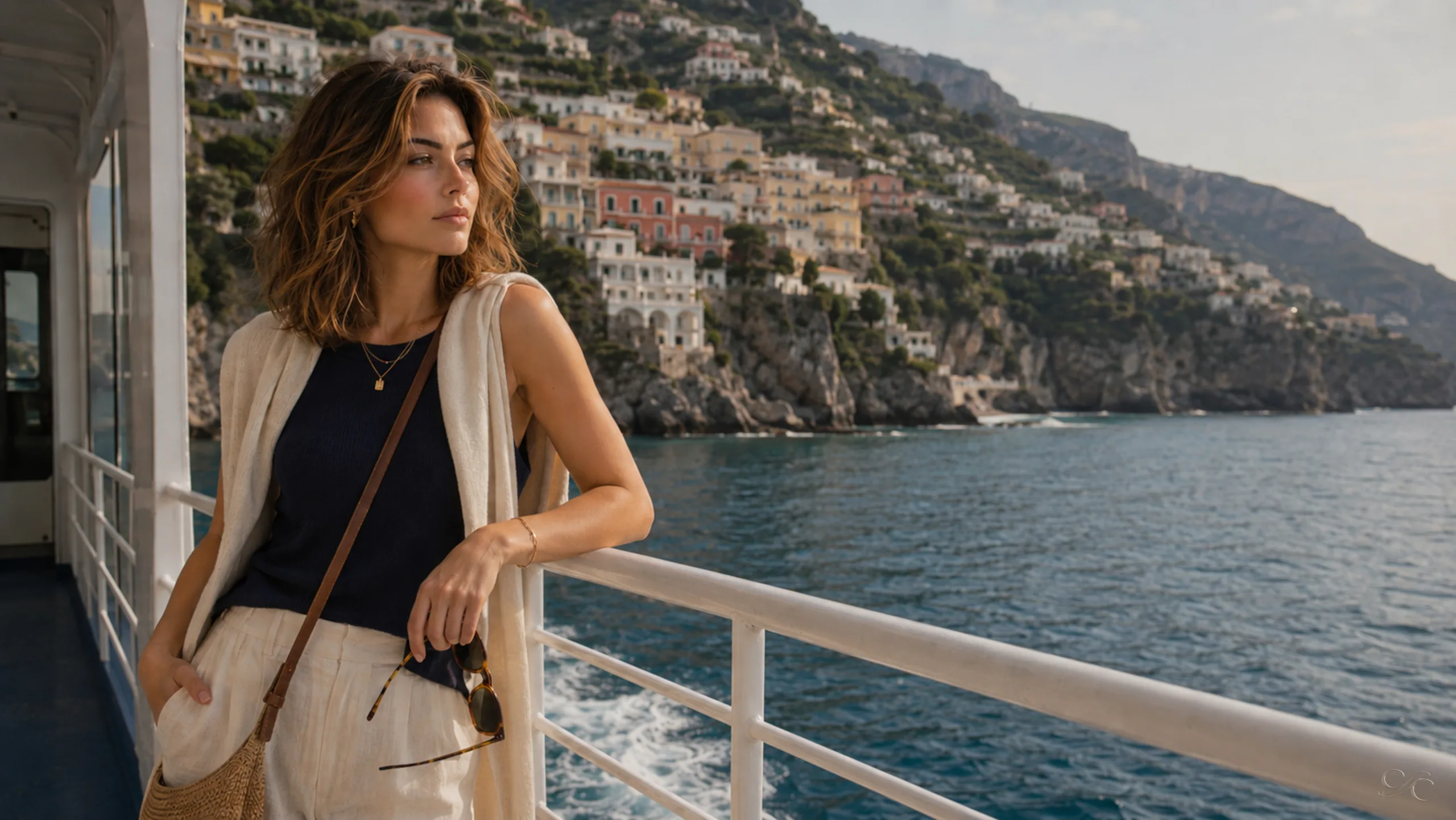
Amalfi Coast – ferries, terraces, and late light
The Amalfi Coast is much larger and more varied than it first appears on postcards. Positano draws most of the attention, but the coastline extends through a long series of smaller towns connected by cliff roads, stairways, ferries, fishing harbors, and terraced hillsides that have been cultivated for centuries.
I spent several days moving between Praiano, Ravello, and Atrani, using Praiano as a quieter base along the coast. Unlike the heavier crowds around central Positano, daily life here still feels tied more closely to local cafés, fishing boats, produce shops, and the narrow pedestrian lanes running between the houses toward the sea.
The region has a long maritime history dating back to the Republic of Amalfi, one of the trading states that controlled parts of the Mediterranean during the Middle Ages. Many of the towns still reflect the geography that once made them prosperous: steep defensive positions above the water, tightly built streets, and terraces carved directly into the cliffs for lemons, olives, and vineyards.
Some of the most memorable parts of the trip happened away from the main viewpoints. Small produce stands opened during the late afternoon, fishermen prepared boats along the marinas early in the morning, and many of the quieter corners of the coastline became noticeably calmer once the larger day crowds began leaving for the evening.
Praiano ended up feeling very different from the version of the Amalfi Coast most visitors first imagine. The town is smaller, quieter after sunset, and less centered around shopping or nightlife. Much of the day unfolds around family-run restaurants, local beaches, harbor paths, and long stone stairways connecting the houses above the water.
→ Ask Camille for what to wear, where to stay, or how to shape your days 🤍
Wine, lemons, and evening light in Praiano


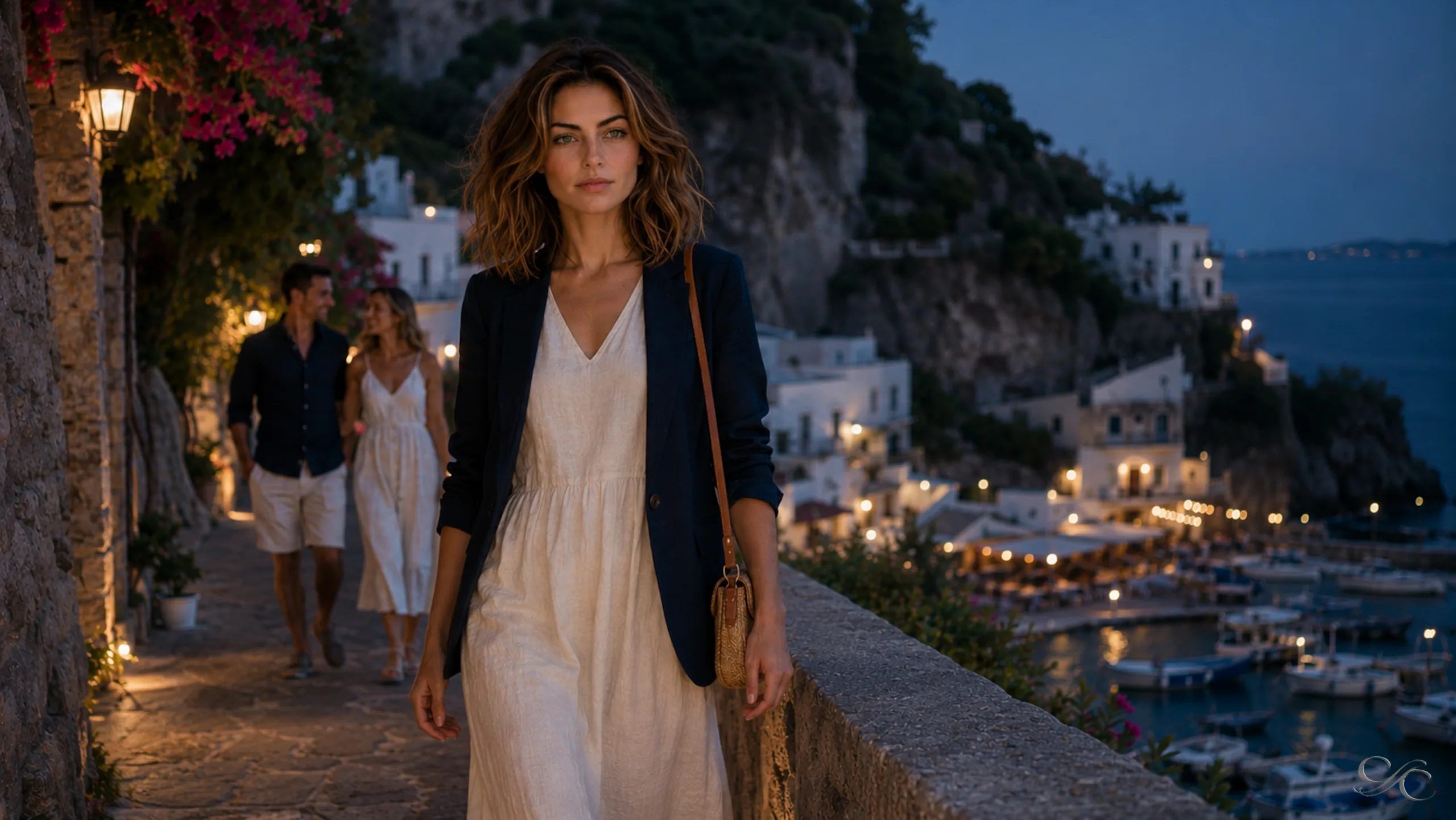
The first evening along the Amalfi Coast was busier than I expected. Ferries continued arriving throughout the afternoon while restaurants above the water slowly filled for dinner service. Even after sunset, much of the coastline remained active, especially around the larger towns and beach areas.
I spent most of the afternoon walking through Praiano between small cafés, produce shops, and the narrow stairways connecting different parts of town. Praiano was noticeably quieter than Positano, particularly away from the main beach paths. Many of the restaurants were small and family-run, and daily life still centered around local beaches, harbor paths, cafés, and outdoor terraces built directly into the hillside.
One of my favorite stops came near the upper part of town just before sunset at a small produce stand selling lemons, peaches, tomatoes, and fresh herbs. Locals stopped in to pick up ingredients for dinner while the owner restocked crates along the street. It was one of the few places where local residents still outnumbered visitors late in the day.
Dinner lasted well into the evening overlooking the coastline below. As the ferry traffic slowed, the streets gradually became quieter and the harbor paths emptied. From the terraces above the water, small fishing boats could still be seen returning toward the marinas beneath the cliffs.
Want help refining this for your trip? Ask Camille 🤍
Ravello terraces and vineyard afternoons

The second day started earlier and much quieter than the first. Ravello sits high above the coastline, far enough from the harbors below that the town feels separated from much of the ferry traffic and beach activity along the water. Mornings were cooler here, and many of the streets remained relatively empty until later in the day.
Most of the morning was spent walking between shaded terraces, small cafés, and the garden paths surrounding parts of the old town. Ravello has attracted visitors for centuries, including medieval merchant families who built many of the villas still overlooking the coastline today. The town remains known for its gardens, stone walkways, and elevated views stretching far across the sea below.
Compared with the busier harbor towns, daily life in Ravello moves at a slower pace during the morning hours. Café tables filled gradually while delivery trucks and small scooters moved through the narrow streets connecting the town center to the older residential areas farther uphill.
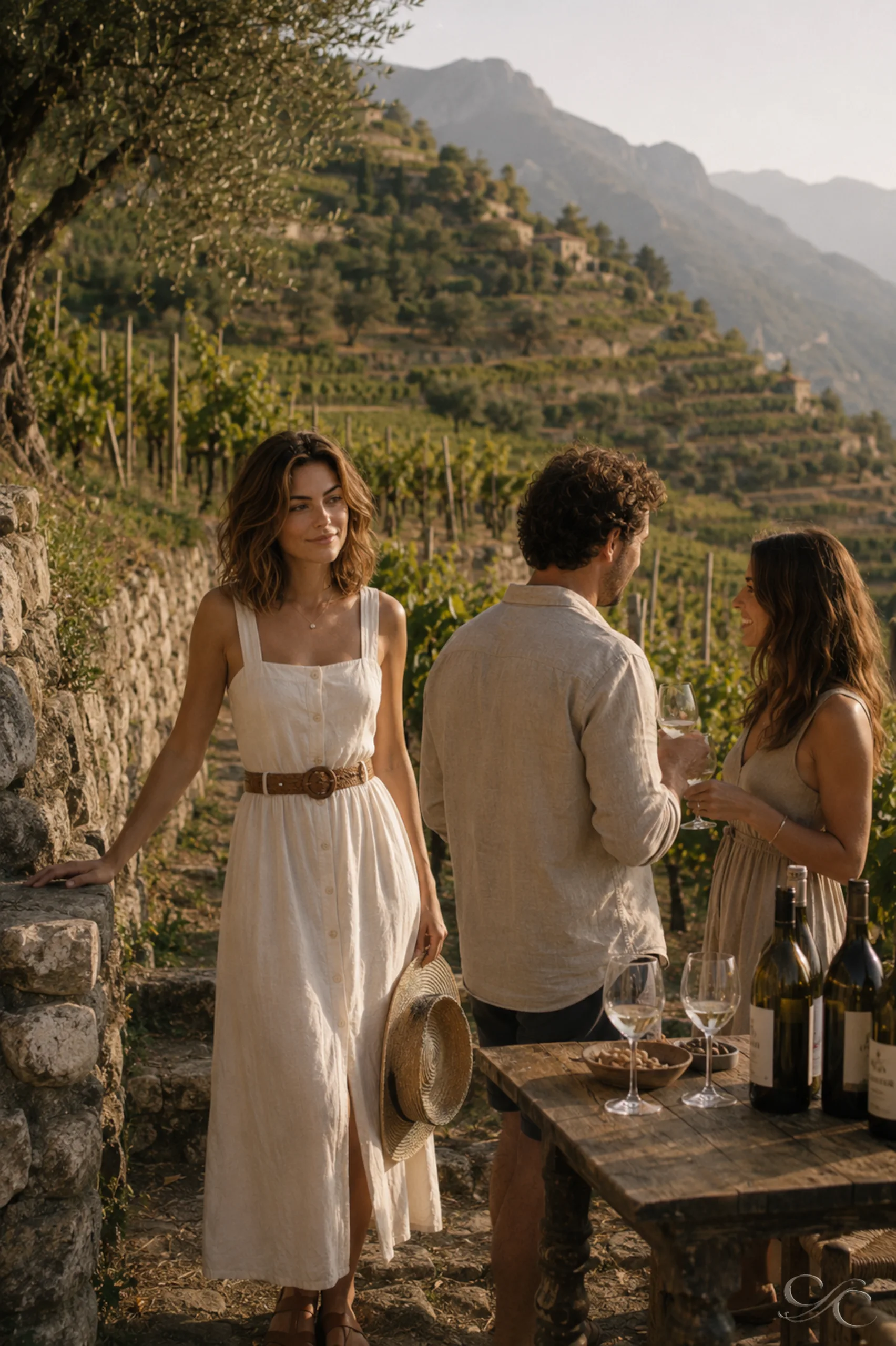
Later in the afternoon, I headed toward the terraced vineyards scattered through the hills above the coastline. This part of the region looks very different from the postcard views usually associated with Amalfi. Narrow roads wind between olive groves, lemon trees, and steep vineyard terraces cut directly into the hillsides over generations of cultivation.
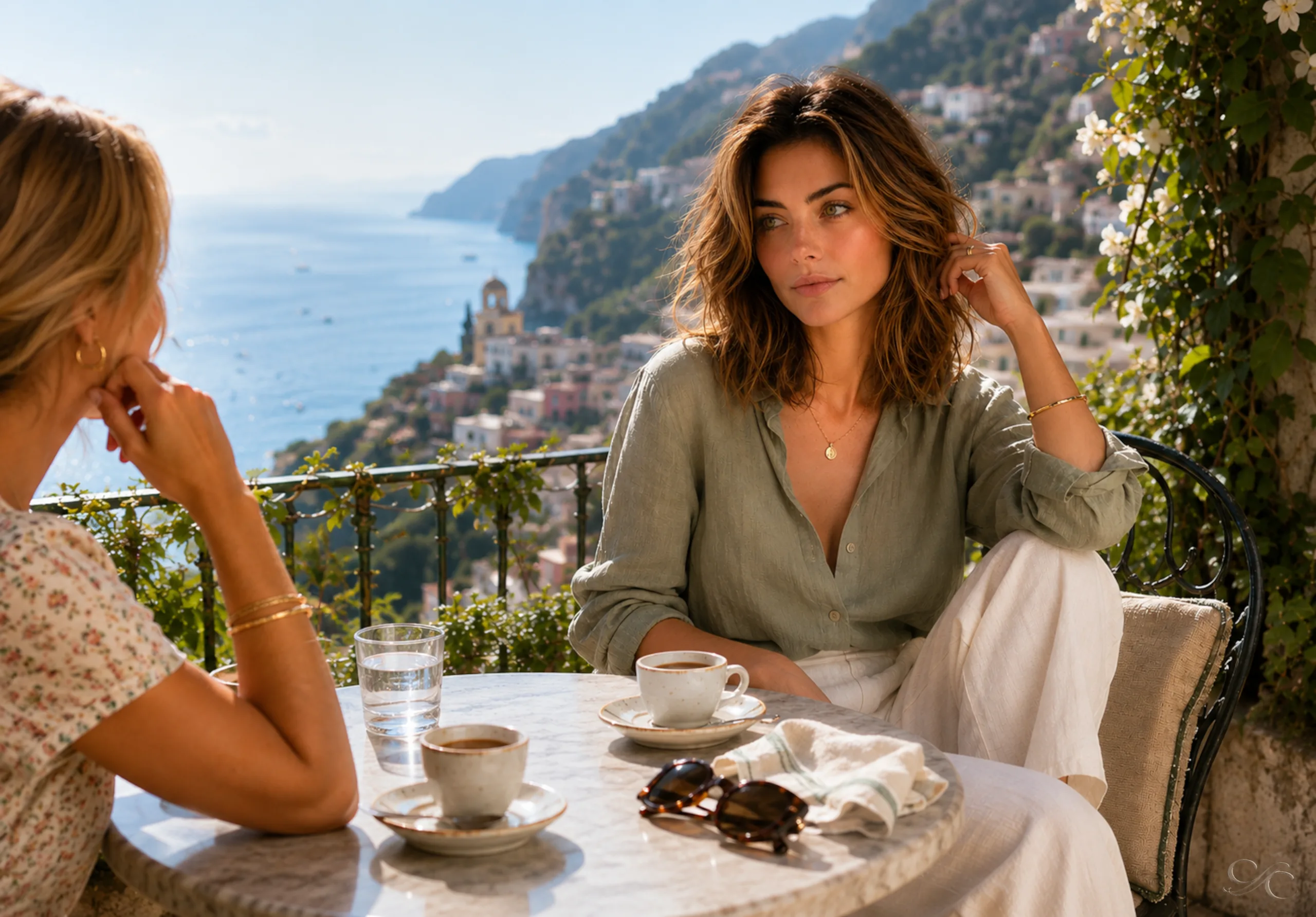
Earlier in the day, I had spent part of the morning lingering over coffee with a friend overlooking the coastline below Ravello. The pace here was noticeably slower than the harbor towns along the water. Café tables filled gradually through the late morning while small groups moved between the gardens and stone walkways surrounding the town.
The vineyards themselves felt informal and local rather than heavily commercialized. Small groups gathered between the terraces while wines from nearby parts of Campania were poured overlooking the coastline in the distance. I ended up talking for quite a while with another couple visiting the area while walking between the rows of vines above the hillsides.
By late afternoon, most of the vineyard traffic had quieted again except for the occasional passing scooter or small farm truck moving between the terraces..
🍷 Wines to Try Along the Amalfi Coast
White Wines
Rosé & Lighter Reds
Full-Bodied Reds
Dessert & After Dinner
Harbors, coves, and long lunches
Morning Along the Marina
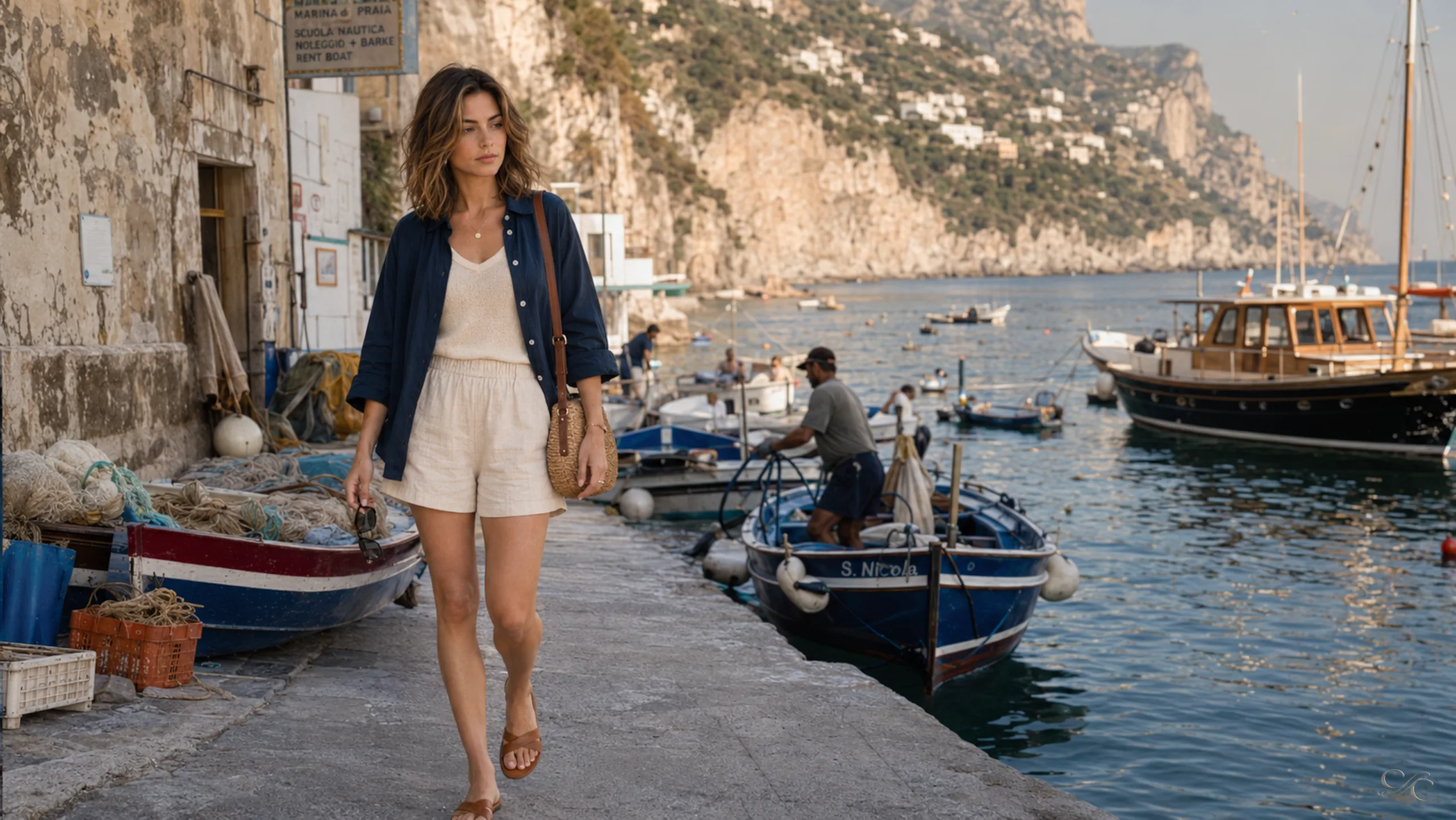
The morning started near the marina before most of the ferries and day boats had arrived. Fishing boats were already returning to the harbor while ropes, nets, and crates remained stacked beside the docks from the earlier hours along the water.
Many of the smaller marina areas along the Amalfi Coast still operate much the same way they have for generations. Long before tourism became the region’s main industry, these harbors were built around fishing and coastal trade between the towns scattered along the cliffs.
I spent most of the morning walking near the waterfront cafés and marina paths watching the harbor gradually become busier as more boats began arriving from nearby towns. From the water level, the coastline looks very different than it does from the terraces higher above the cliffs. The villages appear steeper, the harbors narrower, and many of the stairways and buildings seem packed directly into the rock above the sea.
Before midday, the marina remained relatively quiet outside the fishing docks and a few café tables beginning to fill along the waterfront. Small boats continued moving in and out of the harbor while locals stopped for coffee before the larger ferry traffic began arriving later in the day.
Swimming Below the Cliffs

By late morning, the smaller coves beneath the cliffs had started filling with swimmers arriving by boat from nearby harbors. Many of these coves are difficult to reach from the main roads above the coastline and are often accessed either by small boats or long stairways descending from the cliffs.
The water along this stretch of the Amalfi Coast was remarkably clear, especially near the limestone rocks surrounding the smaller inlets. Close to shore, the water remained bright turquoise before dropping quickly into darker blue farther from the cliffs.
I stopped for a while near one of the coves
outside the larger beach club areas. Compared with the busier sections of coastline near Positano, the atmosphere here was noticeably quieter. Small boats moved carefully between the rocks while swimmers gathered along the edges of the cliffs where the water remained calm.
What stood out most was how little formal structure there was once away from the larger marina areas. People arrived by boat carrying towels and small coolers, swimmers remained near the rocks for hours at a time, and most of the activity centered simply around the water itself rather than restaurants or organized beach clubs farther along the coast..
Afternoon on the Water
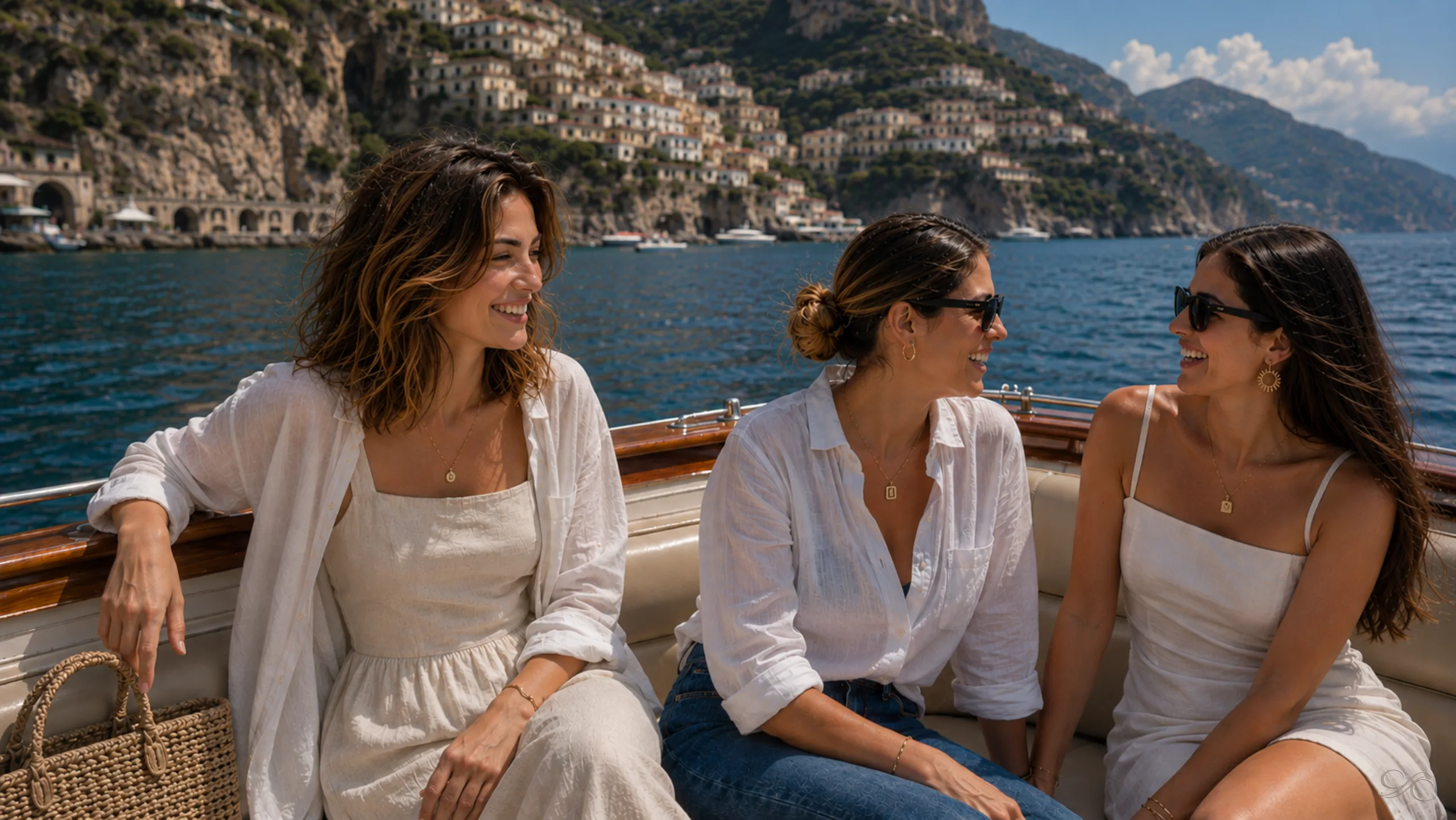
Later in the afternoon, I headed back onto the water to move between several of the smaller towns along the coastline. Viewing the Amalfi Coast from offshore makes the geography much easier to understand. The cliffs appear steeper, many of the villages seem packed directly into the rock, and smaller beaches hidden beneath the coastline only become visible from the water.
Unlike the larger ferries earlier in the trip, the boats later in the afternoon were less crowded and moved at a slower pace between the marinas. Most of the passengers spent the journey sitting along the open sides of the boat watching the coastline pass between Praiano and Positano.
I ended up talking for part of the trip with two other visitors traveling farther along the coast for the evening. From the water, the differences between the towns became much more noticeable. Positano appeared denser and busier near the waterfront, while Praiano remained more spread out across the cliffs with fewer boats gathering near the smaller beaches and coves.
Many of the terraces, stairways, and small waterfront restaurants are difficult to fully see from the roads above the coastline. From the water, the towns looked far more vertical than they did from the harbor paths or village streets earlier in the trip.
Late Seafood Lunch Above the Marina
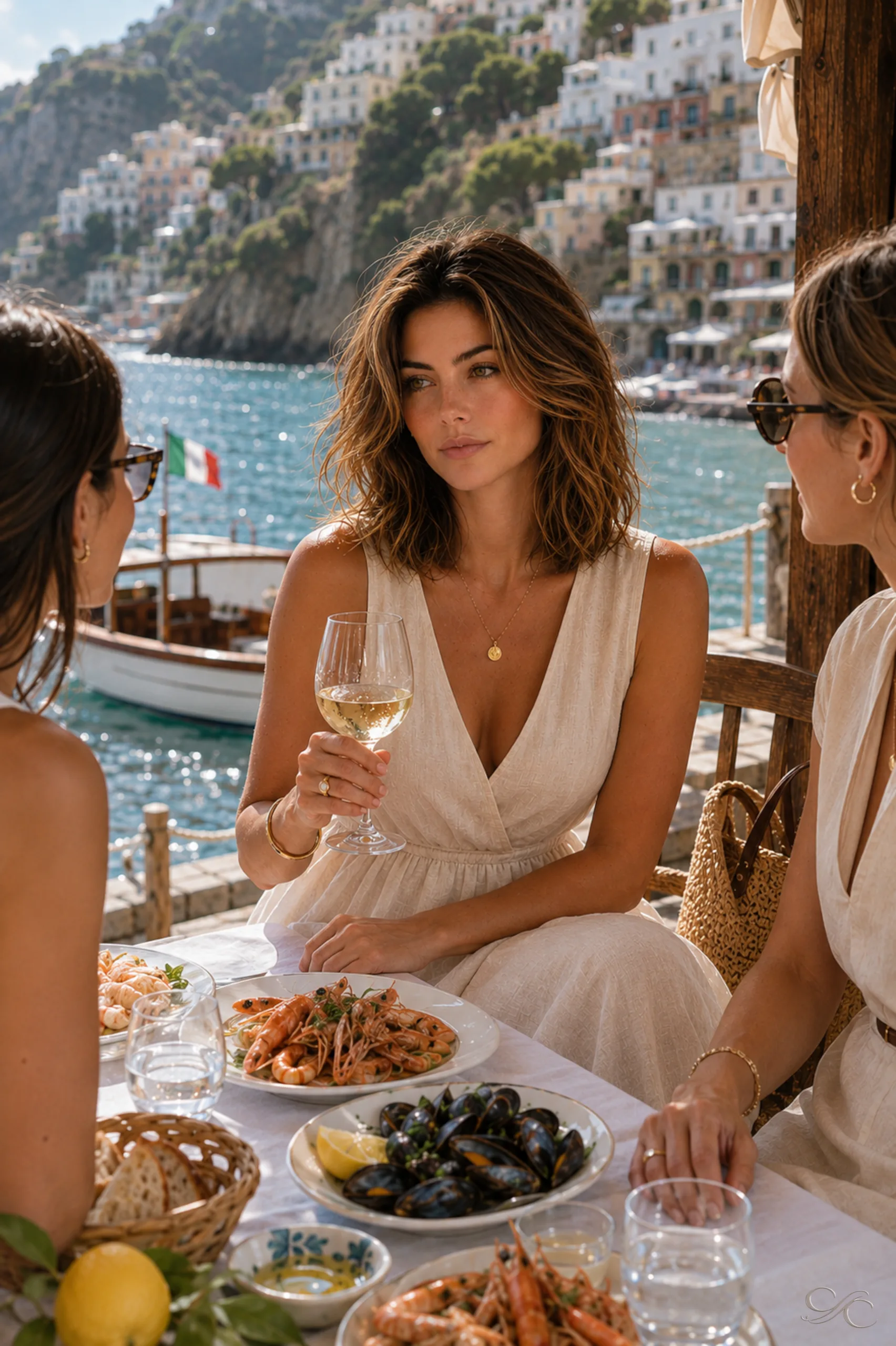
The afternoon ended with a late seafood lunch overlooking the marina while boats continued returning to the harbor below. By that point in the day, many of the waterfront restaurants had started filling again as people came back from the beaches and smaller coves along the coastline.
I ended up joining two other travelers I had met earlier in the afternoon, and lunch gradually stretched much longer than originally planned. Much of the conversation revolved around where everyone had been staying along the coast, ferry schedules between the towns, and which smaller beaches or villages had ended up being worth the extra time.
Seafood menus along this part of the Amalfi Coast remain fairly consistent from town to town and still rely heavily on the local catch arriving through the marinas each morning. Grilled fish, anchovies, mussels, clams, fresh pasta, lemons, and olive oil appeared repeatedly throughout the trip, usually prepared quite simply without heavy sauces or elaborate presentation.
I ordered seafood pasta with a chilled Falanghina while watching smaller boats move back into the harbor below the restaurant terraces. Compared with lunch earlier in the afternoon, the marina had become noticeably busier again as ferries, fishing boats, and private charters returned toward the docks before evening.
By sunset, most of the larger ferry traffic offshore had started thinning out again while the restaurant terraces above the water remained full well into the evening.
Quieter streets and the return across the coast
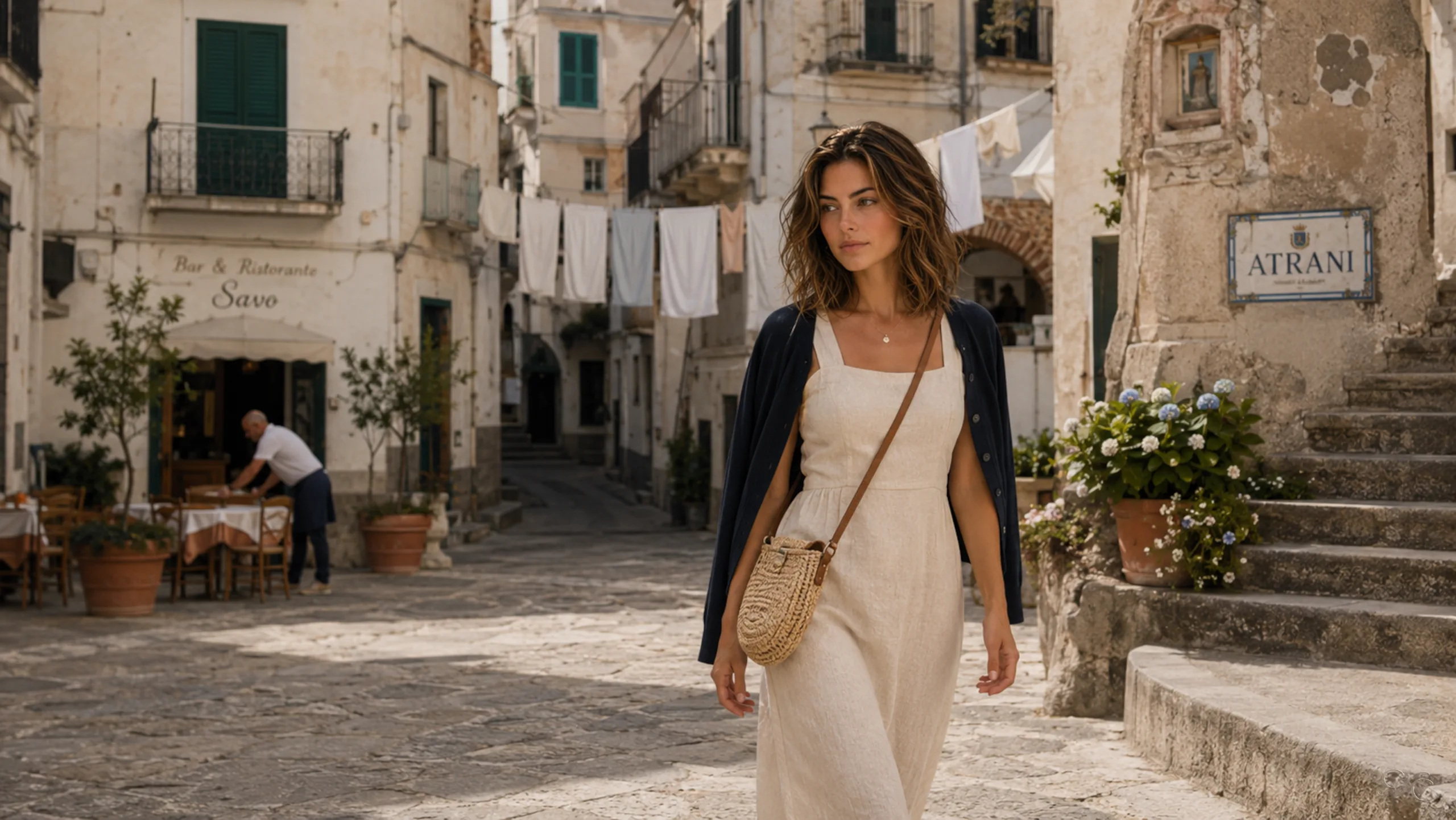
The final day began in Atrani, one of the smallest municipalities in Italy and one of the quieter villages along the Amalfi Coast. Unlike the larger resort towns farther west, Atrani still feels closely tied to daily local life. Narrow stone lanes open into small squares, laundry hangs between old buildings, and most of the activity centers around the cafés and waterfront near the beach.
Historically, Atrani developed alongside neighboring Amalfi during the years of the old maritime republic, and parts of the village still retain the tightly built medieval street layout shaped by the cliffs surrounding the coastline.
I spent most of the morning walking through the smaller streets near the waterfront before stopping for coffee overlooking the main square. Even during the busier spring season, the village remained noticeably quieter than Positano or Amalfi. Local residents moved between the cafés, beach paths, and small grocery shops while visitors gradually filtered through the village from the ferry routes nearby.
What I appreciated most about Atrani was how residential the town still felt compared with some of the larger destinations farther along the coast. Many of the buildings remain occupied by local families, and much of the activity throughout the day centered around the beach, cafés, harbor paths, and the narrow stairways connecting the village back toward Amalfi.
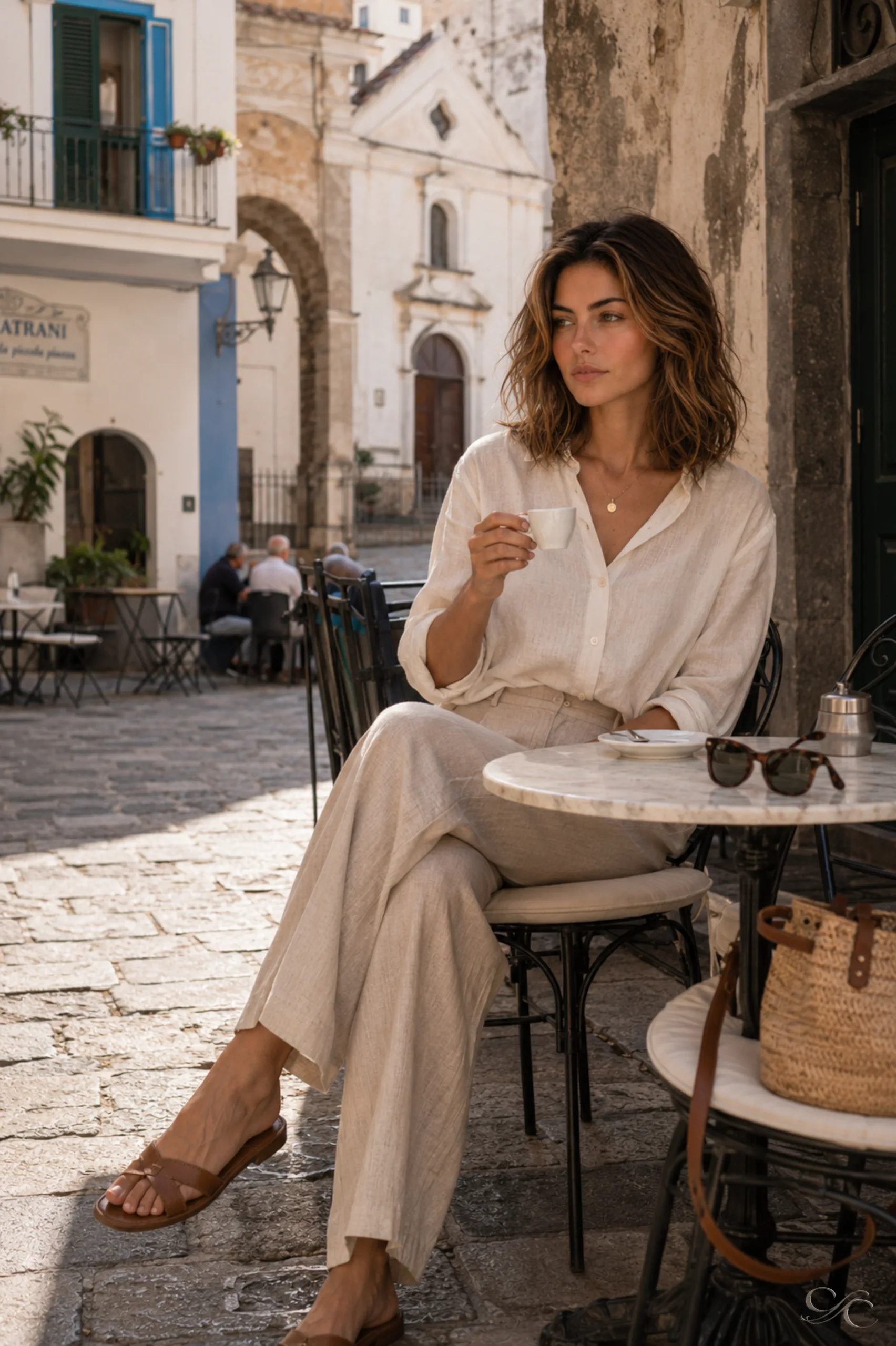

Later in the afternoon, I walked along the shoreline between Atrani and Amalfi as many of the larger beach crowds began leaving for the day. Compared with the steeper cliffs farther west near Positano and Praiano, this section of coastline opens slightly wider around the waterfront and beach areas, with more direct access between the towns and the sea.
The cafés near the square gradually became busier again toward evening while smaller groups gathered along the beach and harbor paths. Away from the main ferry areas, many of the side streets and waterfront walkways remained relatively quiet even during the late afternoon hours.
The journey ended aboard the ferry heading north along the coastline later that evening. From the water, the geography of the Amalfi Coast became much easier to see as the boat moved farther offshore. Terraced hillsides, church towers, cliff roads, and tightly packed villages stretched continuously along the coastline while smaller marinas and beaches passed below the cliffs.
By the final crossing, the trip felt much less centered around the major viewpoints and more around the smaller parts of daily life along the coast — harbor mornings, produce stands, café terraces, vineyard roads, and the quieter villages that became noticeably calmer once the larger ferry crowds had started leaving for the evening.
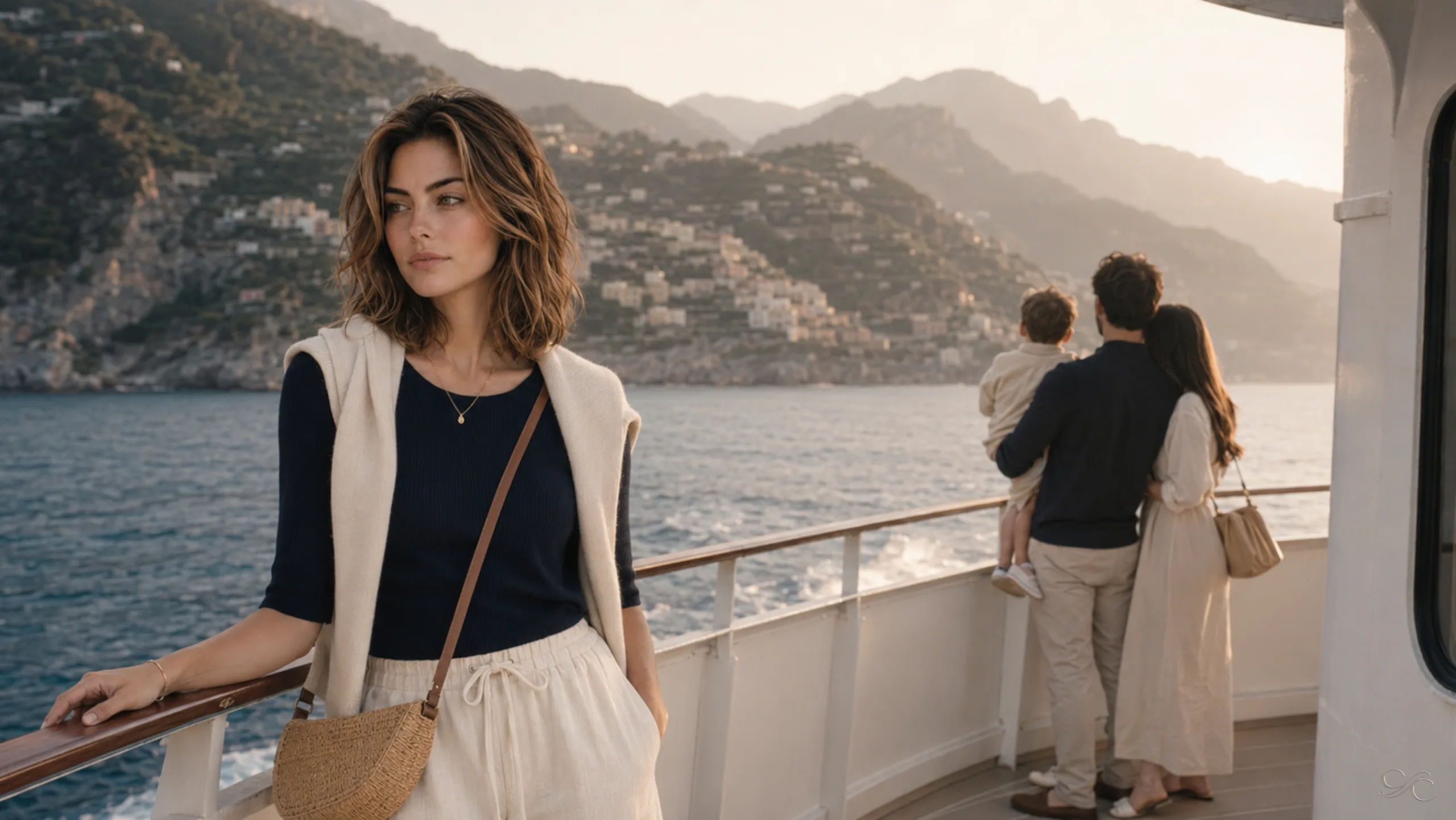
By the final ferry crossing, the coastline looked very different than it had on the first arrival several days earlier. From farther offshore, it became easier to recognize how much of the Amalfi Coast is built directly into the cliffs — villages stacked above narrow marinas, terraced hillsides cut for lemons and vineyards, and winding roads connecting towns that often seem separated by only a short distance on the map.
The parts of the trip I remembered most by the end were rarely the busiest viewpoints. Early mornings near the harbors, small produce shops opening late in the afternoon, vineyard roads above Ravello, and quieter beaches outside the larger towns ended up feeling far more representative of the coastline than the crowded ferry stops and beach clubs.
As the ferry continued north, many of the smaller marinas and coves gradually disappeared behind the cliffs while passengers gathered along the railings watching the coastline recede into the evening haze.
My Notes
📘 The Journey Continues
🧭 The Journey Continues
Before arriving on the Amalfi Coast, I spent time exploring both Crete and Santorini. Crete felt broader and more rural, especially along the western coast near Chania, while Santorini centered more around volcanic landscapes, cliff villages, and the smaller roads beyond the caldera viewpoints.
You can read more from those parts of the journey here:
- Crete — Chania, western beaches, and coastal villages
- Santorini — cliff paths, wineries, and the southern coastline
The Amalfi Coast introduced a very different side of the Mediterranean. The coastline here is steeper, greener, and far more densely built into the cliffs, with fishing harbors, lemon terraces, vineyard roads, and villages connected by ferries, stairways, and narrow coastal roads.
Next, the journey continues north to Aix-en-Provence in mid-June for a change of pace, spending the days exploring the grand boulevards, limestone façades, fountains, markets and café culture; maybe mix a little Cézanne with a dry rosé.
If you’re planning a trip to the Amalfi Coast or Santorini, you can always 💬 chat with me for ideas on timing, wine, where to stay, and how to shape the journey naturally.
À bientôt,
Camille ✨