Five Days Along the Mosel
Late the morning, I arrived by train in Cochem with a suitcase, a folded map and five days to follow the Mosel upstream toward Trier. After Cochem, a rental car would take me around the river’s long bends through Beilstein, Bremm, Traben-Trarbach and Bernkastel-Kues.
The Mosel flows northeast from Trier and joins the Rhine at Koblenz, so my route ran against the current. This stretch is one of Germany’s principal Riesling regions. Vineyards climb slopes where slate-rich, stony slopes drain effectively and store daytime heat, helping Riesling ripen in Germany’s generally cool-climate wine environment.
It was the final week of October. Vineyard leaves had faded, daylight was shortening, and riverside terraces were nearing the end of their outdoor season.
First Steps in Cochem
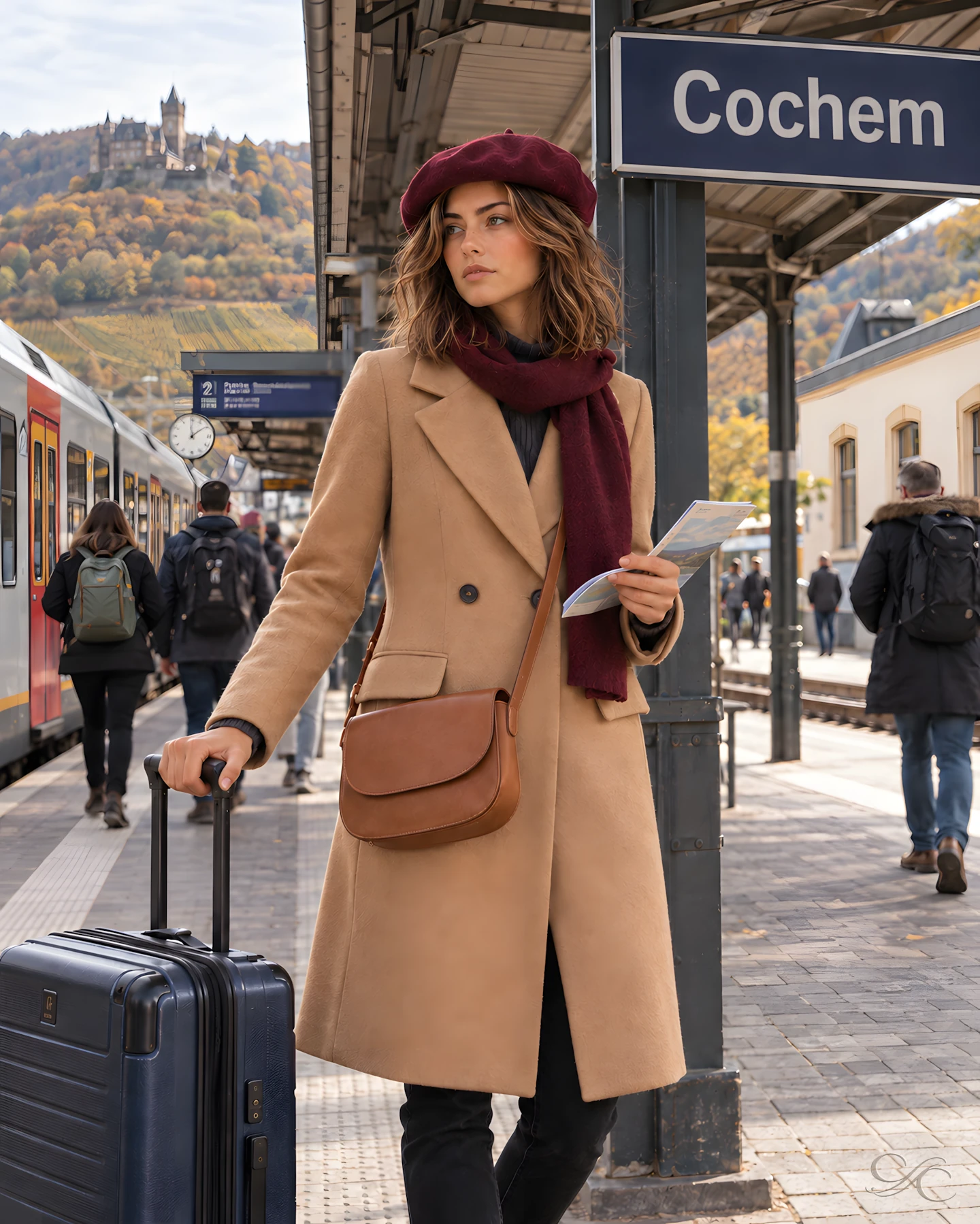
I paused beneath the Cochem station sign, map in hand, while the other passengers continued toward the exit. The old town lay a short walk south, but I needed a moment to fix the direction. Beyond the platform, vineyard rows climbed the steep hills beneath an overcast sky.
Right of Way in the Old Town

Beyond the open riverside, Cochem’s old town narrowed to cobbled lanes between half-timbered façades, hanging signs and shop doors. A delivery worker approached with three beverage crates stacked on a hand truck, leaving little room for either of us. I stepped into a recessed doorway while he steadied the load over the uneven paving. Once the crates had squeezed past, we exchanged smiles and continued in opposite directions.
Turning the Map to Match the River
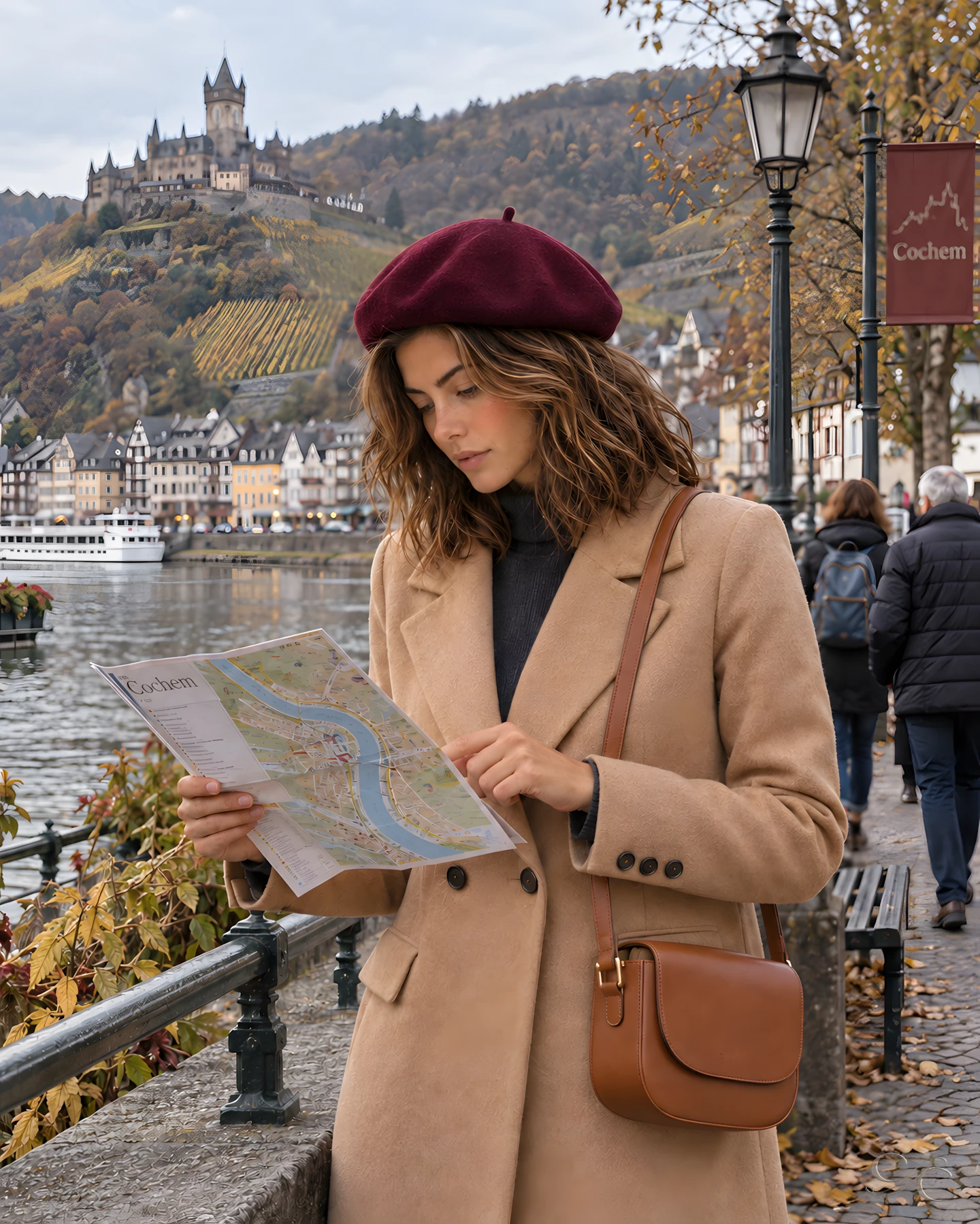
I turned the folded map until its blue bend matched the Mosel in front of me. With the river fixed, Cochem became easier to place: the promenade followed the bank, the historic center clustered behind the riverside buildings, and Reichsburg occupied a steep spur above them. Vineyard rows climbed the surrounding slopes, stopping where the woodland began. I traced a route along the river toward the old streets.
What Holds the Old Houses Together
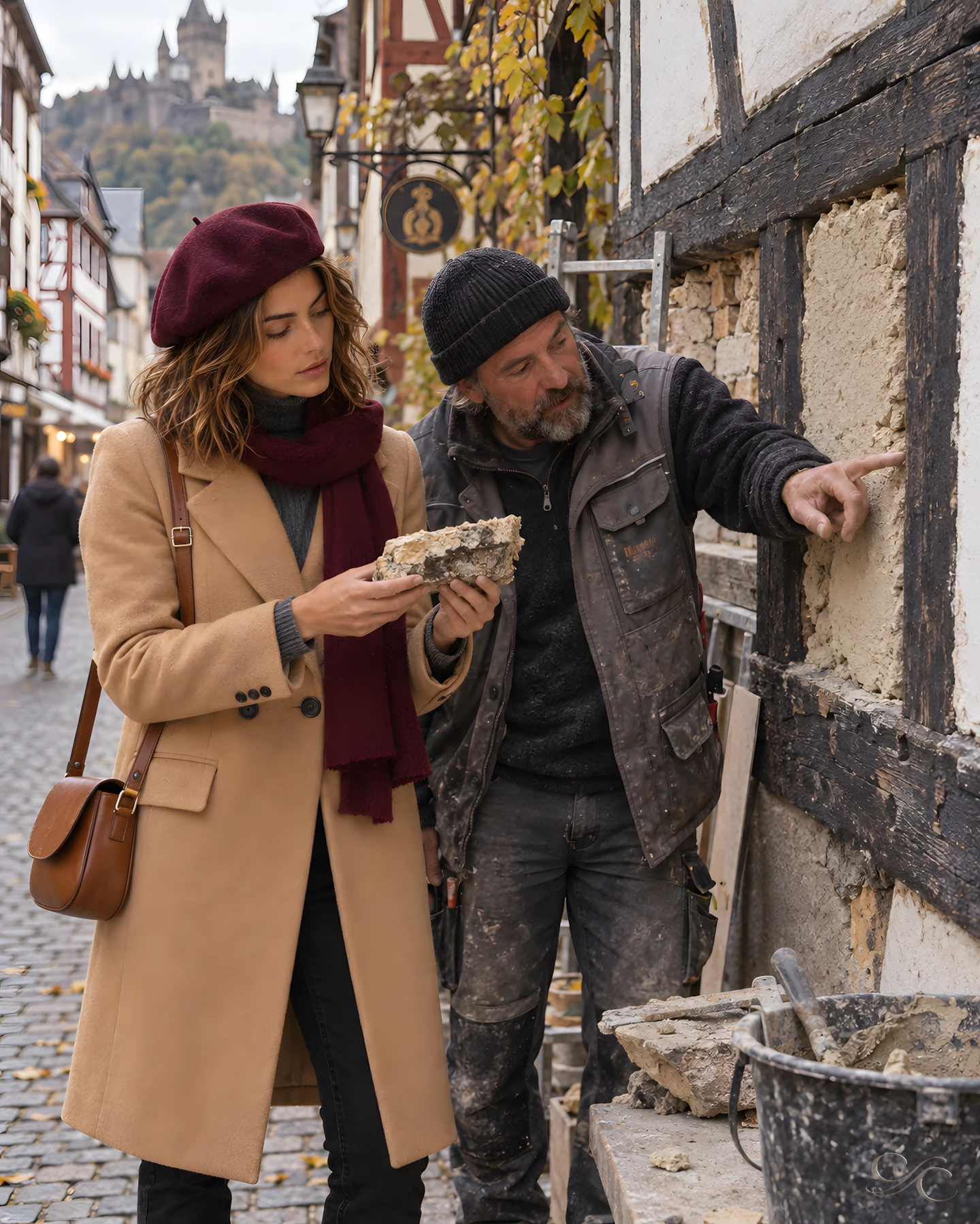
I compared a coarse, weathered section of wall infill with a fresh repair between the dark timbers. The worker pointed to a neighboring panel where age had roughened the surface. In these Fachwerk houses, the timber frame carries the load; the compartments are filled and plastered, traditionally with materials that allow moisture to escape.
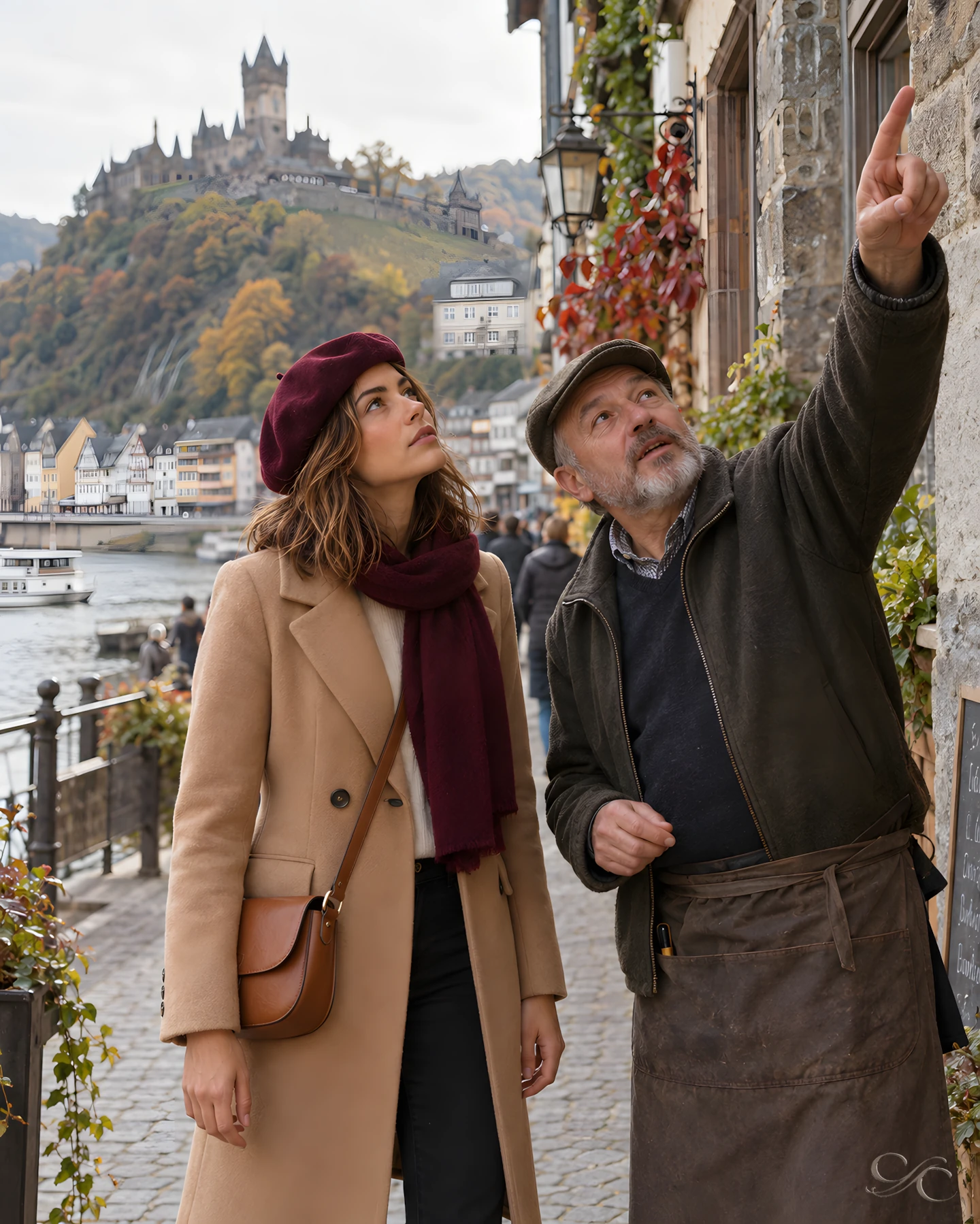
Later, beside the waterfront, a shopkeeper pointed well above my head to the Mosel’s historic high-water level. The river had once risen beyond the masonry most easily repaired from the street.
Learning the Riesling Vocabulary
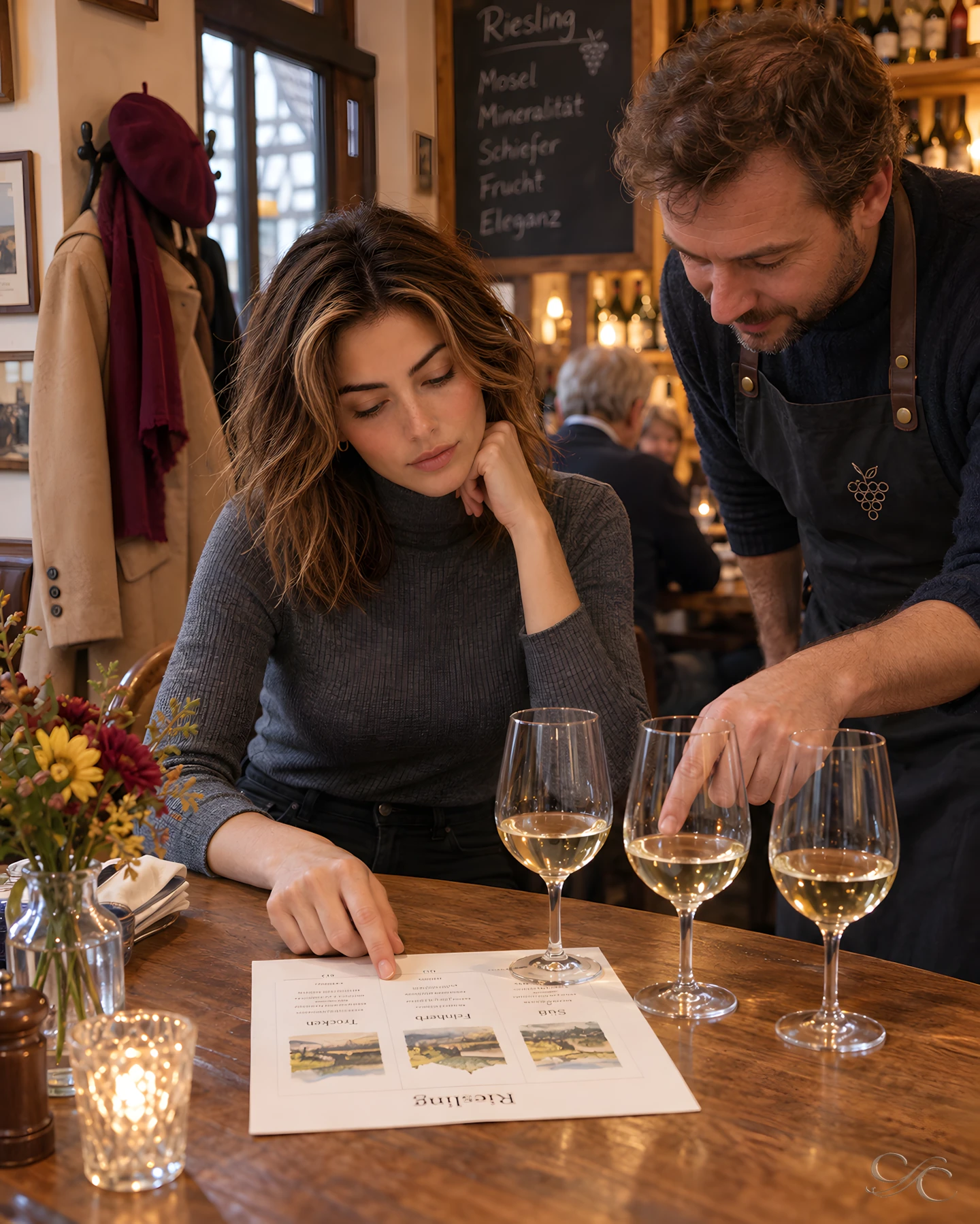
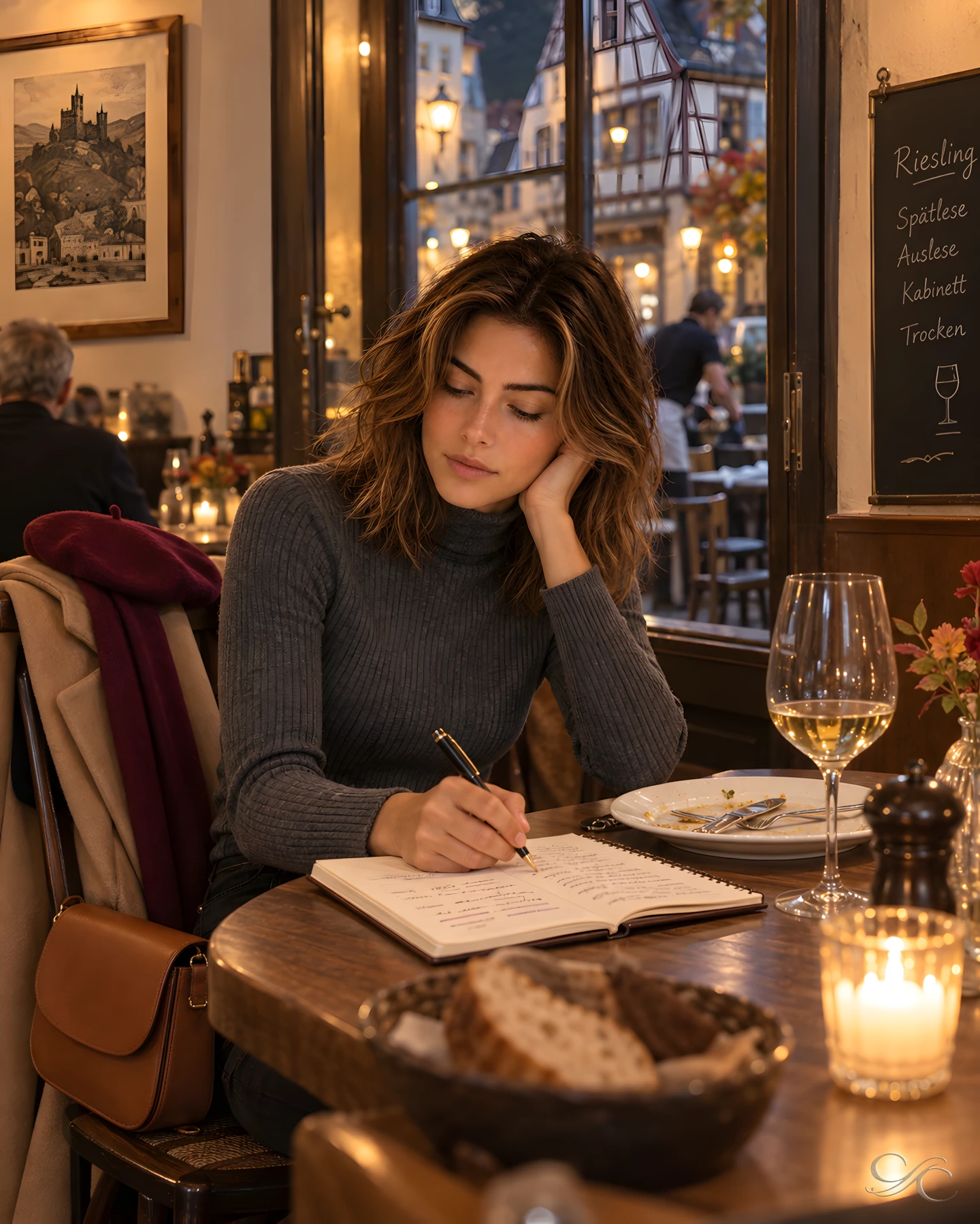
I moved the tasting card toward the glass I thought matched it, but the server pointed to another. The comparison separated two kinds of wine terminology. Trocken indicated a dry wine, while Kabinett, Spätlese and Auslese belonged to the Prädikat system, which classifies grapes by must weight at harvest rather than simply stating how sweet the finished wine will taste. That evening, I copied the unfamiliar terms into my journal as staff cleared the outdoor tables beyond the window.
Breakfast Route
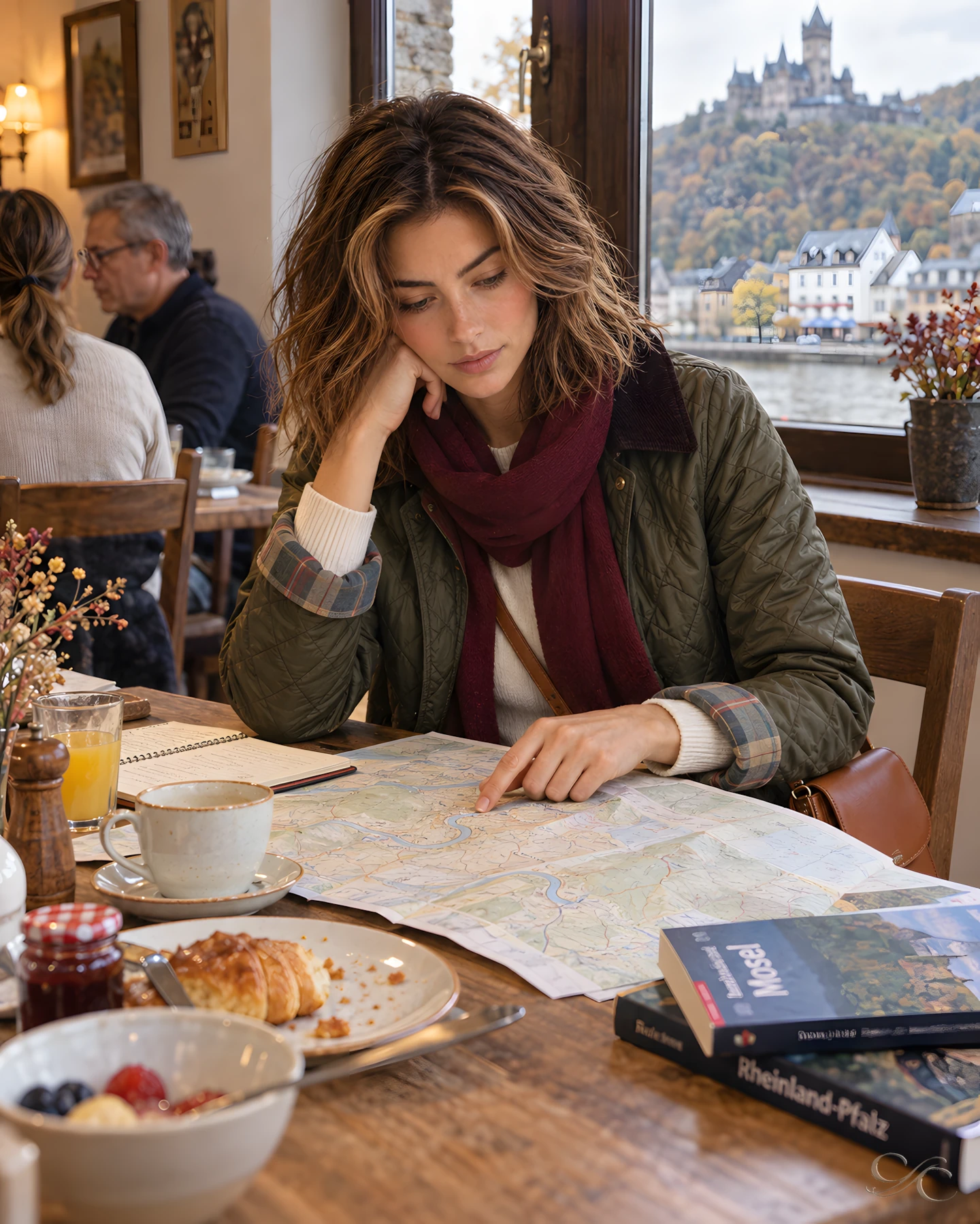
The breakfast room remained warm while the late-October morning outside was chilly and partly cloudy. Beside my coffee and breakfast plates, I opened the map showing the Mosel and checked it against the previous day’s notes. I circled Beilstein, Bremm and Traben-Trarbach in sequence, with Bremm beneath the steep Calmont vineyards. Then I traced the route onward from Cochem, fixing the day’s stops before I left.
The Lane Must Stay Open
Outside a wine and regional-specialties shop, a pavement sign occupied just enough of the cobbled lane to block a delivery van. At the shopkeeper’s request, I moved it against the storefront while she guided the driver through the remaining gap. Once the van had passed, the sign returned to its place, and the shopkeeper gave me a grateful smile. Displays, deliveries and pedestrians shared the same narrow strip of stone.

Tools for the Steep Rows
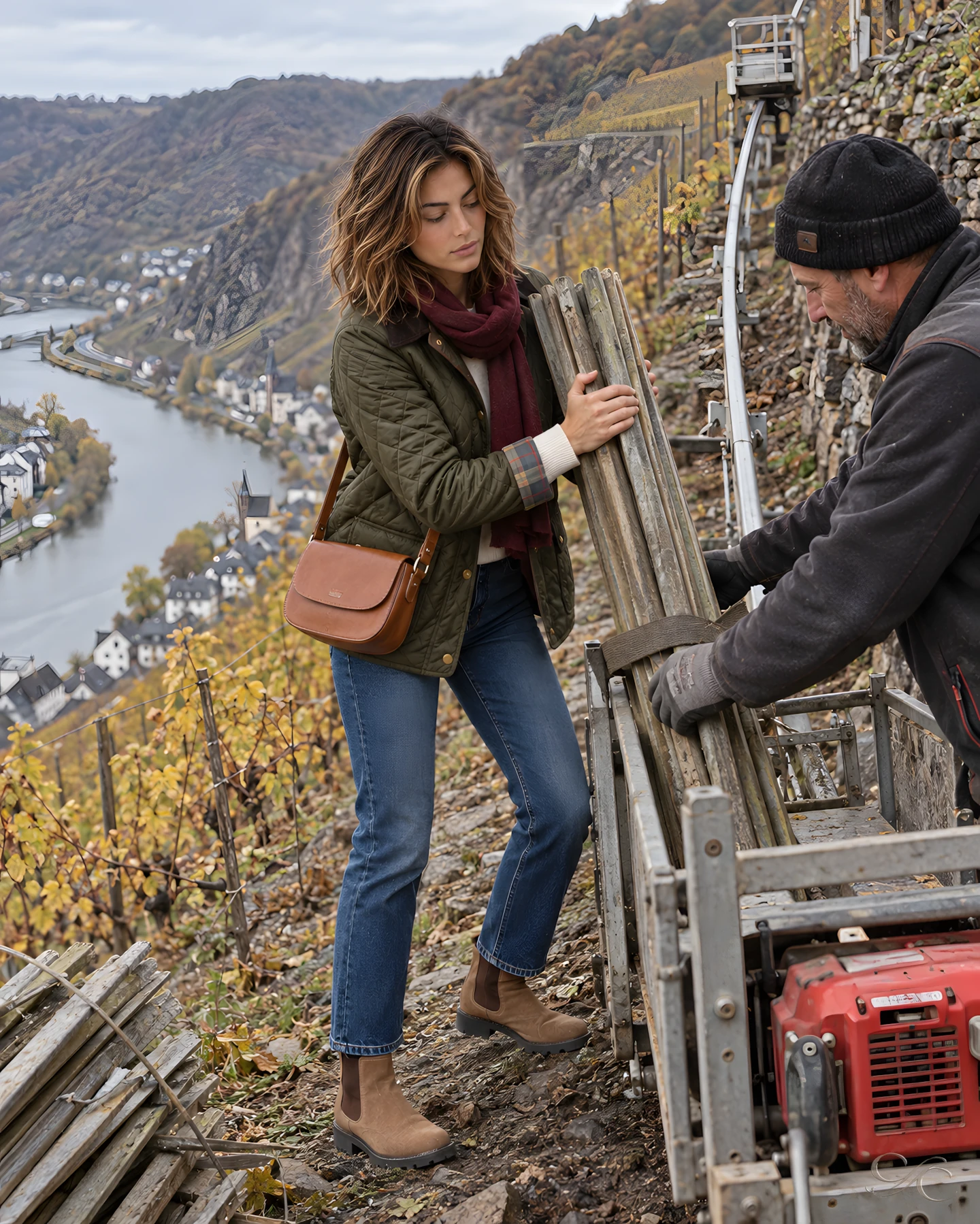
With the Mosel in the background at Calmont, I steadied a bundle of replacement posts while a vineyard worker strapped them to a monorack carrier. The posts formed part of the trellis system supporting the vines and wires, and damaged ones had to be replaced by hand. He pointed uphill along the narrow rail, which followed the terraced slope beyond the reach of ordinary vehicles. Its small powered platform carried tools, posts and other equipment between the rows.
Bread Passed Across the Table
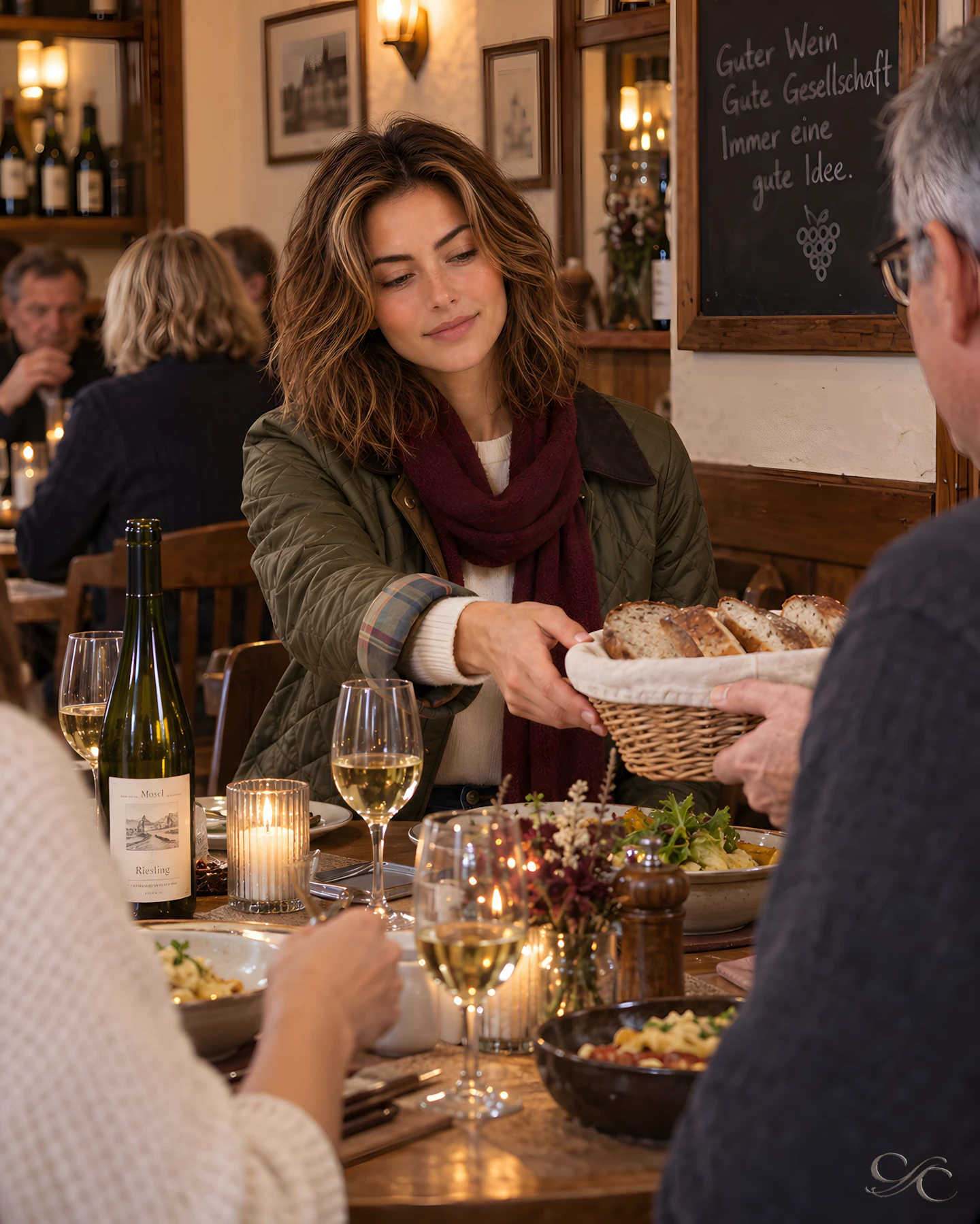
After the cold hillside, I took the open end of a shared table in a compact wine tavern near Bremm. Coats crowded the entrance; hot plates, wine glasses and candles filled the closely set tables. A local diner passed me the bread basket, prompting a brief exchange about the weather outside. We traded a few words about the cold before everyone returned to lunch.
Following the River Bend
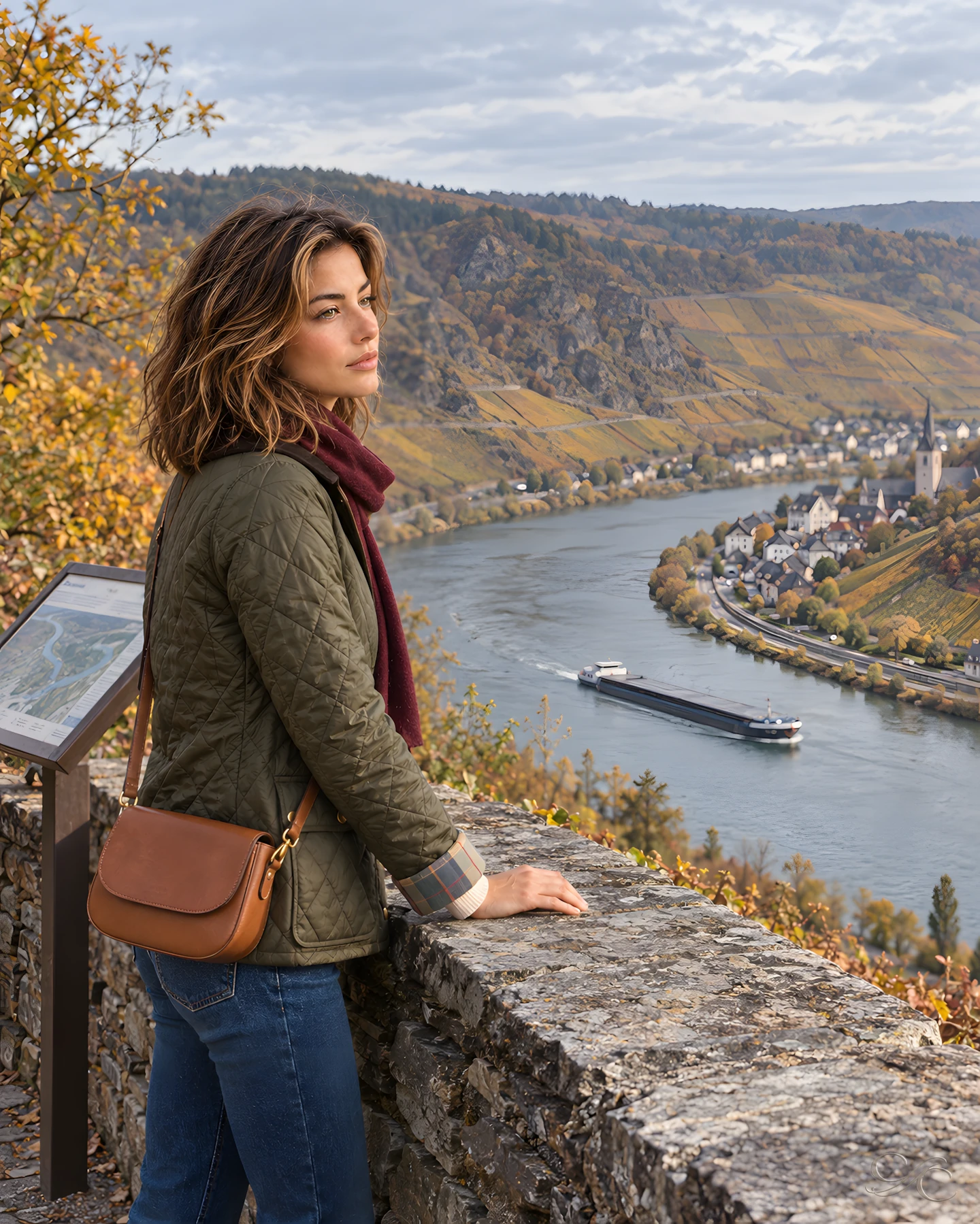
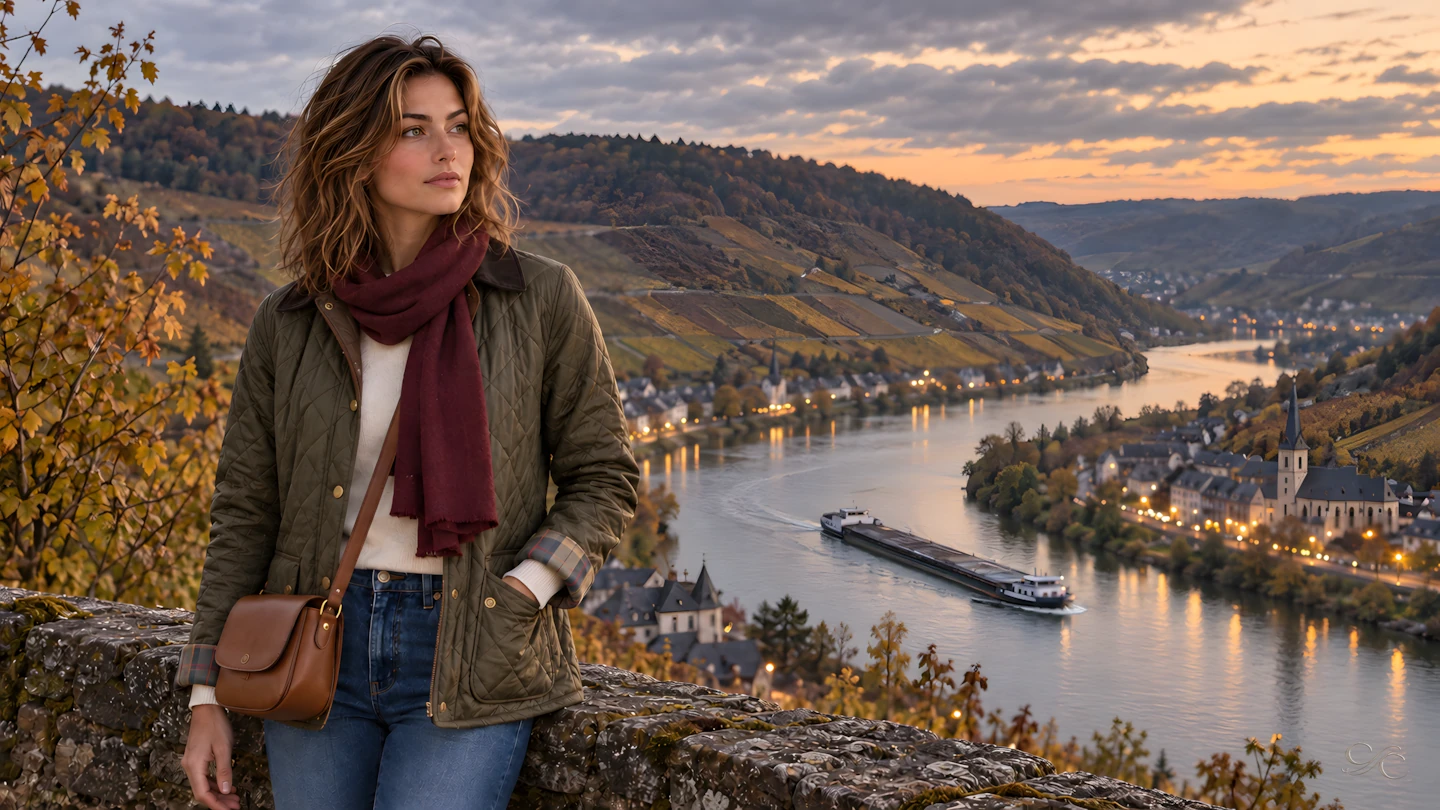
At the viewpoint, I rested my hands on the stone barrier and watched a working barge round the bend. Below, the road curved beside the water, the village occupied a narrow bank, and vineyard terraces followed the slopes above both. Since the Mosel’s canalization in 1964, locks have enabled freight traffic between France and the Rhine. I followed the barge until it disappeared around the next bend.
Two Sides of Town
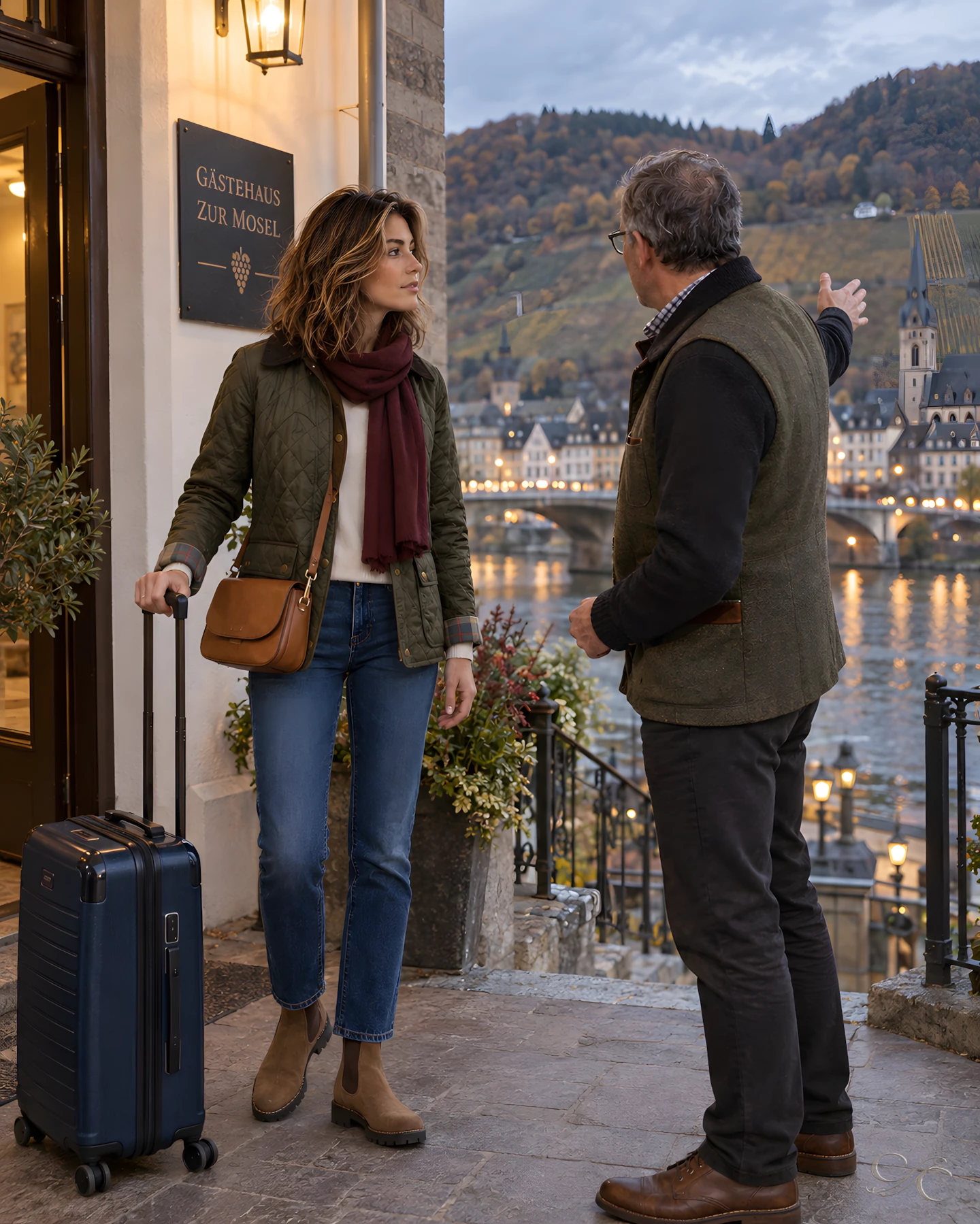
At the guesthouse entrance, my host pointed across the Mosel and named the two halves: Traben and Trarbach. The neighboring communities merged in 1904, though the river still divided their streets. Below the vineyard-covered slopes, the bridge linked the two banks, its lights reflected in the water. I would begin on the opposite side the next morning.
The Ornate Door and the Handcart

Faded commercial lettering drew me to an elaborate shopfront, where I held the heavy door while the merchant tipped a handcart of wine cartons over the raised stone threshold. Around 1900, Traben-Trarbach ranked among Europe’s leading wine-trading centers; its substantial merchant buildings and cellars served that trade.
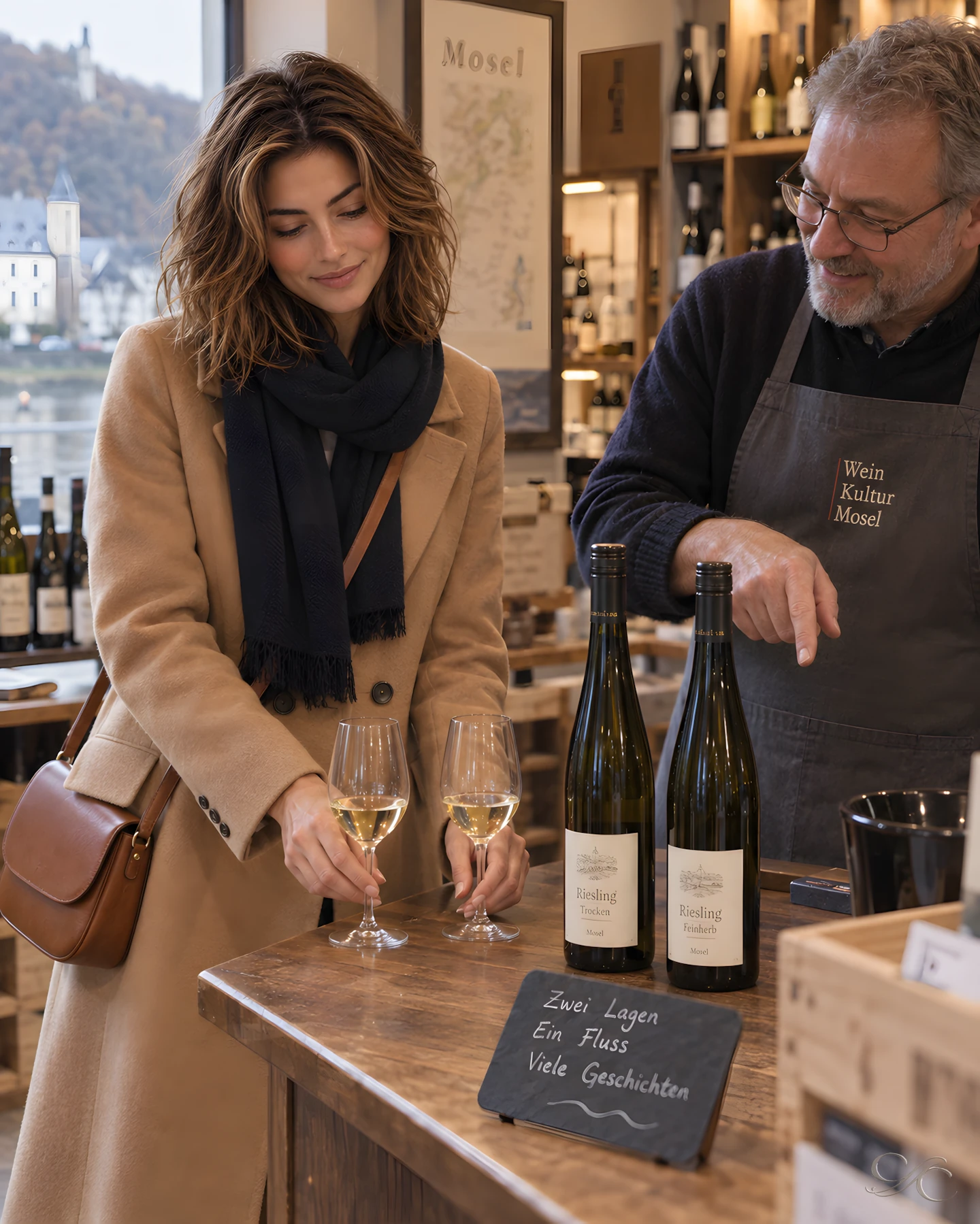
Inside, I compared two Rieslings and matched each glass to a bottle. The merchant pointed out that I had reversed them. I switched the glasses, and we shared a restrained laugh.
The Door Beneath the Street
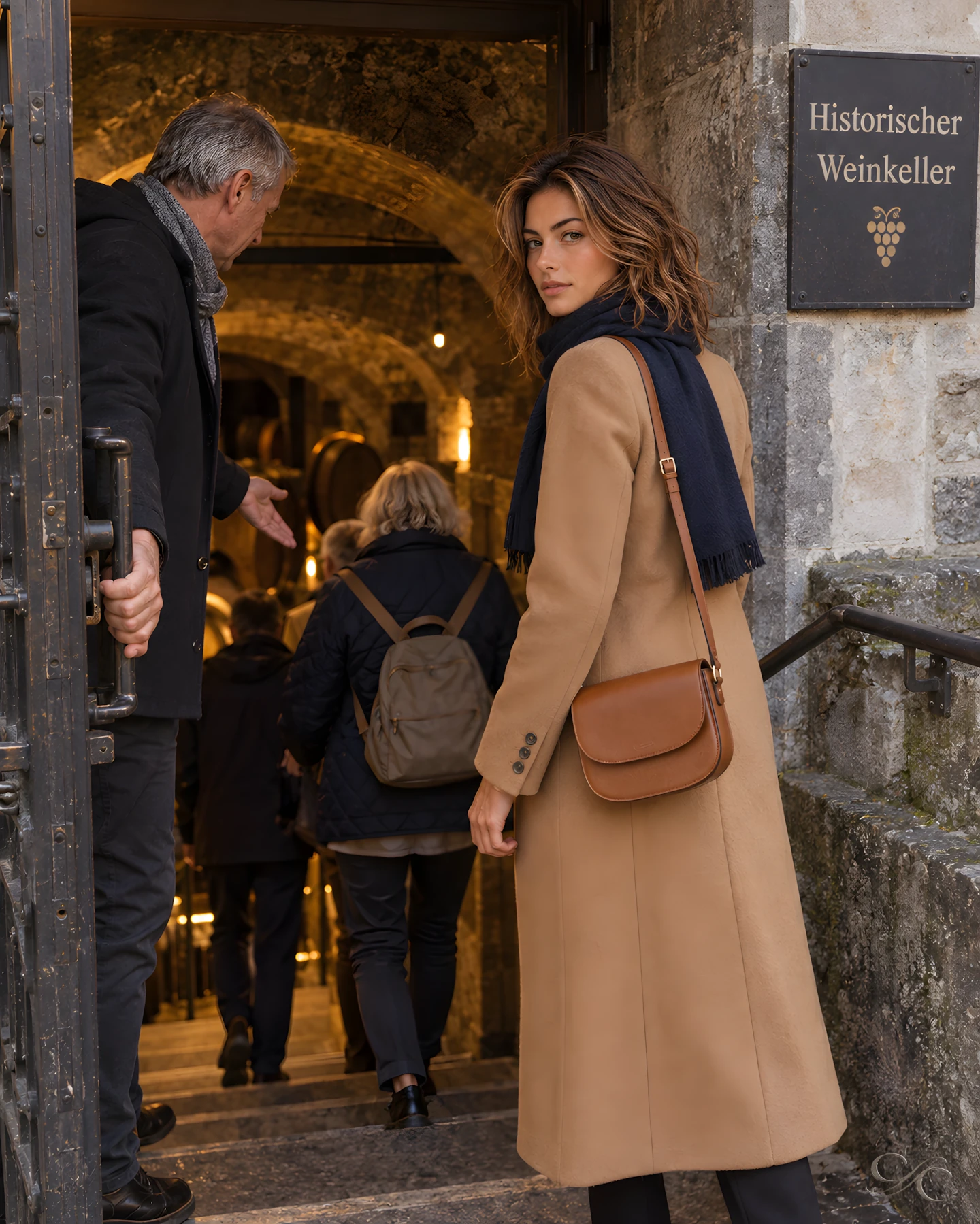
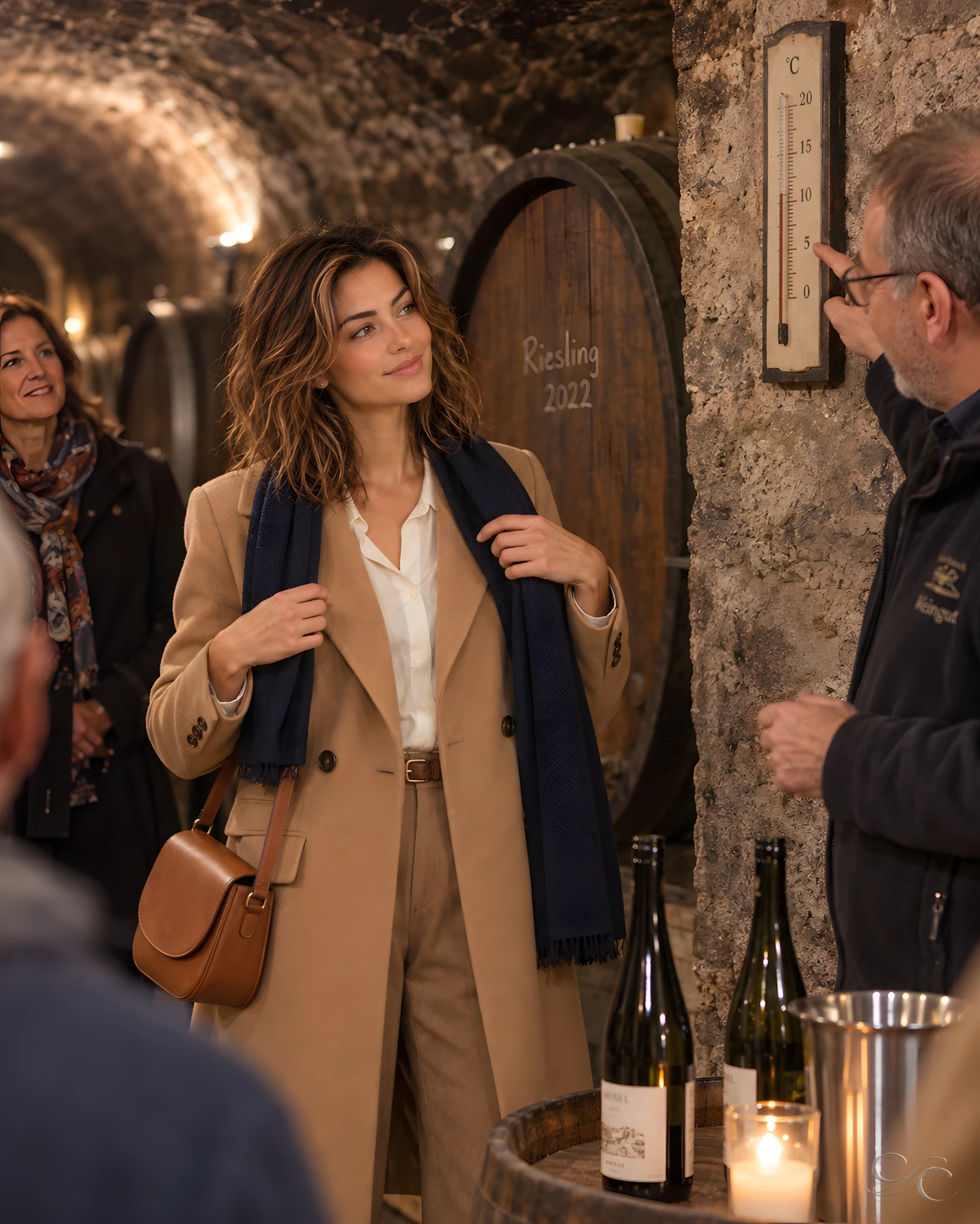
From a plain doorway marked Historischer Weinkeller, I followed the group into broad stone vaults beneath the street. I had expected them to be colder than the 5°C air outside, but the cellar’s steady temperature had me loosening my scarf. The guide pointed to the wall thermometer, and several of us smiled.
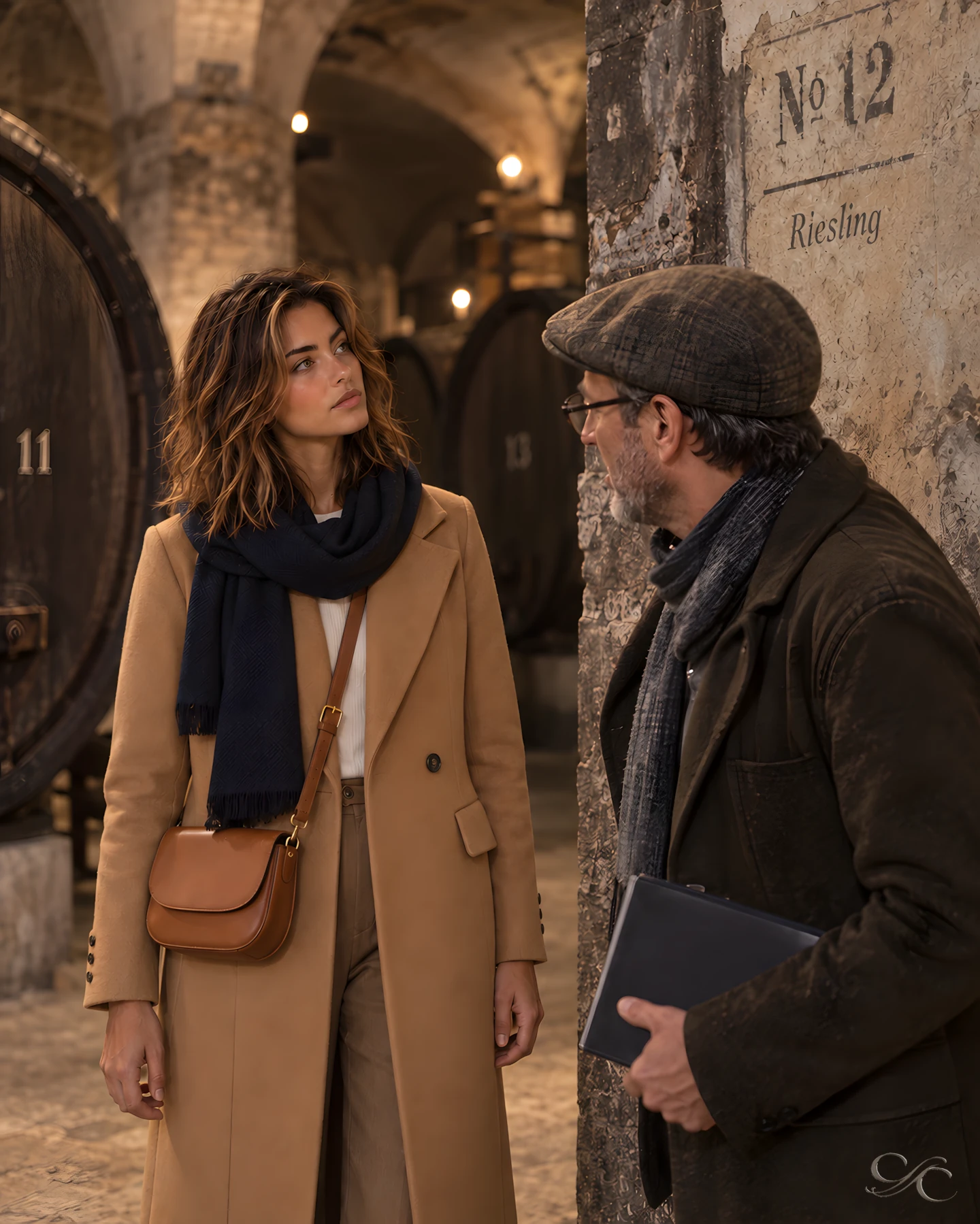
Farther in, large barrels stood in numbered bays. A worn “No. 12 Riesling” marking corresponded to its storage area, part of a practical system for identifying stock and organizing shipments.
Evening Arrival in Bernkastel-Kues
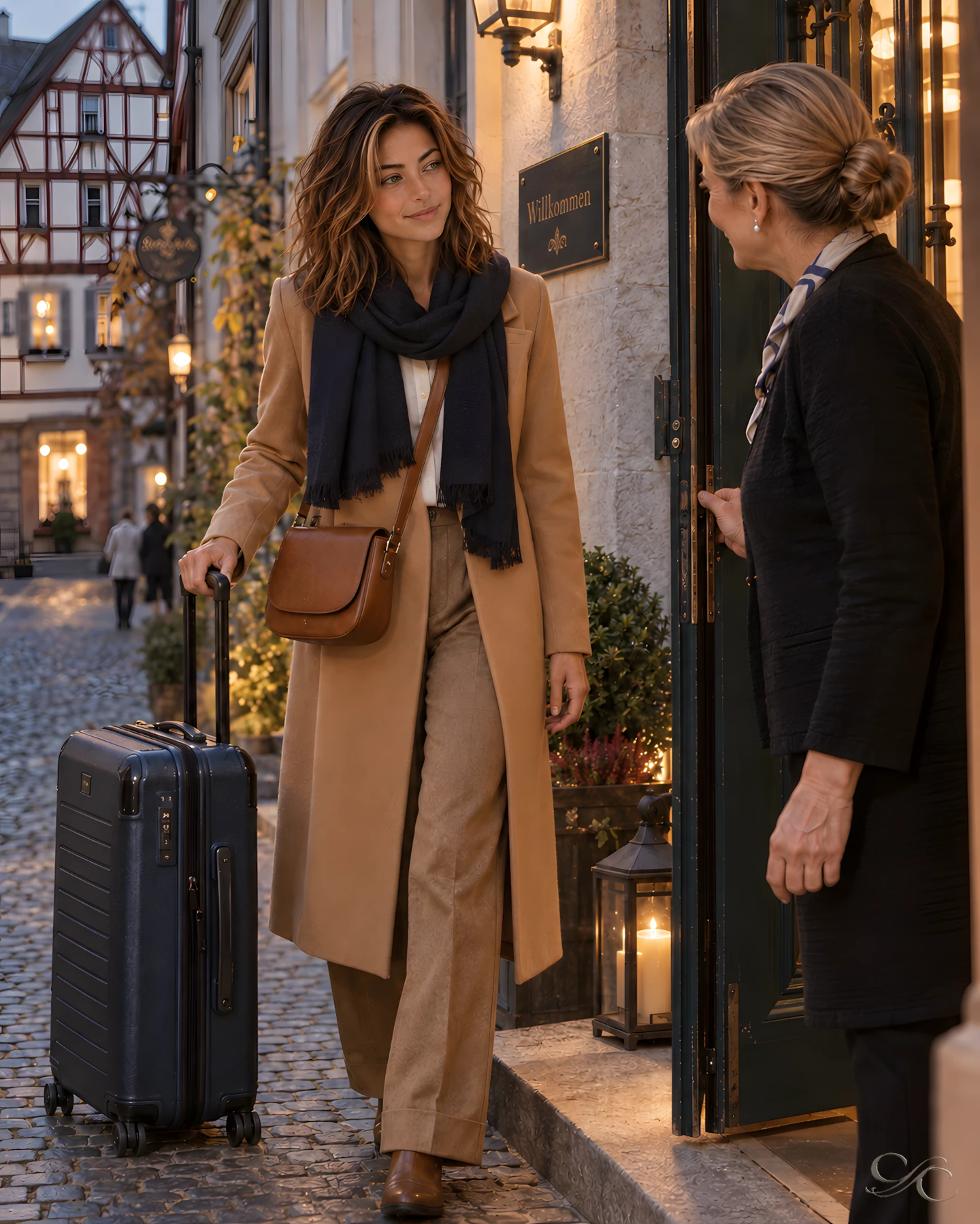
I followed the Mosel by rental car until Bernkastel-Kues appeared in the last light of the short October day. On a quiet cobbled street, warm lamps marked the entrance to my accommodation. My host held the door and welcomed me as I pulled my overnight case across the threshold.
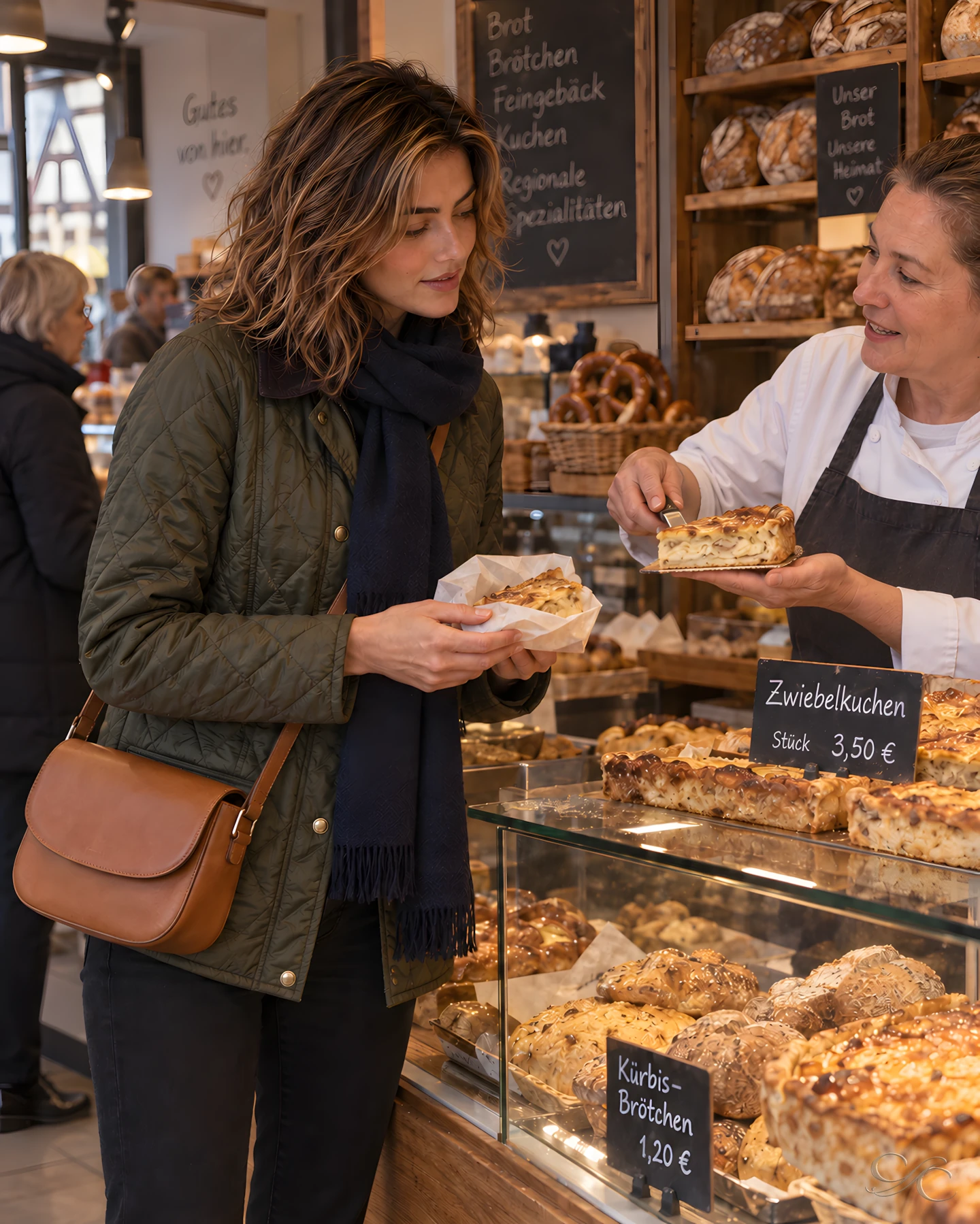
The Savory Bakery Counter
In the compact shop, bread shelves rose behind a counter crowded with pretzels and autumn baking. The baker lifted a cut slice to show me the pale layers of onion inside.
“Zwiebelkuchen,” I repeated carefully.
She explained that it was savory rather than sweet: onion baked into a rich tart filling. The name translates as “onion cake,” is commonly eaten in German wine-growing regions during the autumn wine season. I accepted my slice wrapped in white paper.
The Riesling That Smelled Like Petrol

I lowered the glass and looked at the merchant, eyebrows raised. The aged Riesling really did smell faintly of petrol. He recognized my amused disbelief and explained that this aroma can develop as Riesling matures in the bottle; among enthusiasts, it is considered characteristic rather than a fault.
The first sip brought another surprise. I could not immediately decide how sweet the wine was. Its residual sugar gave it softness, but the brisk acidity sharpened the finish and made the sweetness less obvious than the aroma had led me to expect.
Advice Across the Lunch Table
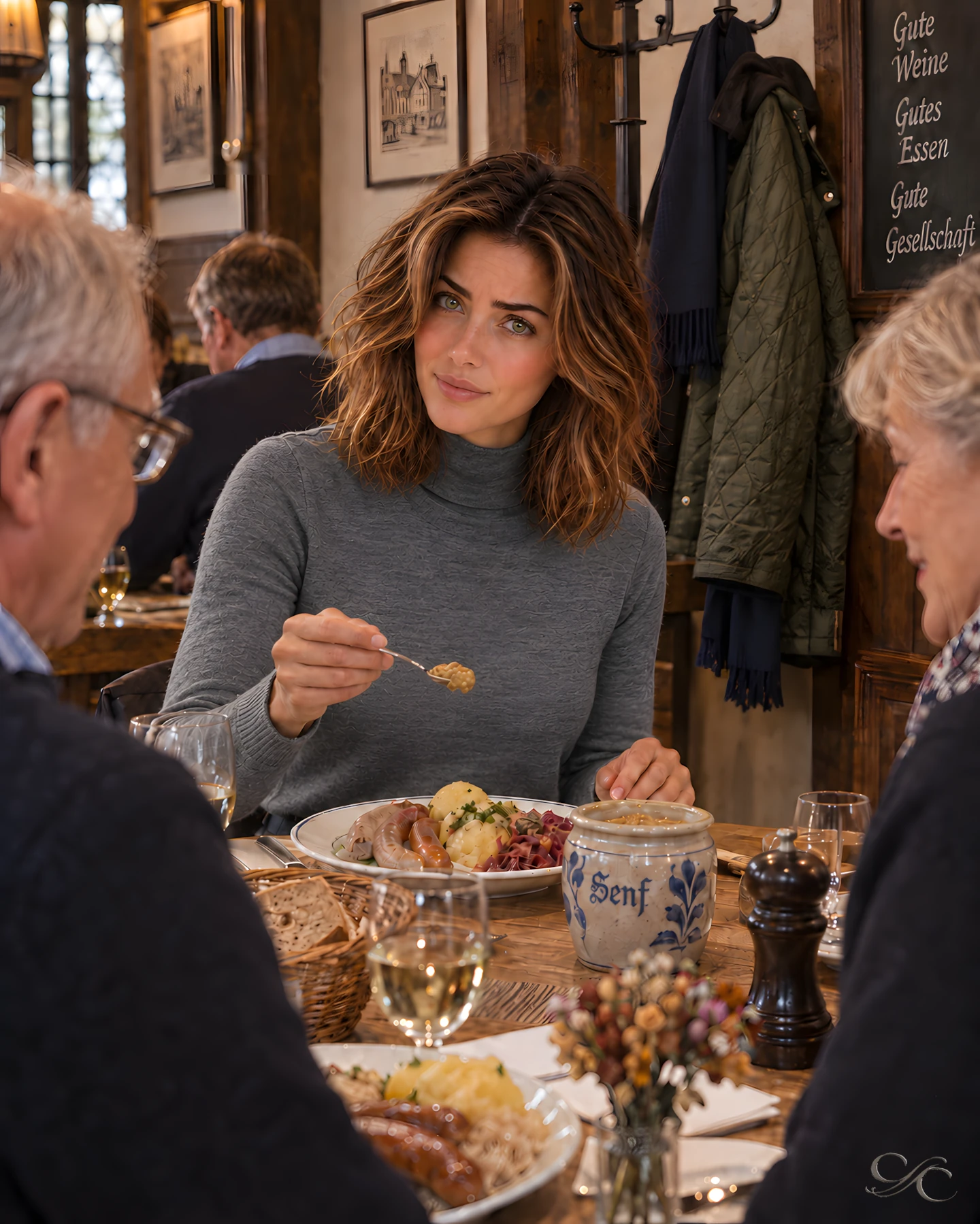
The older couple across from me passed the blue-and-white crock marked Senf. With a few simple gestures, they indicated the mustard and the sausages on my plate. Mustard is a familiar accompaniment to German sausages, but their example supplied the practical detail: a small dab was enough. I copied them. Among the bread, glasses and substantial lunch plates, the advice required little conversation.
A Local View from the Kues Bank
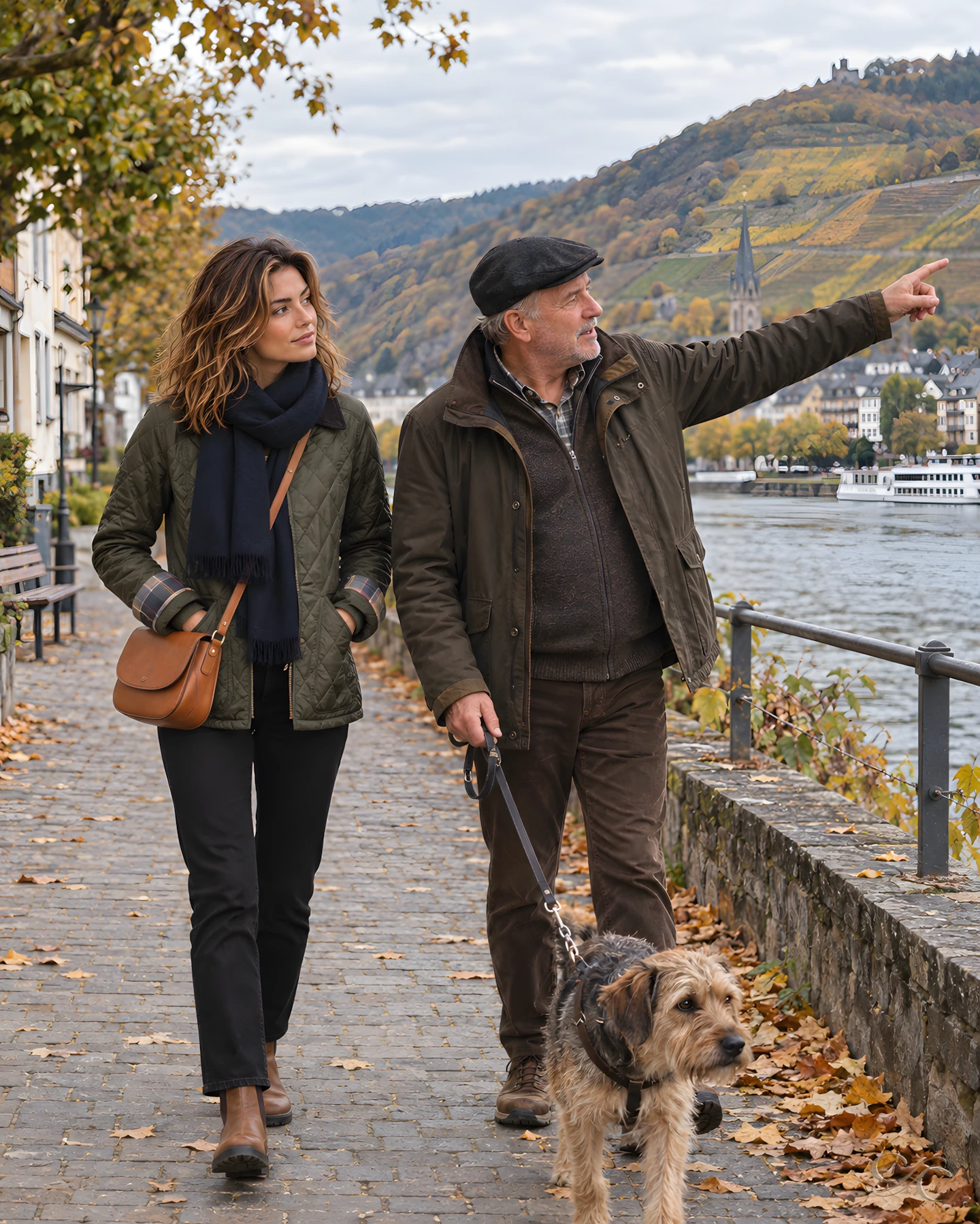
On the Kues bank, residential buildings and a leaf-strewn path replaced Bernkastel’s concentrated medieval façades. I fell into step with a local dog owner as he pointed across the pale Mosel to a vineyard slope above the old town. Its separate parcels became easier to distinguish: rows changed direction, access tracks crossed them, and retaining walls interrupted the vines. His finger kept returning to details I had initially taken for pattern.
Slate Beneath the Fallen Leaves
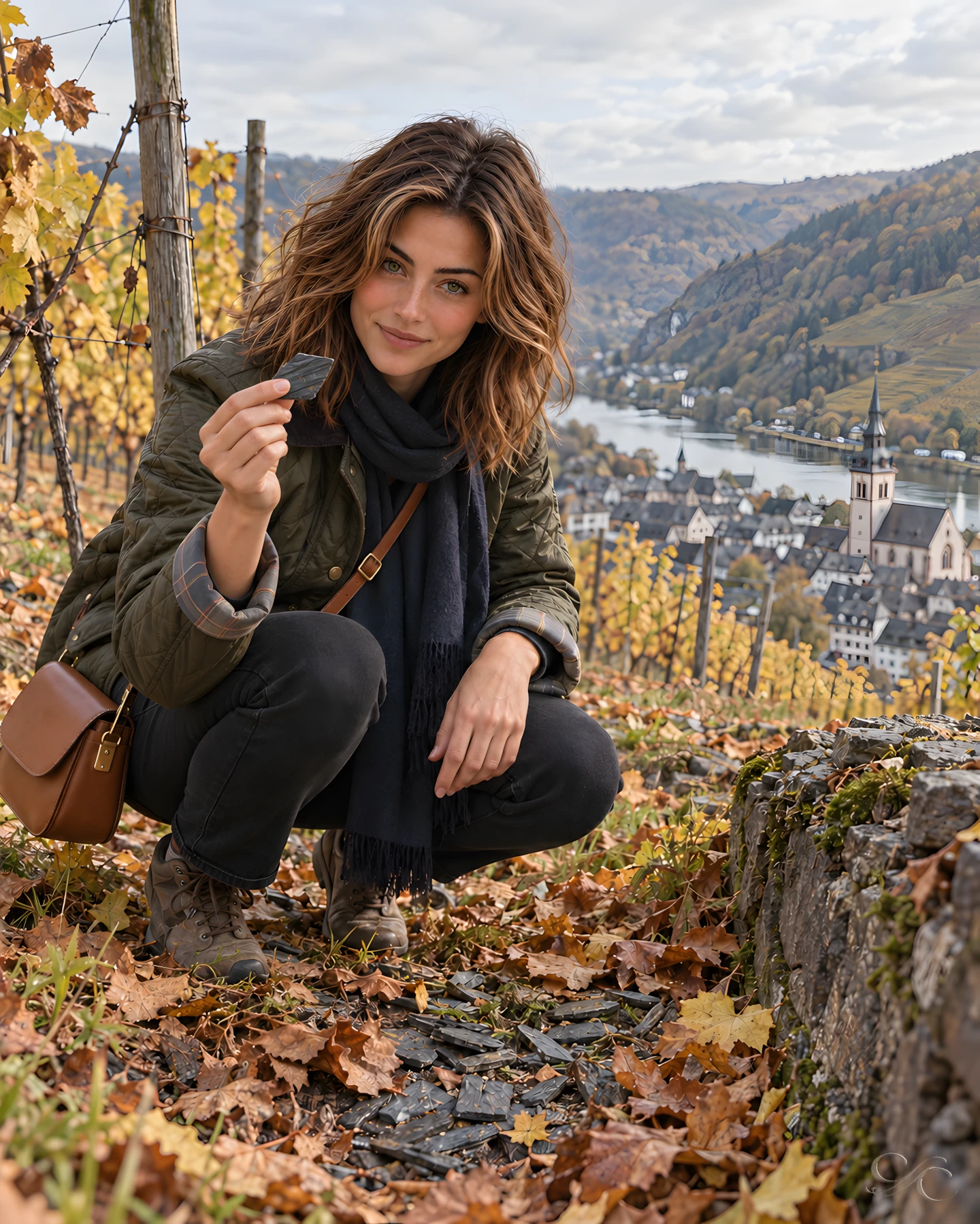
At the edge of the path, I brushed aside fallen vine leaves and lifted a shard of dark slate. It split into thin, sharp layers, like the fractured ground discussed during the morning’s wine tasting. Between the sparse rows, slate chips covered the slope beside low stone edges, leaving little visible soil. The narrow fissures through which the vine roots grew were easy to see.
Explaining the Slope at Dinner
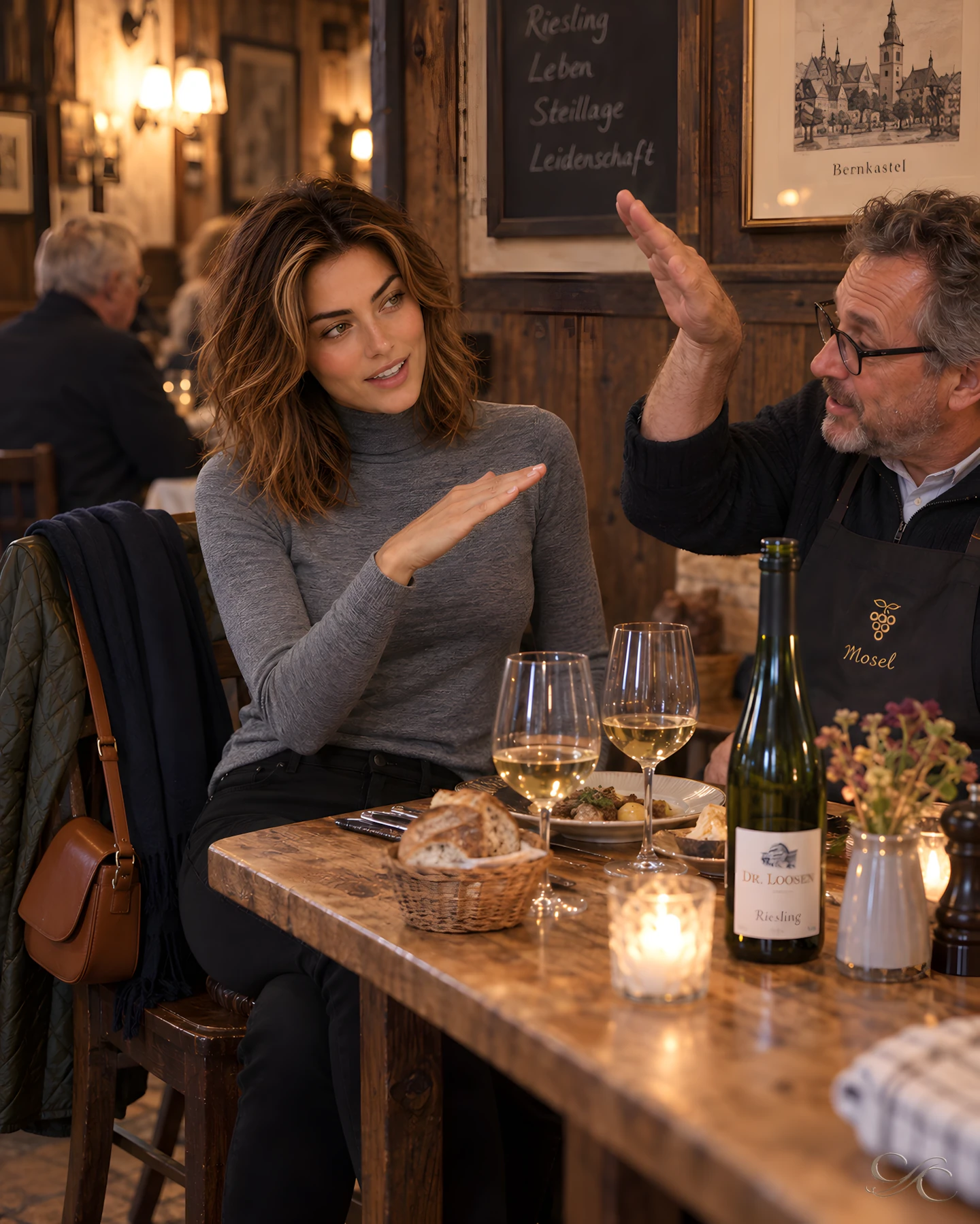
Beside the opened Riesling, I angled one hand to show the vineyard I had visited. The proprietor answered with his palm pitched much closer to vertical. We compared the two slopes across the dinner table. After a day of terraced rows and equipment designed for ground too steep for ordinary vehicles, his steeper hand needed no explanation. We both smiled and held our gradients in place.
Closing the Trunk on Bernkastel
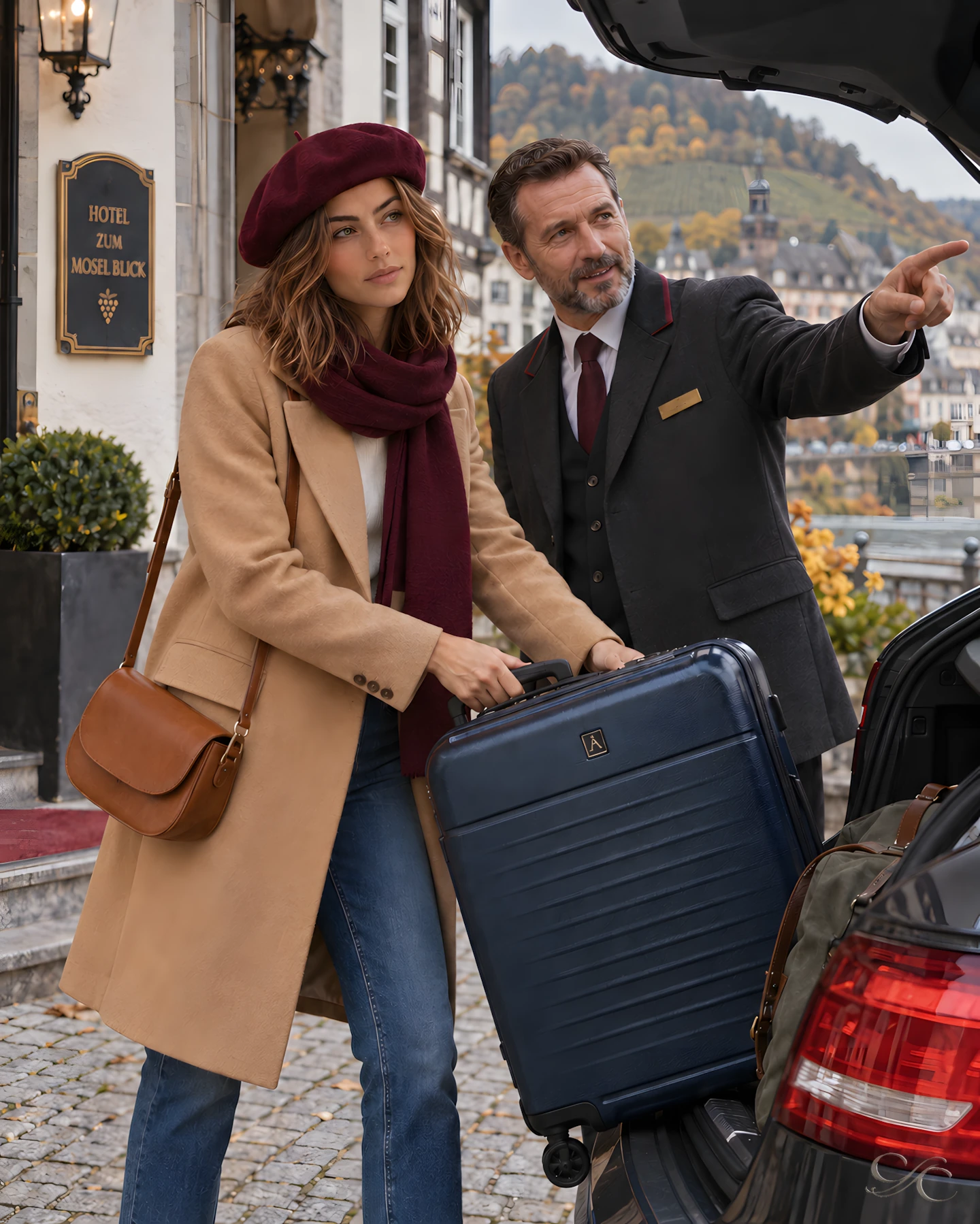
The hotel entrance was chilly, and the nearby streets remained quiet. I angled my suitcase past the other bags in the rental car while the last vineyard colors showed above the town. Once everything fitted, the host lowered the trunk lid and pointed down the road with a final piece of advice. Trier lay ahead along the Mosel.
Coffee and Conflicting Directions
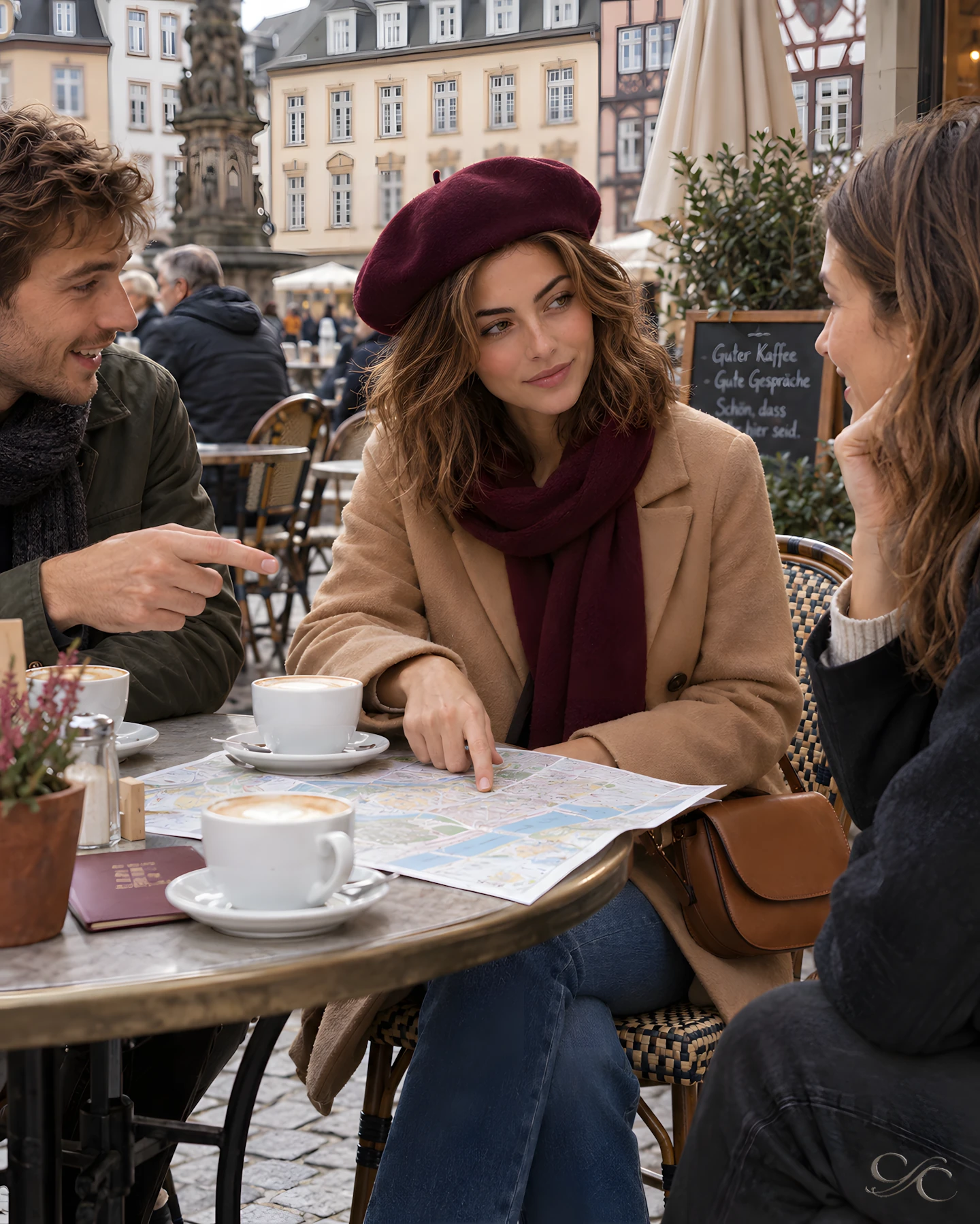
Three cappuccinos did little to settle our route. One traveler pointed toward one Roman site, I argued for another, and our third companion offered a different opinion over the city map.
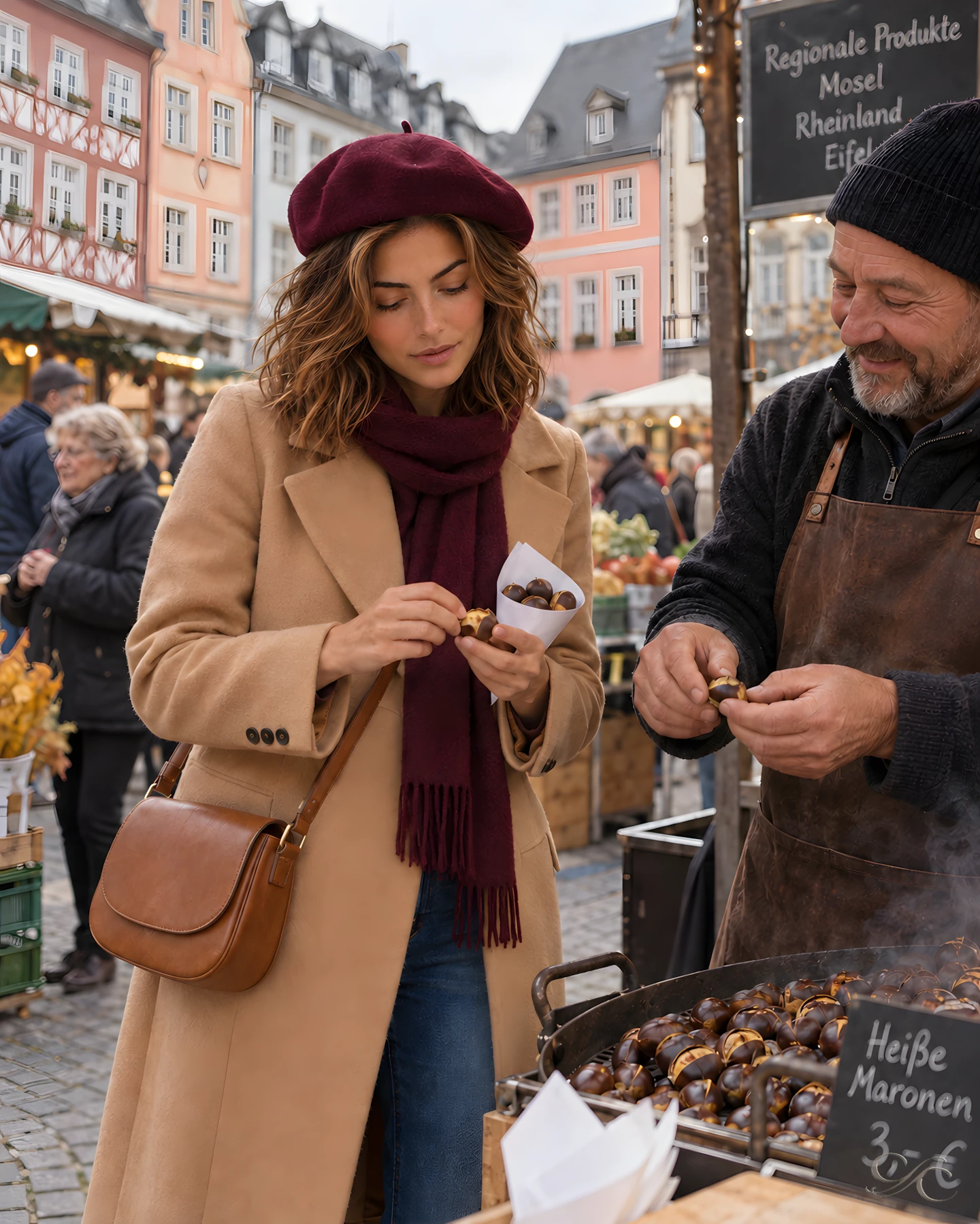
At a Hauptmarkt stall, the debate gave way to a practical lesson. Chestnuts are scored before roasting, allowing steam to escape and giving the shell a place to open. The vendor demonstrated with one, splitting it along the cut without crushing the soft nut. I copied him carefully, a warm paper cone tucked in my other hand.
What Teerdisch Actually Is
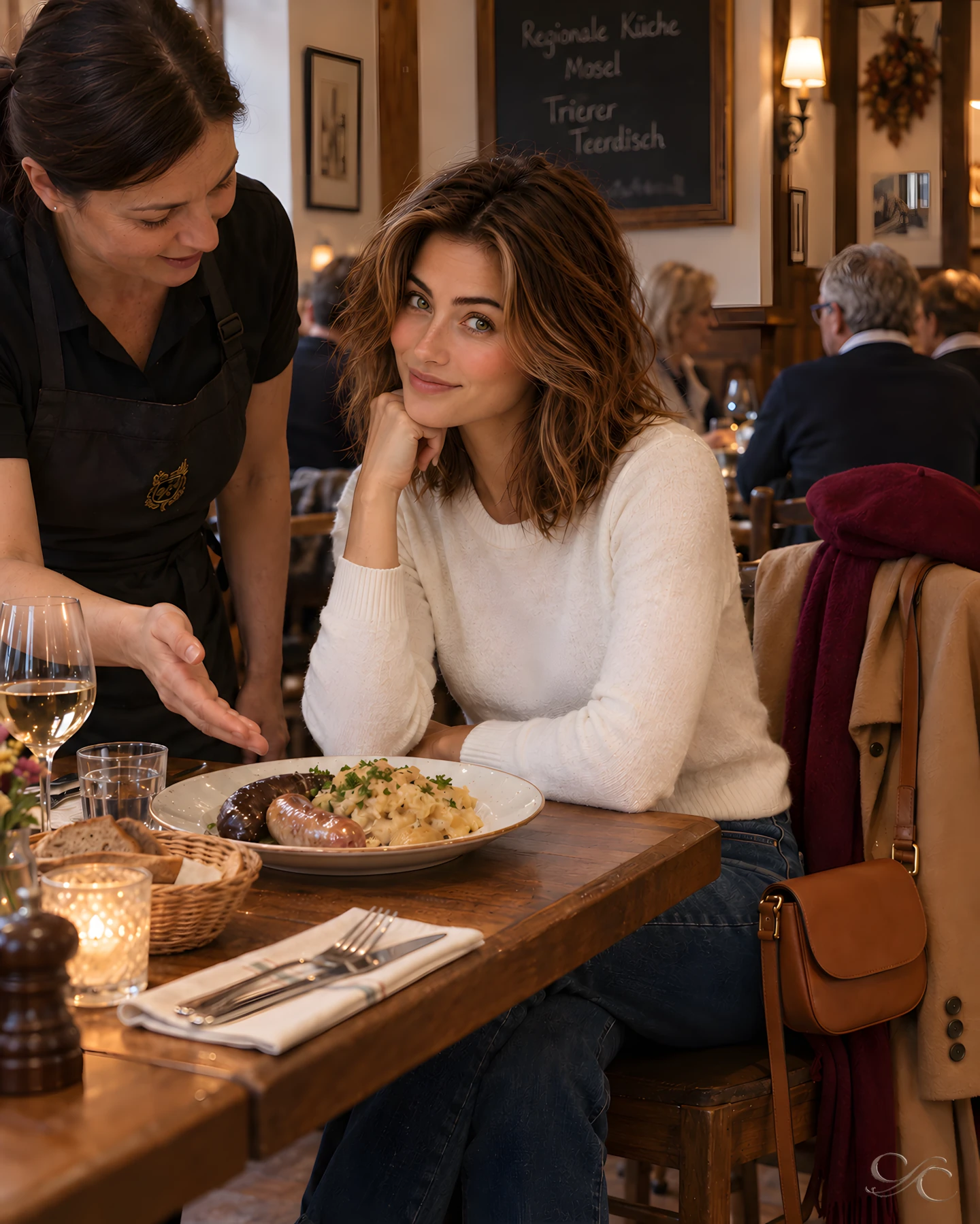
The name Trierer Teerdisch had given me few clues, and the plate did not immediately settle the question. As lunchtime conversations continued around us, the server pointed out the potatoes, then the sauerkraut, moving a hand across the plate to show that they were mixed rather than served as separate sides. Teerdisch was a regional Trier dish made from two familiar ingredients combined into one substantial accompaniment.
Beneath the Imperial Baths
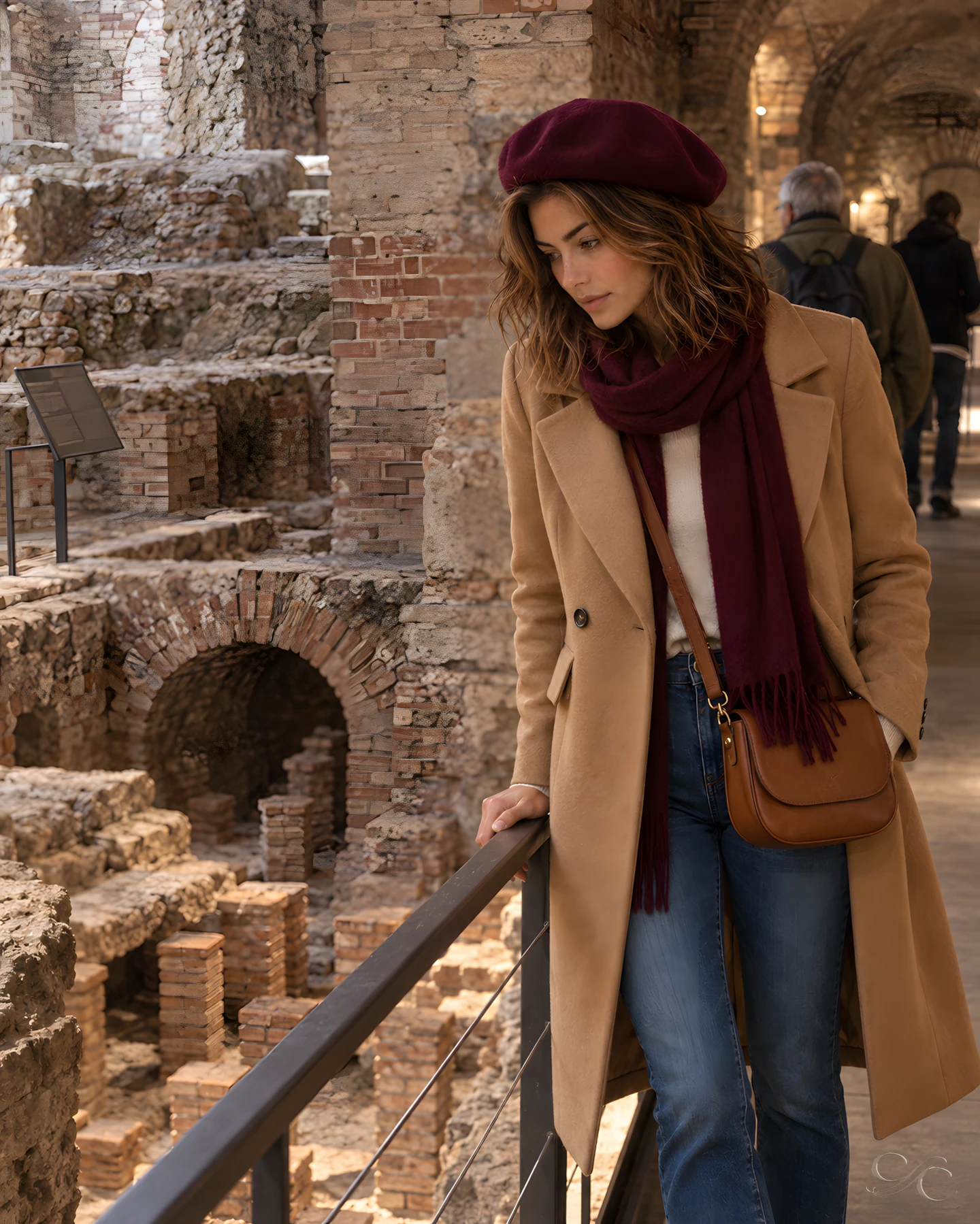
I let another visitor pass in the low service passage, then followed it until the masonry opened around the exposed heating channels. Furnaces once sent hot air beneath raised floors and through wall flues, while attendants tended the system out of sight. Begun in the early fourth century, the Imperial Baths were planned on a scale suited to Constantine’s Trier, though the bathing complex was never completed as intended. I had chosen one Roman site rather than a hurried circuit; the surviving brick piers, arches and foundations filled the afternoon.
The Last Terrace Table

As I finished my coffee, the server began clearing the terrace. I lifted my cup while she stacked the neighboring woven chairs and drew my table closer to the doorway, all without a word. Pedestrians still passed between historic façades and modern shops, but café lamps and lit windows had taken over from the thinning daylight. The air had turned distinctly cold.
Recognizing the Villages on the List
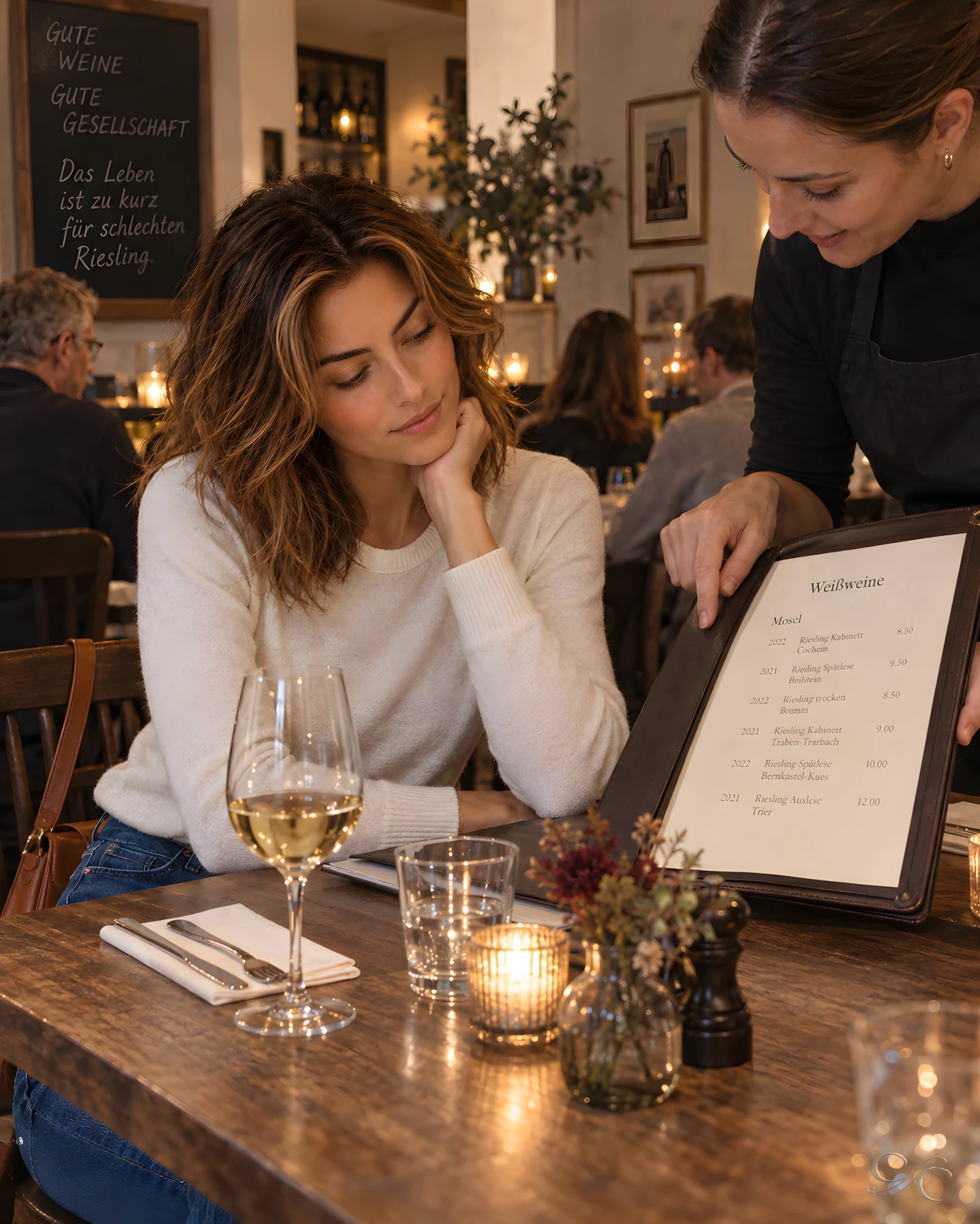
At my final dinner in Trier, the Mosel page no longer read like a list of unfamiliar labels. Cochem, Beilstein, Bremm, Traben-Trarbach and Bernkastel-Kues appeared beside different Rieslings, their names now attached to streets, slopes and stops along the river. The server pointed out a wine from one of them. When I explained that I had just completed that route, we followed the village names down the page together, ending with Trier.
Wines to Try
Riesling dominated the Mosel, where high acidity balanced residual sugar and labels recorded dryness, grape ripeness and often the village or vineyard of origin.
- Mosel Riesling: Typical flavors range from citrus and green apple to peach and apricot. With bottle age, some develop a petrol-like aroma that is not necessarily a fault.
- Trocken: This legally regulated term means dry. Acidity affects the permitted residual-sugar limit, but the finished wine should show little obvious sweetness.
- Feinherb: Usually used for an off-dry style, feinherb has no fixed legal definition. Sweetness varies by producer, so ask for guidance or taste before choosing.
- Kabinett and Spätlese: These Prädikat terms indicate grape ripeness at harvest, not the wine’s final sweetness. Look for trocken if you want a dry version.
- Village and vineyard names: A village name often takes an -er ending and precedes the vineyard name. These details identify a wine more precisely than the regional term Mosel alone.
- Federweisser: This cloudy, still-fermenting young wine appears in autumn and is traditionally served with Zwiebelkuchen. Active fermentation means the bottles are not sealed airtight.
My Notes
- I arrived in Cochem by train, then used a rental car for the smaller riverside stops and the final drive to Trier. The Mosel’s bends made distances deceptive, so I allowed more time than the map’s straight-line distances suggested.
- Late October required layers. Traben-Trarbach’s underground cellars felt warm compared with the 5°C street, while Trier’s café terraces were already closing around dusk. I kept outdoor visits within the available daylight.
- Cobblestones, raised thresholds and cellar steps appeared frequently. Shoes with firm soles were useful, and a compact overnight bag was easier to manage in Bernkastel-Kues than the larger suitcase.
- On wine lists, trocken indicated a legally defined dry style. Feinherb usually suggested an off-dry wine but had no fixed legal definition, so I treated it as a clue rather than a guarantee. Riesling’s acidity could also make residual sweetness seem less pronounced.
- Bernkastel and Kues lay on opposite banks. The Kues side offered a practical riverside path and a clear view back toward Bernkastel’s old town and vineyard slopes.
The Journey Continues
By Trier, trocken, feinherb and süß no longer required translation, and village names on a wine list had become places I could picture. I had seen the slate slopes, cellar vaults and steep rows behind the labels. I had also misidentified enough Rieslings to keep any confidence in check. Five days had answered several questions and left me with others.
If you’re planning a trip to Germany, Austria, Prague, or other European destinations, 💬 chat with me for ideas on timing, wine, where to stay, and how to shape the journey naturally.
À bientôt, Camille ✨